Tales of Soldiers and Civilians is a collection of short stories written by Ambrose Bierce. Published in 1891, the 26 stories detail the lives of soldiers and civilians during the American Civil War. His famous story "An Occurrence at Owl Creek Bridge" is included in this collection.In the preface to the first edition, Bierce maintained that the book had been "denied existence by the chief publishing houses of the country." He credited the eventual publication of the book to his friend, Mr. E. L. G. Steele, a merchant from San Francisco, who was listed with the 1891 copyright. 3] In 1898, Tales was republished along with other stories by G.P. Putnam's Sons under the title In the Midst of Life. 1] George Sterling, in the introduction to a later (1927) edition, noted that as a result of "obtuse critics and a benighted public", the book failed to become the sensation Bierce had expected
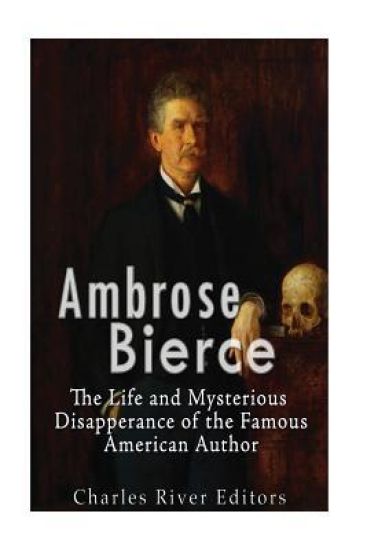
Ambrose Gwinnett Bierce (June 24, 1842 - circa 1914 was an American editorialist, journalist, short story writer, fabulist, and satirist. He wrote the short story "An Occurrence at Owl Creek Bridge" and compiled a satirical lexicon, The Devil's Dictionary. His vehemence as a critic, his motto "Nothing matters", and the sardonic view of human nature that informed his work, all earned him the nickname "Bitter Bierce". Despite his reputation as a searing critic, Bierce was known to encourage younger writers, including the poets George Sterling and Herman George Scheffauer and the fiction writer W. C. Morrow. Bierce employed a distinctive style of writing, especially in his stories. His style often embraces an abrupt beginning, dark imagery, vague references to time, limited descriptions, impossible events, and the theme of war.
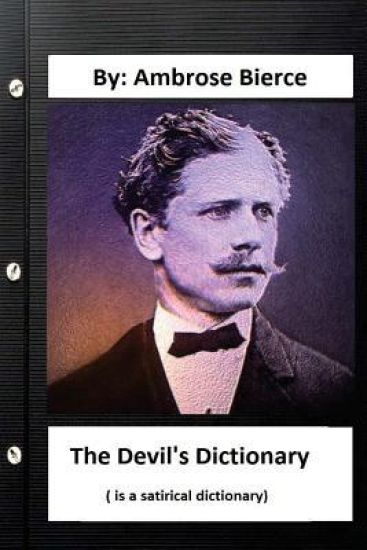
The Devil's Dictionary is a satirical dictionary written by American journalist and author Ambrose Bierce. Originally published in 1906 as The Cynic's Word Book, it features Bierce's witty and often ironic spin on many common English words. Retitled in 1911, it has been followed by numerous "unabridged" versions compiled after Bierce's death, which include definitions absent from earlier editions. The Devil's Dictionary began as a serialized column during Bierce's time as a columnist for the San Francisco News Letter, a small weekly financial magazine founded by Frederick Marriott in the late 1850s. Although a serious magazine aimed at businessmen, the News Letter contained a page of informal satirical content titled "The Town Crier". Bierce, hired as the "Crier"'s editor in December 1868, wrote satire with such irreverence and lack of inhibition he was nicknamed "the laughing devil of San Francisco". Bierce resigned from "The Town Crier" when?] and spent three years in London. Returning to San Francisco in 1875, he made two submissions to the News Letter in hopes of regaining his old position. Both were written under aliases. One, entitled "The Demon's Dictionary", contained Bierce's definitions for 48 words. Later forgotten in his compiling of The Devil's Dictionary, they were added almost a century later to an Enlarged Devil's Dictionary published in 1967. Though Bierce's preface to The Devil's Dictionary dates the earliest work to 1881, its origins can be traced to August 1869. Short of material and recently possessed of a Webster's Unabridged Dictionary, he suggested writing a "comic dictionary" for the "Town Crier". To a quote from Webster's entry for "Vicegerents", "Kings are sometimes called God's vicegerents", he added the italicized rejoinder, "It is to be wished they would always deserve the appellation," then suggested Webster might have used his talent to comic effect. Comic definitions were not a regular feature of Bierce's next column ("Prattle", in the magazine The Argonaut, of which he became an editor in March 1877). Nevertheless, he included comic definitions in his columns dated November 17, 1877 and September 14, 1878. It was in early 1881 that Bierce first used the title, The Devil's Dictionary, while editor-in-chief of another weekly San Francisco magazine, The Wasp. The "dictionary" proved popular, and during his time in this post (1881-86) Bierce included 88 installments, each comprising 15-20 new definitions.n 1887, Bierce became an editor of The San Francisco Examiner and introduced "The Cynic's Dictionary". This was to be the last of his "dictionary" columns until 1904, and it continued irregularly until July 1906. A number of the definitions are accompanied by satiric verses, many of which are signed with comic pseudonyms such as "Salder Bupp", "Orm Pludge", and "Father Gassalasca Jape, S.J.
The Devil's Dictionary is a satirical dictionary written by American journalist and author Ambrose Bierce. Originally published in 1906 as The Cynic's Word Book, it features Bierce's witty and often ironic spin on many common English words. Retitled in 1911, it has been followed by numerous "unabridged" versions compiled after Bierce's death, which include definitions absent from earlier editions. The Devil's Dictionary began as a serialized column during Bierce's time as a columnist for the San Francisco News Letter, a small weekly financial magazine founded by Frederick Marriott in the late 1850s. Although a serious magazine aimed at businessmen, the News Letter contained a page of informal satirical content titled "The Town Crier". Bierce, hired as the "Crier"'s editor in December 1868, wrote satire with such irreverence and lack of inhibition he was nicknamed "the laughing devil of San Francisco". Bierce resigned from "The Town Crier" when?] and spent three years in London. Returning to San Francisco in 1875, he made two submissions to the News Letter in hopes of regaining his old position. Both were written under aliases. One, entitled "The Demon's Dictionary", contained Bierce's definitions for 48 words. Later forgotten in his compiling of The Devil's Dictionary, they were added almost a century later to an Enlarged Devil's Dictionary published in 1967. Though Bierce's preface to The Devil's Dictionary dates the earliest work to 1881, its origins can be traced to August 1869. Short of material and recently possessed of a Webster's Unabridged Dictionary, he suggested writing a "comic dictionary" for the "Town Crier". To a quote from Webster's entry for "Vicegerents", "Kings are sometimes called God's vicegerents", he added the italicized rejoinder, "It is to be wished they would always deserve the appellation," then suggested Webster might have used his talent to comic effect. Comic definitions were not a regular feature of Bierce's next column ("Prattle", in the magazine The Argonaut, of which he became an editor in March 1877). Nevertheless, he included comic definitions in his columns dated November 17, 1877 and September 14, 1878. It was in early 1881 that Bierce first used the title, The Devil's Dictionary, while editor-in-chief of another weekly San Francisco magazine, The Wasp. The "dictionary" proved popular, and during his time in this post (1881-86) Bierce included 88 installments, each comprising 15-20 new definitions.n 1887, Bierce became an editor of The San Francisco Examiner and introduced "The Cynic's Dictionary". This was to be the last of his "dictionary" columns until 1904, and it continued irregularly until July 1906. A number of the definitions are accompanied by satiric verses, many of which are signed with comic pseudonyms such as "Salder Bupp", "Orm Pludge", and "Father Gassalasca Jape, S.J.
Tales of Soldiers and Civilians is a collection of short stories written by Ambrose Bierce. Published in 1891, the 26 stories detail the lives of soldiers and civilians during the American Civil War. His famous story "An Occurrence at Owl Creek Bridge" is included in this collection.In the preface to the first edition, Bierce maintained that the book had been "denied existence by the chief publishing houses of the country." He credited the eventual publication of the book to his friend, Mr. E. L. G. Steele, a merchant from San Francisco, who was listed with the 1891 copyright. 3] In 1898, Tales was republished along with other stories by G.P. Putnam's Sons under the title In the Midst of Life.George Sterling, in the introduction to a later (1927) edition, noted that as a result of "obtuse critics and a benighted public", the book failed to become the sensation Bierce had expected. The original publication contained nineteen stories, while those in later publications increased in number; 1898 to 22, and 1909 to 26.The original nineteen stories were retained in the 1898 publication, but were not entirely collectively retained in the 1909 edition.Four of these were transferred by Bierce into his collection Collected Works, Can Such Things Be?In a similar fashion, Bierce moved eight stories into the 1909 version of In the Midst of Life from the 1893 edition of Can Such Things Be?Sixteen of the original stories were initially published in the San Francisco Examiner... Ambrose Gwinnett Bierce (June 24, 1842 - circa 1914) was an American editorialist, journalist, short story writer, fabulist, and satirist. He wrote the short story "An Occurrence at Owl Creek Bridge" and compiled a satirical lexicon, The Devil's Dictionary. His vehemence as a critic, his motto "Nothing matters", and the sardonic view of human nature that informed his work, all earned him the nickname "Bitter Bierce". Despite his reputation as a searing critic, Bierce was known to encourage younger writers, including the poets George Sterling and Herman George Scheffauer and the fiction writer W. C. Morrow. Bierce employed a distinctive style of writing, especially in his stories. His style often embraces an abrupt beginning, dark imagery, vague references to time, limited descriptions, impossible events, and the theme of war. In 1913, Bierce traveled to Mexico to gain first-hand experience of the Mexican Revolution. He was rumored to be traveling with rebel troops, and was not seen again.
Ambrose Gwinnett Bierce (June 24, 1842 - circa 1914) was an American editorialist, journalist, short story writer, fabulist, and satirist. He wrote the short story "An Occurrence at Owl Creek Bridge" and compiled a satirical lexicon, The Devil's Dictionary. His vehemence as a critic, his motto "Nothing matters", and the sardonic view of human nature that informed his work, all earned him the nickname "Bitter Bierce". Despite his reputation as a searing critic, Bierce was known to encourage younger writers, including the poets George Sterling and Herman George Scheffauer and the fiction writer W. C. Morrow. Bierce employed a distinctive style of writing, especially in his stories. His style often embraces an abrupt beginning, dark imagery, vague references to time, limited descriptions, impossible events, and the theme of war. In 1913, Bierce traveled to Mexico to gain first-hand experience of the Mexican Revolution. He was rumored to be traveling with rebel troops, and was not seen again. Bierce was born in a log cabin at Horse Cave Creek in Meigs County, Ohio, on June 24, 1842, to Marcus Aurelius Bierce (1799-1876) and Laura Sherwood Bierce.His mother was a descendant of William Bradford. He was the tenth of thirteen children whose father gave all names beginning with the letter "A": in order of birth, the Bierce siblings were Abigail, Amelia, Ann, Addison, Aurelius, Augustus, Almeda, Andrew, Albert, and Ambrose. His parents were a poor but literary couple who instilled in him a deep love for books and writing.Bierce grew up in Kosciusko County, Indiana, attending high school at the county seat, Warsaw.He left home at 15 to become a "printer's devil" at a small Ohio newspaper.