Kirjojen hintavertailu. Mukana 12 595 353 kirjaa ja 12 kauppaa.

Kirjahaku

Etsi kirjoja tekijän nimen, kirjan nimen tai ISBN:n perusteella.

1000 tulosta hakusanalla Archibald Hamilton Bryce

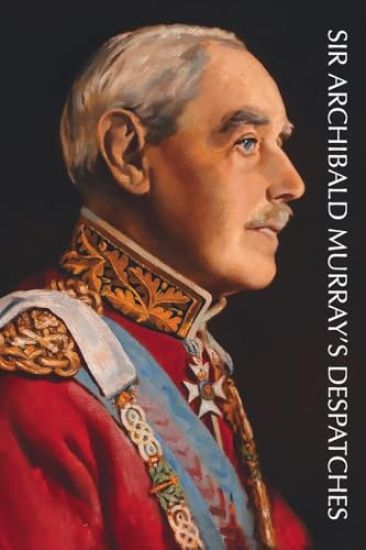
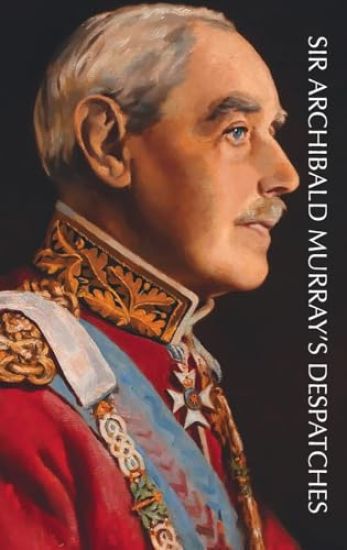
Sir Archibald Murray's Despatches

Sir Archibald Murray's Despatches

Archibald Murray

NAVAL MILITARY PRESS
2024
pokkari
Four despatches by the C in C of the Egyptian Expeditionary Force during his period in command from January 1916-June 1917, not published in their full original text prior to this publication. Fourth despatch contains letter from War Office, included as a condition for authority to publish the despatch.There are four despatches covering Sir Archibald Murray's period in command (Jan 1916-June 1917) and until publication of this book they had never been published in their full original text. This was especially true of the fourth despatch, dated 28th June 1917 which Murray was permitted by the War Office to publish on the condition that a letter from them was published at the same time. The first part of this despatch refers to the frequently changing directives laid down by the War Cabinet regarding tasks for the EEF - defensive one day, offensive the next coupled with a failure to meet the the request for the number of divisions needed to carry out the objectives laid down. The letter, signed by the secretary to the Army Council, was a model of damage limitation stating that the changes in policy were were based on the wider considerations than just those of the Egyptian campaign, which would not be apparent to the reader of the despatch.The first despatch deals with operations from 10th January to 31st May 1916. It was a period of a great deal of troop movement - divisions withdrawing from Gallipoli via Egypt and from France to Salonika with all the administrative backup needed for the Salonika force. The second despatch covers the period 1st June to 30th September 1916 during which the Battle of Romani was fought (4/5 August). The third despatch takes the story up to 28th February 1917 and the fourth and final one brings us to Murray's handover of command to Allenby on 28th June 1917. The principle actions described in this despatch are the First and Second Battles of Gaza, both of which were Turkish victories inflicting in all some 10,000 casualties. It was these failures that led to Murray's replacement by Allenby.
Sir Archibald Murray's Despatches

Sir Archibald Murray's Despatches

Archibald Murray

NAVAL MILITARY PRESS
2024
sidottu
Four despatches by the C in C of the Egyptian Expeditionary Force during his period in command from January 1916-June 1917, not published in their full original text prior to this publication. Fourth despatch contains letter from War Office, included as a condition for authority to publish the despatch.There are four despatches covering Sir Archibald Murray's period in command (Jan 1916-June 1917) and until publication of this book they had never been published in their full original text. This was especially true of the fourth despatch, dated 28th June 1917 which Murray was permitted by the War Office to publish on the condition that a letter from them was published at the same time. The first part of this despatch refers to the frequently changing directives laid down by the War Cabinet regarding tasks for the EEF - defensive one day, offensive the next coupled with a failure to meet the the request for the number of divisions needed to carry out the objectives laid down. The letter, signed by the secretary to the Army Council, was a model of damage limitation stating that the changes in policy were were based on the wider considerations than just those of the Egyptian campaign, which would not be apparent to the reader of the despatch.The first despatch deals with operations from 10th January to 31st May 1916. It was a period of a great deal of troop movement - divisions withdrawing from Gallipoli via Egypt and from France to Salonika with all the administrative backup needed for the Salonika force. The second despatch covers the period 1st June to 30th September 1916 during which the Battle of Romani was fought (4/5 August). The third despatch takes the story up to 28th February 1917 and the fourth and final one brings us to Murray's handover of command to Allenby on 28th June 1917. The principle actions described in this despatch are the First and Second Battles of Gaza, both of which were Turkish victories inflicting in all some 10,000 casualties. It was these failures that led to Murray's replacement by Allenby.
Archibald Simpson's Unpeaceable Kingdom

Archibald Simpson's Unpeaceable Kingdom

Peter N. Moore

Lexington Books
2018
sidottu
This book draws on the life of Presbyterian minister and diarist Archibald Simpson (1734–1795) to examine the history of evangelical Protestantism in South Carolina and the British Atlantic during the last half of the eighteenth century. Although he grew up in the evangelical heartland of Scotland in the wake of the great mid-century revivals, Simpson spurned revivalism and devoted himself instead to the grinding work of the parish ministry. At age nineteen he immigrated to South Carolina, where he spent the next eighteen years serving slaveholding Reformed congregations in the lowcountry plantation district. Here powerful planters held sway over slaves, families, churches, and communities, and Simpson was constantly embattled as he sought to impose an evangelical order on his parishes. In refusing to put the gospel in the pockets of planters who scorned it—and who were accustomed to controlling their parish churches—he earned their enmity. As a result, every relationship was freighted with deceit and danger, and every practice—sermons, funerals, baptisms, pastoral visits, death narratives, sickness, courtship, friendship, domestic concerns—was contested and politicized. In this context, the cause of the gospel made little headway in Simpson’s corner of the world. Despite the great midcentury revivals, the steady stream of religious dissenters who poured into the province, and all the noise they made about slave conversions, Simpson’s story suggests that there was no evangelical movement in colonial South Carolina, just a tired and frustrating evangelical slog.
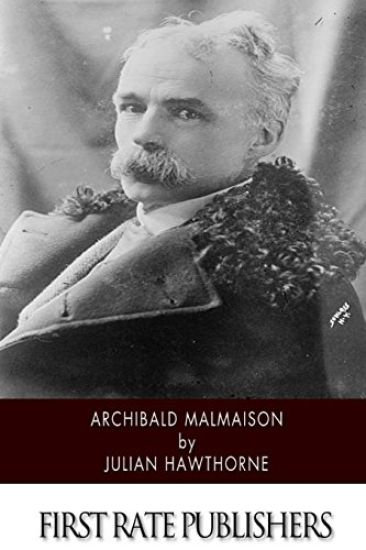
Archibald Malmaison

Archibald Malmaison

Julian Hawthorne

Black Curtain Press
2018
sidottu
This work has been selected by scholars as being culturally important, and is part of the knowledge base of civilization as we know it. This work was reproduced from the original artifact, and remains as true to the original work as possible. Therefore, you will see the original copyright references, library stamps (as most of these works have been housed in our most important libraries around the world), and other notations in the work.This work is in the public domain in the United States of America, and possibly other nations. Within the United States, you may freely copy and distribute this work, as no entity (individual or corporate) has a copyright on the body of the work.As a reproduction of a historical artifact, this work may contain missing or blurred pages, poor pictures, errant marks, etc. Scholars believe, and we concur, that this work is important enough to be preserved, reproduced, and made generally available to the public. We appreciate your support of the preservation process, and thank you for being an important part of keeping this knowledge alive and relevant.