Kirjojen hintavertailu. Mukana 12 542 227 kirjaa ja 12 kauppaa.

Kirjahaku

Etsi kirjoja tekijän nimen, kirjan nimen tai ISBN:n perusteella.

1000 tulosta hakusanalla Augustin

Augustine: A New Biography

Augustine: A New Biography

James J. O'Donnell

Ecco Press
2006
nidottu
Saint Augustine -- the celebrated theologian who served as Bishop of Hippo from 396 C.E. until his death in 430 C.E. -- is widely regarded as one of the most influential thinkers in the Western world. His autobiography, Confessions, remains among the most important religious writings in the Christian tradition. In this eye-opening and eminently readable biography, renowned historical scholar James J. O'Donnell picks up where Augustine himself left off to offer a fascinating, in-depth portrait of an unparalleled politician, writer, and churchman in a time of uncertainty and religious turmoil.Augustine is a triumphant chronicle of an extraordinary life that is certain to surprise and enlighten even those who believed they knew the complex and remarkable man of God.
Augustine, the Trinity, and the Church

Augustine, the Trinity, and the Church

Adam Ployd

Oxford University Press Inc
2015
sidottu
The legacy of Augustine of Hippo (354-430) continues to shape Western Christian language about both the Trinity and the church. Yet scholars rarely treat these two topics as related in his work. In Augustine, the Trinity, and the Church, Adam Ployd argues that Augustine's ecclesiology draws upon his Trinitarian theology to a surprising degree. This connection appears most clearly in a series of sermons Augustine preached in 406-407 against the Donatists, the rival Christian communion in North Africa. As he preached, Augustine deployed scriptural interpretations derived from his Latin pro-Nicene predecessors. But he adapts these Trinitarian arguments to construct a vision of the charitable unity of the Catholic Church against the Donatists. To condemn the Donatists for separating from the body of Christ, Augustine appropriates a pro-Nicene Christology that views Christ's body as the means for ascent to his divinity. He further identifies the love that unites Christians to each other and to Christ in his body as the Holy Spirit, who gives to us what he eternally is as the mutual love of Father and Son. On the central issue of baptism, Augustine makes the sacrament a Trinitarian act as Christ gives the Spirit to his own body. The unity and integrity of the church, therefore, depend not upon the purity of the bishops or the guarded boundaries of the community, but upon the work of the triune God who unites us to Christ through the love of the Spirit who Christ himself gives in baptism.
Augustine's Early Theology of Image

Augustine's Early Theology of Image

Gerald P. Boersma

Oxford University Press Inc
2016
sidottu
The question of what it means for Christ to be the "image of God," or imago dei, lies at the heart of the Christological debates of the fourth century. Is an image a derivation from its source? Are they two separate substances? Does an image serve to reveal its source? Is an image ontologically inferior to its source? In this book, Gerald P. Boersma examines three Western pro-Nicene theologies of the imago dei, which tackle the question of whether human beings and Christ can both be considered to be the "image of God." Boersma goes on to examine Augustine's early theology of the imago dei, prior to his ordination (386-391). According to Boersma, Augustine's early thought posits that Christ is an image of equal likeness to God, while a human being is an image of unequal likeness. He argues that although Augustine's early theology of image builds on that of Hilary of Poitiers, Marius Victorinus, and Ambrose of Milan, Augustine was able to affirm, in ways that his predecessors were not, how both Christ and the human person can be considered the imago dei.
Augustine, Martyrdom, and Classical Rhetoric

Augustine, Martyrdom, and Classical Rhetoric

Adam Ployd

OXFORD UNIVERSITY PRESS INC
2023
sidottu
Early Christian martyr accounts were less about recounting history than about constructing theology. As such, many historians of late antique Christianity call them "rhetorical." But what does this mean for early Christian theology of martyrdom? And what rhetorical techniques are actually being used for such theological construction? To answer these questions, Adam Ployd looks to Augustine of Hippo. He places Augustine's martyr theology within its classical rhetorical context, drawing upon the theoretical foundations of Cicero, Quintilian, and others. Ployd investigates all of Augustine's major controversies as well as his work as a bishop and preacher cultivating a particular vision of the Christian life. Ployd uncovers the rich rhetorical roots of Augustine's martyr theology, roots that delve beyond ornamentation and into the depths of inventio and the techniques of rhetorical argumentation. What emerges from this investigation is a vision of Augustine's martyr discourse that is connected to his larger theological projects, including the promotion of Christian virtue pursued in the context of God's mysterious, providential work in human history.
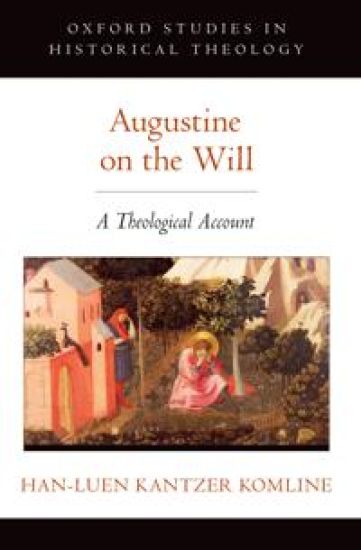
Augustine on the Will

Augustine on the Will

Han-luen Kantzer Komline

Oxford University Press Inc
2020
sidottu
This book provides a framework for Augustine's understanding of will, an aspect of his thought that has proven to be both essential and inscrutable. On the one hand, the Augustinian will is everywhere. It comes up constantly both in Augustine's thought and in the massive literature engaging it. The will is impossible to avoid in almost any treatment of any aspect of his thinking, whether theological, philosophical, psychological, or political, because it is at the heart of his understanding of the human person and therefore vital to his understanding of such diverse topics as grace, freedom, the image of God, and moral responsibility. On the other hand, Augustine's understanding of the will resists direct examination. With the exception of an early treatise on free choice, Augustine never devoted a work to exploring the will in a programmatic way. Likewise, while the Augustinian will is constantly invoked in secondary literature, it rarely receives analysis in its own right. Han-luen Kantzer Komline demonstrates that Augustine's view is "theologically differentiated," comprising four distinct types of human will, which correspond to four different theological scenarios. Augustine's innovation consists in distinguishing these types with a detail and clarity unprecedented by any thinker before him. This account of the Augustinian will gives a comprehensive picture of the development and mature shape of Augustine's thinking on this vital yet perennially puzzling topic.
Augustine

Augustine

Henry Chadwick

Oxford University Press
2001
nidottu
By his writings, the surviving bulk of which exceeds that of any other ancient author, Augustine came to influence not only his contemporaries but also the West since his time. This Very Short Introduction traces the development of Augustine's thought, discussing his reaction to the thinkers before him, and themes such as freedom, creation, and the trinity. ABOUT THE SERIES: The Very Short Introductions series from Oxford University Press contains hundreds of titles in almost every subject area. These pocket-sized books are the perfect way to get ahead in a new subject quickly. Our expert authors combine facts, analysis, perspective, new ideas, and enthusiasm to make interesting and challenging topics highly readable.
Augustine's Invention of the Inner Self

Augustine's Invention of the Inner Self

Phillip Cary

Oxford University Press Inc
2000
sidottu
Phillip Cary argues that Augustine invented or created the concept of self as an inner space--as space into which one can enter and in which one can find God. This concept of inwardness, says Cary, has worked its way deeply into the intellectual heritage of the West and many Western individuals have experienced themselves as inner selves. After surveying the idea of inwardness in Augustine's predecessors, Cary offers a re-examination of Augustine's own writings, making the controversial point that in his early writings Augustine appears to hold that the human soul is quite literally divine. Cary goes on to contend that the crucial Book 7 of the Confessions is not a historical report of Augustine's "conversion" experience, but rather an explanation of his intellectual development over time.
Augustine's Invention of the Inner Self

Augustine's Invention of the Inner Self

Phillip Cary

Oxford University Press Inc
2003
nidottu
In this book, Phillip Cary argues that Augustine invented the concept of the self as a private inner space-a space into which one can enter and in which one can find God. Although it has often been suggested that Augustine in some way inaugurated the Western tradition of inwardness, this is the first study to pinpoint what was new about Augustine's philosophy of inwardness and situate it within a narrative of his intellectual development and his relationship to the Platonist tradition. Augustine invents the inner self, Cary argues, in order to solve a particular conceptual problem. Augustine is attracted to the Neoplatonist inward turn, which located God within the soul, yet remains loyal to the orthodox Catholic teaching that the soul is not divine. He combines the two emphases by urging us to turn "in then up"--to enter the inner world of the self before gazing at the divine Light above the human mind. Cary situates Augustine's idea of the self historically in both the Platonist and the Christian traditions. The concept of private inner self, he shows, is a development within the history of the Platonist concept of intelligibility or intellectual vision, which establishes a kind of kinship between the human intellect and the divine things it sees. Though not the only Platonist in the Christian tradition, Augustine stands out for his devotion to this concept of intelligibility and his willingness to apply it even to God. This leads him to downplay the doctrine that God is incomprehensible, as he is convinced that it is natural for the mind's eye, when cleansed of sin, to see and understand God. In describing Augustine's invention of the inner self, Cary's fascinating book sheds new light on Augustine's life and thought, and shows how Augustine's position developed into the more orthodox Augustine we know from his later writings.
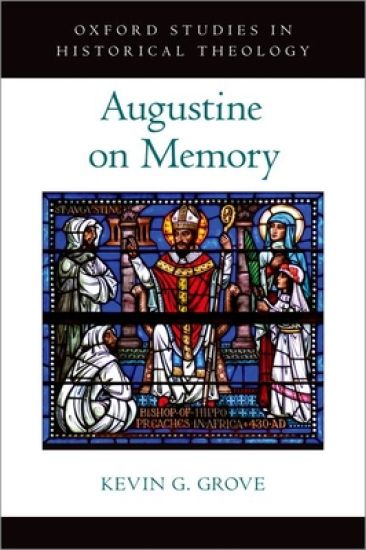
Augustine on Memory

Augustine on Memory

Kevin G. Grove

OXFORD UNIVERSITY PRESS INC
2021
sidottu
Augustine of Hippo, indisputably one of the most important figures for the study of memory, is credited with establishing memory as the inner source of selfhood and locus of the search for God. Yet, those who study memory in Augustine have never before taken into account his preaching. His sermons are the sources of memory's greatest development for Augustine. In Augustine's preaching, especially on the Psalms, the interior gives way to communal exterior. Both the self and search for God are re-established in a shared Christological identity and the communal labors of remembering and forgetting. This book opens with Augustine's early works and Confessions as the beginning of memory and concludes with Augustine's Trinity and preaching on Psalm 50 as the end of memory. The heart of the book, the work of memory, sets forth how ongoing remembering and forgetting in Christ are for Augustine are foundational to the life of grace. To that end, Augustine and his congregants go leaping in memory together, keep festival with abiding traces, and become forgetful runners like St. Paul. Remembering and forgetting in Christ, the ongoing work of memory, prove for Augustine to be actions of reconciliation of the distended experiences of human life-of praising and groaning, labouring and resting, solitude and communion. Augustine on Memory presents this new communal and Christological paradigm not only for Augustinian studies, but also for theologians, philosophers, ethicists, and interdisciplinary scholars of memory.
Augustine on the Will

Augustine on the Will

Han-luen Kantzer Komline

OXFORD UNIVERSITY PRESS INC
2023
nidottu
This book provides a framework for Augustine's understanding of will, an aspect of his thought that has proven to be both essential and inscrutable. On the one hand, the Augustinian will is everywhere. It comes up constantly both in Augustine's thought and in the massive literature engaging it. The will is impossible to avoid in almost any treatment of any aspect of his thinking, whether theological, philosophical, psychological, or political, because it is at the heart of his understanding of the human person and therefore vital to his understanding of such diverse topics as grace, freedom, the image of God, and moral responsibility. On the other hand, Augustine's understanding of the will resists direct examination. With the exception of an early treatise on free choice, Augustine never devoted a work to exploring the will in a programmatic way. Likewise, while the Augustinian will is constantly invoked in secondary literature, it rarely receives analysis in its own right. Han-luen Kantzer Komline demonstrates that Augustine's view is "theologically differentiated," comprising four distinct types of human will, which correspond to four different theological scenarios. Augustine's innovation consists in distinguishing these types with a detail and clarity unprecedented by any thinker before him. This account of the Augustinian will gives a comprehensive picture of the development and mature shape of Augustine's thinking on this vital yet perennially puzzling topic.
Augustine's City of God

Augustine's City of God

O'Daly Gerard

Clarendon Press
1999
sidottu
The City of God is the most influential of Augustine's works, which played a decisive role in the formation of the Christian West. This book is the first comprehensive modern guide to it in any language. The City of God's scope embodies cosmology, psychology, political thought, anti-pagan polemic, Christian apologetic, theory of history, biblical interpretation and apocalyptic themes. This book is, therefore, at once about a single masterpiece and at the same time surveys Augustine's developing views through the whole range of his thought. The book is written in the form of a detailed, running commentary on each part of the work. Further chapters elucidate the early fifth century political, social, historical, and literary background, the work's sources, and its place in Augustine's writings. The book should prove of value to Augustine's wide readership among students of late antiquity, theologians, philosophers, medievalists, Renaissance scholars, and historians of Art and iconography.
Augustine of Hippo and his Monastic Rule

Augustine of Hippo and his Monastic Rule

George Lawless

Clarendon Press
1990
nidottu
* With a Latin text and a facing-page translation of the Rule, Regulations for a Monastery, and Letter 211 The Rule of Augustine, very likely the oldest monastic rule with western origins, provides daily inspiration for more than 150 Christian communities. In giving an account of Augustine's distinctive contributions to the monastic spirituality of the late Roman world, and in particular of his achievement as a monastic legislator, Augustine of Hippo and his Monastic Rule fills a long-standing gap in Augustinian studies.
Augustine's Way into the Will

Augustine's Way into the Will

Simon Harrison

Oxford University Press
2006
sidottu
Augustine's dialogue De libero arbitrio (On Free Choice) is, with his Confessions and City of God, one of his most important and widely read works. It contains one of the earliest accounts of the concept of 'free will' in the history of philosophy. Composed during a key period in Augustine's early career, between his conversion to Christianity and his ordination as a bishop, it has often been viewed as a an incoherent mixture of his 'early' and 'late' thinking. Simon Harrison offers an original account of Augustine's theory of will, taking seriously both the philosophical arguments and literary form of the text. Relating De libero arbitrio to other key texts of Augustine's, in particular the City of God and the Confessions, Harrison shows that Augustine approaches the problem of free will as a problem of knowledge: how do I know that I am free?, and that Augustine uses the dialogue form to instantiate his 'way into the will'.
Augustine

Augustine

Carol Harrison

Oxford University Press
2000
nidottu
St. Augustine, the North African bishop of Hippo (AD 354-430), has been much studied. But there has been no systematic attempt to consider the context which shaped his life and thought. Augustine's long and controversial career and his vast literary output provide unrivalled evidence for understanding the diverse ways in which Christianity confronted, assimilated, and finally transformed the traditional society of late antiquity. This book sets Augustine in his cultural and social context showing how, as a Christian, he came to terms with the philosophical and rhetorical ideals of classical culture, and, as a bishop, with the ecclesiastical, ascetic, and political structures of late antique society. According to Augustine, the Fall of man and Original sin fracture and vitiate mankind's ability to know or to will the good. This is revealed as the keystone of his theology, effecting a decisive break with classical ideals of perfection and shaping the distinctive theology of Western Christendom.
Augustine

Augustine

Carol Harrison

Oxford University Press
2000
sidottu
St. Augustine, the North African bishop of Hippo (AD 354-430), has been much studied. But there has been no systematic attempt to consider the context which shaped his life and thought. Augustine's long and controversial career and his vast literary output provide unrivalled evidence for understanding the diverse ways in which Christianity confronted, assimilated, and finally transformed the traditional society of late antiquity. This book sets Augustine in his cultural and social context showing how, as a Christian, he came to terms with the philosophical and rhetorical ideals of classical culture, and, as a bishop, with the ecclesiastical, ascetic, and political structures of late antique society. According to Augustine, the Fall of man and Original sin fracture and vitiate mankind's ability to know or to will the good. This is revealed as the keystone of his theology, effecting a decisive break with classical ideals of perfection and shaping the distinctive theology of Western Christendom.
Augustine's Early Thought on the Redemptive Function of Divine Judgement
Augustine's Early Thought on the Redemptive Function of Divine Judgement considers the relationship between Augustine's account of God's judgment and his theology of grace in his early works. How does God use his law and the penal consequences of its transgression in the service of his grace, both personally and through his 'agents' on earth? Augustine reflected on this question from different perspectives. As a teacher and bishop, he thought about the nature of discipline and punishment in the education of his pupils, brothers, and congregants. As a polemicist against the Manichaeans and as a biblical expositor, he had to grapple with issues regarding God's relationship to evil in the world, the violence God displays in the Old Testament, and in the death of his own Son. Furthermore, Augustine meditated on the way God's judgment and grace related in his own life, both before and after his conversion. Bart van Egmond follows the development of Augustine's early thought on judgment and grace from the Cassiacum writings to the Confessions. The argument is contextualized both against the background of the earlier Christian tradition of reflection on the providential function of divine chastisement, and the tradition of psychagogy that Augustine inherited from a variety of rhetorical and philosophical sources. This study expertly contributes to the ongoing scholarly discussion on the development of Augustine's doctrine of grace, and to the conversation on the theological roots of his justification of coercion against the Donatists.
Augustine's City of God

Augustine's City of God

Gerard O'Daly

Oxford University Press
2020
nidottu
The most influential of Augustine's works, City of God played a decisive role in the formation of the Christian West. Augustine wrote City of God in the aftermath of the Gothic sack of Rome in AD 410, at a time of rapid Christianization across the Roman Empire. Gerard O'Daly's book remains the most comprehensive modern guide in any language to this seminal work of European literature. In this new and extensively revised edition, O'Daly takes into account the abundant scholarship on Augustine in the twenty years since its first publication, while retaining the book's focus on Augustine as a writer in the Latin tradition. He explores the many themes of City of God, which include cosmology, political thought, anti-pagan polemic, Christian apologetic, theory of history, and biblical interpretation. This guide, therefore, is about a single literary masterpiece, yet at the same time it surveys Augustine's developing views through the whole range of his thought. As well as a running commentary on each part of the work, O'Daly provides chapters on the themes of the work, a bibliographical guide to research on its reception, translations of any Greek and Latin texts discussed, and detailed suggestions for further reading.
Augustine and the Disciplines

Augustine and the Disciplines

Oxford University Press
2007
nidottu
Augustine and the Disciplines takes its cue from Augustine's theory of the liberal arts to explore the larger question of how the Bible became the focus of medieval culture in the West. Augustine himself became increasingly aware that an ambivalent attitude towards knowledge and learning was inherent in Christianity. By facing the intellectual challenge posed by this tension he arrived at a new theory of how to interpret the Bible correctly. The topics investigated here include: Augustine's changing relationship with the 'disciplines', as he moved from an attempt at their Christianization (in the philosophical dialogues of Cassiciacum) to a radical reshaping of them within a Christian world-view (in the De Doctrina Christiana and Confessiones); the factors that prompted and facilitated his change of perspective; and the ways in which Augustine's evolving theory reflected contemporary trends in Christian pedagogy.
Augustine's Commentary on Galatians

Augustine's Commentary on Galatians

Eric Plumer

Oxford University Press
2003
sidottu
Augustine's 'Commentary on Galatians' is his only complete, formal commentary on any book of the Bible and offers unique insights into his understanding of Paul and of his own task as a biblical interpreter. In addition to an English translation with facing Latin text, Eric Plumer provides a comprehensive introduction and copious notes.