

Kirjahaku
Etsi kirjoja tekijän nimen, kirjan nimen tai ISBN:n perusteella.
1000 tulosta hakusanalla Barry M. Shapiro
Med en autismediagnose folger ofte bekymring og forvirring. Ligesom alle andre foraeldre onsker foraeldre til born med autisme kun det allerbedste for deres born, men da de kaemper mod en udviklingsforstyrrelse, de ikke forstar, ved de ikke, hvad de skal gore. Maske begynder de at opfatte deres barn som radikalt anderledes, og alt i barnets adfaerd tolkes som 'autismetraek'. De tvivler pa deres egne evner som foraeldre og glemmer helt at grave lidt dybere i barnets adfaerd og stille det simple sporgsmal: 'Hvorfor gor hun sadan' Barry M. Prizant opsummerer i Det unikke menneske mere end 40 ars forskning og arbejde med mennesker med autisme. Hans konklusion er: Der er ikke noget, der hedder autistisk adfaerd. Der er tale om menneskelige adfaerdsmonstre og menneskelige reaktioner, baseret pa en persons oplevelse. Den adfaerd, man ser hos mennesker med autisme, er ikke tilfaeldig, afvigende eller bizar, den er tvaertimod bade legitim og funktionel. Adfaerden - hvor belastende og stressende den end kan vaere - er en strategi til at handtere, tilpasse sig, kommunikere med og magte en verden, der foles overvaeldende og skraemmende. Denne bog er en handsraekning til de parorende og professionelle, som er taettest pa, og dens budskab er dette: Hvis vi for alvor skal hjaelpe en person med autisme med at fa det bedre, sa skal vi aendre os selv - vores holdninger, vores adfaerd og vores hjaelp og stotte.



Living Wisely-For Millennials & Beyond by psychologist Barry M. Cohen explores the essential life skills that millennials beginning their journeys through life-as well as all the rest of us-need to live wisely and well throughout our lives. Reflecting Dr. Cohen's decades-long experiences as a consulting psychologist to healthy corporate populations, the skills covered in Living Wisely are timeless and apply to all generations. This guide approaches these skills from the perspectives and experiences of millennials living in the twenty-first century. Ironically, it has never been more important than it is today to develop the skills of resourcefulness, motivation, resilience, leadership, savvy financial habits, smart aging, self-fulfillment, and more.Living Wisely-For Millennials & Beyond also helps readers self-assess the crucial personal skills that lead to accomplished lives. This much-needed introspective search begins when young millennials are most vulnerable and making critical decisions such as choosing a lifelong partner, establishing a career, and making financial plans. These critical decisions typically extend into their middle and retirement years. Throughout the book, scientific research and contributions from psychology, medicine, and renowned life coaches validate each skill and illustrate how it contributes to well-being. All those seeking to gain healthy life habits for self-improvement will find the book an invaluable resource-especially parents of millennials who wish to wisely guide their young adults through the hurdles they face. While no one moves through life unscathed, Living Wisely offers an informative and encouraging roadmap for growing up and flourishing.
This cross-disciplinary reference offers a thorough overview of the communication, language, social, and behavioral issues characteristic of autism spectrum disorders (ASD). Based on meticulous research of the core areas of ASD - communication, socialization, emotional regulation, and symbolic development - the authors offer practical guidelines for intervention designed for children with autism and their families. In this comprehensive book, speech-language pathologists, clinicians, early interventionists, psychologists, and educators learn how to: understand and address the social and communication challenges experienced by children with autism; enhance assessment and intervention methods; and support families in their efforts to facilitate their children's development. Chapters in this volume, written by leading clinical and research authorities in ASD, will allow readers to understand the principles and philosophies behind clinical and educational practices implemented with children with autism. Readers will also encounter guidelines to use when making critical assessment and intervention decisions to create more natural, child-centered supports. All professionals will learn how to improve their educational and developmental supports for young children with autism.
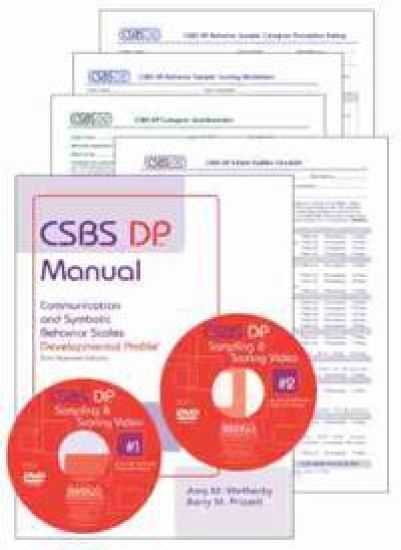
The CSBS DP™ Test Kit contains the testing and scoring materials for the Communication and Symbolic Behavior Scales Developmental Profile (CSBS DP™), an easy-to-use, norm-referenced screening and evaluation tool that measures the communicative competence (use of eye gaze, gestures, sounds, words, understanding, and play) of children with a functional communication age of 6 to 24 months and a chronological age of 6 months to 6 years.Derived from the popular, norm-referenced CSBS™, CSBS DP™ is shorter and faster and lets early intervention professionals begin identification earlier. CSBS DP™ is an ideal starting point for planning IFSPs, determining the efficacy of interventions, documenting changes in a child's behavior over time, and identifying areas for further assessment. The CSBS DP™ Test Kit includes:Infant-Toddler Checklist: In 5–10 minutes, caregivers answer 24 multiple-choice questions grouped into seven language predictor clusters: Emotion and Eye Gaze, Communication, Gestures, Sounds, Words, Understanding, and Object Use. Then, a professional combines the clusters to yield scores in three composite categories: social, speech, and symbolic. The Checklist can also be used to monitor development every 3 months between the ages of 6 and 24 months.Caregiver Questionnaire: If the Checklist indicates a need for further evaluation, caregivers complete this easy-to-read four-page questionnaire, which measures in more detail the same seven clusters. It takes approximately 15–25 minutes and is designed to be given or mailed to the caregiver before the child is brought in for the Behavior Sample.Behavior Sample: This face-to-face sampling procedure takes 30 minutes to conduct and simultaneously score. Professionals lead a brief warm-up with the child and then sample behavior in various contexts: communicative temptations, book sharing, symbolic play probes, language comprehension probes, and constructive play probes. The Behavior Sample measures 20 scales that comprise the social, speech, and symbolic composites, and professionals record the presence or absence of 20 types of behavior on a scoring worksheet.Caregiver Perception Rating: This one-page form asks caregivers to compare the child's behavior during the assessment to the child's typical behavior.CSBS DP™ Manual: The Manual includes instructions for administering and scoring the profile, technical data on standardization and norming, and guidelines for interpreting a child's CSBS DP™ for screening and evaluation.Instructional Videos: These two videos demonstrate how to collect a Behavior Sample and complete the scoring worksheets as well as explain key developmental terms.
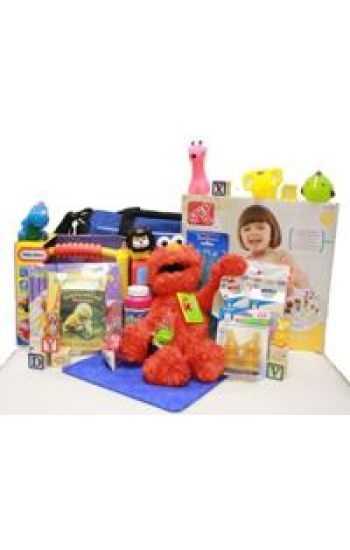
The CSBS DP™ Test Kit contains the testing and scoring materials for the Communication and Symbolic Behavior Scales Developmental Profile (CSBS DP™), an easy-to-use, norm-referenced screening and evaluation tool that measures the communicative competence (use of eye gaze, gestures, sounds, words, understanding, and play) of children with a functional communication age of 6 to 24 months and a chronological age of 6 months to 6 years. Derived from the popular, norm-referenced CSBS™, CSBS DP™ is shorter and faster and lets early intervention professionals begin identification earlier. CSBS DP™ is an ideal starting point for planning IFSPs, determining the efficacy of inteventions, documenting changes in a child's behavior over time, and identifying areas for further assessment.Available separately or as part of the CSBS DP™ Complete Kit is the CSBS DP™ Toy Kit. It contains the familiar, action-based play materials used to entice spontaneous communication during the Behavior Sample. (Owners of CSBS™: All the toys needed to implement CSBS DP™ are included in the CSBS™ Toy Kit.)This toy kit is part of CSBS DP™, an easy-to-use, norm-referenced screening and evaluation tool that helps determine the communicative competence (use of eye gaze, gestures, sounds, words, understanding, and play) of young children. CSBS DP is an ideal starting point for IFSP planning and can be used as a guide to indicate areas that need further assessment.
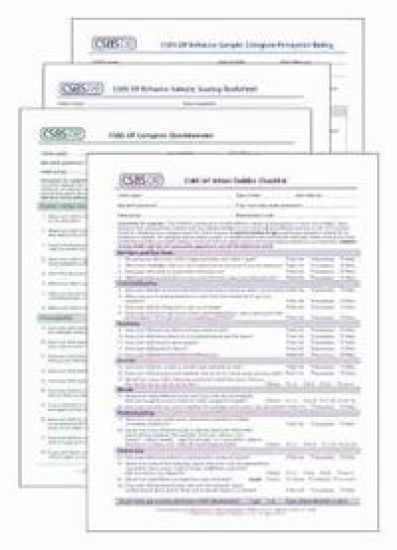
The CSBS DP™ Record Forms, sold in packages for easy re-ordering, are assessment forms for the Communication and Symbolic Behavior Scales Developmental Profile (CSBS DP™), an easy-to-use, norm-referenced screening and evaluation tool that measures the communicative competence of children with a functional communication age of 6 to 24 months and a chronological age of 6 months to 6 years.Derived from the popular, norm-referenced CSBS™, CSBS DP™ is shorter and faster and lets early intervention professionals begin identification earlier. CSBS DP™ is an ideal starting point for planning IFSPs, determining the efficacy of inteventions, documenting changes in a child's behavior over time, and identifying areas for further assessment.A package of CSBS DP™ Record Forms includes:2 Outline Cards20 Infant-Toddler Checklists: In 5–10 minutes, caregivers answer 24 multiple-choice questions grouped into seven language predictor clusters: Emotion and Eye Gaze, Communication, Gestures, Sounds, Words, Understanding, and Object Use. Then, a professional combines the clusters to yield scores in three composite categories: social, speech, and symbolic. The Checklist can also be used to monitor development every 3 months between the ages of 6 and 24 months.20 1-page copies of the CSBS DP™ Infant-Toddler Checklist: Screening Reports20 Caregiver Questionnaires: If the Checklist indicates a need for further evaluation, caregivers complete this easy-to-read four-page questionnaire, which measures in more detail the same seven clusters. It takes approximately 15–25 minutes and is designed to be given or mailed to the caregiver before the child is brought in for the Behavior Sample.20 Caregiver Questionnaire: Scoring WorksheetBehavior Sample: Caregiver Perception RatingAvailable separately or as part of the CSBS DP™ Complete Kit are the other materials required to conduct a CSBS DP™ assessment.These forms are part of CSBS DP™, an easy-to-use, norm-referenced screening and evaluation tool that helps determine the communicative competence (use of eye gaze, gestures, sounds, words, understanding, and play) of young children. CSBS DP is an ideal starting point for IFSP planning and can be used as a guide to indicate areas that need further assessment.This product is sold in a package of 102.
This helpful manual guide professionals through the process of administering, scoring, and interpreting the Communication and Symbolic Behavior Scales Developmental Profile (CSBS DP™), an easy-to-use, norm-referenced screening and evaluation tool that measures the communicative competence of children with a functional communication age of 6 to 24 months and a chronological age of 6 months to 6 years. The manual includes:- Information on how and why CSBS DP™ was developed and refineddetailed, step-by-step instructions on how to administer and score each part of CSBS DP™: the Infant-Toddler Checklist, the Caregiver Questionnaire, and the Behavior Sample.- A chapter on the technical characteristics of CSBS DP™, including standardization, reliability, and validity.- Helpful tips on putting caregivers at ease and encouraging the most communication from very young children.- An extensive companion to the CSBS DP™ tutorial videotapes, including completed Behavior Samples for the six children shown and comments on the sampling and scoring decisions on the forms.- Guidelines, case studies, and sample letters to parents that help professionals interpret and report the results of CSBS DP™.With the clear instructions in this manual—reinforced by practical tips, charts, case studies, and scoring practice—professionals will use CSBS DP™ accurately and confidently with the children and families they serve.Available separately or as part of the CSBS DP™ Complete Kit are the other materials required to conduct a CSBS DP™ assessment.This manual is part of CSBS DP™, an easy-to-use, norm-referenced screening and evaluation tool that helps determine the communicative competence (use of eye gaze, gestures, sounds, words, understanding, and play) of young children. CSBS DP is an ideal starting point for IFSP planning and can be used as a guide to indicate areas that need further assessment.

The CSBS™ Test Kit contains the testing and scoring materials for the Communication and Symbolic Behavior Scales (CSBS™), one of the best measures of early communication in children 8–24 months (or up to 72 months if developmental delays are present).The norm-referenced, standardized CSBS™ uses parent interviews and naturalistic sampling procedures to collect crucial information — not just on language skills but also on often-overlooked communicative behaviors like communicative functions, gestures, rate of communicating, positive effect, and gaze shifts. CSBS™ takes just 50–75 minutes for child assessment and 60–75 minutes for in-depth scoring. Backed by technical data, CSBS™ is compatible with most developmental curricula in use today.The CSBS™ Test Kit includes:Caregiver Questionnaire: Caregivers complete this 15-minute qualitative questionnaire to provide background information. Their responses provide a baseline that helps professionals evaluate a child's performance.Behavior Sample: After the questionnaire is complete, professionals trained to assess developmentally young children conduct the videotaped Behavior Sample as the caregiver interacts with the child using a naturalistic sampling procedure. The sampling procedure uses communicative temptations, book sharing, symbolic play, language comprehension probes, and constructive play. Later, professionals use the Behavior Sample Record Form to convert results to scores on 22 five-point scales, organized in seven clusters: Communicative Function, Communicative Means — Gestural, Communicative Means — Vocal, Communicative Means — Verbal, Reciprocity, Social-Affective Signaling, and Symbolic Behavior. This yields raw scores and scaled scores for the 22 scales, percentile ranks and standard scores for the seven clusters, a percentile rank and standard overall composite score, and norms by chronological age or language stage.CSBS™ Manual: The manual includes technical data about CSBS™, plus instructions on how to administer the questionnaire and sampling procedures, plan interventions, analyze the videotaped behavior samples, and score and interpret the assessment.Outline Cards: These two reference cards outline sampling procedures step by step and give directions for scoring.Instructional Videos: These two videos demonstrate how to collect a behavior sample and convert the information into scores using the five-point scales.Available separately or as part of the CSBS™ Complete Kit is the CSBS™ Toy Kit. It contains the familiar, action-based play materials used to entice spontaneous behavior during the Behavior Sample.This test kit is part of CSBS™ a norm-referenced, standardized tool that uses parent interview and direct observation to assess infants, toddlers, and preschoolers at risk for communication delays and impairments. With 22 rating scales that accurately survey children's language skills and symbolic development, CSBS is backed by technical data and compatible with most developmental curricula in use today.

The CSBS™ Toy Kit contains play materials for enticing young children's spontaneous behavior and is part of the Communication and Symbolic Behavior Scales (CSBS™), one of the best measures of early communication in children 8–24 months (or up to 72 months if developmental delays are present).The norm-referenced, standardized CSBS™ uses parent interviews and naturalistic sampling procedures to collect crucial information—not just on language skills but also on often-overlooked communicative behaviors like communicative functions, gestures, rate of communicating, positive affect, and gaze shifts. CSBS™ takes just 50–75 minutes for child assessment and 60–75 minutes for in-depth scoring. Backed by technical data, CSBS™ is compatible with most developmental curricula in use today.The CSBS™ Toy Kit includes familiar, action-based play materials and all of the toys needed to conduct an assessment. It also includes a convenient carrying bag.Available separately or as part of the CSBS™ Complete Kit is the CSBS™ Test Kit. It contains the testing and scoring materials required for administering CSBS™.This kit is part of CSBS™ a norm-referenced, standardized tool that uses parent interview and direct observation to assess infants, toddlers, and preschoolers at risk for communication delays and impairments. With 22 rating scales that accurately survey children's language skills and symbolic development, CSBS is backed by technical data and compatible with most developmental curricula in use today.

CSBS DP™ Caregiver Questionnaires
Amy M. Wetherby; Barry M. Prizant
Brookes Publishing Co
2002
irtolehti
The CSBS DP™ Caregiver Questionnaires, sold in packages for easy re-ordering, are forms for the Communication and Symbolic Behavior Scales Developmental Profile (CSBS DP™), an easy-to-use, norm-referenced screening and evaluation tool that measures the communicative competence of children with a functional communication age of 6 to 24 months and a chronological age of 6 months to 6 years.Derived from the popular, norm-referenced CSBS™, CSBS DP™ is shorter and faster and lets early intervention professionals begin identification earlier. CSBS DP™ is an ideal starting point for planning IFSPs, determining the efficacy of inteventions, documenting changes in a child's behavior over time, and identifying areas for further assessment.A package of CSBS DP™ Caregiver Questionnaires includes 50 of these easy-to-read four-page questionnaires, which are used when the initial screening indicates a need for further evaluation. It takes approximately 15–25 minutes and is designed to be given or mailed to the caregiver before the child is brought in for the CSBS DP™ Behavior Sample.Available separately or as part of the CSBS DP™ Complete Kit are the other materials required to conduct a CSBS DP™ assessment.These forms are part of CSBS DP™, an easy-to-use, norm-referenced screening and evaluation tool that helps determine the communicative competence (use of eye gaze, gestures, sounds, words, understanding, and play) of young children. CSBS DP is an ideal starting point for IFSP planning and can be used as a guide to indicate areas that need further assessment.This product is sold in a package of 50.

CSBS™ Record Forms and Caregiver Questionnaires
Amy M. Wetherby; Barry M. Prizant
BROOKES PUBLISHING CO
2003
irtolehti
The CSBS™ Record Forms and Caregiver Questionnaires, sold in packages for easy re-ordering, are assessment forms for the Communication and Symbolic Behavior Scales (CSBS™), one of the best measures of early communication in children 8–24 months (or up to 72 months if developmental delays are present).The norm-referenced, standardized CSBS™ uses parent interviews and naturalistic sampling procedures to collect crucial information — not just on language skills but also on often-overlooked communicative behaviors like communicative functions, gestures, rate of communicating, positive affect, and gaze shifts. CSBS™ takes just 50–75 minutes for child assessment and 60–75 minutes for in-depth scoring. Backed by technical data, CSBS™ is compatible with most developmental curricula in use today.A package of CSBS™ Record Forms and Caregiver Quesionnaires includes:25 Caregiver Questionnaires: Caregivers complete this 15-minute qualitative questionnaire to provide background information. Their responses provide a baseline that helps professionals evaluate a child's performance.25 Behavior Sample Record Forms: Data from the CSBS™ behavior sample is tallied on this form and converted to scores on 22 five-point scales.2 Outline Cards: These reference cards outline sampling procedures step by step and give directions for scoring.Available separately or as part of the CSBS™ Complete Kit are the other materials required to conduct a CSBS™ assessment. These forms are part of CSBS™, a norm-referenced, standardized tool that uses parent interview and direct observation to assess infants, toddlers, and preschoolers at risk for communication delays and impairments. With 22 rating scales that accurately survey children's language skills and symbolic development, CSBS is backed by technical data and compatible with most developmental curricula in use today.This product is sold in a package of 25.

The Communication and Symbolic Behavior Scales Developmental Profile (CSBS DP) is an easy-to-use, norm-referenced screening and evaluation tool that helps determine the communicative competence (use of eye gaze, gestures, sounds, words, understanding, and play) of children with a functional communication age between 6 months and 24 months (chronological age from about 6 months to 6 years). The CSBS DP Complete Kit, First Normed Edition (Test Kit Toy Kit) comprises: CSBS DP Manual, First Normed Edition (with norming tables); 25 1-page CSBS DP Infant-Toddler Checklists; 25 4-page CSBS DP Caregiver Questionnaires; 25 Caregiver Rating Perception forms; the CSBS DP Behavior Sample (including 25 1-page double-sided copies of the CSBS DP Worksheet for Rating Behaviors, and the Sampling and Scoring Videos; and the CSBS Toy Kit and materials for test administration.

Cultural History and Education
Thomas Popkewitz; Barry M. Franklin; Miguel Pereyra
Routledge
2001
sidottu
Cultural History and Education brings together an outstanding group of the leading scholars in the study of the cultural history of education. These scholars, whose work represents a variety of national contexts from throughout Europe, Latin America, and North America, contribute to a growing body of work that seeks to re-think historical studies in education.

Cultural History and Education
Thomas Popkewitz; Barry M. Franklin; Miguel Pereyra
Routledge
2001
nidottu
Cultural History and Education brings together an outstanding group of the leading scholars in the study of the cultural history of education. These scholars, whose work represents a variety of national contexts from throughout Europe, Latin America, and North America, contribute to a growing body of work that seeks to re-think historical studies in education.
Perspectives on Literacy
Eugene Kintgen; Barry M. Kroll; Mike Rose
Southern Illinois University Press
1988
nidottu
The 28 essays reprinted here are arranged in four sections that offer theoretical, historical, educational, and community perspectives on the whole topic of literacy. In addition to their substantial introduction, the editors provide an exhaustive bibliography based on the citations to the essays.Kintgen, Kroll, and Rose see literacy as an extremely complex area of inquiry in which all aspects are interrelated, and they hope to avoid creating or perpetuating false boundaries within the field.The book's first section contains articles dealing with various psychological and economic consequences of literacy. The second provides an introduction to the development of literacy in different eras of the West, from its inception among the Greeks to the teaching of it in North America during the past century. The third section treats the teaching of literacy in educational institutions, primarily at the secondary and post-secondary levels. The final section discusses literacy outside the traditional classroom: the development of literacy among children and adults, the functions and uses of literacy in the workplace and elsewhere, and the identity and problems of those who have not mastered literacy skills.

Disabled & Challenged: Reach for your Dreams!
Terry Scott Cohen; Barry M. Cohen
WishingUwellPublishing
2020
nidottu
Terry Cohen, a young adult with Myotonic Dystrophy never wrote a book, and then after graduating from high school, he decided to write one dedicated to all young people with progressive disabilities and seeking a full life.Terry writes-- he has a disability and disease inherited from his mom, and must face it every day of his life. As a teen, he struggled the most, and then it hit him-- "My disability isn't in charge of my life. I am."It was up to Terry to make his life worthwhile, despite all his problems.Here are just a few of the skills he writes about: --Getting doctors to stop talking over your head and scaring you--Finding healthcare buddies who really care about you, not just treating your disability--Making good friends--What to do when people don't give you a chance or expect next to nothing from you--Having fun; enjoying your life despite your limitations--Achieving the goals you set for yourself--Living the life you want

Barry Goldwater was a defining figure in American public life, a firebrand politician associated with an optimistic brand of conservatism. In an era in which American conservatism has lost his way, his legacy is more important than ever. For over 50 years, in those moments when he was away from the political fray, Senator Goldwater kept a private journal, recording his reflections on a rich political and personal life. Here bestselling author John Dean combines analysis with Goldwater's own words. With unprecedented access to his correspondence, interviews, and behind-the-scenes conversations, Dean sheds new light on this political figure. From the late Senator's honest thoughts on Richard Nixon to his growing discomfort with the rise of the extreme right, Pure Goldwater offers a revelatory look at an American icon - and also reminds us of a more hopeful alternative to the dispiriting political landscape of today.