Kindergarten workbook are a wonderful learning tool for educators and students to use. Kids can build foundational math skills by completing these fun activities. Students can count 1 -20, color, paste cut images, write missing numbers, match numbers with the number of objects,
Dance Sport Ballet Ballerinas Attitude Ballet hall rules Cambr Fondu Glissade, basic positions, pass , pench , pirouettes en dehors, pli . Ballet Gift - Born To Dance - Forced To School - Secret Notes
Praised for its clear writing style and logical organization, Basic Biomechanics provides a sound introduction to human biomechanics for students in kinesiology and allied health fields. The mechanical aspects of human movement and applied anatomy are explained with examples of relevant sport, clinical, and daily living applications. In each successive edition, many of these examples are taken from hot topics in the current biomechanics research literature. The quantitative aspects of biomechanics are presented in a manageable, progressive fashion. In the first chapter, students are given a structured template along with practical advice for approaching and solving both qualitative and quantitative problems. The quantitative and qualitative concepts are reinforced with sets of introductory problems and more advanced problems, along with laboratory exercises.
Praised for its clear writing style and logical organization, Basic Biomechanics provides a sound introduction to human biomechanics for students in kinesiology and allied health fields. The mechanical aspects of human movement and applied anatomy are explained with examples of relevant sport, clinical, and daily living applications. In each successive edition, many of these examples are taken from hot topics in the current biomechanics research literature. The quantitative aspects of biomechanics are presented in a manageable, progressive fashion. In the first chapter, students are given a structured template along with practical advice for approaching and solving both qualitative and quantitative problems. The quantitative and qualitative concepts are reinforced with sets of introductory problems and more advanced problems, along with laboratory exercises. The 9th edition features updated illustrations and coverage of numerous new topics.
Is running barefoot beneficial? What is the most mechanically efficient way to move a piece of heavy furniture? Can stretching before a competition worsen performance? How do cats always land on their feet? The answers to these questions are all based on the science of biomechanics. In Basic Biomechanics, Eighth Edition, the focus is on the anatomy and movement capabilities of the human body, explained with examples of relevant sport, clinical, and daily living applications. The quantitative aspects of biomechanics are presented in a manageable, progressive fashion, using a structured and problem-based format with practical advice. This edition also retains the important sensitivity to the fact that some beginning students of biomechanics possess weak backgrounds in mathematics. For this reason, it includes numerous sample problems and applications, along with practical advice on approaching quantitative problems.With balanced, integrated coverage of applied anatomy, mechanical principles, and relevant sport and daily living applications, this text introduces you to the basics of biomechanics. The quantitative aspects of biomechanics are presented in a manageable, progressive fashion, with practical advice on approaching both qualitative and quantitative problems in biomechanics.Instructors and students can now access their course content through the Connect digital learning platform by purchasing either standalone Connect access or a bundle of print and Connect access. McGraw-Hill Connect® is a subscription-based learning service accessible online through your personal computer or tablet. Choose this option if your instructor will require Connect to be used in the course. Your subscription to Connect includes the following:SmartBook® - an adaptive digital version of the course textbook that personalizes your reading experience based on how well you are learning the content.Access to your instructor’s homework assignments, quizzes, syllabus, notes, reminders, and other important files for the course.Progress dashboards that quickly show how you are performing on your assignments and tips for improvement.The option to purchase (for a small fee) a print version of the book. This binder-ready, loose-leaf version includes free shipping.Complete system requirements to use Connect can be found here: http://www.mheducation.com/highered/platforms/connect/training-support-students.html
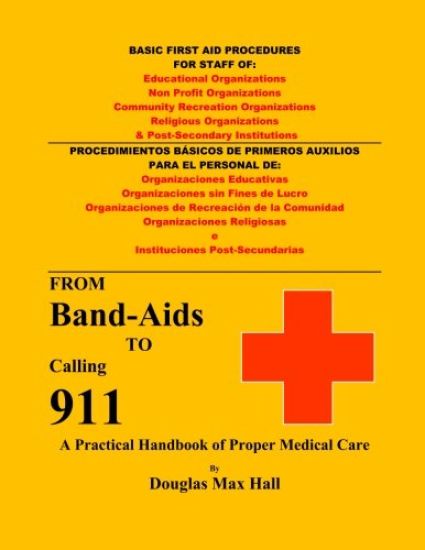
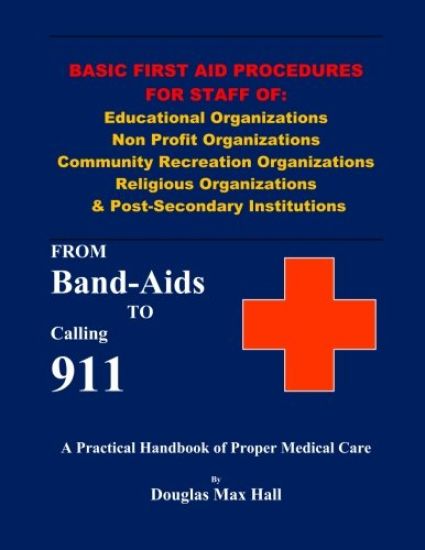
This book is the outcome of the author's decision to share his expertise with others, particularly those about to embark upon a career in recreational activities involving children. This manual is a practical handbook of proper medical care. In 35 years in Education and Community organizations, the author has observed most staff have stress and anxiety with student injuries and providing proper First Aid. It is an area most of the staff is very uncomfortable with and have had little or NO training or information provided. His goal is to provide a practical handbook that could be added to Staff Handbooks for ALL organizations involving activities and programs for individuals of all ages. Este libro es el resultado de la decisi n del autor para compartir su experiencia con otros usuarios, especialmente aquellos a punto de embarcarse en una carrera en actividades recreativas que involucran a ni os. Este manual es una gu a pr ctica de la atenci n m dica adecuada. En 35 a os en las organizaciones educativas e comunitarias, el autor ha observado que la mayor a del personal tienen estr s y la ansiedad con las lesiones de los estudiantes y la disponibilidad adecuada de primeros auxilios. Es un rea en la cual la mayor a del personal es muy inc modo por haber tenido poca o ninguna formaci n suministrada. Su objetivo es proporcionar un manual pr ctico que podr a a adirse a los manuales del personal en todas las organizaciones que implican actividades y programas para las personas de todas las edades.
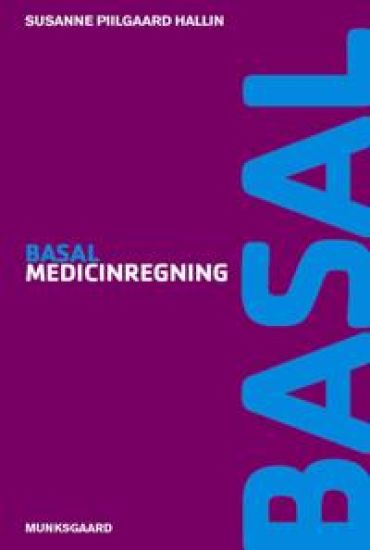
Hvor mange tabletter af et lægemiddel skal patienten have? I et letlæst sprog beskriver bogen grundlæggende regnefærdigheder og matematiske begreber, og den gennemgår alle de regnemetoder, som er nødvendige i forhold til medicinregning. Bogen giver et godt fundament for videre arbejde med medicinregningsopgaver og farmakologi.
House-Break Your Puppy in One WeekTraining puppies to obedience is a fundamental moment for those who love dogs. METHOD 1: TRADITIONAL DOG TRAINING METHOD 2: MODERN DOG TRAINING METHOD 3: BALANCED DOG TRAINING PUPPY BEHAVIORS AND WHAT THEY MEAN DETERMINE WHICH TRAINING TECHNIQUE IS RIGHT FOR YOU PUNISHMENT IN DOG TRAINING TECHNIQUES TO RELATE IN A POSITIVE WAY LEARN TO STOP AGGRESSIVE BEHAVIOR IN PUPPY Step by step instructions to stop your puppy biting COMMON COMMANDS USEFUL FOR TRAINING YOUR PUPPY Use Treats When Teaching Dog Commands STRATEGIES TO TEACH YOUR PUPPY HOW TO BEHAVE AT HOME WHEN LONELY POTTY TRAINING YOUR DOG The First Week of Potty Training Your Puppy The Second Week of Potty Training Your Puppy STRATEGIES FOR IMPROVING YOUR DOG BEHAVIOR TOWARDS OTHER DOG OR CATS PUPPY TRAINING TECHNIQUES HOW TO TRAIN ADULT DOGS
From English to Swedish 1 & 2 is a series of textbooks for English speaking students who would like to learn Swedish. The first book covers level A1 and the second book level A2 of the European CEFR-scale. Unlike most Swedish textbooks they provide vocabulary lists, grammar explanations, and text commentaries in English. To help the reader learn Swedish pronunciation, a series of videos linked to the first book is available on YouTube (see https://www.youtube.com/watch?v=mEQVgbDPZ4I). The texts of the two books tell the story of an American girl who comes as an exchange student to live in a Swedish family. She struggles to learn Swedish and adapt to Swedish culture, but in the process runs into a number of culture clashes, all based on the authors' real life experiences. Åke Daun, professor of ethnology from Stockholm University and a specialist in Swedish mentality, has examined the first book and describes the way it introduces Swedish mentality as "innovative and entertaining". To facilitate the student's learning the books take advantage of the close relationship between English and Swedish. Many of the words appearing in the texts are similar to their English counterparts. Having finished both books, the student will have acquired a vocabulary of slightly more than 1,500 words including 57 % of the 2,000 most frequent words of the Swedish language as defined by Språkbanken (the Language Bank), a data base published by the University of Gothenburg. In an appendix to book 1, the similarities between English and Swedish are explained from an historical point of view, and over 300 related words from different areas are presented. Each chapter in the books contains a short grammar section presenting essentials in Swedish morphology and syntax. All grammatical terms, except the most common ones, are explained. At the end of each book there is a grammar overview with definitions of concepts and references to relevant chapters. Each lesson includes a number of exercises, where students are encouraged to practice their newly gained grammar knowledge, repeat vocabulary, and answer questions in connection with the texts. As the students' vocabulary develops, the questions become increasingly open-ended in order to stimulate reflection and discussion in class. Furthermore, a number of songs with simple vocabulary are included, mainly children's songs by classic song-writers. Finally, each book contains answers to the exercises and a complete alphabetical glossary. Judgments about From English to Swedish 1: "I'm just learning Swedish, and this book is wonderful. The style & methodology are ideal. Highly recommend." (Amazon, USA) "A brilliant book. … The words and pronunciations are well explained with examples given. Common Swedish vocab is also used in lessons. Quite amazing that by lesson 2 (Lektion 2) I was understanding and translating simple paragraphs and answering questions in full sentences without much difficulty. The two books are a must buy for people looking to learn the Swedish language. … The second book is just as good as this one." (Amazon, England)
This book is the outcome of the author's decision to share his expertise with others, particularly those about to embark upon a career in School Administration. What GOOD Administrators Do to LEAD Great Schools is a practical handbook of proper medical care. In 35 years in Education, He has observed most staff have stress and anxiety with student injuries and providing proper First Aid. It is an area most of the staff is very uncomfortable with and have had little or NO training or information provided. His goal is to provide a practical handbook that could be added to the Parent or Teacher Handbook at ALL school sites. Este libro es el resultado de la decisi n del autor para compartir su experiencia con otros, particularmente aquellos a punto de embarcarse en una carrera en la administraci n de la escuela. Lo que hacen BUENOS Administradores Para Dirigir BUENAS Escuelas es un manual pr ctico de estrategias para el xito. En 35 a os en la educaci n, que he observado m s personal tiene estr s y ansiedad con las lesiones de los estudiantes y adecuada prestaci n de primeros auxilios adecuados. Es una zona m s del personal es muy inc moda por haber tenido poca o ninguna capacitaci n formaci n suministrada. Su objetivo es proporcionar un manual pr ctico que se podr a a adir al manual de padres y maestros en todas las escuelas.
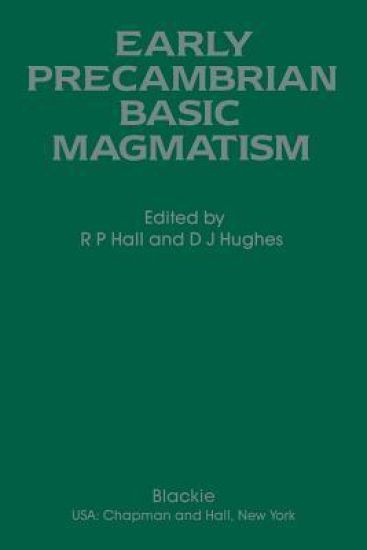
Basic magmatic rocks make up approximately three-quarters of the crust ofthe present day Earth. Because we can observe and study the volcanic products of present day tectonic regimes comprehensively, we can shed light on ancient tectono-magmatic provinces, and thereby deduce the petrogenesis and evolution of the oldest basic rocks. This is the primary objective of this book. The book was conceived in order to provide a comprehensive review of the basic rocks produced during the first half of the Precambrian, i.e. the Archaean and early Proterozoic, to about 1.8 Ga years ago. Two major questions are addressed. First, what basic magmas were generated during the early Precambrian: were these magmas globally uniform, and to what extent were prevailing tectonic controls and compo sitions analogous to those of the present day? Clearly, this can be answered only by bringing together fundamental information about all relevant basic magmatic events. Second, is there any systematic temporal variation in the nature of basic suites, and what implications might such variations have on our interpretations of early Earth history? Are there important differences between early Archaean, late Archaean, Proterozoic and modern basic magmatic suites? The book uses two approaches to address these questions. Early chapters examine the fundamental characteristics of these basic rocks, whilst later chapters assess regional distribution and development by providing an overview of each major early Precambrian craton.