
Kirjahaku
Etsi kirjoja tekijän nimen, kirjan nimen tai ISBN:n perusteella.
1000 tulosta hakusanalla Beam Alex

The Beam is a love story, centring round an old beam in Devon, the owner of the house containing the beam, and a woman marine researcher. Then, after a dramatic incident while together at sea, they finally set off to sail around the world...The beam in the house acts as a trigger for several other beams of various times and places, all linking the couple together. Beyond the Beam follows on directly from the earlier novel and explores the ongoing relationship of Hal and Amanda on their journey around the world in their junk rigged ketch "Kwan Yin". Amanda at last discovers the name of the old man who has haunted her visions and whom she now believes is the spirit of Hal and the Elizabethan sea captain.

Cone Beam Computed Tomography
CRC Press Inc
2014
sidottu
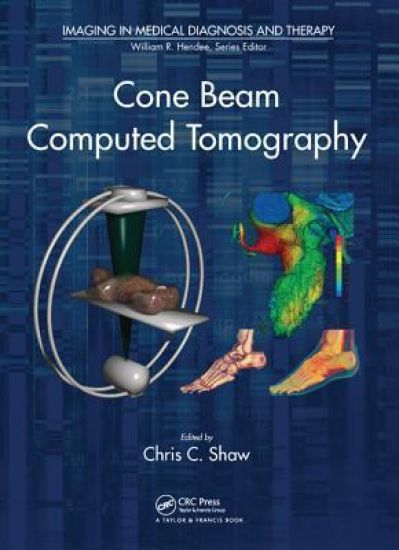
Conventional computed tomography (CT) techniques employ a narrow array of x-ray detectors and a fan-shaped x-ray beam to rotate around the patient to produce images of thin sections of the patient. Large sections of the body are covered by moving the patient into the rotating x-ray detector and x-ray source gantry. Cone beam CT is an alternative technique using a large area detector and cone-shaped x-ray beam to produce 3D images of a thick section of the body with one full angle (360 degree or 180 degree plus detector coverage) rotation. It finds applications in situations where bulky, conventional CT systems would interfere with clinical procedures or cannot be integrated with the primary treatments or imaging systems. Cone Beam Computed Tomography explores the past, present, and future state of medical x-ray imaging while explaining how cone beam CT, with its superior spatial resolution and compact configuration, is used in clinical applications and animal research. The book: Supplies a detailed introduction to cone beam CT, covering basic principles and applications as well as advanced techniquesExplores state-of-the-art research and future developments while examining the fundamental limitations of the technologyAddresses issues related to implementation and system characteristics, including image quality, artifacts, radiation dose, and perceptionReviews the historical development of medical x-ray imaging, from conventional CT techniques to volumetric 3D imagingDiscusses the major components of cone beam CT: image acquisition, reconstruction, processing, and displayA reference work for scientists, engineers, students, and imaging professionals, Cone Beam Computed Tomography provides a solid understanding of the theory and implementation of this revolutionary technology.

Ion Beam Analysis: Fundamentals and Applications explains the basic characteristics of ion beams as applied to the analysis of materials, as well as ion beam analysis (IBA) of art/archaeological objects. It focuses on the fundamentals and applications of ion beam methods of materials characterization.The book explains how ions interact with solids and describes what information can be gained. It starts by covering the fundamentals of ion beam analysis, including kinematics, ion stopping, Rutherford backscattering, channeling, elastic recoil detection, particle induced x-ray emission, and nuclear reaction analysis. The second part turns to applications, looking at the broad range of potential uses in thin film reactions, ion implantation, nuclear energy, biology, and art/archaeology. Examines classical collision theoryDetails the fundamentals of five specific ion beam analysis techniquesIllustrates specific applications, including biomedicine and thin film analysisProvides examples of ion beam analysis in traditional and emerging research fields Supplying readers with the means to understand the benefits and limitations of IBA, the book offers practical information that users can immediately apply to their own work. It covers the broad range of current and emerging applications in materials science, physics, art, archaeology, and biology. It also includes a chapter on computer applications of IBA.
Laser Beam Propagation in Nonlinear Optical Media
CRC Press Inc
2013
sidottu
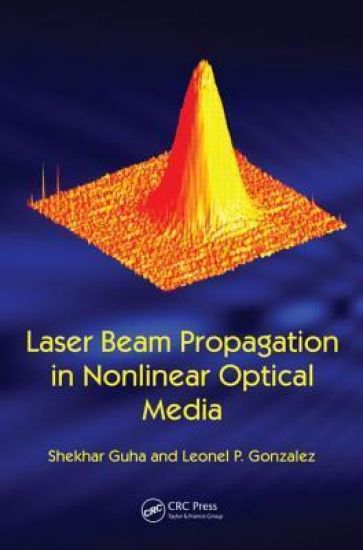
"This is very unique and promises to be an extremely useful guide to a host of workers in the field. They have given a generalized presentation likely to cover most if not all situations to be encountered in the laboratory, yet also highlight several specific examples that clearly illustrate the methods. They have provided an admirable contribution to the community. If someone makes their living by designing lasers, optical parametric oscillators or other devices employing nonlinear crystals, or designing experiments incorporating laser beam propagation through linear or nonlinear media, then this book will be a welcome addition to their bookshelf."—Richard Sutherland, Mount Vernon Nazarene University, Ohio, USALaser Beam Propagation in Nonlinear Optical Media provides a collection of expressions, equations, formulas, and derivations used in calculating laser beam propagation through linear and nonlinear media which are useful for predicting experimental results. The authors address light propagation in anisotropic media, oscillation directions of the electric field and displacement vectors, the walk-off angles between the Poynting and propagation vectors, and effective values of the d coefficient for biaxial, uniaxial, and isotropic crystals. They delve into solutions of the coupled three wave mixing equations for various nonlinear optical processes, including quasi-phase matching and optical parametric oscillation, and discuss focusing effects and numerical techniques used for beam propagation analysis in nonlinear media, and phase retrieval technique. The book also includes examples of MATLAB and FORTRAN computer programs for numerical evaluations.An ideal resource for students taking graduate level courses in nonlinear optics, Laser Beam Propagation in Nonlinear Optical Media can also be used as a reference for practicing professionals.
Proton beam therapy is an emerging technology with promise of revolutionizing the treatment of cancer. While nearly half of all patients diagnosed with cancer in the US receive radiation therapy, the majority is delivered via electron accelerators, where photons are used to irradiate cancerous tissue. Because of the physical properties of photon beams, photons may deposit energy along their entire path length through the body. On the other hand, a proton beam directed at a tumor travels in a straight trajectory towards its target, gives off most of its energy at a defined depth called the Bragg peak, and then stops. While photons often deposit more energy within the healthy tissues of the body than within the cancer itself, protons can deposit most of their cancer-killing energy within the area of the tumor. As a result, in the properly selected patients, proton beam therapy has the ability to improve cure rates by increasing the dose delivered to the tumor and simultaneously reduceside-effects by decreasing the dose to surrounding tissue. The benefits of proton beam therapy in delivering a lethal hit to the target while sparing surrounding normal tissues from radiation are becoming applicable to an increasing number of patients and a growing list of conditions. In this book, the author will guide the reader through existing evidence supporting proton beam therapy for pediatric cancer, prostate cancer, lung cancer, brain tumors, spinal tumors, and several other conditions. The book will discuss which conditions are suitable for treatment with proton beam therapy, how the treatment is delivered, and the current data supporting its use.

The II. International Conference on Ion Beam Surface Layer Analysis was held on September 15-19, 1975 at the Nuclear Research Center, Karlsruhe, Germany. The date fell between two related con ferences: "Application of Ion-Beams to Materials" at Warwick, Eng land and "Atomic Collisions in Solids" at Amsterdam, the Nether lands. The first conference on Ion Beam Surface Layer Analysis was held at Yorktown Heights, New York, 1973. The major topic of that and the present conference was the material analysis with ion beams including backscattering and channeling, nuclear reactions and ion induced X-rays with emphasis on technical problems and no vel applications. The increasing interest in this field was docu mented by 7 invited papers and 85 contributions which were presen ted at the meeting in Karlsruhe to about 150 participants from 21 countries. The oral presentations were followed by parallel ses sions on "Fundamental Aspects", "Analytical Problems" and "Appli cations" encouraging detailed discussions on the topics of most current interest. Summaries of these sessions were presented by the discussion leaders to the whole conference. All invited and contributed papers are included in these proceedings; summaries of the discussion sessions will appear in a separate booklet and are availble from the editors. The application of ion beams to material analysis is now well established.

The II. International Conference on Ion Beam Surface Layer Analysis was held on September 15-19, 1975 at the Nuclear Research Center, Karlsruhe, Germany. The date fell between two related con ferences: "Application of Ion-Beams to Materials" at Warwick, Eng land and "Atomic Collisions in Solids" at Amsterdam, the Nether lands. The first conference on Ion Beam Surface Layer Analysis was held at Yorktown Heights, New York, 1973. The major topic of that and the present conference was the material analysis with ion beams including backscattering and channeling, nuclear reactions and ion induced X-rays with emphasis on technical problems and no vel applications. The increasing interest in this field was docu mented by 7 invited papers and 85 contributions which were presen ted at the meeting in Karlsruhe to about 150 participants from 21 countries. The oral presentations were followed by parallel ses sions on "Fundamental Aspects", "Analytical Problems" and "Appli cations" encouraging detailed discussions on the topics of most current interest. Summaries of these sessions were presented by the discussion leaders to the whole conference. All invited and contributed papers are included in these proceedings; summaries of the discussion sessions will appear in a separate booklet and are availble from the editors. The application of ion beams to material analysis is now well established.
Laser Beam Propagation
CRC Press Inc
2014
sidottu
How do laser beams propagate? Innovative discoveries involving laser beams and their propagation properties are at the heart of Laser Beam Propagation: Generation and Propagation of Customized Light. This book captures the essence of laser beam propagation. Divided into three parts, it explores the fundamentals of how laser beams propagate, and provides novel methods to describe and characterize general laser beams. Part one covers the physical optics approach to the propagation of optical waves, the concept of plane waves, the mathematical description of diffraction and Gaussian optics, and adapting the concepts to the single photon level. The book explains the parallels between the paraxial propagation of light beams and the Schrödinger equation in quantum mechanics, and delves into the description of paraxial optics by means of state vectors and operators. It also discusses classical optics and quantum entanglement. Part two focuses on the application of modal decomposition to the characterization of laser beams, and provides a characterization of time domain pulses. It discusses tools for the temporal characterization of laser beams, the generation of arbitrary laser beams with digital holograms, and the use of spatial light modulators to display reconfigurable digital holograms capable of modifying and shaping laser beams. It also covers various techniques and the control of the polarization properties of light.Part three defines the most commonly generated shaped light, flat-top beams, outlining their propagation rules as well as the means to create them in the laboratory. It also highlights Helmholtz-Gauss beams, vector beams, and low coherence laser beams.The text presents the concepts of coherence theory and applies this to the propagation of low coherence optical fields. It also considers the recent developments in orbital angular momentum carrying fields, touches on basics properties, definitions and applications, and brings together the classical and quantum concepts of spatial modes of light.
Laser Beam Shaping
CRC Press Inc
2014
sidottu
Laser Beam Shaping: Theory and Techniques addresses the theory and practice of every important technique for lossless beam shaping. Complete with experimental results as well as guidance on when beam shaping is practical and when each technique is appropriate, the Second Edition is updated to reflect significant developments in the field. This authoritative text:Features new chapters on axicon light ring generation systems, laser-beam-splitting (fan-out) gratings, vortex beams, and microlens diffusersDescribes the latest advances in beam profile measurement technology and laser beam shaping using diffractive diffusersContains new material on wavelength dependence, channel integrators, geometrical optics, and optical softwareLaser Beam Shaping: Theory and Techniques, Second Edition not only provides a working understanding of the fundamentals, but also offers insight into the potential application of laser-beam-profile shaping in laser system design.
Neutron Beam Design, Development, and Performance for Neutron Capture Therapy
Springer-Verlag New York Inc.
2012
nidottu
For this Workshop, the organizers have attempted to invite experts from all known centers which are engaged in neutron beam development for neutron capture therapy. The Workshop was designed around a series of nineteen invited papers which dealt with neutron source design and development and beam characterization and performance. Emphasis was placed on epithermal beams because they offer clinical advantages and are more challenging to implement than thermal beams. Fission reactor sources were the basis for the majority of the papers; however three papers dealt with accelerator neutron sources. An additional three invited papers provided a summary of clinical results of Ncr therapy in Japan between 1968 and 1989 and overviews of clinical considerations for neutron capture therapy and of the status of tumor targeting chemical agents for Ncr. Five contributed poster papers dealing with NCT beam design and performance were also presented. A rapporteurs' paper was prepared after the Workshop to attempt to summarize the major aspects, issues, and conclusions which resulted from this Workshop. Many people contributed to both the smooth functioning of the Workshop and to the preparation of these proceedings. Special thanks are reserved for Ms. Dorothy K.

Focused Beam Methods: Measuring Microwave Materials in Free Space
John W. Schultz
Createspace Independent Publishing Platform
2012
nidottu

MOON BEAM
Baen Books
2017
sidottu
MIDDLE GRADE, 10 YEARS AND UP. FROM BEST-SELLING AUTHORS TRAVIS S. TAYLOR AND JODY LYNN NYE STAY ALIVE ON THE FAR SIDE OF THE MOON What happens when you get the one thing you wanted most in life? Lonely 16-year-old farm girl Barbara Winton has been following one reality show for years. Then in an instant she goes from fangirl to participant when the call comes from Dr. Keegan Bright: She’s been selected out of a horde of applicants to join him on the Moon.

Anthology of Sci-Fi V38, the Pulp Writers - Henry Beam Piper
Henry Beam Piper
Spastic Cat Press
2014
pokkari

Anthology of Sci-Fi V39, the Pulp Writers - Henry Beam Piper
Henry Beam Piper
Bottom of the Hill Publishing
2014
pokkari
Particle Beam Radiation Therapies for Cancer: Technical Brief Number 1
Agency for Healthcare Resea And Quality; U. S. Department of Heal Human Services
Createspace Independent Publishing Platform
2013
nidottu

Electron Beam Testing Technology
Springer-Verlag New York Inc.
2013
nidottu
Although exploratory and developmental activity in electron beam testing (EBT) 25 years, it was not had already been in existence in research laboratories for over until the beginning of the 1980s that it was taken up seriously as a technique for integrated circuit (IC) testing. While ICs were being fabricated on design rules of several microns, the mechanical ne edle probe served quite adequately for internal chip probing. This scenario changed with growing device complexity and shrinking geometries, prompting IC manufacturers to take note ofthis new testing technology. It required several more years and considerable investment by electron beam tester manufacturers, however, to co me up with user-friendly automated systems that were acceptable to IC test engineers. These intervening years witnessed intense activity in the development of instrumentation, testing techniques, and system automation, as evidenced by the proliferation of technical papers presented at conferences. With the shift of interest toward applications, the technology may now be considered as having come of age.
Proton beam therapy is an emerging technology with promise of revolutionizing the treatment of cancer. While nearly half of all patients diagnosed with cancer in the US receive radiation therapy, the majority is delivered via electron accelerators, where photons are used to irradiate cancerous tissue. Because of the physical properties of photon beams, photons may deposit energy along their entire path length through the body. On the other hand, a proton beam directed at a tumor travels in a straight trajectory towards its target, gives off most of its energy at a defined depth called the Bragg peak, and then stops. While photons often deposit more energy within the healthy tissues of the body than within the cancer itself, protons can deposit most of their cancer-killing energy within the area of the tumor. As a result, in the properly selected patients, proton beam therapy has the ability to improve cure rates by increasing the dose delivered to the tumor and simultaneously reduceside-effects by decreasing the dose to surrounding tissue. The benefits of proton beam therapy in delivering a lethal hit to the target while sparing surrounding normal tissues from radiation are becoming applicable to an increasing number of patients and a growing list of conditions. In this book, the author will guide the reader through existing evidence supporting proton beam therapy for pediatric cancer, prostate cancer, lung cancer, brain tumors, spinal tumors, and several other conditions. The book will discuss which conditions are suitable for treatment with proton beam therapy, how the treatment is delivered, and the current data supporting its use.

The Beam of Interest: Taken by Storm
Christopher Garfield Allen
Createspace Independent Publishing Platform
2014
nidottu
On Saturday 13th September 2014, the world is shaken to learn of the disastrous loss-with all hands-of the British Astute class nuclear attack submarine: HMS Armageddon off the West Coast of Scotland. With the vote for Scottish independence only days away, the Nationalists insist on the decommissioning of the naval facility at Faslane, thus calling the future of the United Kingdom independent nuclear deterrent into question and intensifying the debate for planetary disarmament. With so much at stake, the need is seen for fresh insights, for new ways of thinking. To this end, from around the world, a deeply committed group of people gathers for a residential-like no other-at Blenheim House on the outskirts of Sherwood Forest. Funded by a wealthy philanthropist, the property is equipped with specialized technology and staffed with instructors of the highest calibre. The intention is to take candidates to the very limit of their physical, psychological and spiritual endurance and beyond. Despite his initial misgivings, a senior student-Michael Stapleton-eventually agrees to represent the School of Consciousness Studies in a struggle towards the goal of what appears to be the most arduous of human undertakings-the attainment of enlightenment. Over a three week period, he comes to understand that the challenges, he must face, are also the key to unravelling the mystery of memory blackouts that threaten his engagement and future happiness. Nevertheless, as the enterprise unfolds, unexplained accidents add to his growing sense of unease as Michael comes to realize that he may well be the next target for those who have no intention of allowing the venture to succeed. The Beam of Interest is a fact based espionage thriller about the development of human consciousness and the phenomenon of amnesia due to the early onset of Alzheimer's disease. Careful research has been undertaken to ensure that the main and sub plot to 'The Beam of Interest' are both factually accurate and credible. In addition, the author has used personal experience, wherever possible, to gain the reader's trust that the varied action sequences, most especially in relation to scuba diving, are authentic. The story is narrated in the first person by Michael Stapleton who is the central character. It begins in the reception hall of the School of Consciousness Studies in Knightsbridge, London on Tuesday September 2014, few days before the crucial vote on Scottish Independence which threatens to break up the United Kingdom following the recent sinking of the British nuclear attack submarine: HMS Armageddon. Michael is a senior student of the SCS and has been invited-out of the blue and without explanation-to attend an interview with the School leader: the formidable Doctor Duncan Bennett. Their meeting turns out to be acrimonious but, nevertheless sets in motion a remarkable sequence of events over the following 12 months leading to Michael's attendance of an extraordinary gathering designed to lead to enlightenment. Other characters in the drama include: Iris Sheridan: who is Michael's fianc e and fellow student. She persuades him to attend the residential despite his initial reluctance to do so. Michael comes to realise how little he knows about her as a colourful past comes to light. Jill Frobisher: who becomes Michael's mentor in the techniques of espionage. Bradley Douglas: who is a former senior member of the SCS, ex SAS officer and lately CEO of Rapier International Ltd, an armaments and private military company. He is in charge of the security for the three week residential on the Blenheim Estate as well as its External Events Coordinator. However, he appears to have an agenda other than its successful outcome. Michael comes to regard Douglas as the most dangerous of adversaries. John Cassidy: an American who is on leave of absence from the Behavioural Analysis Unit of FBI after a controversial operation against domestic terrorists back in