

Kirjahaku
Etsi kirjoja tekijän nimen, kirjan nimen tai ISBN:n perusteella.
1000 tulosta hakusanalla Benedicta Froelich



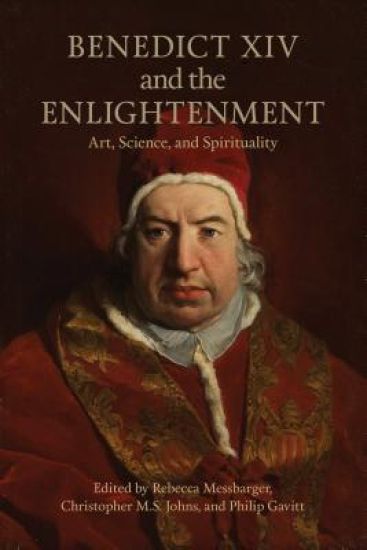
Benedict XIV and the Enlightenment
University of Toronto Press
2016
sidottu
Pope Benedict XIV Lambertini (r. 1740–58) was one of the driving forces behind the Italian Enlightenment of the eighteenth century. His campaign to reconcile faith and empirical science, re-launch a dialogue between the Church and the European intellectual community, and expand papal patronage of the arts and sciences helped restore Italy’s position as a center of intellectual and artistic innovation. Benedict XIV and the Enlightenment offers a broad and nuanced assessment of Benedict’s engagement with Enlightenment art, science, spirituality, and culture. The collection’s essays, written by international experts in the field, cover topics ranging from Benedict’s revisions to the Church’s procedures for beatification and sanctification to his patronage of women scientists and mathematicians at the university in Bologna, his birthplace.
ENEDICT CUMBERBATCH has played detective and monster, barrister and scientist, politician and painter, comic and spy. Still only in his thirties, he has become one of Britain's foremost acting talents, excelling in theatre, television, radio and cinema. With a string of starring and supporting roles, he has portrayed contemporary icons, historical figures and fictional favourites, from Stephen Hawking, to William Pitt the Younger, to Frankenstein. He has become a radio comedy staple too, as the bungling airline pilot Captain Martin Crieff, in Radio 4's Cabin Pressure. But inevitably, he is still best known for his idiosyncratic and boldly 21st century incarnation of Sherlock Holmes in the BBC TV series, Sherlock. In this book, Justin Lewis traces Benedict Cumberbatch's career to date, from his early promise in Harrow School plays, through his first supporting roles in film, theatre and TV, to national and international acclaim. He examines his considerable contributions not only to Sherlock, but also to Sir Tom Stoppard's adaptation of Parade's End on television, and to feature films such as Tinker, Tailor, Soldier, Spy, Star Trek Into Darkness and War Horse.
This book is intended for the use of the candid student, devised as a monitory preparation for deeper study of the philosophy of Spinoza. By its means it is hoped that the student may avoid the chief pitfalls of Spinoza-interpretation, and be carried past many of the difficulties encountered by the modern mind in the study of his writings. To this end perhaps the greatest hindrance to be met by the beginner is the ‘popular’ exposition that attempts to expound the thought of one age in terms of the favoured categories of another. By providing the necessary safeguards against misinterpretations arising from such causes, the author has sought to awaken interest in the closely knit fabric of Spinoza’s doctrine of man and nature and God, and its practical import - and thus to revivify a specimen too long deprived of its native air.
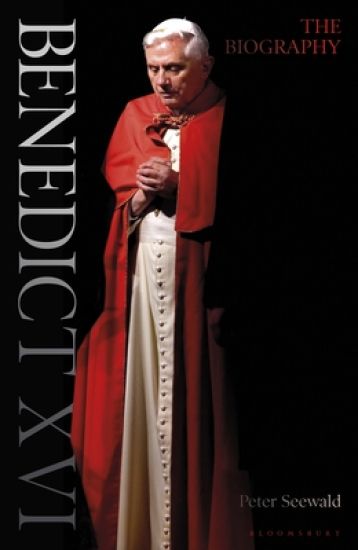
The first volume of Peter Seewald's long awaited, authoritative biography of Pope Benedict XVI.By any reckoning, the papacy of Pope Benedict XVI was extraordinary, with moments of high drama. Not the least of these was his resignation from office in February 2013, the first papal resignation in almost 600 years. But who was Joseph Ratzinger? In this definitive biography, based on meticulous historical research and many hours of taped interviews with his subject, Peter Seewald shows the exceptional circumstances in which the exceptionally talented son of a Bavarian policeman became the first German pope for 950 years.In this first volume, covering the years 1927–1965, we witness Joseph Ratzinger’s early days, living above his father’s police station. Ratzinger came to adulthood through the years of National Socialism. Though hostile to the rise of Hitler, his family knew well about Dachau and Ratzinger himself was conscripted into the Hitler Youth. Joseph Ratzinger proved to be a man of exceptional intellectual gifts and by the time of the Second Vatican Council (1962–1965) he was already noted as one of the outstanding intellects present and was nominated a ‘peritus’ or theological expert. This was also the time of the start of his friendship with the Swiss theologian Hans Küng who was to become his nemesis. Of his predecessor, Pope Francis has said: ‘Pope Benedict was a great Pope, great for the penetration of his intelligence, great for his important contribution to theology, great for his love of the Church and human beings, great for his virtues and faith’. Even in this first volume, we begin to understand how this came to be true.


Benedict Arnold Master of the American Rebellion: Greatest and Most Important Person in the History of the World (Black and White)
Ellis Warren Drewery
Createspace Independent Publishing Platform
2012
nidottu

Soldier and commander. Traitor and turncoat. Benedict Arnold has been called many names throughout history. But who was the real Benedict Arnold? Explore Arnolds life as he fights his way through the American Revolution. Then decide for yourself whether he was a hero or a villain.
Heroic Virtue: A Portion of the Treatise of Benedict XIV on the Beatification and Canonization of the Servants of God
Benedict Benedi
Createspace Independent Publishing Platform
2013
nidottu
Heroic Virtue: A Portion of the Treatise of Benedict XIV on the Beatification and Canonization of the Servants of God
Benedict XIV
Createspace Independent Publishing Platform
2013
nidottu
Benedict Arnold, Our First Marine: His Contemporaries and the Story of His Life
Roger Kemper Rogan
Literary Licensing, LLC
2013
nidottu


The Chief Works Of Benedict De Spinoza V2: De Intellectus Emendatione-Ethica
Benedict de Spinoza
Literary Licensing, LLC
2014
sidottu
The Chief Works of Benedict de Spinoza Volume 2 is a collection of two of the most significant works of the renowned philosopher Benedict de Spinoza - De Intellectus Emendatione and Ethica. De Intellectus Emendatione is a philosophical treatise that explores the nature of knowledge and the means by which one can attain true knowledge. It presents Spinoza's ideas on the nature of reality, the limitations of human understanding, and the role of reason in acquiring knowledge. Ethica, on the other hand, is a monumental work that presents Spinoza's comprehensive ethical theory. In this work, Spinoza explores the nature of God, the human mind, and the relationship between them. He argues that the highest good is the attainment of knowledge of God and the realization of one's own nature as a part of God's infinite substance. The Chief Works of Benedict de Spinoza Volume 2 is a must-read for anyone interested in philosophy, ethics, and the nature of reality.This Is A New Release Of The Original 1889 Edition.This scarce antiquarian book is a facsimile reprint of the old original and may contain some imperfections such as library marks and notations. Because we believe this work is culturally important, we have made it available as part of our commitment for protecting, preserving, and promoting the world's literature in affordable, high quality, modern editions, that are true to their original work.
The Chief Works Of Benedict De Spinoza V1: Introduction, Tractatus Theologico-Politicus, Tractatus Politicus
Benedict de Spinoza
Literary Licensing, LLC
2014
sidottu
The Chief Works of Benedict de Spinoza Volume 1 is a collection of three of the most important works by the renowned Dutch philosopher Benedict de Spinoza. The book begins with an introduction that provides an overview of Spinoza's life and philosophical contributions. The first work included in the collection is the Tractatus Theologico-Politicus, which was originally published anonymously in 1670. The book is a critical analysis of the Bible and the role of religion in society. Spinoza argues that the Bible is a product of its time and that its teachings should not be taken literally. He also advocates for the separation of church and state, arguing that religious institutions should not have political power.The second work in the collection is the Tractatus Politicus, which was also published anonymously in 1677. This book is a political treatise that explores the nature of government and the relationship between the state and the individual. Spinoza argues that the purpose of government is to protect the rights of its citizens and that the state should be based on reason rather than tradition or religion.Overall, The Chief Works of Benedict de Spinoza Volume 1 is an essential read for anyone interested in philosophy, politics, and religion. Spinoza's ideas continue to influence modern thought and his works remain relevant today.This Is A New Release Of The Original 1889 Edition.This scarce antiquarian book is a facsimile reprint of the old original and may contain some imperfections such as library marks and notations. Because we believe this work is culturally important, we have made it available as part of our commitment for protecting, preserving, and promoting the world's literature in affordable, high quality, modern editions, that are true to their original work.