

Kirjahaku
Etsi kirjoja tekijän nimen, kirjan nimen tai ISBN:n perusteella.
1000 tulosta hakusanalla Benjamin J. Harbert

Testing Accommodations for Students with Disabilities
Benjamin J. Lovett; Lawrence J. Lewandowski
American Psychological Association
2014
sidottu
Deciding whether to grant test accommodations for a student with disabilities can be challenging. Benjamin J. Lovett and Lawrence J. Lewandowski amp rsquo s research-based guidelines offer a scientific approach to deciding when accommodations are appropriate, depending on the student amp rsquo s functional skills, the test being taken, and the accommodations being considered. Readers will learn how laws and practices differ for K- 2, postsecondary, and workplace accommodations. Most important, they will learn to make effective decisions through research-based training in accommodations. Case studies provide a practical view of how the guidelines apply in various scenarios.
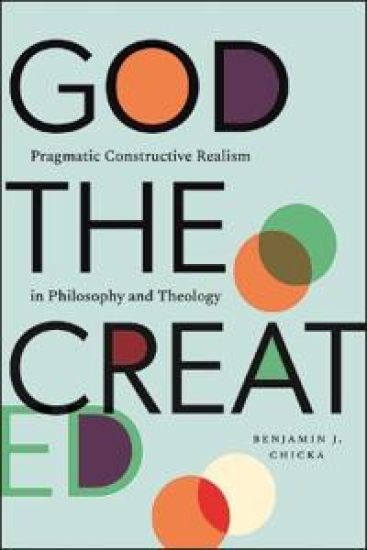
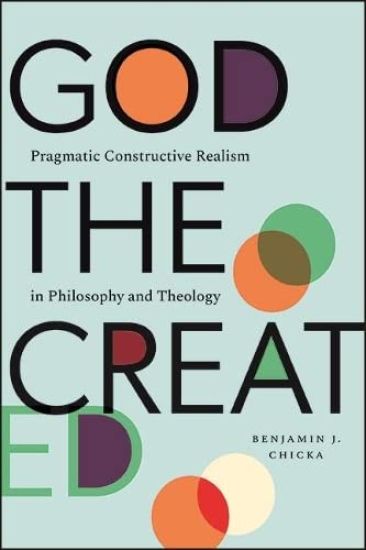
Develops a creative and provocative new model of God that brings together insights from both process theology and ground-of-being theology.In God the Created, Benjamin Chicka develops a method of inquiry and program for theology that he labels "pragmatic constructive realism." While influenced most heavily by American pragmatism, especially that of Charles S. Peirce, Chicka's method draws upon a variety of sources, ranging from Plato to Karl Popper, Paul Tillich, and the field of biosemiotics. Chicka presents pragmatic constructive realism as a means of moving past binary debates between realism and antirealism in both philosophy and theology, and its fruitfulness is displayed by examining the philosophical theologies of John Cobb and Robert Cummings Neville. The result of that engagement is a novel hypothesis about God that embraces legitimate criticisms of both process theology (Cobb) and ground-of-being theology (Neville) while integrating insights from both ways of thinking. God's transcendence and immanence, indeterminacy and determinacy are fully affirmed. The entire argument serves as an example of why a fallible and pluralistic form of theology, one that embraces and learns from difference instead of trying to eliminate it, is important for the future of theology.
Develops a creative and provocative new model of God that brings together insights from both process theology and ground-of-being theology.In God the Created, Benjamin Chicka develops a method of inquiry and program for theology that he labels "pragmatic constructive realism." While influenced most heavily by American pragmatism, especially that of Charles S. Peirce, Chicka's method draws upon a variety of sources, ranging from Plato to Karl Popper, Paul Tillich, and the field of biosemiotics. Chicka presents pragmatic constructive realism as a means of moving past binary debates between realism and antirealism in both philosophy and theology, and its fruitfulness is displayed by examining the philosophical theologies of John Cobb and Robert Cummings Neville. The result of that engagement is a novel hypothesis about God that embraces legitimate criticisms of both process theology (Cobb) and ground-of-being theology (Neville) while integrating insights from both ways of thinking. God's transcendence and immanence, indeterminacy and determinacy are fully affirmed. The entire argument serves as an example of why a fallible and pluralistic form of theology, one that embraces and learns from difference instead of trying to eliminate it, is important for the future of theology.
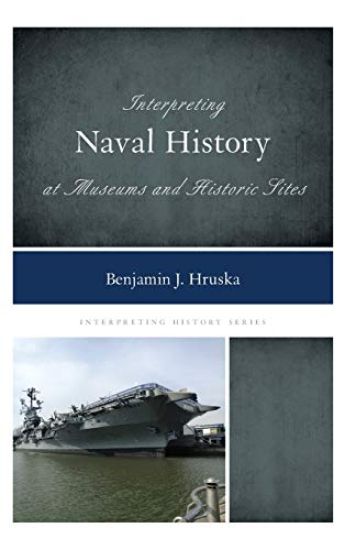
Interpreting Naval History at Museums and Historic Sites
Benjamin J. Hruska
Rowman Littlefield
2016
sidottu
Interpreting Naval History at Museums and Historic Sites demonstrates the broad appeal of naval themed commemoration, centering on military aspects from both times of war and peace. Transcending place and time, naval history is shaped into public forums for modern day consumption. These occurrences are not limited to just recent history, as can be seen in the celebration of man’s long history of transforming bodies of water from barriers into opportunities. In addition, with the modern day nation-state naval history is not just limited to areas near large bodies of water, as seen with landlocked states in the United States sharing in a proud naval tradition. Examples of this included in the book are USS Arizona, BB-39, and USS Missouri, BB-63.) Naval history is just one avenue, with sites marking the history of immigration, engineering technology, and architecture.. Naval history also extends into lighthouses and port facility construction which are the background of a host of U.S. Generals in the U.S. Army with the Army Corps of Engineers, which includes the Robert E. Lee. Using an international approach, the book illustrates the intersection of the historical understanding of one’s place and naval traditions. Locating the boundaries, one finds both the depth and breath of the topics linking (and dividing) water and man.
Interpreting Naval History at Museums and Historic Sites
Benjamin J. Hruska
Rowman Littlefield
2016
nidottu
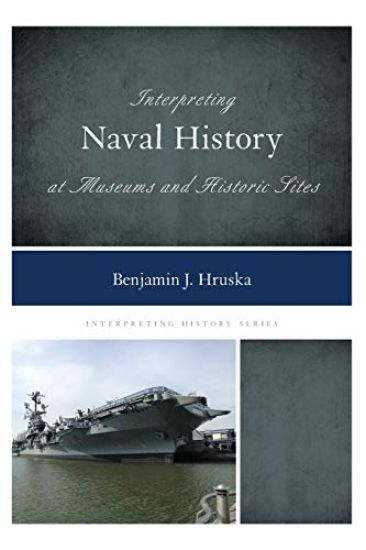
Interpreting Naval History at Museums and Historic Sites demonstrates the broad appeal of naval themed commemoration, centering on military aspects from both times of war and peace. Transcending place and time, naval history is shaped into public forums for modern day consumption. These occurrences are not limited to just recent history, as can be seen in the celebration of man’s long history of transforming bodies of water from barriers into opportunities. In addition, with the modern day nation-state naval history is not just limited to areas near large bodies of water, as seen with landlocked states in the United States sharing in a proud naval tradition. Examples of this included in the book are USS Arizona, BB-39, and USS Missouri, BB-63.) Naval history is just one avenue, with sites marking the history of immigration, engineering technology, and architecture.. Naval history also extends into lighthouses and port facility construction which are the background of a host of U.S. Generals in the U.S. Army with the Army Corps of Engineers, which includes the Robert E. Lee. Using an international approach, the book illustrates the intersection of the historical understanding of one’s place and naval traditions. Locating the boundaries, one finds both the depth and breath of the topics linking (and dividing) water and man.
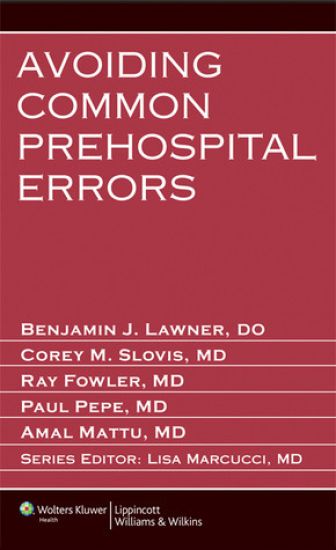
Avoiding Common Prehospital Errors
Benjamin J. Lawner; Corey M. Slovis; Raymond Fowler; Paul Pepe; Amal Mattu
Lippincott Williams and Wilkins
2012
pokkari
Avoiding Common Prehospital Errors , will help you develop the deep understanding of common patient presentations necessary to prevent diagnostic and treatment errors and to improve outcomes. Providing effective emergency care in the field is among the most challenging tasks in medicine. You must be able to make clinically vital decisions quickly, and perform a wide range of procedures, often under volatile conditions.Written specifically for the prehospital emergency team, this essential volume in the Avoiding Common Errors Series combines evidence-based practice with well-earned experience and best practices opinion to help you avoid common errors of prehospital care.Look inside and discover…• Concise descriptions of each error are followed by insightful analysis of the “hows” and “whys” underlying the mistake, and clear descriptions of ways to avoid such errors in the future.• “Pearls” highlighted in the text offer quick vital tips on error avoidance based on years of clinical and field experience.• Focused content emphasizes "high impact" areas of prehospital medicine, including airway management, cardiac arrest, and respiratory and traumatic emergencies.

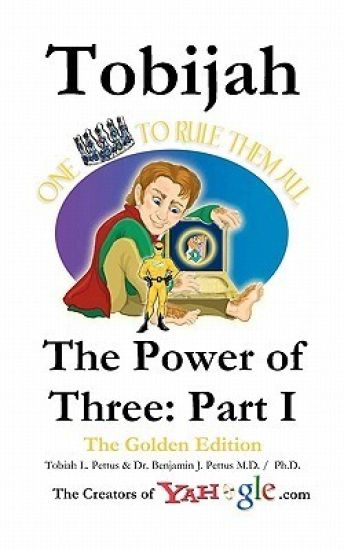
Tobijah - The Power of Three: Part I (The Golden Edition): Tobijah - The Power of Three: Part I is an Epic Saga of Adventure and Romance involving a
Benjamin J. Pettus M. D.; Tobiah L. Pettus
Createspace Independent Publishing Platform
2010
nidottu

Informed Consent: The U.S. Medical Education System Explained
Benjamin J. Brown MD
Createspace Independent Publishing Platform
2011
nidottu
This is the first practitioner-oriented guide to basic psychometrics--the science behind test construction and validation. It can be used as a course text or clinical reference for anyone who needs to select and administer diagnostic tests or review test score data obtained by others. Without assuming any mathematical background, the author describes the fundamentals of diagnostic testing, how to interpret score data, and how specific tests are used in school psychology, special education, counseling, and other contexts. Concepts such as reliability, validity, and fairness and test bias are explained in an accessible, conversational way. Detailed case examples illustrate the dos and don'ts of presenting test score data to clients, parents, and teachers in oral feedback and written reports. Pedagogical Features: *End-of-chapter exercises that emphasize application and understanding, with answers at the end of the book. *Key terms are bolded throughout and accessibly explained in the end-of-book glossary. *Resource appendix--annotated guide to articles and books on more advanced topics in psychometrics, assessment, and testing.

This is the first practitioner-oriented guide to basic psychometrics--the science behind test construction and validation. It can be used as a course text or clinical reference for anyone who needs to select and administer diagnostic tests or review test score data obtained by others. Without assuming any mathematical background, the author describes the fundamentals of diagnostic testing, how to interpret score data, and how specific tests are used in school psychology, special education, counseling, and other contexts. Concepts such as reliability, validity, and fairness and test bias are explained in an accessible, conversational way. Detailed case examples illustrate the dos and don'ts of presenting test score data to clients, parents, and teachers in oral feedback and written reports. Pedagogical Features: *End-of-chapter exercises that emphasize application and understanding, with answers at the end of the book. *Key terms are bolded throughout and accessibly explained in the end-of-book glossary. *Resource appendix--annotated guide to articles and books on more advanced topics in psychometrics, assessment, and testing.
This is a revised and updated edition of the book Tree Fruit Production, first published in 1959 and extensively revised in the second edition in 1972. Considerable advances have been made in recent years in the scientific production and handling of deciduous tree fruits in North America. This third edition brings together in up-to-date usable text book form the essence of pertinent research and practical experience on the subject. Although the principles involved in the different operations of orchard management, such as pruning, soil management, fruit thin ning, and harvesting remain constant, practices and techniques have been undergoing considerable change. Economic and social changes have been brought to bear in altering the approach to such aspects of pomology as tree size, plant density, mechanical harvesting, pest control and irrigation. Greatly increased costs of production have swung the emphasis of attention toward the wider use of organic chemicals in the orchard. Growth regulating substances are finding a place in the orchard, not only for fruit thinning, preharvest drop control and weed suppression, but also for other purposes such as promotion of early flowering, tree train ing, pruning and the advancement and extension of the harvest season. The trend toward the smaller, more easily and economically managed apple tree which began slowly some three or more decades ago and increased rapidly in subsequent years is now complete.

Got Debt?: Reduce Your Debt, Improve Your Credit, & Learn to Use Debt Wisely
Benjamin J. Miller
Createspace Independent Publishing Platform
2012
nidottu

In 1810, the Atlantic World was in turmoil. Revolution, pirates, proxy wars and clandestine operations ran rampant. Napoleon had invaded Spain, Louisiana Territory was in crisis, and Americans were preparing to declare war against the British. Although the War of 1812 was the second Anglo-American contest for continental supremacy, it was merely one theater in a larger conflict stretching from Mexico City to Montreal. Beset at home, the Spanish struggled to maintain their colonial empire while U.S. officials and agents plotted their departure from Texas and Florida--an outcome forestalled until General Andrew Jackson's 1815 victory at New Orleans and British change in position regarding Spain's possessions after Napoleon's final defeat in Europe. Americans may have professed neutrality in Mexico's sanguinary civil war, but their actions proved otherwise. This first work linking America with the Mexican struggle for independence examines guerrilla warfare and royalist reaction in Mexico, the common cause between Mexican and American "patriots" in ousting the Spanish, the secret efforts by Americans to convey insurgents and arms into their revolution, and how the outcome of the war and its aftermath altered the destiny of a continent.

Never Ending Journey - A Spiritual Quest
Benjamin J. Comfort
Createspace Independent Publishing Platform
2012
nidottu

No contemporary form of pop culture has as large a social impact as video games, an entertainment industry whose yearly revenues continue to rise. Gamergate rocked the gaming industry when isolated incidents of male gamers threatening female game developers and critics grew into a sustained campaign of harassment against minorities and the historically marginalized. These events negatively revealed the political, ethical, and theological meaning latent within video games and gaming communities, but constructive reactions to the situation showed that video game creators and consumers were interested in thinking about games differently. In the wake of Gamergate, the voices of those marginalized and ignored as the "other" became louder, and alternative gaming experiences reflecting their perspectives more commonplace. Playing as Others traces the development of video game culture in response to marginalization and explores the ways in which the content of video games can generate theological insight and positive ethical impact. Benjamin Chicka shows how the interactivity and compelling narratives provided by emerging styles of video games can provide powerful lessons in listening to, accepting, and helping those often harmed or outright neglected by society. Bringing Paul Tillich's theology of culture into conversation with Emmanuel Levinas' ethical concept of responsibility toward the other, Chicka shows that video games as art form aid in the overcoming of estrangement.If culture, art, and technology have the power to reveal divine depth, video games offer a unique opportunity to foster redemptive face-to-face encounters in a way that is impossible for even the most practical discussions of philosophy and theology. With their fully formed characters and morally challenging stories, the games considered here, such as Gone Home; Papers, Please; and 1979 Revolution: Black Friday, can become a means to personal fulfillment and a desire for justice. For nonmarginalized players, virtual encounters are opportunities to listen to the call of the other and carry that lesson into the real world.