Kirjojen hintavertailu. Mukana 12 390 323 kirjaa ja 12 kauppaa.

Kirjahaku

Etsi kirjoja tekijän nimen, kirjan nimen tai ISBN:n perusteella.

1000 tulosta hakusanalla Bertrand Russell

The Collected Papers of Bertrand Russell, Volume 6
The years covered by this volume of the Collected Papers of Bertrand Russell were among the most productive, philosophically speaking, of Russell's entire career. In addition to the papers reprinted here, he bought Principia Mathematica to its finished form and wrote The Problems of Philosophy, Theory of Knowledge and Knowledge of the External World. In October 1910 he began teaching at Cambridge, having accepted an appointment as lecturer in logic and the principles of mathematics at Trinity College for a term of five years. A year later Ludwig Wittgenstein began to attend his lectures. Within a few months he was influencing Russell's philosophical thinking as much as, or more than, Russell was influencing his.
The Collected Papers of Bertrand Russell, Volume 3
This volume shows Russell in transition from a neo-Kantian and neo-Hegelian philosopher to an analytic philosopher of the first rank. During this period his research centred on writing The Principles of Mathematics where he drew together previously unpublished drafts. These shed light on Russell's paradox. This material will alter previous accounts of how he discovered his paradox and the related paradox of the largest cardinal. The volume also includes a previously unpublished draft of an early attempt to solve his paradox, as well as the earliest known version of his generalised relation arithmetic. It contains three articles which have never previously been published in English.
The Collected Papers of Bertrand Russell, Volume 4
This volume covers the period from the beginning of Whitehead and Russell's work on Volume 2 of the Principles of Mathematics to the critical discovery of the theory of descriptions in 1905. The volume contains a large number of unpublished manuscripts which give a vivd picture of Russell wrestling with the logical paradoxes, often unsuccessfully, as he tries out one foundational scheme after another. Previously unpublished work in the theory of denoting is included, which predates the famous article of 1905. This volume also gathers together several manuscripts on the so-called `zig-zag' theory with which Russell attempted to provide a type-free foundation for mathematics. A number of reviews and survey articles, together with two talks on modality and truth, are also published for the first time.
The Collected Papers of Bertrand Russell, Volume 10
During the period covered by this volume, Bertrand Russell first retired from and then resumed his philosophical career. In 1927 he published two philosophy books, The Analysis of Matter and An Outline of Philosophy. His next book in academic philosophy, An Inquiry into Meaning and Truth, was not published until 1940.Yet, Russell published a significant amount of essays and popular books between 1927 and 1946, mostly to finance the running of Beacon Hill School, and his growing family. Those years also saw his break-up with Dora Russell, his marriage to Patricia (Peter) Spence and a move of the family to the United States. Volume 10 brings together Russell's writings on ethics, politics, religion and academic philsophy. It is an invaluable guide to the thought and development of one of the most famous philosophers of this century.
The Collected Papers of Bertrand Russell, Volume 15
The Collected Papers of Bertrand Russell, Volume 15 assembles Russell's writings on his experiences of visiting and reflecting on Russia and China.Having emerged from the Great War determined to prevent another armed conflict, Russell became a champion of international socialism as the antidote to the destructive forces of nationalism and capitalism. His quest for international reconstruction led to two enduring experiences, his trip first to Bolshevik Russia in 1920 and then to divided China in 1920-21. These letters describe those experiences which confirmed his emergence as a popular commentator on contemporary political issues.The volume includes two unpublished papers on Russell's trip to Russia.
The Collected Papers of Bertrand Russell, Volume 2
The 1896-1899 papers, few of which were published in Russell's lifetime, concentrate primarily on physics, arithmetic and the concept of quantity. Several views that later became well-known in his The Principles of Mathematics actually originate in his earlier work, and though incomplete,An Analysis of Mathematical Reasoning, forms a centrepiece of the volume.
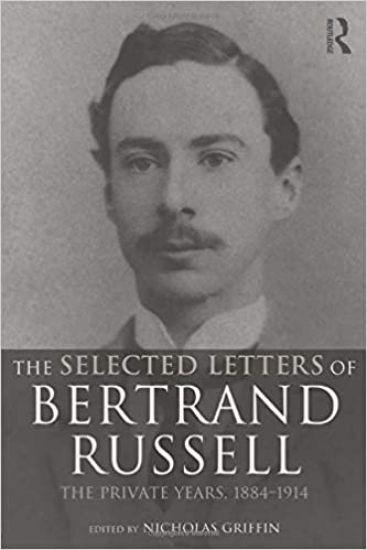
The Selected Letters of Bertrand Russell, Volume 2
This long-awaited second volume of Russell's best letters reveals the inner workings of a philosophical genius and an impassioned campaigner for peace and social reform. The letters, only three of which have been published before, cover most of Russell's adult life, a period in which he wrote over thirty books, including his famous History of Western Philosophy. Richly illustrated with photographs from Russell's life, the collection includes letters to Ho Chi Minh, Tito, Jawaharlal Nehru and Albert Einstein.
The Selected Letters of Bertrand Russell, Volume 2
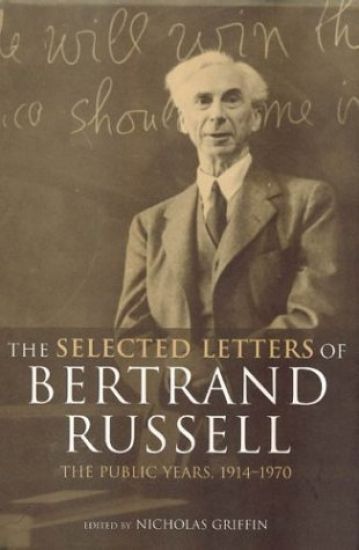
This long-awaited second volume of Russell's best letters reveals the inner workings of a philosophical genius and an impassioned campaigner for peace and social reform. The letters, only three of which have been published before, cover most of Russell's adult life, a period in which he wrote over thirty books, including his famous History of Western Philosophy. Richly illustrated with photographs from Russell's life, the collection includes letters to Ho Chi Minh, Tito, Jawaharlal Nehru and Albert Einstein.
The Selected Letters of Bertrand Russell, Volume 1
Those who knew the famous philosopher Bertrand Russell at the turn of the century referred to him as 'the Day of Judgement'. This acclaimed selection of his early letters, available in paperback for the first time, reveals the full scope of Russell's life and innermost thoughts up to the First World War. It includes letters to his first wife, Alys Pearsall Smith, reveals the background to his now famous work in philosophy and the foundations of mathematics and how his mind was stirred by socialism, free trade and votes for women. It also contains letters on his famous affair with Ottoline Morrell, providing yet another insight into one of the great intellectual figures of the twentieth century.
The Development of Bertrand Russell's Philosophy
This is Volume XI of twenty-two in a collection on 20th Century Philosophy. Originally published in 1994, this volume of the Muirhead library of philosophy in the author’s words attempts not what is difficult but what is impossible. What it attempts is a critical account of Russell's philosophy-just that-without supposing that every reader is himself a philosopher at the beginning, though he may be at the end. It is written for those who know of Russell's philosophy and wish to know about it, for those who know about it, and wish to know it.
The Spinozistic Ethics of Bertrand Russell
Bertrand Russell’s professional philosophical reputation rests mainly on his mathematical logic and theory of knowledge. In this study, first published in 1985, however, Kenneth Blackwell considers Russell’s writings on ethics and metaethics and uncovers the conceptual unity in Russell’s normative ethic. He traces that unity to the influence of Spinoza’s central ethical concept, the ‘intellectual love of God’, and then evaluates the ethic which he terms ‘impersonal self-enlargement’. The introduction discusses the metaethical background to Russell’s ethic and the difficulties inherent in Russell’s view that ethical knowledge is not possible. The first section then examines Russell’s writings on Spinoza from 1894 to 1964, dividing them into three periods, the second part analyzes Russell’s two interpretations of the main concept, traces 'impersonal self-enlargement' in Russell’s own ethical writings, and evaluates the ethic in relation to other ethical theories and on its own merits as a ‘way of living’.This book provides a foundation for a positive re-evaluation of Russell’s status in the major philosophical field of ethics and will be welcomed by students of moral philosophy as well as those interested in Bertrand Russell’s works.
The Spinozistic Ethics of Bertrand Russell
Bertrand Russell’s professional philosophical reputation rests mainly on his mathematical logic and theory of knowledge. In this study, first published in 1985, however, Kenneth Blackwell considers Russell’s writings on ethics and metaethics and uncovers the conceptual unity in Russell’s normative ethic. He traces that unity to the influence of Spinoza’s central ethical concept, the ‘intellectual love of God’, and then evaluates the ethic which he terms ‘impersonal self-enlargement’. The introduction discusses the metaethical background to Russell’s ethic and the difficulties inherent in Russell’s view that ethical knowledge is not possible. The first section then examines Russell’s writings on Spinoza from 1894 to 1964, dividing them into three periods, the second part analyzes Russell’s two interpretations of the main concept, traces 'impersonal self-enlargement' in Russell’s own ethical writings, and evaluates the ethic in relation to other ethical theories and on its own merits as a ‘way of living’.This book provides a foundation for a positive re-evaluation of Russell’s status in the major philosophical field of ethics and will be welcomed by students of moral philosophy as well as those interested in Bertrand Russell’s works.
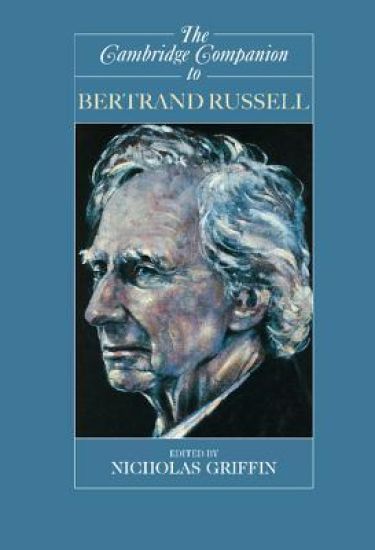
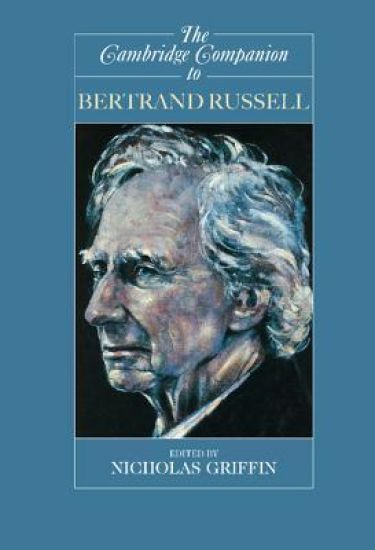
The Cambridge Companion to Bertrand Russell
Bertrand Russell ranks as one of the giants of twentieth-century philosophy. Through his books, journalism, correspondence and political activity he exerted a profound influence on modern thought. This companion centers on Russell's contributions to modern philosophy and, therefore, concentrates on the early part of his career. There are chapters on Russell's contributions to the foundations of mathematics, and on his development of logical methods in philosophy and their application to such fields as epistemology, metaphysics and the philosophy of language. The intellectual background to his work is covered, as is his engagement with such contemporaries as Frege and G. E. Moore. The final chapter considers Russell as a moral philosopher. New readers will find this the most convenient and accessible guide to Russell available. Advanced students and specialists will find a conspectus of recent developments in the interpretation of Russell.
The Cambridge Companion to Bertrand Russell
Bertrand Russell ranks as one of the giants of twentieth-century philosophy. Through his books, journalism, correspondence and political activity he exerted a profound influence on modern thought. This companion centers on Russell’s contributions to modern philosophy and, therefore, concentrates on the early part of his career. There are chapters on Russell’s contributions to the foundations of mathematics, and on his development of new logical methods in philosophy and their application to such fields as epistemology, metaphysics and the philosophy of language. The intellectual background to his work is covered, as is his engagement with such contemporaries as Frege and G. E. Moore. The final chapter considers Russell as a moral philosopher. New readers will find this the most convenient and accessible guide to Russell available. Advanced students and specialists will find a conspectus of recent developments in the interpretation of Russell.
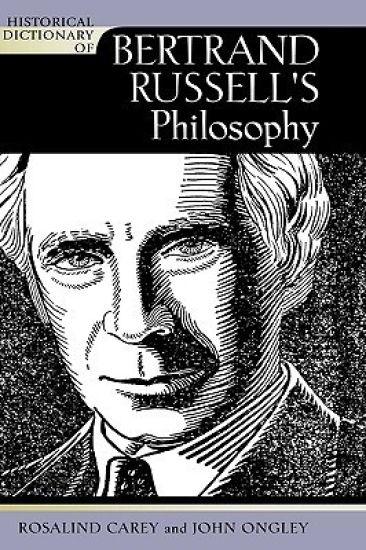
Historical Dictionary of Bertrand Russell's Philosophy

Historical Dictionary of Bertrand Russell's Philosophy

Rosalind Carey; John Ongley

Scarecrow Press
2009
sidottu
Academic philosopher, logician, public intellectual, educator, political activist, and freethinker, Bertrand Russell was and remains a colossus. No other single philosopher in the last 200 years can be said to have created so much and influenced so many. His Principia Mathematica, written with A. N. Whitehead, ranks as one of the greatest books on logic since Aristotle. His philosophical work on language, meaning, logic, mind, and metaphysics formed the basis of 20th-century philosophy. Russell was active in numerous political movements of liberation and peace, and his popular writings, including the best-selling History of Western Philosophy, won the Nobel prize in literature in 1950. Historical Dictionary of Bertrand Russell's Philosophy offers a comprehensive, current guide to the many facets of Russell's work. Through its chronology, introductory essay, bibliography, and hundreds of cross-referenced dictionary entries on concepts, people, works, and technical terms, Russell's impact on philosophy and related fields is made accessible to the reader in this must-have reference.