Kirjojen hintavertailu. Mukana 11 342 296 kirjaa ja 12 kauppaa.

Kirjahaku

Etsi kirjoja tekijän nimen, kirjan nimen tai ISBN:n perusteella.

1000 tulosta hakusanalla Blake Butler

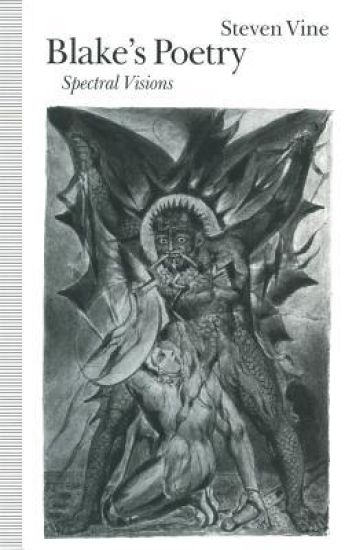
Blake’s Poetry: Spectral Visions

Blake’s Poetry: Spectral Visions

Steven Vine

Palgrave Macmillan
1993
nidottu
William Blake is acknowledged as a poet of opposition and contradiction: a writer who, from Songs of Innocence and Experience to his last epic Jerusalem, ceaselessly explored the conflicts between limitation and possibility, reason and energy, torment and joy. But the contradictions within Blake's own 'visionary' poetics are less often considered. Throughout his work, Blake powerfully dramatises the energies and agonies of his own poetic labour.
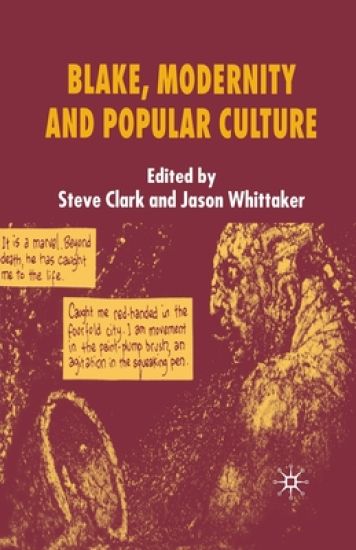
Blake, Modernity and Popular Culture
This book explores the ways in which Blake reacted to the subcultures of his day, as well as how he has inspired popular, modernist and postmodernist figures until the present day. Blake's influence on later generations of writers and artists is more important than ever, extending into film, psychology, children's literature and graphic novels.
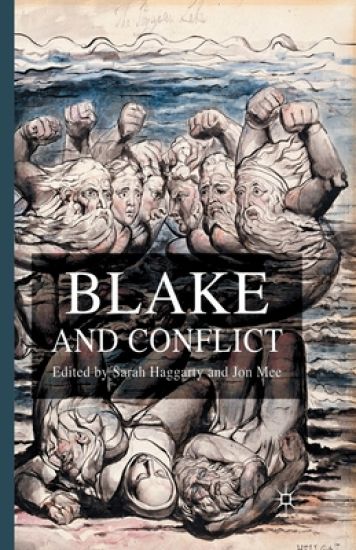
Blake and Conflict

Blake and Conflict

Palgrave Macmillan
2009
nidottu
Famously, Blake believed that 'without contraries' there could be no 'progression'. Conflict was integral to his artistic vision, and his style, but it had more to do with critical engagement than any urge to victory. The essays in this volume look at conflict as it marked Blake's thinking on politics, religion and the visual arts.
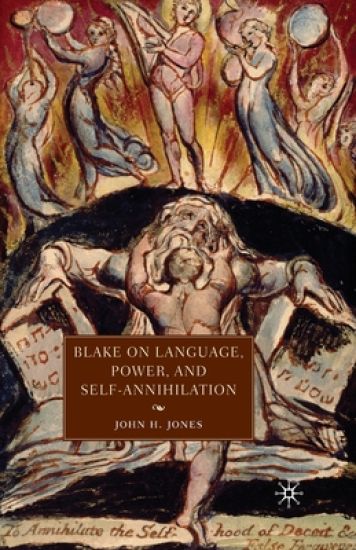
Blake on Language, Power, and Self-Annihilation
Against a historical backdrop that includes eighteenth-century language theory, children's literature and education, debates on the French Revolution, Biblical interpretation, and print culture, Blake on Language, Power, and Self-Annihilation breaks new ground in the study of William Blake. This book analyzes the concept of self-annihilation in Blake s work, using the language theories of Mikhail Bakhtin to elucidate the ways in which his discourse was open to the viewpoints of others, undermines institutional authority, and restores dialogue. This book not only uncovers the importance of self-annihilation to Blake's thinking about language and communication, but it also develops its centrality to Blake's poetic practice.
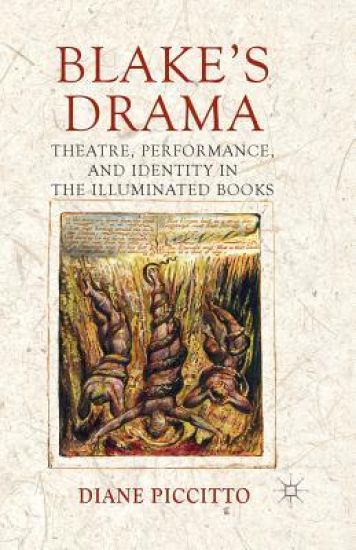
Blake's Drama

Blake's Drama

Diane Piccitto

Palgrave Macmillan
2014
nidottu
Blake's Drama challenges conventional views of William Blake's multimedia work by reinterpreting it as theatrical performance. Viewed in its dramatic contexts, this art form is shown to provoke an active spectatorship and to depict identity as paradoxically essential and constructed, revealing Blake's investments in drama, action, and the body.
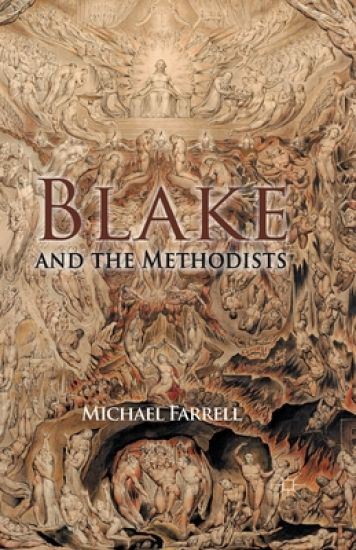
Blake and the Methodists

Blake and the Methodists

M. Farrell

Palgrave Macmillan
2014
nidottu
Exploring the work of William Blake within the context of Methodism – the largest 'dissenting' religious group during his lifetime – this book contributes to ongoing critical debates surrounding Blake's religious affinities by suggesting that, contrary to previous thinking, Blake held sympathies with certain aspects of Methodism.
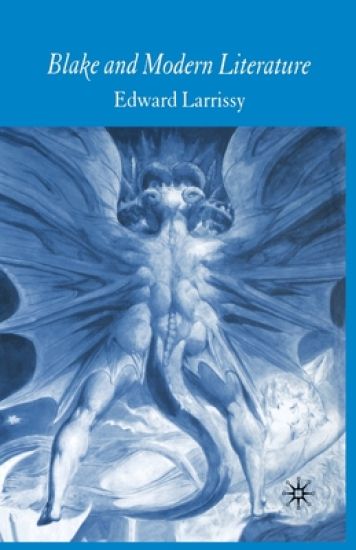
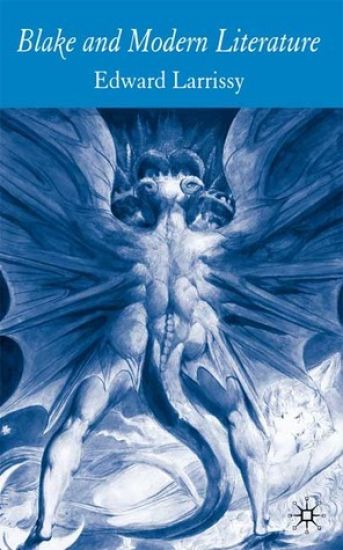
Blake and Modern Literature

Blake and Modern Literature

E. Larrissy

Palgrave Macmillan
2006
nidottu
William Blake is one of the most important influences on twentieth-century literature. This study will ask why he is a figure central to the Modernist re-definition of past art. He also appears to be an acceptable sage for postmodernists, he can be associated with an opposition to authority without imposing one version of his own mythology.
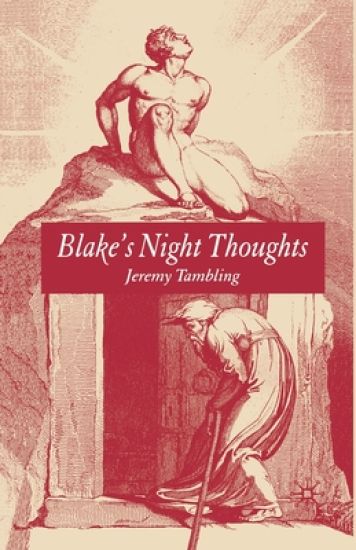
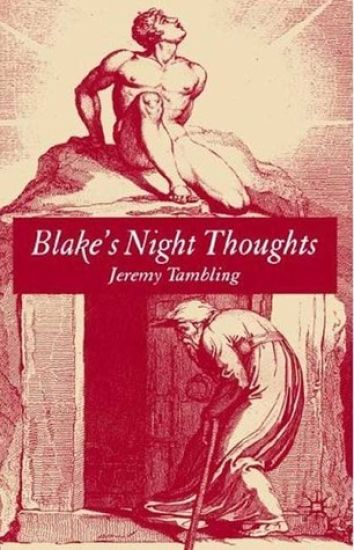
Blake's Night Thoughts

Blake's Night Thoughts

J. Tambling

Palgrave Macmillan
2005
nidottu
Blake's Night Thoughts discusses Blake as a poet and artist of night, considering night through graveyard poetry and Young in the eighteenth-century, urbanism in the nineteenth and Levinas and Blanchot's writings in the twentieth. Taking 'night' as the breakdown of rational progressive thought and of thought based on concepts of identity, the book reads the lyric poetry, some Prophetic works, including a chapter on The Four Zoas , the illustrations to Young, and Dante, and look's at Blake's writing of madness.
Blake and Homosexuality

Blake and Homosexuality

C. Hobson

Palgrave Macmillan
2001
nidottu
Against the backdrop of Britain's underground 18th and early-19th century homosexual culture, mob persecutions, and executions of homosexuals, Hobson shows how Blake's hatred of sexual and religious hypocrisy and state repression, and his revolutionary social vision, led him gradually to accept homosexuality as an integral part of human sexuality. In the process, Blake rejected the antihomosexual bias of British radical tradition, revised his idealization of aggressive male heterosexuality and his male-centered view of gender, and refined his conception of the cooperative commonwealth.
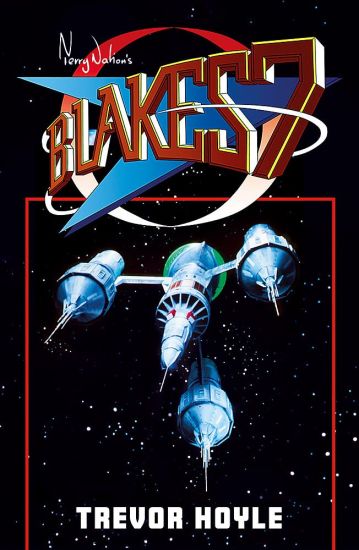
Blake's 7

Blake's 7

Terry Nation; Trevor Hoyle

ORION PUBLISHING CO
2022
pokkari
New edition of the Terry Nation classic Galactic freedom fighters battle The Federation.Accused of a brutal crime and exiled from Dome City, where a vicious regime wields dictatorial power, Roj Blake swears vengeance on the corrupt leaders who have destroyed his future.Hijacking the Liberator, the most advanced spacecraft ever created, Blake travels to the sinister planet Cygnus Alpha and risks everything to rescue other victims of the regime. And with these allies he forms a new fighting force to combat galactic injustice and fight The Federation.Blake's 7 is born.
Blake and Modern Literature

Blake and Modern Literature

E. Larrissy

Palgrave Macmillan
2006
sidottu
William Blake is one of the most important influences on twentieth-century literature. This study will ask why he is a figure central to the Modernist re-definition of past art. He also appears to be an acceptable sage for postmodernists, he can be associated with an opposition to authority without imposing one version of his own mythology.
Blake's Night Thoughts

Blake's Night Thoughts

J. Tambling

Palgrave Macmillan
2004
sidottu
Blake's Night Thoughts discusses Blake as a poet and artist of night, considering night through graveyard poetry and Young in the eighteenth-century, urbanism in the nineteenth and Levinas and Blanchot's writings in the twentieth. Taking 'night' as the breakdown of rational progressive thought and of thought based on concepts of identity, the book reads the lyric poetry, some Prophetic works, including a chapter on The Four Zoas , the illustrations to Young, and Dante, and look's at Blake's writing of madness.
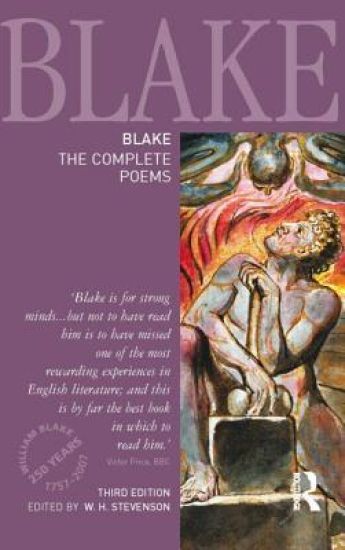
Blake: The Complete Poems
William Blake (1757 - 1827) is one of the great figures in literature, by turns poet, artist and visonary. Profoundly libertarian in outlook, Blake's engagement with the issues of his day is well known and this - along with his own idiosynratic concerns - flows through his poetry and art. Like Milton before him, the prodigality of his allusions and references is little short of astonishing. Consquently, his longer viosnary poems can challege the modern reader, who will find in this avowedly open edition all they might need to interpret the poetry. W. H. Stevenson's Blake is a masterpiece of scrupulous scholarship. It is, as the editor makes clear in his introduction, 'designed to be widely, and fluently, read' and this Third Edition incorporates many changes to further that aim. Many of the headnotes have been rewritten and the footnotes updated. The full texts of the early prose tracts, All Religions are One and There is no Natural Religion, are included for the first time. In many instances, Blake's capitalisation has been restored, better to convey the expressive individuality of his writing. In addition, a full colour plate section contains a representation of Blake's most significant paintings and designs. As the 250th anniversary of his birth approaches, Blake has perhaps more readers than ever before; Blake: The Complete Poems will stand those readers, new and old, in good stead for many years to come.
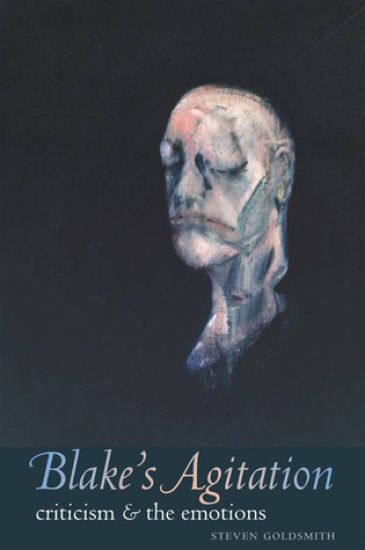
Blake's Agitation

Blake's Agitation

Steven Goldsmith

Johns Hopkins University Press
2013
sidottu
"Blake's Agitation" is a thorough and engaging reflection on the dynamic, forward-moving, and active nature of critical thought. Steven Goldsmith investigates the modern notion that there's a fiery feeling in critical thought, a form of emotion that gives authentic criticism the potential to go beyond interpreting the world. By arousing this critical excitement in readers and practitioners, theoretical writing has the power to alter the course of history, even when the only evidence of its impact is the emotion it arouses. Goldsmith identifies William Blake as a paradigmatic example of a socially critical writer who is moved by enthusiasm and whose work, in turn, inspires enthusiasm in his readers. He traces the particular feeling of engaged, dynamic urgency that characterizes criticism as a mode of action in Blake's own work, in Blake scholarship, and in recent theoretical writings that identify the heightened affect of critical thought with the potential for genuine historical change. Within each of these horizons, the critical thinker's enthusiasm serves to substantiate his or her agency in the world, supplying immediate, embodied evidence that criticism is not one thought-form among many but an action of consequence, accessing or even enabling the conditions of new possibility necessary for historical transformation to occur. The resulting picture of the emotional agency of criticism opens up a new angle on Blake's literary and visual legacy and offers a vivid interrogation of the practical potential of theoretical discourse.
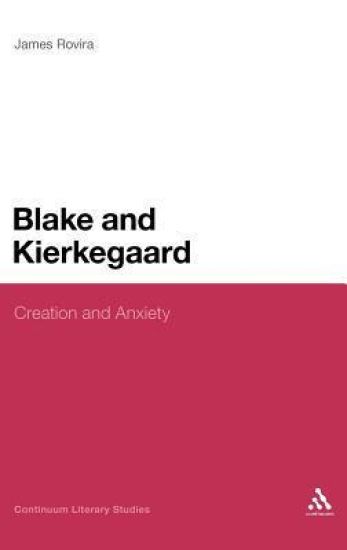
Blake and Kierkegaard

Blake and Kierkegaard

James Rovira

CONTINUUM PUBLISHING CORPORATION
2010
sidottu
Apocalyptic nightmares that humanly-created intelligences will one day rise up against their creators haunt the western creative imagination. However, these narratives find their initial expression not in the widely disseminated Frankenstein story but in William Blake's early mythological works. This book looks at why we persistently fear our own creations by examining Blake's illuminated books of the 1790s through the lens of Kierkegaard's theories of personality and of anxiety. It offers a close examination of Kierkegaard's and Blake's similar, and to an extent shared, historical milieux as residents of Denmark's and England's political and economic centers. Each author's residence in a major urban center motivated them to develop a concept of innocence closely identified with the pastoral, and to place their respective and similar concepts of innocence within a larger developmental scheme encompassing an ethical and then a religious consciousness. Rovira identifies contemporary tensions between monarchy and democracy, science and religion, and nature and artifice as the source both of Kierkegaard's concept of anxiety and Blake's representation of creation anxiety in his early illuminated books.
Blake, Deleuzian Aesthetics, and the Digital

Blake, Deleuzian Aesthetics, and the Digital

Claire Colebrook

Continuum Publishing Corporation
2012
sidottu
This is an exploration of new aspects of Blake's work using the concept of incarnation and drawing on theories of contemporary digital media. Drawing on recent theories of digital media and on the materiality of words and images, this fascinating study makes three original claims about the work of William Blake. First, Blake offers a critique of digital media. His poetry and method of illuminated printing is directed towards uncovering an analogical language. Second, Blake's work can be read as a performative. Finally, Blake's work is at one and the same time immanent and transcendent, aiming to return all forms of divinity and the sacred to the human imagination, stressing that 'all deities reside in the human breast,' but it also stresses that the human has powers or potentials that transcend experience and judgement: deities reside in the human breast. These three claims are explored through the concept of incarnation: the incarnation of ideas in words and images, the incarnation of words in material books and their copies, the incarnation of human actions and events in bodies, and the incarnation of spirit in matter.
Blake and Kierkegaard

Blake and Kierkegaard

James Rovira

Continuum Publishing Corporation
2011
nidottu
Apocalyptic nightmares that humanly-created intelligences will one day rise up against their creators haunt the western creative imagination. However, these narratives find their initial expression not in the widely disseminated Frankenstein story but in William Blake's early mythological works. This book looks at why we persistently fear our own creations by examining Blake's illuminated books of the 1790s through the lens of Kierkegaard's theories of personality and of anxiety. It offers a close examination of Kierkegaard's and Blake's similar, and to an extent shared, historical milieux as residents of Denmark's and England's political and economic centers. Each author's residence in a major urban center motivated them to develop a concept of innocence closely identified with the pastoral, and to place their respective and similar concepts of innocence within a larger developmental scheme encompassing an ethical and then a religious consciousness. Rovira identifies contemporarytensions between monarchy and democracy, science and religion, and nature and artificeas the source bothof Kierkegaard's concept of anxiety and Blake's representation of creation anxiety in his early illuminated books.
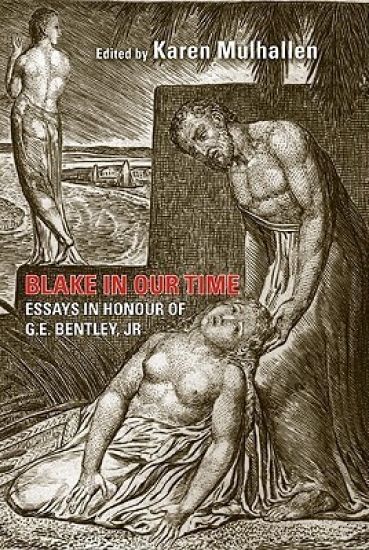
Blake in Our Time

Blake in Our Time

University of Toronto Press
2010
sidottu
Blake in Our Time explores the work of British poet and artist William Blake in the context of the material culture of his era. In the 1960s, University of Toronto scholar G.E. Bentley, Jr almost singlehandedly shifted the focus of Blake criticism from formalism and symbolism to the materiality that contextualizes Blake's work. Following in the footsteps of Bentley's pioneering scholarship, this collection, richly illustrated, demonstrates that the locus of Blake's work lies in the elements that are historically particular to his place and time. Topics include the impact of the town of Chichester on Blake's imagination, the material processes of Blake's painting, the detection of a Blake forgery, and new biographical materials, using archives and online resources, on Blake's contemporaries, patrons, peers, and friends. Essays on the importance of Blake collections world-wide, on variant printings, and on the heirs of Blake in British painting extend the focus of this remarkable investigation to include chalcography and book history.