Kirjojen hintavertailu. Mukana 12 459 402 kirjaa ja 12 kauppaa.

Kirjahaku

Etsi kirjoja tekijän nimen, kirjan nimen tai ISBN:n perusteella.

1000 tulosta hakusanalla Blake Nevius

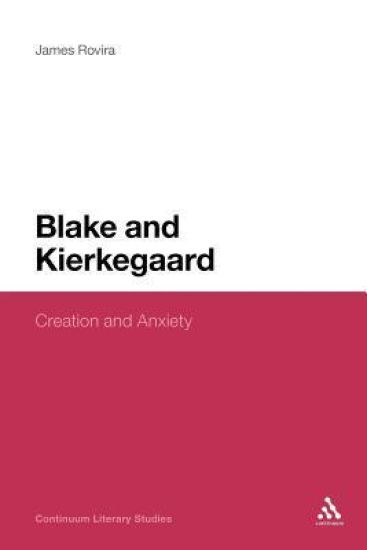
Blake and Kierkegaard

Blake and Kierkegaard

James Rovira

CONTINUUM PUBLISHING CORPORATION
2010
sidottu
Apocalyptic nightmares that humanly-created intelligences will one day rise up against their creators haunt the western creative imagination. However, these narratives find their initial expression not in the widely disseminated Frankenstein story but in William Blake's early mythological works. This book looks at why we persistently fear our own creations by examining Blake's illuminated books of the 1790s through the lens of Kierkegaard's theories of personality and of anxiety. It offers a close examination of Kierkegaard's and Blake's similar, and to an extent shared, historical milieux as residents of Denmark's and England's political and economic centers. Each author's residence in a major urban center motivated them to develop a concept of innocence closely identified with the pastoral, and to place their respective and similar concepts of innocence within a larger developmental scheme encompassing an ethical and then a religious consciousness. Rovira identifies contemporary tensions between monarchy and democracy, science and religion, and nature and artifice as the source both of Kierkegaard's concept of anxiety and Blake's representation of creation anxiety in his early illuminated books.
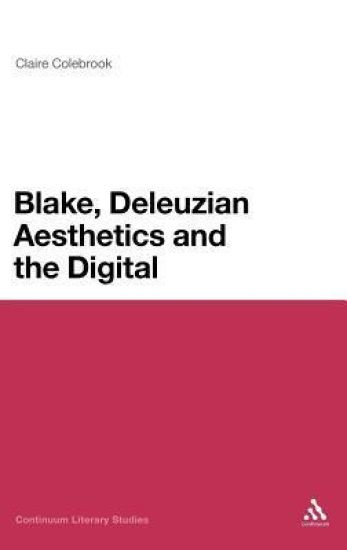
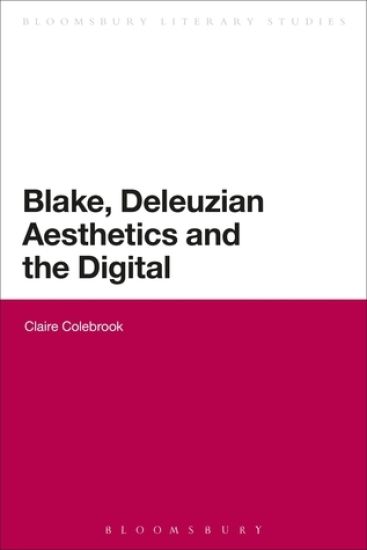
Blake, Deleuzian Aesthetics, and the Digital

Blake, Deleuzian Aesthetics, and the Digital

Claire Colebrook

Continuum Publishing Corporation
2012
sidottu
This is an exploration of new aspects of Blake's work using the concept of incarnation and drawing on theories of contemporary digital media. Drawing on recent theories of digital media and on the materiality of words and images, this fascinating study makes three original claims about the work of William Blake. First, Blake offers a critique of digital media. His poetry and method of illuminated printing is directed towards uncovering an analogical language. Second, Blake's work can be read as a performative. Finally, Blake's work is at one and the same time immanent and transcendent, aiming to return all forms of divinity and the sacred to the human imagination, stressing that 'all deities reside in the human breast,' but it also stresses that the human has powers or potentials that transcend experience and judgement: deities reside in the human breast. These three claims are explored through the concept of incarnation: the incarnation of ideas in words and images, the incarnation of words in material books and their copies, the incarnation of human actions and events in bodies, and the incarnation of spirit in matter.
Blake and Kierkegaard

Blake and Kierkegaard

James Rovira

Continuum Publishing Corporation
2011
nidottu
Apocalyptic nightmares that humanly-created intelligences will one day rise up against their creators haunt the western creative imagination. However, these narratives find their initial expression not in the widely disseminated Frankenstein story but in William Blake's early mythological works. This book looks at why we persistently fear our own creations by examining Blake's illuminated books of the 1790s through the lens of Kierkegaard's theories of personality and of anxiety. It offers a close examination of Kierkegaard's and Blake's similar, and to an extent shared, historical milieux as residents of Denmark's and England's political and economic centers. Each author's residence in a major urban center motivated them to develop a concept of innocence closely identified with the pastoral, and to place their respective and similar concepts of innocence within a larger developmental scheme encompassing an ethical and then a religious consciousness. Rovira identifies contemporarytensions between monarchy and democracy, science and religion, and nature and artificeas the source bothof Kierkegaard's concept of anxiety and Blake's representation of creation anxiety in his early illuminated books.
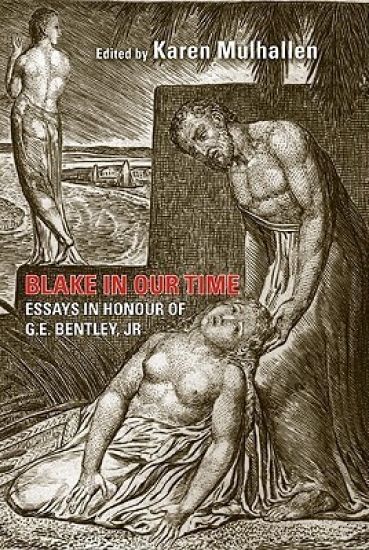
Blake in Our Time

Blake in Our Time

University of Toronto Press
2010
sidottu
Blake in Our Time explores the work of British poet and artist William Blake in the context of the material culture of his era. In the 1960s, University of Toronto scholar G.E. Bentley, Jr almost singlehandedly shifted the focus of Blake criticism from formalism and symbolism to the materiality that contextualizes Blake's work. Following in the footsteps of Bentley's pioneering scholarship, this collection, richly illustrated, demonstrates that the locus of Blake's work lies in the elements that are historically particular to his place and time. Topics include the impact of the town of Chichester on Blake's imagination, the material processes of Blake's painting, the detection of a Blake forgery, and new biographical materials, using archives and online resources, on Blake's contemporaries, patrons, peers, and friends. Essays on the importance of Blake collections world-wide, on variant printings, and on the heirs of Blake in British painting extend the focus of this remarkable investigation to include chalcography and book history.
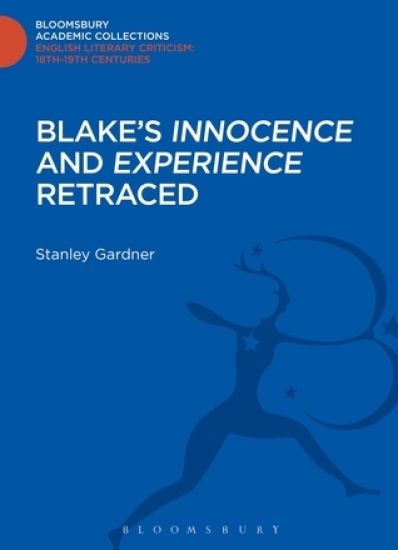
Blake's 'Innocence' and 'Experience' Retraced

Blake's 'Innocence' and 'Experience' Retraced

Stanley Gardner

Bloomsbury Academic
2013
sidottu
This major work of historical and interpretative scholarship draws upon fresh evidence to set the Songs in a new perspective. Blake’s etchings are substantially discussed alongside the poems they illustrate. The plates of both Innocence and Experience are considered in detail as Blake’s response to social circumstances between 1782 and 1794. The reader is asked to re-think the nature of ‘the Two Contrary States’, and the relationship of the designs to the understanding of Blake.
Blake, Deleuzian Aesthetics, and the Digital

Blake, Deleuzian Aesthetics, and the Digital

Claire Colebrook

Bloomsbury Academic
2013
nidottu
Drawing on recent theories of digital media and on the materiality of words and images, this fascinating study makes three original claims about the work of William Blake. First, Blake offers a critique of digital media. His poetry and method of illuminated printing is directed towards uncovering an analogical language. Second, Blake's work can be read as a performative. Finally, Blake's work is at one and the same time immanent and transcendent, aiming to return all forms of divinity and the sacred to the human imagination, stressing that 'all deities reside in the human breast,' but it also stresses that the human has powers or potentials that transcend experience and judgement: deities reside in the human breast. These three claims are explored through the concept of incarnation: the incarnation of ideas in words and images, the incarnation of words in material books and their copies, the incarnation of human actions and events in bodies, and the incarnation of spirit in matter.
Blake Shelton: Happy Anywhere

Blake Shelton: Happy Anywhere

Carol Cash Large

HAL LEONARD CORPORATION
2022
sidottu
Watch Blake Shelton's career begin and flourish from the viewpoint of a lifelong friend who moved the award-winning musician to Nashville when he was seventeen and has been with him every step of the way. In Blake Shelton: Happy Anywhere, Carol Cash Large takes you backstage for personal and unique insight into the life of the young singer. Large starts at the beginning, when Shelton worked with producer Bobby Braddock, recorded his #1 song "Austin," and performed on the Grand Ole Opry. She shares his victories and the rise in fame when he started garnering nominations at award shows and then recorded seventeen consecutive #1 songs. Large's favorite stories come from Shelton's time as host and entertainment on Saturday Night Live and his induction into the Grand Ole Opry. But, she says, landing a gig as a coach of the NBC hit, The Voice, had the biggest impact on his career. Along with his music career success and fame, Large delves into his personal life, showing his penchant for entertaining and bringing smiles to his friends and family. She also recounts stories about Shelton's marriages to Kaynette Williams and Miranda Lambert, and the joy he has found with Gwen Stefani. With fifty personal photos from the author's collection and a close connection to Blake Shelton, Carol Cash Large presents a warm, detailed account of one of country music's biggest stars of all time.
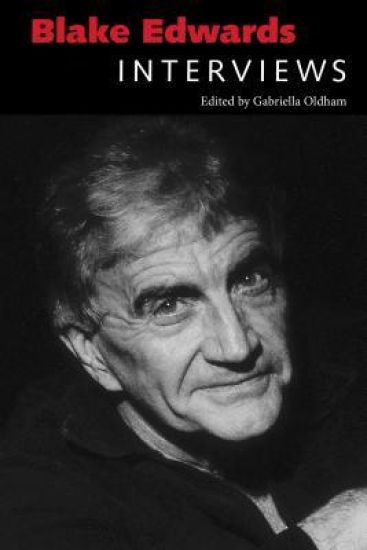
Blake Edwards

Blake Edwards

University Press of Mississippi
2017
sidottu
Blake Edwards (1922-2010) was a multitalented, versatile director constantly exploring who he was, not only in filmmaking but also in life. Often typecast as a comedy director, he also created westerns, thrillers, musicals, and heart-wrenching dramas. His strength as a filmmaker came from his ability to be a triple threat—writer, director, and producer—allowing him full control of his films, especially when the studio system failed him.Blake Edwards: Interviews highlights how the filmmaker created the hugely successful Pink Panther franchise; his long partnership with award-winning composer Henry Mancini; his principles of comedy as influenced by the comic greats of film history, especially silent comedies; his decades-long marriage and film collaborations with Julie Andrews; and his unique philosophy of life. Continually testing his abilities as a writer, which he considered himself to be above all other professions, Edwards did not hesitate to strip comedy from films that clearly and purposefully explored other genres with sharp, dramatic insight. He created thrilling suspense (Experiment in Terror); rugged westerns (Wild Rovers); riveting drama (Days of Wine and Roses); and bittersweet romance (Breakfast at Tiffany’s). He also created musicals, namely Darling Lili and Victor/Victoria, showcasing the talents of Andrews. In fact, many of these films have been considered some of Edwards’s finest in his appreciable career.Reinventing himself throughout his sixty-year career, Edwards found new outlets of expression that fueled his creativity to the very end. This long-overdue collection of published interviews explores the up and downs—and ups again—of a sometimes flawed but always gifted and often surprising filmmaker.