Kirjojen hintavertailu. Mukana 12 402 706 kirjaa ja 12 kauppaa.

Kirjahaku

Etsi kirjoja tekijän nimen, kirjan nimen tai ISBN:n perusteella.

1000 tulosta hakusanalla Brian C. Johnson

Reducing Secondary Traumatic Stress

Reducing Secondary Traumatic Stress

Brian C. Miller

TAYLOR FRANCIS LTD
2025
sidottu
The second edition of Reducing Secondary Traumatic Stress expands the five evidence-informed CE-CERT practices for supporting emotional well-being in workers exposed to the effects of secondary trauma. Adding new insights, additional research support, and fresh examples, the conversational tone makes this edition eminently readable and especially useful.Not only does the book provide helping professionals with a portfolio of skills that support emotion regulation and recovery from secondary trauma exposure, it also enhances the experience of the helping encounter. Each chapter presents evidence-informed skills that allow readers to regulate distressing emotions and foster increased empathy for those suffering from trauma. Reducing Secondary Traumatic Stress goes beyond the usual discussion of burnout to talk in specific terms about what we do about the very real stress that is produced by this work.
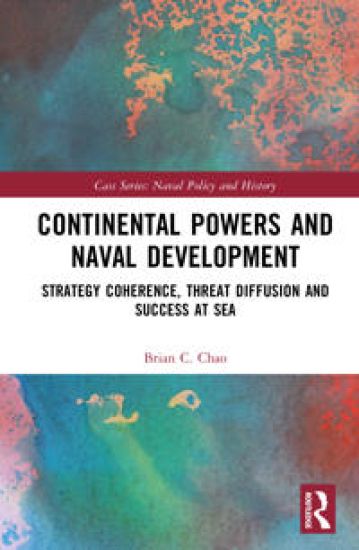
Continental Powers and Naval Development

Continental Powers and Naval Development

Brian C. Chao

TAYLOR FRANCIS LTD
2025
sidottu
This book considers how continental great powers have attempted to develop and wield strong navies from 1801 onwards.Continental Powers and Naval Development argues that a continental great power’s ability to build and effectively use a strong navy are greatly affected by two factors: a naval force design capable of executing national strategy (strategy coherence) and the deployment of that navy to places or for purposes that minimize the dominant naval power’s threat perception (threat diffusion). Each factor is deceptively difficult for a continental great power to achieve but, through an analysis of four historical case studies, this book shows how both factors are vital not just for successful naval development, but for keeping the peace among great powers. Finally, it highlights how states commonly thought of as “unnatural” naval powers can nonetheless achieve their political objectives at sea.This book will be of much interest to students of naval history, maritime strategy, and International Relations.
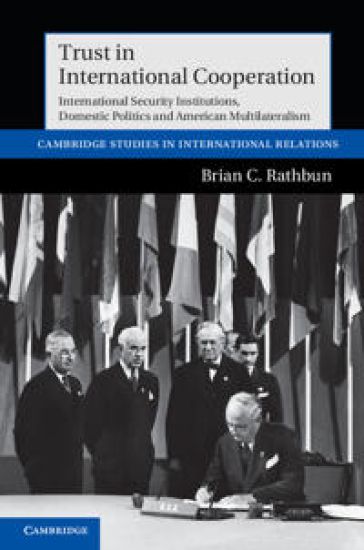
Trust in International Cooperation

Trust in International Cooperation

Brian C. Rathbun

Cambridge University Press
2011
sidottu
Trust in International Cooperation challenges conventional wisdoms concerning the part which trust plays in international cooperation and the origins of American multilateralism. Brian C. Rathbun questions rational institutionalist arguments, demonstrating that trust precedes rather than follows the creation of international organizations. Drawing on social psychology, he shows that individuals placed in the same structural circumstances show markedly different propensities to cooperate based on their beliefs about the trustworthiness of others. Linking this finding to political psychology, Rathbun explains why liberals generally pursue a more multilateral foreign policy than conservatives, evident in the Democratic Party's greater support for a genuinely multilateral League of Nations, United Nations and North Atlantic Treaty Organization. Rathbun argues that the post-World War Two bipartisan consensus on multilateralism is a myth, and differences between the parties are growing continually starker.
Trust in International Cooperation

Trust in International Cooperation

Brian C. Rathbun

Cambridge University Press
2011
pokkari
Trust in International Cooperation challenges conventional wisdoms concerning the part which trust plays in international cooperation and the origins of American multilateralism. Brian C. Rathbun questions rational institutionalist arguments, demonstrating that trust precedes rather than follows the creation of international organizations. Drawing on social psychology, he shows that individuals placed in the same structural circumstances show markedly different propensities to cooperate based on their beliefs about the trustworthiness of others. Linking this finding to political psychology, Rathbun explains why liberals generally pursue a more multilateral foreign policy than conservatives, evident in the Democratic Party's greater support for a genuinely multilateral League of Nations, United Nations and North Atlantic Treaty Organization. Rathbun argues that the post-World War Two bipartisan consensus on multilateralism is a myth, and differences between the parties are growing continually starker.
Reasoning of State

Reasoning of State

Brian C. Rathbun

Cambridge University Press
2019
sidottu
Scholars and citizens tend to assume that rationality guides the decision-making of our leaders. Brian C. Rathbun suggests, however, that if we understand rationality to be a cognitive style premised on a commitment to objectivity and active deliberation, rational leaders are in fact the exception not the norm. Using a unique combination of methods including laboratory bargaining experiments, archival-based case studies, quantitative textual analysis and high-level interviews, Rathbun questions some of the basic assumptions about rationality and leadership, with profound implications for the field of international relations. Case studies of Bismarck and Richelieu show that the rationality of realists makes them rare. An examination of Churchill and Reagan, romantics in international politics who sought to overcome obstacles in their path through force of will and personal agency, show what less rationality looks like in foreign policy making.
Reasoning of State

Reasoning of State

Brian C. Rathbun

Cambridge University Press
2019
pokkari
Scholars and citizens tend to assume that rationality guides the decision-making of our leaders. Brian C. Rathbun suggests, however, that if we understand rationality to be a cognitive style premised on a commitment to objectivity and active deliberation, rational leaders are in fact the exception not the norm. Using a unique combination of methods including laboratory bargaining experiments, archival-based case studies, quantitative textual analysis and high-level interviews, Rathbun questions some of the basic assumptions about rationality and leadership, with profound implications for the field of international relations. Case studies of Bismarck and Richelieu show that the rationality of realists makes them rare. An examination of Churchill and Reagan, romantics in international politics who sought to overcome obstacles in their path through force of will and personal agency, show what less rationality looks like in foreign policy making.
Mastering AutoCAD 2021 and AutoCAD LT 2021

Mastering AutoCAD 2021 and AutoCAD LT 2021

Brian C. Benton; George Omura

Sybex Inc.,U.S.
2021
nidottu
Give life to your designs and keep your CAD skills fresh with Mastering AutoCAD 2021 and Mastering AutoCAD LT 2021 AutoCAD continues to be the tool of choice for architects, project managers, engineers, city planners, and other design professionals, and when the industry experts need to learn the latest CAD techniques and trends, they turn to Mastering AutoCAD and AutoCAD LT. Packed with real-world examples, straightforward instructions, and downloadable project files, this edition of this bestselling AutoCAD reference has been fully updated for the latest features from the 2021 version of AutoCAD and AutoCAD LT. From getting familiar with the interface to preparing for Autodesk AutoCAD certification, Mastering AutoCAD 2021 and AutoCAD LT 2021 gives CAD professionals command of the software’s core functions and complex capabilities. Develop AutoCAD drawings from concept to creationUse hatches, fields, and tablesWork with dynamic blocks, attributes, drawing curves, and solid fillsApply 3D modeling and imaging techniquesCustomize your interface and configure template settings and stylesGet ready for the Autodesk AutoCAD Certification exam Whether you’re seeking on-the-job certification or just looking to dream big and draw, Mastering AutoCAD 2021 and AutoCAD LT 2021 is the ultimate guide to all things AutoCAD.
Hong Kong's Governance Under Chinese Sovereignty
As a hybrid regime, Hong Kong has been governed by a state-business alliance since the colonial era. However, since the handover in 1997, the transformation of Hong Kong’s political and socio-economic environment has eroded the conditions that supported a viable state-business alliance. This state-business alliance, which was once a solution for Hong Kong’s governance, has now become a political burden, rather than a political asset, to the post-colonial Hong Kong state. This book presents a critical re-examination of the post-1997 governance crisis in Hong Kong under the Tung Chee-hwa and Donald Tsang administrations. It shows that the state-business alliance has failed to function as an organizational machinery for supporting the post-colonial state, and has also served to generate new governance problems. Drawing upon contemporary theories on hybrid regimes and state capacity, this book looks beyond the existing opposition-centered explanations of Hong Kong’s governance crisis. By establishing the causal relationship between the failure of the state-business alliance and the governance crisis facing the post-colonial state, Brian C. H. Fong broadens our understanding of the governance problems and political confrontations in post-colonial Hong Kong. In turn, he posits that although the state-business alliance worked effectively for the colonial state in the past, it is now a major problem for the post-colonial state, and suggests that Hong Kong needs a realignment of a new governing coalition.Hong Kong’s Governance under Chinese Sovereignty will enrich and broaden the existing literature on Hong Kong’s public governance whilst casting new light on the territory’s political developments. As such, it will be welcomed by students and scholars interested in Chinese politics, Hong Kong politics, and governance.
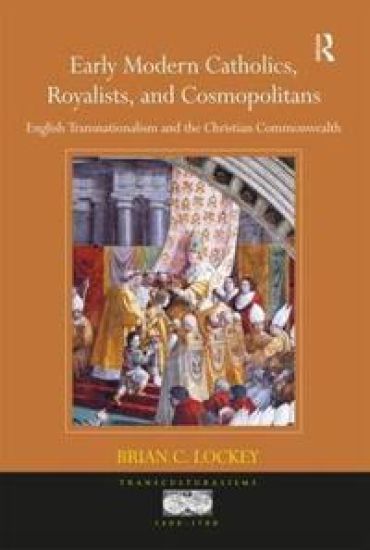
Early Modern Catholics, Royalists, and Cosmopolitans
Early Modern Catholics, Royalists, and Cosmopolitans considers how the marginalized perspective of 16th-century English Catholic exiles and 17th-century English royalist exiles helped to generate a form of cosmopolitanism that was rooted in contemporary religious and national identities but also transcended those identities. Author Brian C. Lockey argues that English discourses of nationhood were in conversation with two opposing 'cosmopolitan' perspectives, one that sought to cultivate and sustain the emerging English nationalism and imperialism and another that challenged English nationhood from the perspective of those Englishmen who viewed the kingdom as one province within the larger transnational Christian commonwealth. Lockey illustrates how the latter cosmopolitan perspective, produced within two communities of exiled English subjects, separated in time by half a century, influenced fiction writers such as Sir Philip Sidney, Edmund Spenser, Anthony Munday, Sir John Harington, John Milton, and Aphra Behn. Ultimately, he shows that early modern cosmopolitans critiqued the emerging discourse of English nationhood from a traditional religious and political perspective, even as their writings eventually gave rise to later secular Enlightenment forms of cosmopolitanism.
Exercise and Disease Management

Exercise and Disease Management

Brian C. Leutholtz; Ignacio Ripoll

CRC Press
2019
nidottu
Exercise and Disease Management is designed to help managed care physicians, their patients, other health care professionals, and interested readers integrate current exercise guidelines into their practices. This extraordinary book is accompanied by a series of 11 workbooks, each one for a chronic disease, designed specifically for physicians to give to their patients. These workbooks make it convenient for physicians to prescribe physical activity to their patients in a ready-to-use format. Each book chapter and workbook contains a section on the background, medical management, and exercise guidelines, accompanied by self-care instructions for patients, encouraging them to take a proactive role in their health and disease management. New and Updated in the Second Edition:A ready-to-use "Exercise Prescription Page," which follows each chapter on a specific disease, enables health care professionals, especially physicians in managed care, to prescribe exercise quickly to clients with specific medical conditionsThe "Rate Pressure Product" method for prescribing exercise helps health care providers individualize exercise prescriptions for patients with heart disease by accounting for the amount of oxygen the heart usesIndividual companion workbooks on the downloadable resources provide patient health maintenance information about diabetes, AIDS, obesity, golden years (age 65 and older), heart, kidney, peripheral arterial, and lung disease. Workbooks for physical inactivity, osteoporosis, arthritis and high blood pressure also are included on the downloadable resourcesCommon question-and-answer sections that help patients understand the diseases from which they suffer and encourages them to take responsibility for their healthExercise and Disease Management, Second Edition consolidates the current knowledge base on exercise and chronic disease, providing a ready-made format for health care providers to use when prescribing exercise programs for their clients. Using guidelines set forth by the American College of Sports Medicine and the American Association of Cardiovascular and Pulmonary Rehabilitation, this book helps physicians, other health care providers, and health enthusiasts respond to the challenge to keep patients healthier and active and reduce recurrent hospitalizations and health care costs.
Democracy, Dialectics, and Difference

Democracy, Dialectics, and Difference

Brian C. Lovato

Routledge
2015
sidottu
It has been nearly two centuries since Marx famously turned Hegel on his head in order to repurpose dialectics as a revolutionary way of thinking about the internal contradictions of our social relations. Despite critiques from post-structuralists, post-colonialists, and others, there has been a resurgence of dialectical thought among political theorists as of late. This resurgence has coincided with a rise in the mention of words like class warfare, socialism, and communism among the general public on the streets of Seattle in 1999, in Cairo’s Tahrir Square, in the actions of the Greek anarchists and the Spanish indignados, and in the rallying cry of "we are the 99%" of the Occupy Movement, and in academia. This book explores how it is that dialectical thought might respond to the critiques brought forth by those on the left who are critical of Marxism’s universalizing and authoritarian legacy.Brian C. Lovato singles out Ernesto Laclau and Chantal Mouffe as the key interlocutors in this ongoing conversation between Marxism and post-structuralism. Laclau and Mouffe argue that Marxist theory is inherently authoritarian, cannot escape a class-reductionist theory of revolutionary subjectivity, and is bound by a closed Hegelian ontology. Lovato argues the opposite by turning to two heterodox Marxist thinkers, Raya Dunayevskaya and C. L. R. James, in order to construct a radically democratic, dynamic, and open conceptualization of dialectical thought. In doing so, he advances a vision of Marxist theory that might serve as a resource to scholars and activists committed not only to combatting capitalism, but also to fighting against colonialism, patriarchy, white supremacy, and heteronormativity. The writings of Dunayevskaya and James allow for Marxism to become relevant again in these tumultuous early years of the 21st century.
The Immortality Key: The Secret History of the Religion with No Name
THE NEW YORK TIMES BESTSELLER As seen on The Joe Rogan Experience A groundbreaking dive into the role psychedelics have played in the origins of Western civilization, and a real-life quest for the Holy Grail. The most influential religious historian of the 20th century, Huston Smith, once referred to it as the "best-kept secret" in history. Did the Ancient Greeks use drugs to find God? And did the earliest Christians inherit the same, secret tradition? A profound knowledge of visionary plants, herbs and fungi passed from one generation to the next, ever since the Stone Age? There is zero archaeological evidence for the original Eucharist - the sacred wine said to guarantee life after death for those who drink the blood of Jesus. The Holy Grail and its miraculous contents have never been found. In the absence of any hard data, whatever happened at the Last Supper remains an article of faith for today's 2.5 billion Christians. In an unprecedented search for real answers, The Immortality Key examines the archaic roots of the ritual that is performed every Sunday for nearly one third of the planet. Religion and science converge to paint a radical picture of Christianity's founding event. And after centuries of debate, to solve history's greatest puzzle once and for all. Before the birth of Jesus, the Ancient Greeks found salvation in their own sacraments. Sacred beverages were routinely consumed as part of the so-called Ancient Mysteries - elaborate rites that led initiates to the brink of death. The best and brightest from Athens and Rome flocked to the spiritual capital of Eleusis, where a holy beer unleashed heavenly visions for two thousand years. Others drank the holy wine of Dionysus to become one with the god. In the 1970s, renegade scholars claimed this beer and wine - the original sacraments of Western civilization - were spiked with mind-altering drugs. In recent years, vindication for the disgraced theory has been quietly mounting in the laboratory. The constantly advancing fields of archaeobotany and archaeochemistry have hinted at the enduring use of hallucinogenic drinks in antiquity. And with a single dose of psilocybin, the psychopharmacologists at Johns Hopkins and NYU are now turning self-proclaimed atheists into instant believers. But the smoking gun remains elusive. If these sacraments survived for thousands of years in our remote prehistory, from the Stone Age to the Ancient Greeks, did they also survive into the age of Jesus? Was the Eucharist of the earliest Christians, in fact, a psychedelic Eucharist? With an unquenchable thirst for evidence, Muraresku takes the reader on his twelve-year global hunt for proof. He tours the ruins of Greece with its government archaeologists. He gains access to the hidden collections of the Louvre Museum to show the continuity from pagan to Christian wine. He unravels the Ancient Greek of the New Testament with a Catholic priest. He spelunks into the catacombs under the streets of Rome to decipher the lost symbols of Christianity's oldest monuments. He breaches the secret archives of the Vatican to unearth manuscripts never before translated into English. And with leads from the archaeological chemists at the University of Pennsylvania and the Massachusetts Institute of Technology, he unveils the first scientific data for the ritual use of psychedelic drugs in classical antiquity. The Immortality Key reconstructs the suppressed history of women consecrating a forbidden, drugged Eucharist that was later banned by the Church Fathers. Women who were then targeted as witches during the Inquisition, when Europe's sacred pharmacology largely disappeared. Have the scientists of today resurrected this lost technology? Is Christianity capable of returning to its roots? Featuring a Foreword by Graham Hancock, the New York Times bestselling author of America Before: The Key to Earth's Lost Civilization.
The Immortality Key

The Immortality Key

Brian C. Muraresku

St Martin's Press
2023
nidottu
The world’s biggest religion has a problem. There is zero archaeological evidence for the original Eucharist – the sacred wine said to guarantee life after death for those who drink the blood of Jesus. The Holy Grail and and its miraculous contents have never been found. In the absence of any hard data, whatever happened at the Last Supper remains a mystery for today’s 2.5 billion faithful. The Immortality Key attempts to crack the best-kept secret in history by examining the archaic roots of the ritual that is performed every Sunday for nearly one third of the planet. Two thousand years in the making, religion and science converge to paint a radical picture of Christianity’s founding event. In the tradition of David Grann's Killers of the Flower Moon and Douglas Preston's The Lost City of the Monkey God, Muraresku takes the reader on his twelve-year global hunt for proof. He gains access to the hidden collections of the Louvre Museum to show the continuity from pagan to Christian wine. He spelunks into the catacombs under the streets of Rome to decipher the lost symbols of Christianity’s oldest monuments. He breaches the secret archives of the Vatican to unearth manuscripts never before translated into English. And with leads from elite archaeological chemists, he unveils the first scientific data for the ritual use of psychedelic drugs in classical antiquity.
Exercise Prescription for Special Populations: Chronic Disease, Unique Populations, and Challenging Diagnosis
Practitioners should always develop exercise prescription with consideration for an individual's health history, but this is especially true for individuals with a history of chronic disease. Exercise Prescription for Special Populations: Chronic Disease, Unique Populations, and Challenging Diagnosis delves into how practitioners should prescribe exercise for those with conditions such as heart disease, diabetes, and hypertension, as well as for those who are pregnant, wheelchair-dependent, or adolescents.Exercise Prescription for Special Populations utilizes a hybrid approach, combining elements of a traditional textbook and a "field guide" reference, with summative tables at the end of each chapter fulfilling the latter function. This reference aspect makes this text an ideal fit not just for upper-level undergraduate and graduate-level Exercise Science students, but also for exercise physiologists and personal fitness trainers working in fitness centers, hospitals, and in-/out-patient cardiac rehabilitation programs.
Gone to Fiddler's Green: Reconnaissance and Security for the Corps
The United States Army's transformation from the Army of Excellence design to the Modular design had profound changes for the corps organization. Armored cavalry regiments under the Army of Excellence design provided reconnaissance and security for corps. However, the pending transformation of the 3d Armored Cavalry Regiment to a Stryker brigade combat team fundamentally changed the way corps conduct reconnaissance and security. This change raised the issue of a corps ability to conduct reconnaissance and security without a dedicated land-based organization. This study addresses a corps requirement for reconnaissance and security through the criteria of doctrine, capability and organization. The study uses the criteria to describe how Army doctrine shapes a corps requirement for a reconnaissance and security organization, the capabilities such an organization requires, and the actual organizational structure of the reconnaissance and security force the Army designed. The case studies for analysis are the II Field Force, Vietnam and 11th Armored Cavalry Regiment in Operation TOAN THANG 43; VII Corps and 2d Armored Cavalry Regiment in Operation DESERT STORM; and V Corps in Operation IRAQI FREEDOM. The first two case studies represent different eras in the U.S. Army's history which saw corps-sized formations employ a dedicated reconnaissance and security organization. These case studies establish the Army's previous experience with armored cavalry regiments against different enemies and on different types of terrain. The last case study, Operation IRAQI FREEDOM, addresses a corps operating without a dedicated reconnaissance and security organization. The set of criteria to analyze the case studies are doctrine, capability, and organization. The main findings indicated the need for corps to have a dedicated reconnaissance and security organization. Although transformation in its final stages, the Army is still in a period of transition between the Army of Excellence an This work has been selected by scholars as being culturally important, and is part of the knowledge base of civilization as we know it. This work was reproduced from the original artifact, and remains as true to the original work as possible. Therefore, you will see the original copyright references, library stamps (as most of these works have been housed in our most important libraries around the world), and other notations in the work. This work is in the public domain in the United States of America, and possibly other nations. Within the United States, you may freely copy and distribute this work, as no entity (individual or corporate) has a copyright on the body of the work. As a reproduction of a historical artifact, this work may contain missing or blurred pages, poor pictures, errant marks, etc. Scholars believe, and we concur, that this work is important enough to be preserved, reproduced, and made generally available to the public. We appreciate your support of the preservation process, and thank you for being an important part of keeping this knowledge alive and relevant.