In the twenty years that preceded the publication of this book in 1988, David Rabe was in the vanguard of playwrights who shaped American theatre. As the first full-length work on Rabe, this book laid the groundwork for later critical and biographical studies. The first part consists of an essay that covers three sections: a short biography, a summary and evaluation of his formative journalism for the New Haven Register, and a detailed and cohesive stage history of his work. The second part presents the most comprehensive and authoritative primary bibliography of Rabe to date, with the third section containing a secondary bibliography — including a section on biographical studies.
In the twenty years that preceded the publication of this book in 1988, David Rabe was in the vanguard of playwrights who shaped American theatre. As the first full-length work on Rabe, this book laid the groundwork for later critical and biographical studies. The first part consists of an essay that covers three sections: a short biography, a summary and evaluation of his formative journalism for the New Haven Register, and a detailed and cohesive stage history of his work. The second part presents the most comprehensive and authoritative primary bibliography of Rabe to date, with the third section containing a secondary bibliography — including a section on biographical studies.
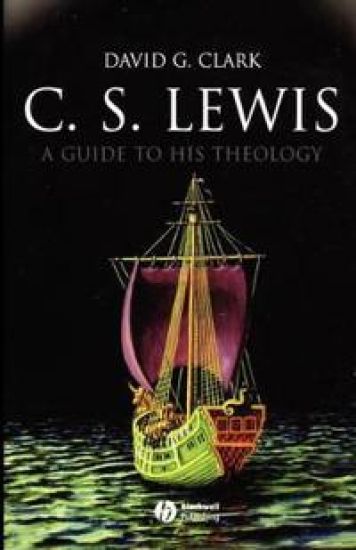
In this engaging book David Clark guides the reader through the theology of CS Lewis and illuminates the use and understanding of scripture in the works of this popular author. Examines his life, work, world view, and the implications of his theology in relation to his other writingsLooks at Lewis' beliefs on the topics of redemption, humanity, spiritual growth, purgatory, and resurrectionExamines the different perspectives on Lewis and his work: as prophet, evangelist, and as a spiritual mentorExplores the range and influence of Lewis' work, from the bestselling apologetic, Mere Christianity, to the world-famous Chronicles of NarniaFeatures specially-commissioned artwork throughoutWritten in an accessible style for general readers, students, and scholars, and will introduce Lewis' theology to a wider audience.
In this engaging book David Clark guides the reader through the theology of CS Lewis and illuminates the use and understanding of scripture in the works of this popular author. Examines his life, work, world view, and the implications of his theology in relation to his other writingsLooks at Lewis' beliefs on the topics of redemption, humanity, spiritual growth, purgatory, and resurrectionExamines the different perspectives on Lewis and his work: as prophet, evangelist, and as a spiritual mentorExplores the range and influence of Lewis' work, from the bestselling apologetic, Mere Christianity, to the world-famous Chronicles of NarniaFeatures specially-commissioned artwork throughoutWritten in an accessible style for general readers, students, and scholars, and will introduce Lewis' theology to a wider audience.
An ICU nurse and a hospital chaplain fight bureaucratic bungling, medical arrogance, and their own limitations as their patients hover between death and life.
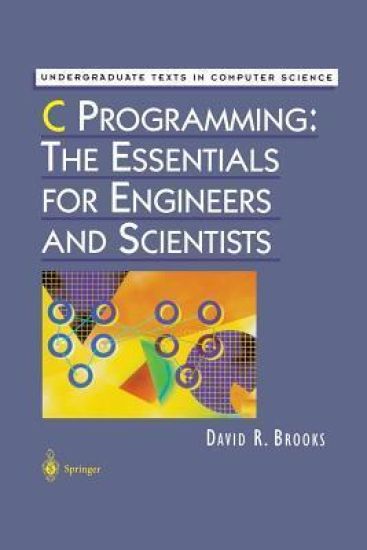
1 The Purpose of This Text This text has been written in response to two trends that have gained considerable momentum over the past few years. The first is the decision by many undergraduate engineering and science departments to abandon the traditional programming course based on the aging Fortran 77 standard. This decision is not surprising, considering the more modem features found in languages such as Pascal and C. However, Pascal never developed a strong following in scientific computing, and its use is in decline. The new Fortran 90 standard defines a powerful, modem language, but this long-overdue redesign of Fortran has come too late to prevent many colleges and universities from switching to C. The acceptance of C by scientists and engineers is based perhaps as. much on their perceptions of C as an important language, which it certainly is, and on C programming experience as a highly marketable skill, as it is on the suitability of C for scientific computation. For whatever reason, C or its derivative C++ is now widely taught as the first and often only programming language for undergraduates in science and engineering. The second trend is the evolving nature of the undergraduate engineering curriculum. At a growing number of institutions, the traditional approach of stressing theory and mathematics fundamentals in the early undergraduate years, and postponing real engineering applications until later in the curriculum, has been turned upside down.
The authors develop in detail the theory of (almost) c-projective geometry, a natural analogue of projective differential geometry adapted to (almost) complex manifolds. The authors realise it as a type of parabolic geometry and describe the associated Cartan or tractor connection. A Kahler manifold gives rise to a c-projective structure and this is one of the primary motivations for its study. The existence of two or more Kahler metrics underlying a given c-projective structure has many ramifications, which the authors explore in depth. As a consequence of this analysis, they prove the Yano–Obata Conjecture for complete Kahler manifolds: if such a manifold admits a one parameter group of c-projective transformations that are not affine, then it is complex projective space, equipped with a multiple of the Fubini-Study metric.
The second son of Johann Sebastian Bach, C.P.E. Bach was an important composer in his own right, as well as a writer and performer on keyboard instruments. He composed roughly a thousand works in all the leading genres of the period, with the exception of opera, and Haydn, Mozart and Beethoven all acknowledged his influence. He was also the author of a two-volume encyclopedic book about performance on keyboard instrument. C.P.E. Bach and his music have always been the subject of significant scholarship and publication but interest has sharply increased over the past two or three decades from performers as well as music historians. This volume incorporates important writings not only on the composer and his chief works but also on theoretical issues and performance questions. The focus throughout is on relatively recent scholarship otherwise available only in hard-to-access sources.