Kirjojen hintavertailu. Mukana 12 016 292 kirjaa ja 12 kauppaa.

Kirjahaku

Etsi kirjoja tekijän nimen, kirjan nimen tai ISBN:n perusteella.

1000 tulosta hakusanalla C. Steven Ellis

Wheelz

Wheelz

Steven C. Fotheringham

Wheelzbook
2015
nidottu
This book is not about turning lemons into lemonade. It's about liking lemons. And no one likes them more than Aaron "Wheelz" Fotheringham When asked by ESPN, "How do you define spina bifida?" Aaron responded, "A great opportunity." Consumed by the simple but logical belief that riding is more fun than walking, Aaron took his wheelchair and turned it into a toy, playing and practicing on it until there was no place he couldn't go. After beating his peers in all the BMX competitions he could enter, Aaron became the unicorn of the Nitro Circus team, the ultimate dream of every BMX rider and skateboarder alike."The effect that Wheelz has on the crowd is out of this world. I mean, we have the best in the world of action sports, and more people come to see Wheelz than anybody else."Quote from Travis Pastrana, -X Games gold medalist and Nitro Circus organizer, leader and performer.Aaron's story includes pain, determination, failure, motivation, and unimagined success. And yet these things are incidental to the real story. What makes his story great is that his attitude is contagious, and Wheelz is anything but quarantined."What a fantastic story of one determined kid with a great outlook on life Everyone can learn and be inspired by Wheelz That is what I love most about this book, it's applicable to everyone." Reader review.
A Liberated Mind: How to Pivot Toward What Matters

A Liberated Mind: How to Pivot Toward What Matters

Steven C. Hayes

Avery Publishing Group
2020
nidottu
"In all my years studying personal growth, Acceptance and Commitment Therapy is one of the most useful tools I've ever come across, and in this book, Dr. Hayes describes it with more depth and clarity than ever before."-Mark Manson, #1 New York Times best-selling author of The Subtle Art of Not Giving a F*ckLife is not a problem to be solved. ACT shows how we can live full and meaningful lives by embracing our vulnerability and turning toward what hurts. In this landmark book, the originator and pioneering researcher into Acceptance and Commitment Therapy (ACT) lays out the psychological flexibility skills that make it one of the most powerful approaches research has yet to offer. These skills have been shown to help even where other approaches have failed. Science shows that they are useful in virtually every area--mental health (anxiety, depression, substance abuse, eating disorders, PTSD); physical health (chronic pain, dealing with diabetes, facing cancer); social processes (relationship issues, prejudice, stigma, domestic violence); and performance (sports, business, diet, exercise). How does psychological flexibility help? We struggle because the problem-solving mind tells us to run from what causes us fear and hurt. But we hurt where we care. If we run from a sense of vulnerability, we must also run from what we care about. By learning how to liberate ourselves, we can live with meaning and purpose, along with our pain when there is pain. Although that is a simple idea, it resists our instincts and programming. The flexibility skills counter those ingrained tendencies. They include noticing our thoughts with curiosity, opening to our emotions, attending to what is in the present, learning the art of perspective taking, discovering our deepest values, and building habits based around what we deeply want. Beginning with the epiphany Steven Hayes had during a panic attack, this book is a powerful narrative of scientific discovery filled with moving stories as well as advice for how we can put flexibility skills to work immediately. Hayes shows how allowing ourselves to feel fully and think freely moves us toward commitment to what truly matters to us. Finally, we can live lives that reflect the qualities we choose.
Just Ecological Integrity

Just Ecological Integrity

Steven C. Rockefeller

Rowman Littlefield Publishers
2002
nidottu
Just Ecological Integrity presents a collection of revised and expanded essays originating from the international conference 'Connecting Environmental Ethics, Ecological Integrity, and Health in the New Millennium' held in San Jose, Costa Rica in June 2000. It is a cooperative venture of the Global Ecological Integrity Project and the Earth Charter Initiative. Beginning with an in depth look at the history and meaning of the Earth Charter itself, Just Ecological Integrity moves to consider the systems of measurement necessary to indicate progress in achieving the Earth Charter's goals. Contributors to the volume explore such issues as the reciprocal impacts between humans and nature; human destructiveness; and the various ways in which the revaluation of nature in terms of intrinsic qualities affects broader notions of justice. A rich collection of case studies enhances the volume and examines such issues as violence, risk, and the preservation of nature in local circumstances.
Politicizing the International Criminal Court

Politicizing the International Criminal Court

Steven C. Roach

Rowman Littlefield Publishers
2006
sidottu
The establishment of the International Criminal Court (ICC) in July 1998 has attracted growing interest in the evolving role of politics in international law. Steven C. Roach's innovative and systematic work on the political and ethical dimensions of the ICC is the first comprehensive attempt to situate the politics of the ICC both theoretically and practically. Linking the ICC's internal politicization with its formative development, Roach provides a unique understanding of this institution's capacity to play a constructive role in global politics. He argues that an internal form of politicization will allow the ICC to counter outside efforts to politicize it, whether this involves the political agenda of a state hegemon or the geopolitical interests of U. N. Security Council permanent members. Steering a new path between conventional approaches that stress the formal link between legitimacy and legal neutrality, and unconventional approaches that treat legitimacy and politics as inextricable elements of a repressive international legal order, Roach formulates the concept of political legalism, which calls for a self-directed and engaged application of the legal rules and principles of the ICC Statute. Politicizing the International Criminal Court is a must-read for scholars, students, and policymakers interested in the dynamics of this important international institution.
Politicizing the International Criminal Court

Politicizing the International Criminal Court

Steven C. Roach

Rowman Littlefield Publishers
2006
nidottu
The establishment of the International Criminal Court (ICC) in July 1998 has attracted growing interest in the evolving role of politics in international law. Steven C. Roach's innovative and systematic work on the political and ethical dimensions of the ICC is the first comprehensive attempt to situate the politics of the ICC both theoretically and practically. Linking the ICC's internal politicization with its formative development, Roach provides a unique understanding of this institution's capacity to play a constructive role in global politics. He argues that an internal form of politicization will allow the ICC to counter outside efforts to politicize it, whether this involves the political agenda of a state hegemon or the geopolitical interests of U. N. Security Council permanent members. Steering a new path between conventional approaches that stress the formal link between legitimacy and legal neutrality, and unconventional approaches that treat legitimacy and politics as inextricable elements of a repressive international legal order, Roach formulates the concept of political legalism, which calls for a self-directed and engaged application of the legal rules and principles of the ICC Statute. Politicizing the International Criminal Court is a must-read for scholars, students, and policymakers interested in the dynamics of this important international institution.
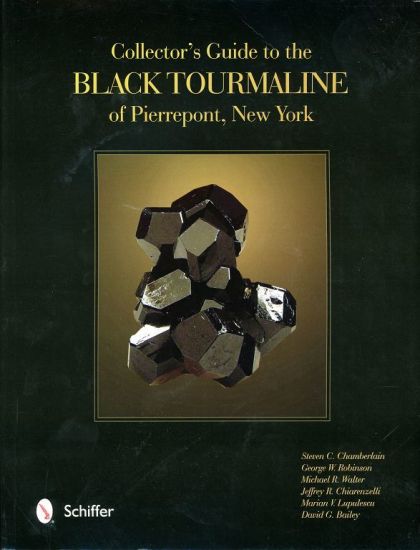
Collector's Guide to the Black Tourmaline of Pierrepont, New York

Collector's Guide to the Black Tourmaline of Pierrepont, New York

Steven C. Chamberlain; George Robinson; Michael Walter; Jeffrey Chiarenzelli

Schiffer Publishing Ltd
2016
nidottu
Since its discovery by a teenager in 1859, thousands of specimens of lustrous black tourmaline crystals from Pierrepont, New York, have found their way into both museum and private mineral collections worldwide. Pierrepont is a classic American mineral locality and a popular site for field collecting, and the discovery of new collecting sites there in the past decade has only enhanced its importance. Yet no detailed scientific research has been published until now. The six authors represent a team with comprehensive skills to tackle this study, which covers the locality's history, geology, and mineralogy. The origin of the mineralization, the true nature of the black tourmaline, and the extensive suite of accessory minerals are presented in detail. The authors also resolve identification questions about the tourmaline and its many accessory minerals.
The Economics of American Agriculture

The Economics of American Agriculture

Steven C. Blank

Routledge
2008
sidottu
This book answers the questions: What is happening to American agriculture, and why? Steven C. Blank uses portfolio theory to analyze both macro- and microeconomic data that paints a clear picture of the trends in agriculture, and explains why these trends are consistent with market evolution and global economic development. He clarifies agriculture's specific role in economic development with a focus on the current and future globalizing commodity markets.The book features empirical research that demonstrates the link between farm-level investment decisions and regional and national economic trends. It shows how the dynamic environment of industrialization and globalization of agriculture is part of a continuing development that is driven by technological innovation. This all points to a future with a very different agricultural production sector and some extremely important policy choices that will face the entire country.
The Economics of American Agriculture

The Economics of American Agriculture

Steven C. Blank

Routledge
2008
nidottu
This book answers the questions: What is happening to American agriculture, and why? Steven C. Blank uses portfolio theory to analyze both macro- and microeconomic data that paints a clear picture of the trends in agriculture, and explains why these trends are consistent with market evolution and global economic development. He clarifies agriculture's specific role in economic development with a focus on the current and future globalizing commodity markets.The book features empirical research that demonstrates the link between farm-level investment decisions and regional and national economic trends. It shows how the dynamic environment of industrialization and globalization of agriculture is part of a continuing development that is driven by technological innovation. This all points to a future with a very different agricultural production sector and some extremely important policy choices that will face the entire country.
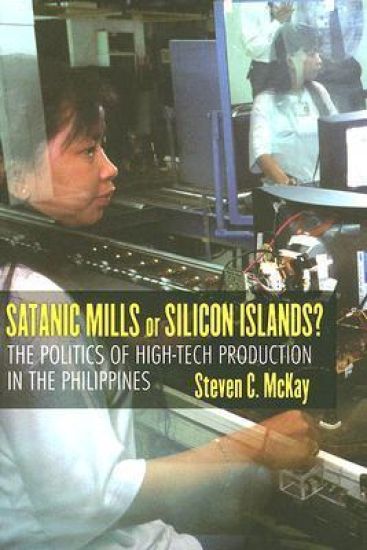
Satanic Mills or Silicon Islands?

Satanic Mills or Silicon Islands?

McKay Steven C.

ILR Press
2006
sidottu
Satanic Mills or Silicon Islands? challenges the myth of globalization's homogenizing power, arguing that the uniqueness of place is becoming more, not less important. Steven McKay documents how multinational firms secure worker control and consent by reaching beyond the high-tech factory and into local labor markets. He also traces the rise of a new breed of privatized export processing zones, revealing the state's—in these cases, the Philippines—revamped role in the wider politics of global production. Finally, McKay gives voice to the women workers themselves, as they find meaning, identity, and agency on and beyond the "new" shop floor. This book deftly weaves together three critical strands of global studies: Southeast Asia as a key site of global production, the organization of work in advanced electronics, and working-class conditions under globalization. Drawing on the author's rich analysis of four multinational electronics firms—from their boardrooms to boarding houses—Satanic Mills or Silicon Islands? makes a unique contribution to the study of work, labor, and high-tech production.
Satanic Mills or Silicon Islands?

Satanic Mills or Silicon Islands?

Steven C. McKay

Cornell University Press
2006
pokkari
Satanic Mills or Silicon Islands? challenges the myth of globalization's homogenizing power, arguing that the uniqueness of place is becoming more, not less important. Steven McKay documents how multinational firms secure worker control and consent by reaching beyond the high-tech factory and into local labor markets. He also traces the rise of a new breed of privatized export processing zones, revealing the state's—in these cases, the Philippines—revamped role in the wider politics of global production. Finally, McKay gives voice to the women workers themselves, as they find meaning, identity, and agency on and beyond the "new" shop floor. This book deftly weaves together three critical strands of global studies: Southeast Asia as a key site of global production, the organization of work in advanced electronics, and working-class conditions under globalization. Drawing on the author's rich analysis of four multinational electronics firms—from their boardrooms to boarding houses—Satanic Mills or Silicon Islands? makes a unique contribution to the study of work, labor, and high-tech production.
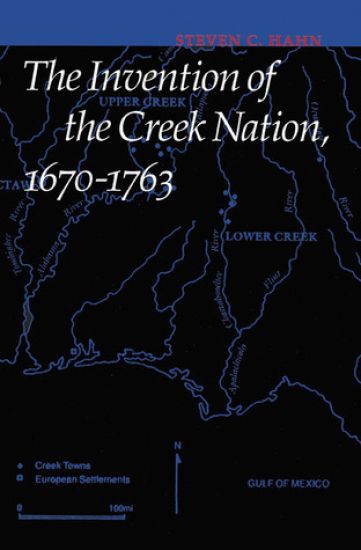
The Invention of the Creek Nation, 1670-1763

The Invention of the Creek Nation, 1670-1763

Steven C. Hahn

University of Nebraska Press
2004
sidottu
Drawing on archaeological evidence and often-neglected Spanish source material, The Invention of the Creek Nation, 1670–1763 explores the political history of the Creek Indians of Georgia and Alabama and the emergence of the Creek Nation during the colonial era in the American Southeast. In part a study of Creek foreign relations, this book examines the creation and application of the "neutrality" policy—defined here as the Coweta Resolution of 1718—for which the Creeks have long been famous, in an era marked by the imperial struggle for the American South. Also a study of the culture of internal Creek politics, this work shows the persistence of a "traditional" kinship-based political system in which town and clan affiliation remained supremely important. These traditions, coupled with political intrusions by the region's three European powers, promoted the spread of Creek factionalism and mitigated the development of a regional Creek Confederacy. But while traditions endured, the struggle to maintain territorial integrity against Britain also promoted political innovation. In this context the territorially defined Creek Nation emerged as a legal concept in the era of the French and Indian War, as imperial policies of an earlier era gave way to the territorial politics that marked the beginning of a new one.
The Invention of the Creek Nation, 1670-1763

The Invention of the Creek Nation, 1670-1763

Steven C. Hahn

University of Nebraska Press
2014
pokkari
Drawing on archaeological evidence and often-neglected Spanish source material, The Invention of the Creek Nation, 1670–1763 explores the political history of the Creek Indians of Georgia and Alabama and the emergence of the Creek Nation during the colonial era in the American Southeast. In part a study of Creek foreign relations, this book examines the creation and application of the "neutrality" policy—defined here as the Coweta Resolution of 1718—for which the Creeks have long been famous, in an era marked by the imperial struggle for the American South. Also a study of the culture of internal Creek politics, this work shows the persistence of a "traditional" kinship-based political system in which town and clan affiliation remained supremely important. These traditions, coupled with political intrusions by the region's three European powers, promoted the spread of Creek factionalism and mitigated the development of a regional Creek Confederacy. But while traditions endured, the struggle to maintain territorial integrity against Britain also promoted political innovation. In this context the territorially defined Creek Nation emerged as a legal concept in the era of the French and Indian War, as imperial policies of an earlier era gave way to the territorial politics that marked the beginning of a new one.
Trade and Gunboats

Trade and Gunboats

Steven C. Topik

Stanford University Press
1997
sidottu
A hundred years ago, the United States first projected itself onto the international stage, hoping to stake out a sphere of influence in Latin America just as the largest of Latin American countries, Brazil, ending a 67-year-long monarchical regime, struggled to redefine its relationship to the world economy. Debates raged between liberals and corporatists, between free traders and protectionists. When the trajectories of these two unequal giants collided, their interaction revealed much about the international economic and political affairs of their day that bears upon the debates surrounding today’s “new world order.” The book begins by examining the Blaine-Mendonca Accord of 1891, the first commercial pact ever signed between Brazil and the United States, thus beginning a special relationship that lasted into the 1970’s. This is the first study of U.S.-Brazilian relations that seriously examines the internal politics and economics of both countries and how they played themselves out in the late nineteenth century. The author attempts a new kind of international history, comparative political economy, that examines not only internal dynamics but also the nature of the international regime at the time.
Trade and Gunboats

Trade and Gunboats

Steven C. Topik

Stanford University Press
2000
pokkari
A hundred years ago, the United States first projected itself onto the international stage, hoping to stake out a sphere of influence in Latin America just as the largest of Latin American countries, Brazil, ending a 67-year-long monarchical regime, struggled to redefine its relationship to the world economy. Debates raged between liberals and corporatists, between free traders and protectionists. When the trajectories of these two unequal giants collided, their interaction revealed much about the international economic and political affairs of their day that bears upon the debates surrounding today's "new world order." The book begins by examining the Blaine-Mendonca Accord of 1891, the first commercial pact ever signed between Brazil and the United States, thus beginning a special relationship that lasted into the 1970's. This is the first study of U.S.-Brazilian relations that seriously examines the internal politics and economics of both countries and how they played themselves out in the late nineteenth century. The author attempts a new kind of international history, comparative political economy, that examines not only internal dynamics but also the nature of the international regime at the time.
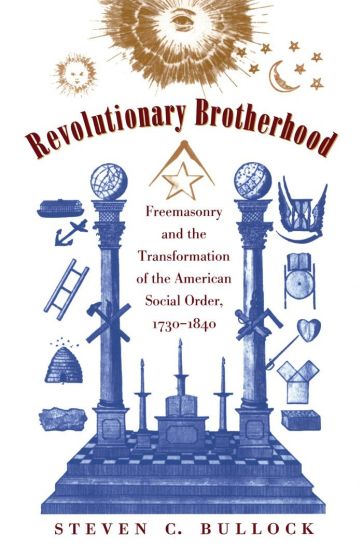
Revolutionary Brotherhood

Revolutionary Brotherhood

Bullock Steven C.

The University of North Carolina Press
1998
nidottu
In the first comprehensive history of the fraternity known to outsiders primarily for its secrecy and rituals, Steven Bullock traces Freemasonry through its first century in America. He follows the order from its origins in Britain and its introduction into North America in the 1730s to its near-destruction by a massive anti-Masonic movement almost a century later and its subsequent reconfiguration into the brotherhood we know today. With a membership that included Benjamin Franklin, George Washington, Paul Revere, and Andrew Jackson, Freemasonry is fascinating in its own right, but Bullock also places the movement at the center of the transformation of American society and culture from the colonial era to the rise of Jacksonian democracy. Using lodge records, members' reminiscences and correspondence, and local and Masonic histories, Bullock links Freemasonry with the changing ideals of early American society. Although the fraternity began among colonial elites, its spread during the Revolution and afterward allowed it to play an important role in shaping the new nation's ideas of liberty and equality. Ironically, however, the more inclusive and universalist Masonic ideas became, the more threatening its members' economic and emotional bonds seemed to outsiders, sparking an explosive attack on the fraternity after 1826. American History |A comprehensive history of the first century of Freemasonry in America.
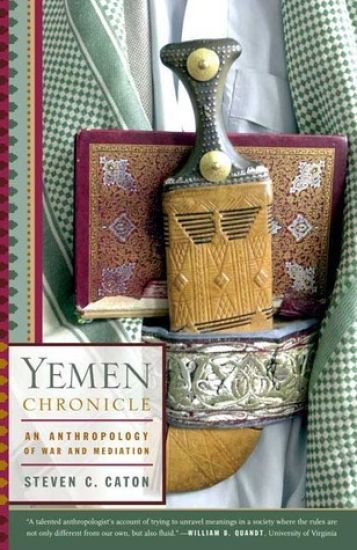
Yemen Chronicle: An Anthropology of War and Mediation
In 1979, Steven C. Caton went to a remote area of Yemen to do fieldwork on the famous oral poetry of its tribes. The recent hostage crisis in Iran made life perilous for a young American in the Middle East; worse, he was soon embroiled in a dangerous local conflict and tribal hostilities simmered for months. Yemen Chronicle is his extraordinary report both on events that ensued and on the many theoretical let alone practical difficulties of doing ethnography in such circumstances. Caton also offers a profound meditation on the political, cultural, and sexual components of modern Arab culture."