Kirjojen hintavertailu. Mukana 11 717 486 kirjaa ja 12 kauppaa.

Kirjahaku

Etsi kirjoja tekijän nimen, kirjan nimen tai ISBN:n perusteella.

1000 tulosta hakusanalla CHARLES WEST

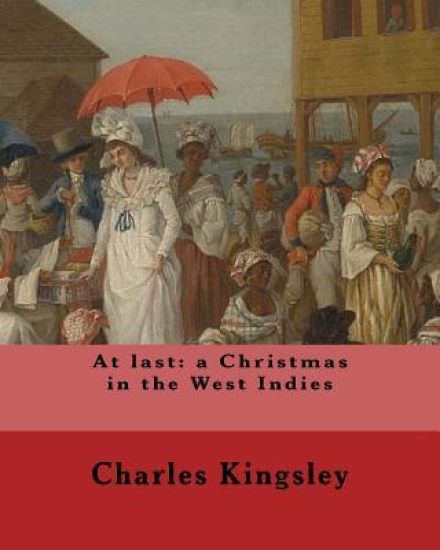
At last: a Christmas in the West Indies By: Charles Kingsley (illustrated): Charles Kingsley (12 June 1819 - 23 January 1875) w
Charles Kingsley (12 June 1819 - 23 January 1875) was a broad church priest of the Church of England, a university professor, social reformer, historian and novelist. He is particularly associated with Christian socialism, the working men's college, and forming labour cooperatives that failed but led to the working reforms of the progressive era. He was a friend and correspondent with Charles Darwin. Life: Kingsley was born in Holne, Devon, the elder of two sons of the Reverend Charles Kingsley and his wife Mary Lucas Kingsley. His brother, Henry Kingsley, also became a novelist. He spent his childhood in Clovelly, Devon, where his father was Curate 1826-1832 and Rector 1832-1836, and at Barnack, Northamptonshire and was educated at Bristol Grammar School and Helston Grammar School before studying at King's College London, and the University of Cambridge. Charles entered Magdalene College, Cambridge, in 1838, and graduated in 1842. 4] He chose to pursue a ministry in the church. From 1844, he was rector of Eversley in Hampshire. In 1859 he was appointed chaplain to Queen Victoria. 5] In 1860, he was appointed Regius Professor of Modern History at the University of Cambridge. 5] In 1861 he became a private tutor to the Prince of Wales. In 1869 Kingsley resigned his Cambridge professorship and, from 1870 to 1873, was a canon of Chester Cathedral. While in Chester he founded the Chester Society for Natural Science, Literature and Art, which played an important part in the establishment of the Grosvenor Museum. In 1872 he accepted the Presidency of the Birmingham and Midland Institute and became its 19th President. In 1873 he was made a canon of Westminster Abbey. Kingsley died in 1875 and was buried in St Mary's Churchyard in Eversley. Kingsley sat on the 1866 Edward Eyre Defence Committee along with Thomas Carlyle, John Ruskin, Charles Dickens and Alfred Lord Tennyson, where he supported Jamaican Governor Edward Eyre's brutal suppression of the Morant Bay Rebellion against the Jamaica Committee. One of his daughters, Mary St Leger Kingsley, became known as a novelist under the pseudonym "Lucas Malet". Kingsley's life was written by his widow in 1877, entitled Charles Kingsley, his Letters and Memories of his Life. Kingsley also received letters from Thomas Huxley in 1860 and later in 1863, discussing Huxley's early ideas on agnosticism.
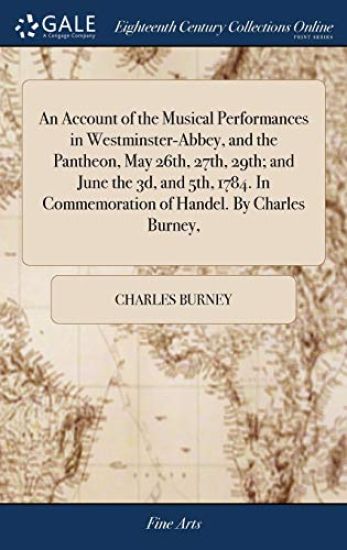
An Account of the Musical Performances in Westminster-Abbey, and the Pantheon, May 26th, 27th, 29th; And June the 3d, and 5th, 1784. in Commemoration of Handel. by Charles Burney,
The 18th century was a wealth of knowledge, exploration and rapidly growing technology and expanding record-keeping made possible by advances in the printing press. In its determination to preserve the century of revolution, Gale initiated a revolution of its own: digitization of epic proportions to preserve these invaluable works in the largest archive of its kind. Now for the first time these high-quality digital copies of original 18th century manuscripts are available in print, making them highly accessible to libraries, undergraduate students, and independent scholars.The eighteenth-century fascination with Greek and Roman antiquity followed the systematic excavation of the ruins at Pompeii and Herculaneum in southern Italy; and after 1750 a neoclassical style dominated all artistic fields. The titles here trace developments in mostly English-language works on painting, sculpture, architecture, music, theater, and other disciplines. Instructional works on musical instruments, catalogs of art objects, comic operas, and more are also included. ++++The below data was compiled from various identification fields in the bibliographic record of this title. This data is provided as an additional tool in helping to insure edition identification: ++++British LibraryT150538The register is continuous.Dublin: printed for Messrs. Moncrieffe, Jenkin, White, H. Whitestone, Burton, and Byrne, 1785. vii, 1], xvi,74,24, 5],28-145, 1]p.; 8
An Account of the Musical Performances in Westminster-Abbey, and the Pantheon, May 26th, 27th, 29th; and June the 3d, and 5th, 1784. In Commemoration of Handel. By Charles Burney,
The 18th century was a wealth of knowledge, exploration and rapidly growing technology and expanding record-keeping made possible by advances in the printing press. In its determination to preserve the century of revolution, Gale initiated a revolution of its own: digitization of epic proportions to preserve these invaluable works in the largest archive of its kind. Now for the first time these high-quality digital copies of original 18th century manuscripts are available in print, making them highly accessible to libraries, undergraduate students, and independent scholars.The eighteenth-century fascination with Greek and Roman antiquity followed the systematic excavation of the ruins at Pompeii and Herculaneum in southern Italy; and after 1750 a neoclassical style dominated all artistic fields. The titles here trace developments in mostly English-language works on painting, sculpture, architecture, music, theater, and other disciplines. Instructional works on musical instruments, catalogs of art objects, comic operas, and more are also included. ++++The below data was compiled from various identification fields in the bibliographic record of this title. This data is provided as an additional tool in helping to insure edition identification: ++++Harvard University Houghton LibraryN014660Dedication signed by Burney but written by Samuel Johnson. The text is continuous despite pagination. With a final errata leaf and 'Directions to the binder for placing the cancels'. Sig.F4 (1st register) and sig.E4 (2nd register) cancelled; sigs.*E1 and F1 are cancels.London: printed for the benefit of the Musical Fund; and sold by T. Payne and Son; and G. Robinson, 1785. vii, 1], xvi,8, *8,9-20, *19-*24,21-56,21, 6],26-41, 6],46-90, 5],94-139, 3]p., pl plates; 4
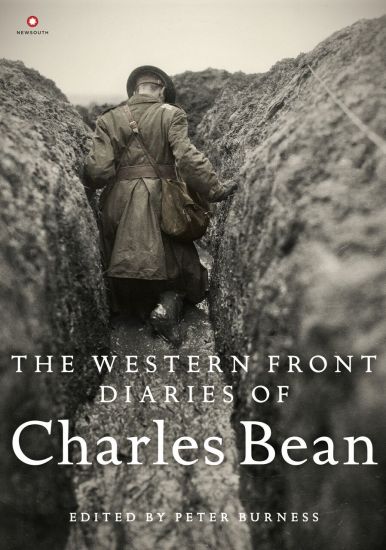
The Western Front Diaries of Charles Bean
Australia’s official First World War correspondent Charles Bean saw more of the Australian army’s activities and battles on the Western Front than anyone.Bean’s private wartime diaries, held by the Australian War Memorial, form a unique and personal record of his experiences and observations throughout the war and were the basis of his monumental twelve-volume official war history. While his diaries relating to the Gallipoli campaign have been published in four editions, Bean’s Western Front diaries are published here for the first time, edited by esteemed historian Peter Burness, and accompanied by over 500 incredible photographs, sketches and maps.
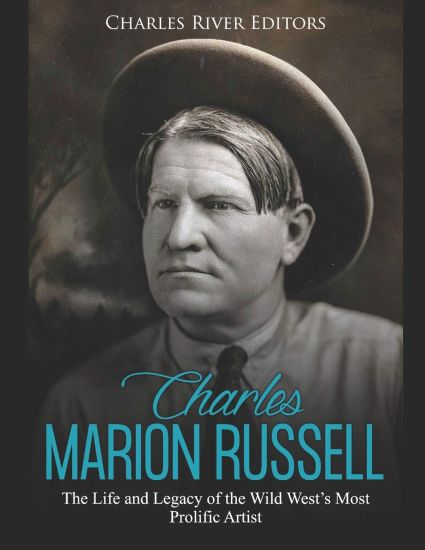
Charles Marion Russell: The Life and Legacy of the Wild West's Most Prolific Artist
*Includes pictures*Includes excerpts of contemporary accounts*Includes a bibliography for further readingThe exploration of the early American West, beginning with Lewis and Clark's transcontinental trek at the behest of President Thomas Jefferson, was not accomplished by standing armies, the era's new steam train technology, or by way of land grabs. These came later, but not until pathways known only to a few of the land's indigenous people were discovered, carved out, and charted in an area stretching from the eastern Rocky Mountains to the Pacific Ocean, and the present-day borders of Mexico and Canada. Even the great survey parties, such as Colonel William Powell's exploration of the Colorado River, came decades later. The first views of the West's enormity by white Americans were seen by individuals of an entirely different personality, in an era that could only exist apart from its home civilization. Naturally, the West was an endless source of fascination for those who were either personally or circumstantially ill-suited to travel there. As explorers opened trails and people expanded the frontier, unusual walks of life like cattle drives and hunting became commonplace, as did images of dusty boomtowns. Before the Transcontinental Railroad connected the Atlantic and Pacific, the Old West possessed a distinctly separate culture from the East Coast, and cowboys, early settlers, and an enormous array of indigenous peoples produced a hybrid culture that seemed doomed to disappear as a result of the inevitable modernization.Many of the first artists in the West were assigned to exploration and geological parties, working as archivists and obedient to demands of cold accuracy. However, a few were driven by an imaginative mix of real events and fantastical visions to whet the appetite of Eastern consumers and preserve their own nostalgia on canvas. Among the most prominent artists depicting the "old" West was Charles Marion Russell, a prolific painter, sculptor, writer, and storyteller based in the heart of the Montana country. Through his years of capturing scenes of daily life between cowboys and Indians before a backdrop of exquisite Montana scenery, he was known by the names of C.M. Russell, Charlie Russell, and "Kid" Russell. As an artist greatly esteemed among art devotees and virtually all Westerners who knew him, he acquired monikers such as the "Rembrandt of the Range" and the "Cowboy Artist." Entirely self-trained, Russell left over 4,000 works that include paintings and bronze sculptures of cowboys, Indians, and the landscapes of the West, as well as Alberta, Canada. As an advocate and activist for the Native Americans, he supported the improvement of reservation conditions and spoke out for the Chippewa's bid for the right to live in Montana. This right was validated by Congress in the early 20th century with the creation of the Rocky Boy Reservation. Russell sketched and painted throughout his life, defying the constrictions of a daily work regimen, but he aspired to work primarily as a cowboy for many years with the understandable assumption that his art would never provide a sustainable living. A fortuitous marriage launched Russell into international art circles, and it brought him a level of wealth never anticipated by the would-be cattle wrangler. By the end of the 19th century, the West had diminished as a cultural entity and rapidly lapsed into a geographical concept attempting to conform itself to the ways of the East. Russell's vast body of work served as an "eternal commentary" on the passing of an epic American experience. With few to mark the West's "lingering death," Russell served not only as an artist evoking the vivid richness of Native American and cowboy life, but as a chronicler and visual biographer of an age that would not come again. He is remembered for his skill in capturing the West's people and landscapes.
Charles Marion Russell: The Life and Legacy of the Wild West's Most Prolific Artist
*Includes pictures*Includes excerpts of contemporary accounts*Includes a bibliography for further readingThe exploration of the early American West, beginning with Lewis and Clark's transcontinental trek at the behest of President Thomas Jefferson, was not accomplished by standing armies, the era's new steam train technology, or by way of land grabs. These came later, but not until pathways known only to a few of the land's indigenous people were discovered, carved out, and charted in an area stretching from the eastern Rocky Mountains to the Pacific Ocean, and the present-day borders of Mexico and Canada. Even the great survey parties, such as Colonel William Powell's exploration of the Colorado River, came decades later. The first views of the West's enormity by white Americans were seen by individuals of an entirely different personality, in an era that could only exist apart from its home civilization. Naturally, the West was an endless source of fascination for those who were either personally or circumstantially ill-suited to travel there. As explorers opened trails and people expanded the frontier, unusual walks of life like cattle drives and hunting became commonplace, as did images of dusty boomtowns. Before the Transcontinental Railroad connected the Atlantic and Pacific, the Old West possessed a distinctly separate culture from the East Coast, and cowboys, early settlers, and an enormous array of indigenous peoples produced a hybrid culture that seemed doomed to disappear as a result of the inevitable modernization.Many of the first artists in the West were assigned to exploration and geological parties, working as archivists and obedient to demands of cold accuracy. However, a few were driven by an imaginative mix of real events and fantastical visions to whet the appetite of Eastern consumers and preserve their own nostalgia on canvas. Among the most prominent artists depicting the "old" West was Charles Marion Russell, a prolific painter, sculptor, writer, and storyteller based in the heart of the Montana country. Through his years of capturing scenes of daily life between cowboys and Indians before a backdrop of exquisite Montana scenery, he was known by the names of C.M. Russell, Charlie Russell, and "Kid" Russell. As an artist greatly esteemed among art devotees and virtually all Westerners who knew him, he acquired monikers such as the "Rembrandt of the Range" and the "Cowboy Artist." Entirely self-trained, Russell left over 4,000 works that include paintings and bronze sculptures of cowboys, Indians, and the landscapes of the West, as well as Alberta, Canada. As an advocate and activist for the Native Americans, he supported the improvement of reservation conditions and spoke out for the Chippewa's bid for the right to live in Montana. This right was validated by Congress in the early 20th century with the creation of the Rocky Boy Reservation. Russell sketched and painted throughout his life, defying the constrictions of a daily work regimen, but he aspired to work primarily as a cowboy for many years with the understandable assumption that his art would never provide a sustainable living. A fortuitous marriage launched Russell into international art circles, and it brought him a level of wealth never anticipated by the would-be cattle wrangler. By the end of the 19th century, the West had diminished as a cultural entity and rapidly lapsed into a geographical concept attempting to conform itself to the ways of the East. Russell's vast body of work served as an "eternal commentary" on the passing of an epic American experience. With few to mark the West's "lingering death," Russell served not only as an artist evoking the vivid richness of Native American and cowboy life, but as a chronicler and visual biographer of an age that would not come again. He is remembered for his skill in capturing the West's people and landscapes.
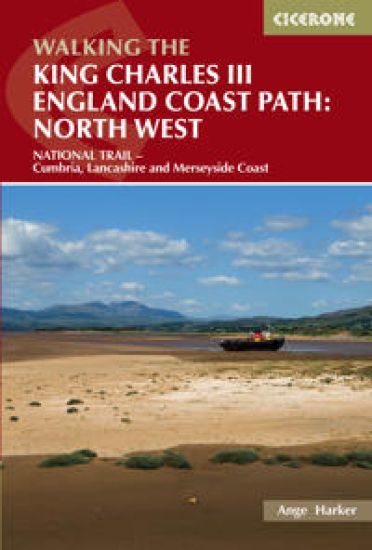
Walking the King Charles III England Coast Path: North West
A guidebook to walking the northwest section of the King Charles III England Coast Path between Gretna and Chester. Covering 590km (367 miles), this straightforward trail along the Cumbria, Lancashire and Merseyside coast takes around 1 month to hike. The route is described from north to south in 28 stages between 13 and 29km (8–18 miles) in length. Contains step-by-step description of the route alongside 1:50,000 OS maps Refreshment information given for each route stage Public transport by stage is listed for those wanting to break the trail into shorter sections Handy trek planner, route summary tables and accommodation listings help you plan your itinerary Accompanying map booklets containing OS 1:25,000 mapping and route line are also available
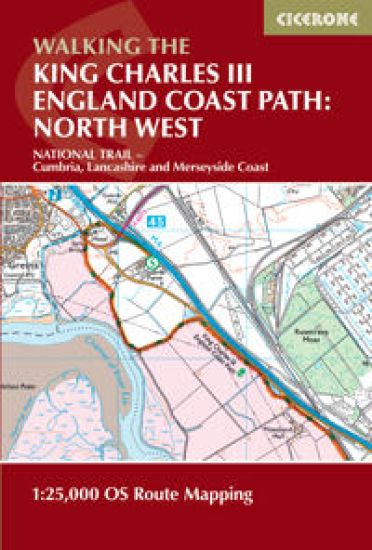
Walking the King Charles III England Coast Path: North West - Cumbria Map Booklet
This map booklet to the Cumbrian section of the England Coast Path contains detailed mapping for walking the route in either direction. With easy access at many points along the way, the Cumbrian section can be enjoyed as a trek of around 15 days or in shorter sections. Full route shown on 1:25,000 OS mapsMap booklet can be used to walk the path in either directionCovers the England Coast Path from Gretna on the Scottish border to ArnsideConveniently sized for slipping into a jacket pocket or top of a rucksackAn accompanying Cicerone guidebook - Walking the England Coast Path: North West - is available separately
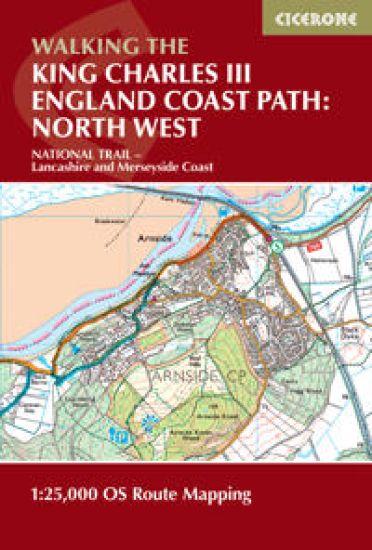
Walking the King Charles III England Coast Path: North West - Lancashire & Merseyside Map Booklet
This map booklet to the Lancashire and Merseyside section of the England Coast Path contains detailed mapping for walking the route in either direction. With easy access at many points along the way, the Lancashire/Merseyside section can be enjoyed as a trek of around 12 days or in shorter sections. Full route shown on 1:25,000 OS mapsMap booklet can be used to walk the path in either directionCovers the England Coast Path from Arnside to ChesterConveniently sized for slipping into a jacket pocket or top of a rucksackAn accompanying Cicerone guidebook - Walking the England Coast Path: North West - is available separately