Kirjojen hintavertailu. Mukana 11 244 527 kirjaa ja 12 kauppaa.

Kirjahaku

Etsi kirjoja tekijän nimen, kirjan nimen tai ISBN:n perusteella.

1000 tulosta hakusanalla Catherine Sinclair

Catherine de'Medici

Catherine de'Medici

R J Knecht

Longman
1997
nidottu
Catherine de' Medici (1519-89) was the wife of one king of France and the mother of three more - the last, sorry representatives of the Valois, who had ruled France since 1328. She herself is of preeminent importance to French history, and one of the most controversial of all historical figures. Despised until she was powerful enough to be hated, she was, in her own lifetime and since, the subject of a "Black Legend" that has made her a favourite subject of historical novelists (most notably Alexandre Dumas, whose Reine Margot has recently had new currency on film). Yet there is no recent biography of her in English. This new study, by a leading scholar of Renaissance France, is a major event.Catherine, a neglected and insignificant member of the Florentine Medici, entered French history in 1533 when she married the son of Francis I for short-lived political reasons: her uncle was pope Clement VII, who died the following year. Now of no diplomatic value, Catherine was treated with contempt at the French court even after her husband's accession as Henry II in 1547. Even so, she gave him ten children before he was killed in a tournament in 1559. She was left with three young boys, who succeeded to the throne as Francis II (1559-60), Charles IX (1560-74) and Henry III (1574-89). As regent and queen-mother, a woman and with no natural power-base of her own, she faced impossible odds. France was accelerating into chaos, with political faction at court and religious conflict throughout the land. As the country disintegrated, Catherine's overriding concern was for the interests of her children. She was tireless in her efforts to protect her sons' inheritance, and to settle her daughters in advantageous marriages. But France needed more. Catherine herself was both peace-loving and, in an age of frenzied religious hatred, unbigoted. She tried to use the Huguenots to counterbalance the growing power of the ultra-Catholic Guises but extremism on all sides frustrated her. She was drawn into the violence. Her name is ineradicably associated with its culmination, the Massacre of St Bartholomew (24 August 1572), when thousands of Huguenots were slaughtered in Paris and elsewhere. To this day no-one knows for certain whether Catherine instigated the massacre or not, but here Robert Knecht explores the probabilities in a notably level-headed fashion.His book is a gripping narrative in its own right. It offers both a lucid exposition of immensely complex events (with their profound imact on the future of France), and also a convincing portrait of its enigmatic central character. In going behind the familiar Black Legend, Professor Knecht does not make the mistake of whitewashing Catherine; but he shows how intractable was her world, and how shifty or intransigent the people with whom she had to deal. For all her flaws, she emerges as a more sympathetic - and, in her pragmatism, more modern - figure than most of her leading contemporaries.
Catherine the Great

Catherine the Great

Simon Dixon

Routledge
2001
nidottu
Neither a comprehensive 'life and times' nor a conventional biography, this is an engaging and accessible exploration of rulership and monarchial authority in eighteenth century Russia. Its purpose is to see how Catherine II of Russia conceived of her power and how it was represented to her subjects. Simon Dixon asks essential questions about Catherin'es life and reign, and offers new and stimulating arguments about the Englightenment, the power of the monarch in early modern Europe, and the much-debated role of the "great individual" in history.
Catherine of Monmouth County, New Jersey

Catherine of Monmouth County, New Jersey

Bonnie L Schermer

iUniverse
2004
pokkari
Catherine Throckmorton has accepted her role as a wealthy, proper spinster in colonial New Jersey. Forced to marry a Quaker, she is caught between her husband's pacifism and her own family's violent patriotism. The American Revolution sweeps her into the Battle of Monmouth, and leaves her struggling to preserve her family in the volatile aftermath.This story, although fictionalized, contains detailed, factual information about the Battle of Monmouth and the history of Monmouth County, New Jersey. All of the main characters are historic figures. Underlying the tale is a continuation of the Throckmorton Family genealogy begun in "Rebecca of Providence, Rhode Island. Because Catherine married Richard Norris, her story becomes the first of three books comprising a Norris family saga.
Catherine Booth

Catherine Booth

David Malcolm Bennett

ACORN PRESS
2024
pokkari
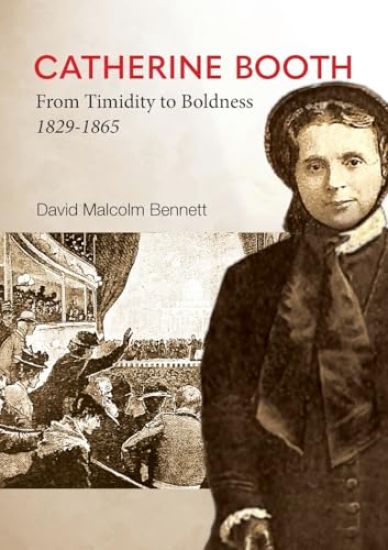
Catherine Booth: From Timidity to Boldness 1829-1865 narrates the compelling story of Catherine Booth's early life, detailing her transformation from a shy young woman in a troubled home to a powerful preacher, advocate for women's rights, and co-founder of The Salvation Army alongside her husband. Author David Malcolm Bennett delves deeply into Catherine's personal writings, utilizing the letters exchanged between Catherine and her husband, her correspondence with her parents, and her diary and reminiscences. This biography stands out as the first to employ the complete transcribed editions of these documents, providing a rich and nuanced portrayal of Catherine's thoughts and experiences.Catherine Booth's journey is one of remarkable personal growth and unwavering faith. Emerging from a household marred by alcohol-related issues, she overcame her initial timidity to become a dynamic and influential figure. Her evolution is traced through her own words, which Bennett skilfully brings to the forefront. This approach allows Catherine to articulate her beliefs, struggles, and triumphs in her own voice, lending authenticity and depth to the narrative.The biography reveals Catherine Booth as a multifaceted individual-dynamic, insightful, deeply spiritual, and at times, controversial. Her writings reflect her fervent commitment to her faith and her passionate advocacy for social justice, particularly regarding the rights of women. As a preacher, she broke conventional barriers, gaining popularity and respect in an era when women's roles were severely restricted. Her partnership with her husband in founding The Salvation Army further underscores her significant contributions to social reform and religious outreach.Bennett's meticulous research and thoughtful presentation make Catherine Booth: From Timidity to Boldness a definitive biography. It not only chronicles her life but also provides valuable insights into her character and legacy. Catherine Booth's story is an inspiring testament to the power of faith and determination, showcasing how one woman's courage and conviction can lead to profound social impact. This biography is an essential read for those interested in the history of The Salvation Army, women's rights, and the transformative potential of individual resilience and dedication.
Catherine & Diderot

Catherine & Diderot

Robert Zaretsky

Harvard University Press
2019
sidottu
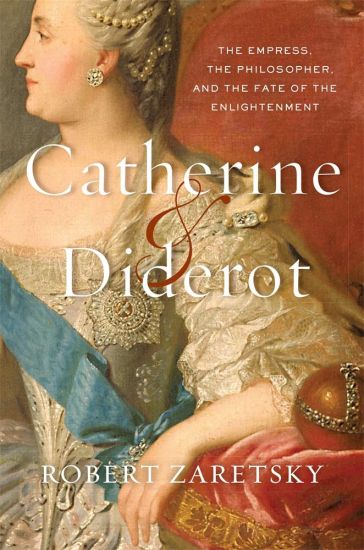
A dual biography crafted around the famous encounter between the French philosopher who wrote about power and the Russian empress who wielded it with great aplomb.In October 1773, after a grueling trek from Paris, the aged and ailing Denis Diderot stumbled from a carriage in wintery St. Petersburg. The century’s most subversive thinker, Diderot arrived as the guest of its most ambitious and admired ruler, Empress Catherine of Russia. What followed was unprecedented: more than forty private meetings, stretching over nearly four months, between these two extraordinary figures. Diderot had come from Paris in order to guide—or so he thought—the woman who had become the continent’s last great hope for an enlightened ruler. But as it soon became clear, Catherine had a very different understanding not just of her role but of his as well. Philosophers, she claimed, had the luxury of writing on unfeeling paper. Rulers had the task of writing on human skin, sensitive to the slightest touch.Diderot and Catherine’s series of meetings, held in her private chambers at the Hermitage, captured the imagination of their contemporaries. While heads of state like Frederick of Prussia feared the consequences of these conversations, intellectuals like Voltaire hoped they would further the goals of the Enlightenment.In Catherine & Diderot, Robert Zaretsky traces the lives of these two remarkable figures, inviting us to reflect on the fraught relationship between politics and philosophy, and between a man of thought and a woman of action.
Catherine's Italian Kitchen

Catherine's Italian Kitchen

Fulvio Catherine

Gill Books
2010
nidottu
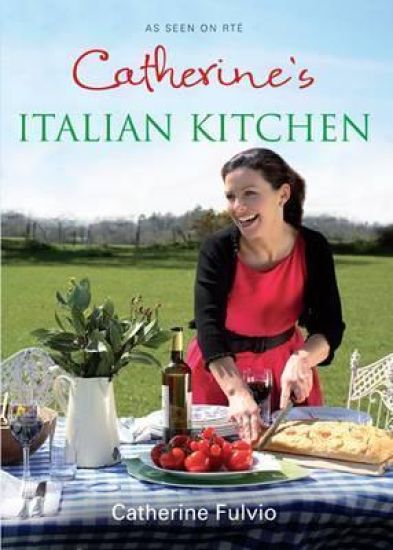
Following her hugely popular RTÉ TV series, ?Catherine’s Italian Kitchen?, and her latest show, ?Catherine’s Roman Holiday?, Catherine Fulvio presents her personal collection of recipes to brighten up Irish kitchens with delicious flavours of Italy. This wonderful selection of vibrant recipes, influenced by Catherine's long summers spent at her home in Sicily, have been gathered from Italian friends and her husband’s family in Sicily and Rome, and perfected at her Wicklow cookery school. With over 100 dishes for all levels of cooks, including familiar recipes with a twist – pizzas, pastas and risotto – as well as the unfamiliar – homemade limoncello, a traditional lemon liqueur, or Stromboli, a mouth-watering bread filled with mozzarella and pancetta, from the volcanic island off the coast of Sicily. So, expect the passion of Sicilian cooking, the heartiness of Roman fare, along with tasty treats from Tuscany, Naples and Venice. Catherine’s infectious enthusiasm for food pervades every recipe as she leads you through your Italian cooking experience. Featuring photography of spectacular Sicilian and Roman scenery taken from the TV series, this is truly Italian food for an Irish kitchen. Buon Appetito!
Catherine's Family Kitchen

Catherine's Family Kitchen

Catherine Fulvio

Gill Books
2011
sidottu
Catherine Fulvio cooks at home, and shows you how! Over 100 recipes, including all those seen on her 8-part RTÉ autumn series in 2011, take you through the full range of home cooking possibilities. Just a few samples: STARTERS Thai Crab Croquettes/Mushroom & Thyme Risotto CakesBAKING Brown Bread/Soda Bread/SconesSPEEDY SUPPERS Beef Stir Fry/Spanish ChickenMEAT & FISH Duck with Spiced Plums/Haddock PortugueseVEG & SPUDS Cheesy Courgette Bake/Herby ChampDESSERTS Mocha Crème Brulée/Sticky Guinness Pudding And throughout the book, Catherine stresses the Power of Five, for example 5 Store Cupboard essentials5 Ways with White Soda Bread5 Sauces for Meat & Fish5 Ways with Bolognese Sauce5 ways with Salad Dressing This is Catherine Fulvio in full flow: practical, geared to our busy modern lives – and truly delicious. We can all cook like this.
Catherine Breillat

Catherine Breillat

Douglas Keesey

Manchester University Press
2009
sidottu
This is the first English-language book on controversial female director Catherine Breillat, whose films include Romance, A ma soeur! (Fat Girl), Anatomy of Hell and most recently, The Last Mistress. This volume explores the director's complex relation to religion and to feminism, and it examines the differences between Breillat's films and patriarchal pornography, engaging in detailed analysis of her intimate scenes between men and women. Keesey also discusses the literature, films, paintings and photos that have influenced Breillat's work, and extends this to show how Breillat's films have influenced other filmmakers and artists in turn.A lively and accessible introduction, this book will appeal to students and researchers, as well as all those with an interest in gender studies, French film and contemporary cinema.
Catherine Breillat

Catherine Breillat

Douglas Keesey

Manchester University Press
2015
nidottu
This is the first English-language book on controversial female director Catherine Breillat, whose films include Romance, A ma soeur! (Fat Girl), Anatomy of Hell and The Last Mistress. This volume explores the director's complex relation to religion and to feminism, and it examines the differences between Breillat's films and patriarchal pornography, engaging in detailed analysis of her intimate scenes between men and women. Keesey also discusses the literature, films, paintings and photos that have influenced Breillat's work, and extends this to show how Breillat's films have influenced other filmmakers and artists in turn.A lively and accessible introduction, this book will appeal to students and researchers, as well as all those with an interest in gender studies, French film and contemporary cinema.
Catherine's Land

Catherine's Land

Anne Douglas

Piatkus Books
2009
nidottu
Madge Ritchie moves into Catherine's Land with her three young daughters when the death of her husband leaves her in reduced circumstances. By 1920 she cannot imagine life without the hurly-burly of the tenement. Two of her girls, however, dream of something very different.
Catherine Parr

Catherine Parr

Susan James

The History Press Ltd
2009
nidottu
Romantic, chaotic and terrifying, Catherine Parr's life unfolds like a romance novel. Married at seventeen to the grandson of a confirmed lunatic and widowed at twenty, Catherine chose a Yorkshire lord twice her age as her second husband. Caught up in the turbulent terrors of the Pilgrimage of Grace in 1536, she was captured by northern rebels, held hostage and suffered violence at their hands. Fleeing to the south shortly afterward, Catherine took refuge in the household of Princess Mary and in the arms of the king's brother-in-law, Sir Thomas Seymour. Her employment in Mary's household brought her to the attention of Mary's father, the unpredictable, often-wed Henry VIII. Desperately in love with Seymour, Catherine was forced into marriage with a king whose passion for her could not be hidden and who was determined to make her his queen.
Catherine Greenbury and Mary Percy

Catherine Greenbury and Mary Percy

Jos Blom

Ashgate Publishing Limited
2006
sidottu
This volume includes two early seventeenth-century translations of Roman Catholic books by English recusant nuns - Catherine Greenbury (a Franciscan) and Mary Percy (a Benedictine). To practise their faith on the continent both these women fled Elizabethan England where Roman Catholic practice had been outlawed under pain of severe penalty (even death). Catherine Greenbury was born at York into a wealthy upper middle-class family but left England after the death of her husband, shortly after the birth of her daughter in or around 1616. After establishing herself in Brussels in a convent dedicated to St Elizabeth, she became its first elected 'Mother' in 1626. During her early years here she translated the work included in this volume - François van den Broecke's biography in Dutch of the saintly Queen Elizabeth of Portugal. A comparison of Greenbury's version with the Dutch text shows not only that the translation is very competent and faithful, but also that she takes the editorial freedom to improve the text. Lady Mary Percy, daughter of Thomas Percy the seventh Earl of Northumberland, left England for Flanders and in 1598 she founded a Benedictine convent in Brussels especially for Englishwomen. Here Mary Percy translated a 1598 French edition of Breve compendio, by the Italian Jesuit Achille Gagliardi with his student Isabella Berinzaga, a mystical handbook which guides the reader through a series of elaborately defined stages striving towards 'deiformitie' - a state in which the soul is 'united unto the will of God'.
Jealousy: The Other Life of Catherine M.

Jealousy: The Other Life of Catherine M.

Catherine Millet

Grove Press
2011
nidottu
Catherine Millet's best-selling The Sexual Life of Catherine M. was a landmark book - a portrait of a sexual life lived without boundaries and without a safety net. Described as "eloquent, graphic -- and sometimes even poignant" by Newsweek, and as " perhaps] one of the most erotic books ever written" by Playboy, it drew international attention for its audacity, and the apparently superhuman sangfroid required of Millet and her partner, Jacques Henric, with whom she had an extremely public and active open relationship. Now, Millet's follow-up answers the first book's implicit question: How did you avoid jealousy? "I had love at home," Millet explains, "I sought only pleasure in the world outside." But one day she discovered a letter in their apartment that made it clear that Jacques was seriously involved with someone else. Jealousy details the crisis provoked by this discovery, and Millet's attempts to reconcile her need for freedom and sexual liberation with the very real heartache that Jacques's infidelity caused. If The Sexual Life of Catherine M. seemed to disregard emotion, Jealousy is its radical complement: the paradoxical confession of a libertine who discovers that love, in any of its forms, can have a dark side.
Catherine of Siena

Catherine of Siena

PAULIST PRESS INTERNATIONAL,U.S.
2025
sidottu
This volume offers a fresh translation of St. Catherine of Siena’s letters that are faithful to the oral, metaphor-filled language of an uneducated woman.EndorsementsWith Hildegard of Bingen and Bridget of Sweden, Catherine of Siena was one of the great mothers of the medieval Church, women who knew how to harmonize mysticism and prophecy, that is, a profound experience of God and a dynamic engagement in history. The Dominican mantellata lived through the fourteenth century, a dramatic and violent period that was marked by the Black Death, famine, and war; she weathered a major crisis in the Church that she sought to face with extraordinary energy and hope. Catherine's spiritual message and her political and social commitment are documented in her letters, a rich selection offered here. The translation is accurate and faithful in language and style to the critical text, while accessible to the contemporary reader."The introduction and commentary situate Catherine in the reality of her time, and also help readers to understand how the image of this woman has become a powerful symbol, capable of bringing together visions and projects of renewal and reform of both the Church and society. Catherine's heritage has been limitless; she has been a constant reference model for Christian ideals and perfection, as well as for the self-awareness of women."—Alessandra Bartolomei Romagnoli, professor of church history and culture, Gregorian University, Rome"Diana Villegas has done English-language readers of Catherine of Siena a real service by providing a more literal translation in this selection of Catherine's letters. This translation reproduces the rhythm and structure of Catherine's original text better than other versions in English. By staying closer to Catherine's original expressions and terminology, Villegas is particularly effective in conveying Catherine's ideas. And she assists the reader in this respect by providing a concise but thorough introduction to major themes in Catherine's spirituality. This volume is a very welcome addition to the literature on this important fourteenth-century saint and spiritual master."—F. Thomas Luongo, PhD, associate professor, Department of History, Tulane University"While the depth of her mystical teaching has long been appreciated, Catherine of Siena's letters illuminate that she was also deeply grounded in the concerns of her times and the concrete lives of her correspondents. Her letters amply demonstrate that her spirituality is both active and contemplative, mystical and political, in ways that are deeply integrated with one another. Villegas's selection and translation of Catherine's letters opens a rich and fresh understanding of Catherine for scholars and students alike."—Amy Maxey, PhD, assistant professor of spirituality and Rolheiser Chair in Spirituality, Oblate School of Theology, San Antonio, TexasDiana L. Villegas studied spirituality at the Institute of Spirituality of the Gregorian University, Rome, and obtained a PhD in theology from Fordham University, NY. Diana has pursued research and writing in spirituality together with involvement in professional societies as an independent scholar, publishing several peer reviewed articles. She is currently on the editorial board of Spiritus, the Journal of the Society for the Study of Christian Spirituality.†
Catherine of Genoa

Catherine of Genoa

Paulist Press International,U.S.
1979
nidottu
"...while offerings by lamas and yogis have been plentiful, books on Western mystics were - and are - hard to find." "The Paulist Press has just published... an ambitious series that should help remedy this situation." Psychology Today Catherine of Genoa: Purgation and Purgatory, The Spiritual Dialogue translation and notes by Serge Hughes introduction by Benedict J. Groeschel, O.F.M. Cap. preface by Catherine de Hueck Doherty "All that I have said is nothing compared to what I feel within, the witnessed correspondence of love between God and the Soul; for when God sees the Soul pure as it is in its origins, He tugs at it with a glance, draws it and binds it to Himself with a fiery love which by itself could annihilate the immortal Soul." Catherine of Genoa (1447-1510) Catherine, who lived for 60 years and died early in the 16th century, leads the modern reader directly to the more significant issues of the day. In her life she reconciled aspects of spirituality often seen to be either mutually exclusive or in conflict. This married lay woman was both a mystic and a humanitarian, a constant contemplative, yet daily immersed in the physical care of the sick and the destitute. For the last five centuries she has been the inspiration of such spiritual greats as Francis de Sales, Robert Bellarmine, Fenelon, Newman and Hecker. Friedrich von Hügel's famous Mystical Element of Religion was a study of the spirituality of Catherine. Purgation and Purgatory is a collection of sayings on spiritual purification in this life and the next. The Spiritual Dialogue gives us a readable and coherent inner history of Catherine. The translation and notes for the volume are by Serge Hughes, Professor of Italian at Hunter College of the City University of New York. Dr. Hughes is best known for his The Fall and Rise of Modern Italy and The Little Flowers of St. Francis. Dr. Benedict J. Groeschel, who authored the Introduction, is Director of the Office for Spiritual Development of the Archdiocese of New York. He teaches pastoral psychology and ascetical-mystical theology at Iona and Fordham, and at St. Joseph's, Immaculate Conception and Maryknoll Seminaries. The Preface has been written by Catherine de Hueck Doherty, the founder and Director General of Madonna House. She is author of such well known books as Poustinia and The Gospel Without Compromise. †