Kirjojen hintavertailu. Mukana 11 717 486 kirjaa ja 12 kauppaa.

Kirjahaku

Etsi kirjoja tekijän nimen, kirjan nimen tai ISBN:n perusteella.

1000 tulosta hakusanalla Chang

Changing Times

Changing Times

Martin Chick

Oxford University Press
2019
nidottu
This is a study of how, and why, the British economy has changed since 1951. It covers the Golden Age of 1945-1973 when unemployment was below one million; when governments built millions of council houses and flats; when electricity, telephones, and gas were supplied by nationalised monopolies; when income and wealth inequality were narrowing; and when the UK was not a member of the European Economic Community. Moving through the inflation, rising unemployment, and rapid contraction of the manufacturing industry from the mid- 1970s, Changing Times examines the transfer of assets which was effected in the privatisation of public housing and nationalised industries from the early 1980s. The role of the State changed as public investment fell. The financing of old-age care, of state pensions, and of the National Health Service became of increasing concern and were less politically amenable to the approach of using private finance (the Private Finance Initiative and tuition fees) to fund former public obligations. Changes were made to the system of taxation, but public expenditure changed little as a share of national income, although the government now built little. Difficulties emerged in ensuring adequate housing for a growing population, and uncertainty grew as to where future investment in necessities like electricity supply would come from. Having narrowed in the Golden Age, inequality of income and wealth widened. Environmental concerns also grew, from the local smogs of the 1950s, through the concern with acid rain from the 1960s, to the current global concern with climate change. The financial crash of 2008 and the decision to 'Brexit' in the referendum of 2016 reduced economic growth and highlighted the extent of economic change since 1951. This is a study of that change.

Changing Times

Changing Times

Martin Chick

Oxford University Press
2019
sidottu
This is a study of how, and why, the British economy has changed since 1951. It covers the Golden Age of 1945-1973 when unemployment was below one million; when governments built millions of council houses and flats; when electricity, telephones, and gas were supplied by nationalised monopolies; when income and wealth inequality were narrowing; and when the UK was not a member of the European Economic Community. Moving through the inflation, rising unemployment, and rapid contraction of the manufacturing industry from the mid- 1970s, Changing Times examines the transfer of assets which was effected in the privatisation of public housing and nationalised industries from the early 1980s. The role of the State changed as public investment fell. The financing of old-age care, of state pensions, and of the National Health Service became of increasing concern and were less politically amenable to the approach of using private finance (the Private Finance Initiative and tuition fees) to fund former public obligations. Changes were made to the system of taxation, but public expenditure changed little as a share of national income, although the government now built little. Difficulties emerged in ensuring adequate housing for a growing population, and uncertainty grew as to where future investment in necessities like electricity supply would come from. Having narrowed in the Golden Age, inequality of income and wealth widened. Environmental concerns also grew, from the local smogs of the 1950s, through the concern with acid rain from the 1960s, to the current global concern with climate change. The financial crash of 2008 and the decision to 'Brexit' in the referendum of 2016 reduced economic growth and highlighted the extent of economic change since 1951. This is a study of that change.

Changing Welfare States

Changing Welfare States

Anton Hemerijck

Oxford University Press
2012
sidottu
Changing Welfare States is a major new examination of the wave of social reform that has swept across Europe over the past two decades. In a comparative fashion, it analyses reform trajectories and political destinations in an era of rapid socioeconomic restructuring, including the critical impact of the global financial crisis on welfare state futures. The book argues that the overall scope of social reform across the member states of the European Union varies widely. In some cases welfare state change has been accompanied by deep social conflicts, while in other instances unpopular social reforms received broad consent from opposition parties, trade unions and employer organizations. The analysis reveals trajectories of welfare reform in many countries that are more proactive and reconstructive than is often argued in academic research and the media. Alongside retrenchments, there have been deliberate attempts - often given impetus by intensified European (economic) integration - to rebuild social programs and institutions and thereby accommodate welfare policy repertoires to the new economic and social realities of the 21st century. Welfare state change is work in progress, leading to patchwork mixes of old and new policies and institutions, on the lookout, perhaps, for greater coherence. Unsurprisingly, that search process remains incomplete, resulting from the institutionally bounded and contingent adaptation to the challenges of economic globalization, fiscal austerity, family and gender change, adverse demography, and changing political cleavages.
Changing Welfare States

Changing Welfare States

Anton Hemerijck

Oxford University Press
2012
nidottu
Changing Welfare States is is a major new examination of the wave of social reform that has swept across Europe over the past two decades. In a comparative fashion, it analyses reform trajectories and political destinations in an era of rapid socioeconomic restructuring, including the critical impact of the global financial crisis on welfare state futures. The book argues that the overall scope of social reform across the member states of the European Union varies widely. In some cases welfare state change has been accompanied by deep social conflicts, while in other instances unpopular social reforms received broad consent from opposition parties, trade unions and employer organizations. The analysis reveals trajectories of welfare reform in many countries that are more proactive and reconstructive than is often argued in academic research and the media. Alongside retrenchments, there have been deliberate attempts - often given impetus by intensified European (economic) integration - to rebuild social programs and institutions and thereby accommodate welfare policy repertoires to the new economic and social realities of the 21st century. Welfare state change is work in progress, leading to patchwork mixes of old and new policies and institutions, on the lookout, perhaps, for greater coherence. Unsurprisingly, that search process remains incomplete, resulting from the institutionally bounded and contingent adaptation to the challenges of economic globalization, fiscal austerity, family and gender change, adverse demography, and changing political cleavages.
Changing Rules of Delegation

Changing Rules of Delegation

Adrienne Héritier; Catherine Moury; Carina S. Bischoff; Carl Fredrik Bergström

Oxford University Press
2013
sidottu
With each legislative issue, legislators have to decide whether to delegate decision-making to the executive and/or to expert bodies in order to flesh out the details of this legislation, or, alternatively, to spell out all aspects of this decision in legislation proper. The reasons why to delegate have been of prime interest to political science. The debate has concentrated on principal-agent theory to explain why politicians delegate decision-making to bureaucrats, to independent regulatory agencies, and to others actors and how to control these agents. By contrast, Changing Rules of Delegation focuses on these questions: Which actors are empowered by delegation? Are executive actors empowered over legislative actors? How do legislative actors react to the loss of power? What opportunities are there to change the institutional rules governing delegation in order to (re)gain institutional power and, with it influence over policy outcomes? The authors analyze the conditions and processes of change of the rules that delegate decision-making power to the Commission's implementing powers under comitology. Focusing on the role of the European Parliament the authors explain why the Commission, the Council, and increasingly the Parliament, delegated decision-making to the Commission. If they chose delegation, they still have to determine under which institutional rule comitology should operate. These rules, too, distribute power unequally among actors and therefore raise the question of how they came about in the first place and whether and how the "losers" of a rule change seek to alter the rules at a later point in time.
Changes of Mind

Changes of Mind

Neil Tennant

Oxford University Press
2012
sidottu
This is the first logically precise, computationally implementable, book-length account of rational belief revision. It explains how a rational agent ought to proceed when adopting a new belief - a difficult matter if the new belief contradicts the agent's old beliefs. Belief systems are modeled as finite dependency networks. So one can attend not only to what the agent believes, but also to the variety of reasons the agent has for so believing. The computational complexity of the revision problem is characterized. Algorithms for belief revision are formulated, and implemented in Prolog. The implementation tests well on a range of simple belief-revision problems that pose a variety of challenges for any account of belief revision. The notion of 'minimal mutilation' of a belief system is explicated precisely for situations when the agent is faced with conflicting beliefs. The proposed revision methods are invariant across different global justificatory structures (foundationalist, coherentist, etc.). They respect the intuition that, when revising one's beliefs, one should not hold on to any belief that has lost all its former justifications. The limitation to finite dependency networks is shown not to compromise theoretical generality. This account affords a novel way to argue that there is an inviolable core of logical principles. These principles, which form the system of Core Logic, cannot be given up, on pain of not being able to carry out the reasoning involved in rationally revising beliefs. The book ends by comparing and contrasting the new account with some major representatives of earlier alternative approaches, from the fields of formal epistemology, artificial intelligence and mathematical logic.
Changing Inequalities and Societal Impacts in Rich Countries
There has been a remarkable upsurge of debate about increasing inequalities and their societal implications, reinforced by the economic crisis but bubbling to the surface before it. This has been seen in popular discourse, media coverage, political debate, and research in the social sciences. The central questions addressed by this book, and the major research project GINI on which it is based, are: - Have inequalities in income, wealth and education increased over the past 30 years or so across the rich countries, and if so why? - What are the social, cultural and political impacts of increasing inequalities in income, wealth and education? - What are the implications for policy and for the future development of welfare states? In seeking to answer these questions, this book adopts an interdisciplinary approach that draws on economics, sociology, and political science, and applies a common analytical framework to the experience of 30 advanced countries, namely all the EU member states except Cyprus and Malta, together with the USA, Japan, Canada, Australia and South Korea. It presents a description and analysis of the experience of each of these countries over the past three decades, together with an introduction, an overview of inequality trends, and a concluding chapter highlighting key findings and implications. These case-studies bring out the variety of country experiences and the importance of framing inequality trends in the institutional and policy context of each country if one is to adequately capture and understand the evolution of inequality and its impacts.
Changing Inequalities in Rich Countries
There has been a remarkable upsurge of debate about increasing inequalities and their societal implications, reinforced by the economic crisis but bubbling to the surface before it. This has been seen in popular discourse, media coverage, political debate, and research in the social sciences. The central questions addressed by this book, and the major research project GINI on which it is based, are: - Have inequalities in income, wealth and education increased over the past 30 years or so across the rich countries, and if so why? - What are the social, cultural and political impacts of increasing inequalities in income, wealth and education? - What are the implications for policy and for the future development of welfare states? In seeking to answer these questions, this book adopts an interdisciplinary approach that draws on economics, sociology, and political science, and applies this approach to learning from the experiences over the last three decades of European countries together with the USA, Japan, Canada, Australia, and South Korea. It combines comparative research with lessons from specific country experiences, and highlights the challenges in seeking to adequately assess the factors underpinning increasing inequalities and in identify the channels through which these may impact on key social and political outcomes, as well as the importance of framing inequality trends and impacts in the institutional and policy context of the country in question.
Changes for Democracy

Changes for Democracy

Leonardo Morlino

Oxford University Press
2011
nidottu
In this major new work, based on an unprecedented range of empirical and theoretical reflection, the author presents a broad-ranging and far-reaching analysis of the mechanisms and processes of democratization. Having reviewed the main theoretical positions in the literature, he goes on to discuss the key features required of a new definition of democracy and to highlight and discuss the existence of a new type of regime: the hybrid regime. The second and third parts of the book cover three geopolitical areas (Southern Europe, Eastern Europe, and Latin America) and examine the main issues in the process of democratization across each area, including the transition toward democracy, installation, consolidation and crisis. From this analysis a new, more nuanced theoretical position is developed and presented. The analysis provides the richest reflection yet on one of the most important political processes of the modern times. The book will be essential reading for all scholars and students of democratization. Oxford Studies in Democratization is a series for scholars and students of comparative politics and related disciplines. Volumes concentrate on the comparative study of the democratization process that accompanied the decline and termination of the cold war. The geographical focus of the series is primarily Latin America, the Caribbean, Southern and Eastern Europe, and relevant experiences in Africa and Asia. The series editor is Laurence Whitehead, Official Fellow, Nuffield College, University of Oxford.
Changing Media, Changing China

Changing Media, Changing China

Oxford University Press Inc
2011
nidottu
Thirty years ago, the Chinese Communist Party (CCP) made a fateful decision: to allow newspapers, magazines, television, and radio stations to compete in the marketplace instead of being financed exclusively by the government. The political and social implications of that decision are still unfolding as the Chinese government, media, and public adapt to the new information environment. Edited by Susan Shirk, one of America's leading experts on contemporary China, this collection of essays brings together a who's who of experts--Chinese and American--writing about all aspects of the changing media landscape in China. In detailed case studies, the authors describe how the media is reshaping itself from a propaganda mouthpiece into an agent of watchdog journalism, how politicians are reacting to increased scrutiny from the media, and how television, newspapers, magazines, and Web-based news sites navigate the cross-currents between the open marketplace and the CCP censors. China has over 360 million Internet users, more than any other country, and an astounding 162 million bloggers. The growth of Internet access has dramatically increased the information available, the variety and timeliness of the news, and its national and international reach. But China is still far from having a free press. As of 2008, the international NGO Freedom House ranked China 181 worst out of 195 countries in terms of press restrictions, and Chinese journalists have been aptly described as "dancing in shackles." The recent controversy over China's censorship of Google highlights the CCP's deep ambivalence toward information freedom. Covering everything from the rise of business media and online public opinion polling to environmental journalism and the effect of media on foreign policy, Changing Media, Changing China reveals how the most populous nation on the planet is reacting to demands for real news.
Changing Media, Changing China

Changing Media, Changing China

Oxford University Press Inc
2011
sidottu
Thirty years ago, the Chinese Communist Party (CCP) made a fateful decision: to allow newspapers, magazines, television, and radio stations to compete in the marketplace instead of being financed exclusively by the government. The political and social implications of that decision are still unfolding as the Chinese government, media, and public adapt to the new information environment. Edited by Susan Shirk, one of America's leading experts on contemporary China, this collection of essays brings together a who's who of experts--Chinese and American--writing about all aspects of the changing media landscape in China. In detailed case studies, the authors describe how the media is reshaping itself from a propaganda mouthpiece into an agent of watchdog journalism, how politicians are reacting to increased scrutiny from the media, and how television, newspapers, magazines, and Web-based news sites navigate the cross-currents between the open marketplace and the CCP censors. China has over 360 million Internet users, more than any other country, and an astounding 162 million bloggers. The growth of Internet access has dramatically increased the information available, the variety and timeliness of the news, and its national and international reach. But China is still far from having a free press. As of 2008, the international NGO Freedom House ranked China 181 worst out of 195 countries in terms of press restrictions, and Chinese journalists have been aptly described as "dancing in shackles." The recent controversy over China's censorship of Google highlights the CCP's deep ambivalence toward information freedom. Covering everything from the rise of business media and online public opinion polling to environmental journalism and the effect of media on foreign policy, Changing Media, Changing China reveals how the most populous nation on the planet is reacting to demands for real news.
Changing Subjects

Changing Subjects

Srikanth Reddy

Oxford University Press Inc
2012
sidottu
Digression is widely considered a mark of disordered or evasive discourse. Modern legal, philosophical, and political writing largely disavows this trope, regarding it as a departure from the model of rational exposition institutionalized under the Enlightenment. And yet, as the rhetorical figure of digression has grown increasingly marginalized within the decorum of public discourse, it has come to occupy a central position in the private discursive world of poetry. Changing Subjects outlines an anatomy of 'the excursus' within twentieth-century American poetics; moving from aesthetics to the archive to narratology to theories of identity, this study considers the various spheres in which American writers of the period revise prior models of purposeful discourse by cultivating a poetics of digression in the modern poem. The opening section considers the manner in which Wallace Stevens employs digression within the ars poetica genre to deconstruct aesthetic theory under High Modernism; the second chapter examines Marianne Moore's use of the excursus to organize archival knowledge in the Progressive poetry of instruction; the third section turns to Lyn Hejinian's construction of a digressive narratology intended to unsettle master-narratives of the Cold War era; the fourth chapter treats digression as a strategy for fashioning the self in the poetry of Walt Whitman and Frank O'Hara; and the book concludes with a survey of "Elliptical" strategies employed by a new generation of poets, writing in the wake of John Ashbery's aleatory craft, who seek to extend the digressive project of American poetry into the 21st Century.
Changing Norms through Actions

Changing Norms through Actions

Jennifer M. Ramos

Oxford University Press Inc
2013
sidottu
How do international norms evolve? This book examines the manner in which sovereignty, a bedrock norm of international relations since the seventeenth century, has evolved in response to changing conceptions of the responsibilities of government. Whereas most previous studies of international norms have examined how norms influence policy decisions, this book asks, instead, how state policies actively shape international norms. Changing Norms through Actions contends that the concept of sovereignty is moving towards one in which states that are unable or unwilling to fulfill their domestic and international obligations are forced to relinquish certain sovereign responsibilities to the international community. As issues such as genocide, weapons of mass destruction, and terrorism have forced states to reassess their understandings of sovereignty, Ramos is interested in how understandings of norms - particularly long-held norms such as absolute sovereignty - change. If action taken by states reinforces an existing norm or alters current understandings of the norm, states must consider how their actions may change the "rules of the game" for the future. Even when a major power acts primarily out of its own self-interest, without any concern to international norms, the action may have the unintended consequence of modifying the normative environment within which other minor powers act. Shifting understandings of sovereignty (and how states relate to one another) can also have profound implications for the workings of the international system. Ramos looks specifically at what happens to sovereignty when states choose to bypass traditional norms of non-intervention on behalf of other competing norms, such as those regarding counterterrorism, human rights, or weapons of mass destruction.
Changing Norms through Actions

Changing Norms through Actions

Jennifer M. Ramos

Oxford University Press Inc
2013
nidottu
How do international norms evolve? This book examines the manner in which sovereignty, a bedrock norm of international relations since the seventeenth century, has evolved in response to changing conceptions of the responsibilities of government. Whereas most previous studies of international norms have examined how norms influence policy decisions, this book asks, instead, how state policies actively shape international norms. Changing Norms through Actions contends that the concept of sovereignty is moving towards one in which states that are unable or unwilling to fulfill their domestic and international obligations are forced to relinquish certain sovereign responsibilities to the international community. As issues such as genocide, weapons of mass destruction, and terrorism have forced states to reassess their understandings of sovereignty, Ramos is interested in how understandings of norms - particularly long-held norms such as absolute sovereignty - change. If action taken by states reinforces an existing norm or alters current understandings of the norm, states must consider how their actions may change the "rules of the game" for the future. Even when a major power acts primarily out of its own self-interest, without any concern to international norms, the action may have the unintended consequence of modifying the normative environment within which other minor powers act. Shifting understandings of sovereignty (and how states relate to one another) can also have profound implications for the workings of the international system. Ramos looks specifically at what happens to sovereignty when states choose to bypass traditional norms of non-intervention on behalf of other competing norms, such as those regarding counterterrorism, human rights, or weapons of mass destruction.
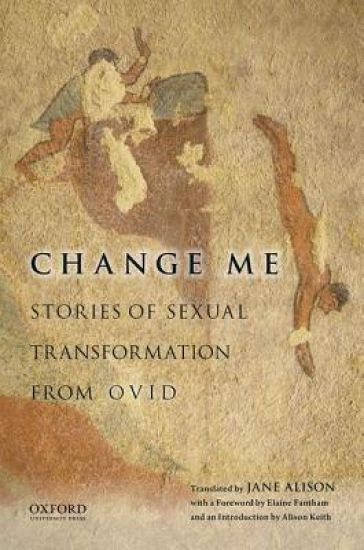
Change Me

Change Me

Jane Alison; Elaine Fantham; Alison Keith

Oxford University Press Inc
2014
nidottu
Ovid's stories melt moral conventions, explore ambiguities, and dissolve boundaries between men, women, animals, gods, plants, and the mineral world; in doing so they contrive to seduce readers. Ovid's dark pleasure in telling such stories with a full register of tones is palpable. But the stories of sexual encounter in the Metamorphoses are also infused with deep questions. What does it mean to have thoughts and passions trapped inside a changeable body? What is a self, and where are its edges? If someone can pierce you in sex and in love, how do you survive? And if your outer form changes, what lasts? In Change Me, Jane Alison, critically acclaimed author of The Love-Artist, renders substantial portions of Ovid's great epic into elegant and remarkably faithful English. Her focus is on episodes that involve desire, sexuality, and the transformations brought about by powerful emotion; because these themes are so central to the Metamorphoses, Alison introduces them with a selection of elegies from Ovid's Amores, the collection with which the poet launched his career. When these selections are taken together, Alison's Ovid comes alive; the Roman poet's great ability to perform contemporary themes through mythical subject matter, and vice versa, is Alison's guiding principle and Muse. Change Me will transform forever readers' experience of this most ingenious of poets. FEATURES The thematically organized translations are lucid, apt, precise, and playful Elaine Fantham's Foreword places Ovid in his Augustan context Alison Keith's introduction offers an overview of gender and sexuality in the ancient world Incorporates sixteen color plates from classical antiquity that illustrate Ovidian themes Audio recordings (read by Alison) of sixteen selected passages are available at www.oup.com/us/alison
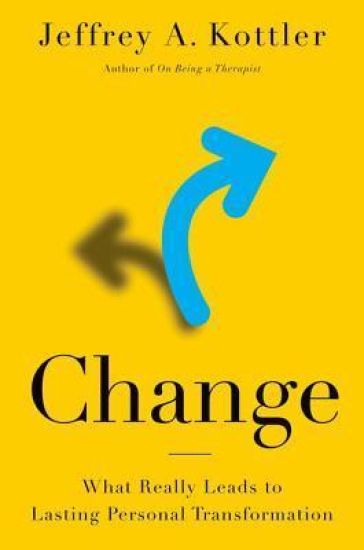
Change

Change

Jeffrey A. Kottler

Oxford University Press Inc
2014
sidottu
Change is often a mystery, one that baffles doctors, therapists, teachers, coaches, parents-and especially those of us who struggle to alter bad habits or simply make lasting improvements in our lives. Why do we suddenly change for the better after years of failed efforts? Why do some of us never escape our self-destructive behaviors, even when we desperately want to? What is it that most reliably and effectively produces growth, learning and development that persist over time? In this vividly written volume, psychotherapist Jeffrey Kottler weaves together inspiring stories and the latest research, taking the reader on a fascinating exploration of human behavior while highlighting what does-and does not-lead to lasting change. Kottler illuminates our many efforts to change-to stop taking drugs, reduce dependencies, leave a destructive relationship, find new and more meaningful work, or adjust to a devastating accident or trauma. Readers are invited to explore key triggers such as hitting bottom, moments of clarity, the power of altruism and service, travel to new surroundings, reading or listening to stories, religious conversion, and much more. Kottler also explores why most changes don't last and what we can do to prevent relapses. Throughout the book, Kottler recounts stories of colleagues and patients-and even recalls episodes from his own life-often moving tales of remarkable, unexpected, and lasting transformation. He looks for instance at a young black basketball star, confined to a wheelchair for life after being shot four times, who turned his life around, becoming a scholar and a PhD. An intriguing glimpse into the complexity of the human psyche, Change will engage anyone who has ever struggled to alter a habit, enrich relationships, recover from disappointment or failure, strive for more meaningful and productive work, deal with anxiety, loneliness, fears, stress, and depression, or transform their lives in any kind of significant way.
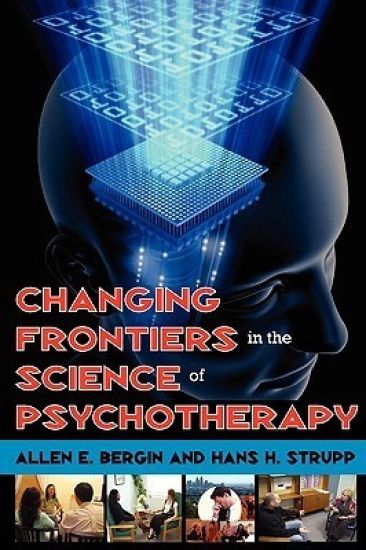
Changing Frontiers in the Science of Psychotherapy
This book is an exploration and mapping of the frontiers of research in psychotherapy. The authors make a systematic effort to discover where the science is going; analyzing conceptual problems, trends, and issues; record their interviews with the leaders in the field; and recommend new directions for research. The volume is the result of a three-year study on collaborative research in psychotherapy by the National Institute of Mental Health, and was first published in 1972.In Changing Frontiers in the Science of Psychotherapy Allen E. Bergin and Hans H. Strupp introduce the reader to therapeutic science as it appeared to them during a three year process of evaluating available literature, conducting interviews with scientists and therapists, and exchanging and formulating viewpoints. Personal reflections and experiences were gleaned from working papers, correspondence, and personal material, all of which gave life to the ongoing processes of science and provide considerable insight into everyday reality behind the scenes.The prominent therapists interviewed in this book include Arnold A. Lazarus, Lester Luborsky, Arthur H. Auerbach, Lyle D. Schmidt, Stanley R. Strong, Paul E. Meehl, Howard F. Hunt, Bernard F. Riess, Thomas S. Szasz, Arnold P. Goldstein, Gerald C. Davison, Bernard Weitzman, J. B. Chassan, Kenneth M. Colby, Albert Bandura, Robert S. Wallerstein, Harold Sampson, Louis Breger, Howard Levene, Ralph R. Greenson, Milton Wexler, Carl B. Rogers, Charles B. Traux, Joseph D. Matarazzo, Neal E. Miller, Henry B. Linford, Peter H. Knapp, John M. Shlien, David Bakan, Marvin A. Smith, and Peter J. Lang, all of whom remain leading figures in the literature on psychotherapy.
Change Of Heart

Change Of Heart

Barbara Anderson

Vintage Publishing
2012
pokkari
But when a minor heart episode convinces Oliver that it's time for him to take more interest in the lives of those close to him, further shocks are in store- Change of Heart is a glittering jewel of a book, an audacious mixture of comic invention and human insight that is Barbara Anderson at her very best.
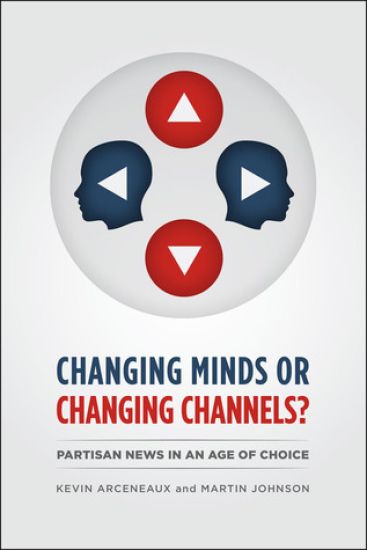
CHANGING MINDS OR CHANGING CHANNELS? - PARTISANNEWS IN AN AGE OF CHOICE

CHANGING MINDS OR CHANGING CHANNELS? - PARTISANNEWS IN AN AGE OF CHOICE

Kevin Arceneaux; Martin Johnson

University of Chicago Press
2013
nidottu
We live in an age of media saturation, where with a few clicks of the remote - or mouse - we can tune in to programming where the facts fit our ideological predispositions. But what are the political consequences of this vast landscape of media choice? Partisan news has been roundly castigated for reinforcing prior beliefs and contributing to the highly polarized political environment we have today, but there is little evidence to support this claim, and much of what we know about the impact of news media come from studies that were conducted at a time when viewers chose from among six channels rather than scores. Through a series of innovative experiments, Kevin Arceneaux and Martin Johnson show that such criticism is unfounded. Americans who watch cable news are already polarized, and their exposure to partisan programming of their choice does not significantly change their initial position. In fact, the opposite is true: viewers become more polarized when forced to watch programming that opposes their beliefs. A much more troubling consequence of the ever-expanding media environment, the authors show, is that it has allowed people to tune out the news: the four top-rated partisan news programs draw a mere three percent of the total number of people watching television. Overturning much of the conventional wisdom, Changing Minds or Changing Channels? demonstrates that the strong effects of media exposure found in past research are simply not applicable in today's more saturated media landscape.