This study uses the celebrated American trial of Charles Guiteau, who assassinated President James A. Garfield in 1881, to explore attitudes towards insanity and criminal responsibility in the the late-19th century. The author reconstructs the courtroom battle waged by 24 expert witnesses who represented the two major schools of psychiatric thought of the generation immediately preceding Freud. Although the role of genetics in behaviour was widely accepted, these psychiatrists debated whether heredity had predisposed Guiteau to assassinate Garfield. Rosenberg's account allows the reader to consider one of the earliest cases in the controversy over the criminal responsibility of the insane, a debate that has continued through to modern times.
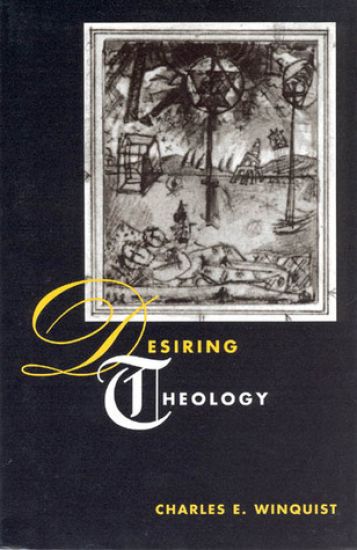
This text argues for the possibility of theological thinking in a postmodern secular milieu. Moving beyond the now familiar reiteration of postmodernity's losses - the death of God, the displacement of the self, the end of history, the closure of the book - Winquist equates a desire to think theologically with a desire, amidst postmodernity's disappointments, for a thinking that does not disappoint. To desire theology in this sense is to desire to know an "other" in and of language that can be valued in the forming of personal and communal identity. In this book, "desiring theology" carries another sense as well, for Winquist argues that, in the wake of psychoanalysis, theology must elaborate the meaning and importance of desire in its own discourse. Winquist's work is tactical as well as theoretical, showing what kind of work theology can do in a postmodern age. He suggests that theology is closely akin to what Gilles Deleuze and Felix Guattari refer to as a minor intensive use of a major language. The minor intensive theological use of language, Winquist argues, pressures the ordinary weave of discourse and opens it to desire. Thus theology becomes a work against "the disappointment of thinking". Engaged with the work of Nietzsche, Derrida, Tillich, Robert P. Scharlemann and Mark C. Taylor, among others, this book aims to provide a contribution to contemporary theology.
This text argues for the possibility of theological thinking in a postmodern secular milieu. Moving beyond the now familiar reiteration of postmodernity's losses - the death of God, the displacement of the self, the end of history, the closure of the book - Winquist equates a desire to think theologically with a desire, amidst postmodernity's disappointments, for a thinking that does not disappoint. To desire theology in this sense is to desire to know an "other" in and of language that can be valued in the forming of personal and communal identity. In this book, "desiring theology" carries another sense as well, for Winquist argues that, in the wake of psychoanalysis, theology must elaborate the meaning and importance of desire in its own discourse. Winquist's work is tactical as well as theoretical, showing what kind of work theology can do in a postmodern age. He suggests that theology is closely akin to what Gilles Deleuze and Felix Guattari refer to as a minor intensive use of a major language. The minor intensive theological use of language, Winquist argues, pressures the ordinary weave of discourse and opens it to desire. Thus theology becomes a work against "the disappointment of thinking". Engaged with the work of Nietzsche, Derrida, Tillich, Robert P. Scharlemann and Mark C. Taylor, among others, this book aims to provide a contribution to contemporary theology.
Written by three expert birders, this book is both a finding guide and an annotated checklist of the birds found in Indiana. In Part I, The Haunts, the Kellers present 66 of their favorite Hoosier birding spots—parks, reservoirs, and wildlife refuges, as well as more unexpected and unusual sites. Part II, the Checklist, provides the latest records for northern, central, and southern Indiana for 397 species, from permanent residents to the rarest of strays. The new edition has also been rearranged according to the most recent AOU classification scheme, which will be especially convenient for birders now using the national Geographic filed guide. Birds in Part II are cross-indexed to the haunts in Part I. First published in 1979, the book was acclaimed as "extremely functional," "gracefully written", "excellent for touring birders," and "an uncommonly thorough regional guide."
" . . . stimulating and insightful . . . a thoroughly researched and timely contribution to the secondary literature of ethics . . . " —Library Journal "His important new work establishes Scott . . . as one of the foremost interpreters of the Continental philosophical tradition of the US. . . . Necessary for anyone working in ethics or the Continental tradition." —Choice " . . . a provocative discourse on the consequences of the ethical in the thought of Nietzsche, Foucault, and Heidegger." —The Journal of Religion Charles E. Scott's challenging book advances the broad claim that ethics as a way of judging and thinking has come into question as philosophers have confronted suffering and conflicts that arise from our traditional systems of value.
". . . remarkable account of the impact of postmodern philosophy on the question of ethics and politics . . . commendable also for its balanced view of Heidegger's relationship to politics and ethics. . . . an excellent account of Heidegger's philosophical understanding of technology . . ." —Choice This book takes as its point of departure the question of ethics: that values and their pursuit in the West often perpetuate their own worst enemies. At issue are the dangers in the structures and movements of images, values, and ways of knowing that are most intimately a part of our lives.
"Like Foucault and Levinas before him, though in very different ways, Scott makes an oblique incision into phenomenology . . . [it is] the kind of book to which people dazed by the specters of nihilism will be referred by those in the know." —David Wood ". . . refreshing and original." —Edward S. Casey In The Lives of Things, Charles E. Scott reconsiders our relationships with ordinary, everyday things and our capacity to engage them in their particularity. He takes up the Greek notion of phusis, or physicality, as a way to point out limitations in refined and commonplace views of nature and the body as well as a device to highlight the often overlooked lives of things that people encounter. Scott explores questions of unity, purpose, coherence, universality, and experiences of wonder and astonishment in connection with scientific fact and knowledge. He develops these themes with lightness and wit, ultimately articulating a new interpretation of the appearances of things that are beyond the reach of language and thought.
Living with Indifference is about the dimension of life that is utterly neutral, without care, feeling, or personality. In this provocative work that is anything but indifferent, Charles E. Scott explores the ways people have spoken and thought about indifference. Exploring topics such as time, chance, beauty, imagination, violence, and virtue, Scott shows how affirming indifference can be beneficial, and how destructive consequences can occur when we deny it. Scott's preoccupation with indifference issues a demand for focused attention in connection with personal values, ethics, and beliefs. This elegantly argued book speaks to the positive value of diversity and a world that is open to human passion.
This volume explores the essence of German military professionalism as exemplified by the nineteenth century Prussian German Staff. The study focuses on the most important Prussian military reformer--Gerhard Johann David von Scharnhorst, who in 1801 founded the Militarische Gesellschaft (Military Society) in Berlin. The Gesellschaft became the focal point for the transformation of the Prussian army from a robotic war machine into a modern fighting force that was instrumental in defeating Napolean in 1813 and in 1815. The author examines the following elements of this military society: its membership; the specifics of its agenda; the intellect, imagination, and habits of thought, reflection, and objective analysis of its members; Scharnhorst's particular contributions.
This compelling work draws on the experiences of America's most successful business leaders to examine the issue of character in business. Based on interviews with 125 CEOs of major U.S. corporations, Managing with Integrity shows how it is possible for the businessperson to do what is right and run a profitable company at the same time. A wealth of practical examples and anecdotes demonstrates that even today, corporate America's most powerful figures tend to place what is ethical over what is expedient and adhere to a higher standard than is generally assumed by the public. By revealing the strategies these leaders employ in the face of the myriad challenges to character encountered in the day-to-day business world, the author provides invaluable insights for executives, managers, supervisors, professionals, and entrepreneurs confronted with their own ethical dilemmas. Readers will find Managing with Integrity both an unusually candid look at the dimensions of executive decision making and an eminently practical guide to the development of a workable moral philosophy for business.Is it possible for a decent human being to succeed in business? How does one find meaning in the business life? These are some of the questions asked by the author as he explores the difficulties associated with ethical thinking within the context of business. Finding that those persons and organizations that aspire to serve worthwhile purposes are ultimately the most profitable, he shows how businesses can and do prosper when high ethical and moral standards underlie executive decision making. Finally, the author examines the concept of success in business and describes the various dimensions of success which are most mentioned most often by the senior executives interviewed for the book. Written in an engaging and nontechnical style and filled with hundreds of real-world examples, Managing with Integrity offers an important counterweight to the cynicism that so often pervades popular thinking about corporate America.
Against the all-too-familiar backdrop of corporate scandal and greed, Charles Watson provides what he calls a blueprint to help working men and women, from the tops of organizations to the bottoms, step forward and help restore and defend the integrity of business. Step by step, he outlines fifteen fundamental commandments of honest business—from put people first to be your own person—common-sensical approaches to making decisions, solving problems, and taking action in ways that deliver results without compromising on principles. Using dozens of compelling examples, from companies large and small, Watson demonstrates how honesty, integrity, and trust are at the root of such essential business concepts as creativity and innovation, risk taking, collaboration, attracting and retaining talented people, and anticipating and exceeding customer expectations. He also tackles such complex issues as how to prevent an ethical ego from becoming arrogant and how to stand your ground when faced with unethical competition, resistance from above or below, or the temptation to take the path of least resistance. Ultimately, he provides practical, not abstract or theoretical, recommendations for developing individuals and organizations that encourage authentic relationships, act in ways that society admires, and have the boldness to initiate action with conviction.Watson also tackles such complex issues as how to prevent an ethical ego from becoming arrogant and how to stand your ground when faced with unethical competition, resistance from above or below, or the temptation to take the path of least resistance. He reminds us that integrity is derived from the Latin integritas—oneness, a consistency of purpose, word, and deed. Applying this principle, he provides practical, not abstract or theoretical, recommendations for developing individuals and organizations that encourage authentic relationships, celebrate positive achievements, act in ways that society admires, and have the boldness to initiate action with conviction. Ultimately, Watson demonstrates that with courage and humility you can, indeed, do well by doing good—not only at work, but in all aspects of your life.
A management professor and a religion professor team up to provide a fresh, penetrating look at the obstacles that prevent people from achieving their full potential. As authors Charles Watson and Thomas Idinopulos demonstrate, inner demons like a lack of integrity, mindless conformity, passivity, or greed conspire to keep people from doing their best. But people can avoid becoming their own worst enemies by using their uniquely human capacities to their fullest—to be more responsible, more creative, more self-disciplined, and more honest. Using these strengths, the authors show, makes it easier to resolve ethical dilemmas, attain peak performance without burning out, maintain a positive outlook, and, ultimately, succeed in achieving treasured personal and professional goals. A management professor and a religion professor team up to provide a fresh, penetrating look at the obstacles that prevent people from achieving their full potential at work. As Watson and Idinopulos demonstrate, inner demons like a lack of integrity, mindless conformity, passivity, mediocrity, or greed conspire to keep people from doing their best. But people can avoid becoming their own worst enemies by using their uniquely human capacities to their fullest: to be more responsible, more insightful, more creative, more self-disciplined, more honest, and more concerned about others. Using these strengths, the authors show, makes it easier to resolve ethical dilemmas, attain peak performance without burning out, maintain a positive outlook, and, ultimately, succeed in achieving treasured personal and professional goals. The world of work is filled with treacherous shoals that constantly test the integrity, fortitude, and tolerance of employees. The stresses can be incapacitating. Faced with competing agendas, high expectations, sclerotic bureaucracies, and scarce resources, many people fall prey to demons that sap their energy or, worse, encourage them to act against their own interests by being dishonest or cutting corners. Are You Your Own Worst Enemy? shows readers how to take responsibility for their actions and their happiness. It discusses the on-going pressures, temptations, and traps in the workplace and how ordinary people can manage them constructively to remain effective and true to their ideals. Specifically, it shows how learning the following behaviors and attitudes can help people become more productive, more valuable, and more fully satisfied: -Develop the capacity to make things happen. -Make the most of who you are. -Sharpen thinking skills. -Be the kind of person others want to be around. -Break the chains of mindless routine. -Become an effective learner and continue learning. -Master the art of self-discipline. -Act with integrity. -Be of service to others. Using dozens of engaging stories from people in all types of organizations, the authors show how to overcome self-defeating behavior. The result for readers is a blueprint for success, reduced stress, better work/life balance, and fulfillment.
This is a rich and many-faceted personal and business biography of the main figure in the third generation of Weyerhaeusers, who led the Weyerhaeuser Timber Company through the difficult and decisive years from 1933 to 1956.Although Phil Weyerhaeuser preferred to pass over the importance of his role, he was an industry leader and as such could not escape a large public duty. The years in which he served, from the 1920s tin the Inland Empire, and from 1933 to 1956 with the Weyerhaeuser Timber Company west of the Cascades, were years of great demands and change. Within his tenure the country experience the Great Depression and World War II, the reluctant acceptance by business of New Deal and Fair Deal legislation and bureaucratic requirements, and the adjustments occasioned by the managerial revolution. In the case of the Timber Company, the period witnessed its transition from what had been primarily a dealer in timberlands to an integrated manufacturer of forest products, from a liquidator of forest resources to a managers of tree farms designed to be perpetual in their providence.Phil oversaw his responsibilities to good purpose. His quiet style is of interest and so too are the effects of just being a Weyerhaeuser. The latter, of course, had much to do with his opportunities and also influenced the manner in which he conducted himself. But it was not without its liabilities, and the family relationships are an important element in the story. The most significant feature, however, has to do with the study of a period and a place and an industry through the experiences of a very special organization and its leadership. The study brings people and events into clearer focus and gives them added meaning. This is of particular importance in an industry so given to stereotyping and disapprobation.This well-written account reveals in detail the operation of a huge family enterprise, government-industry relations at a key time in United States history, labor relations, and efforts to expand and continually revitalize a large company--dependent on natural resources--over a period of half a century. Central to these efforts was Phil's conviction that the best way for a forest products company to operate was to own its own timberlands. he saw such holdings as necessary if the company was to engage in sustained-yield management.This biography draws extensively on primary sources--correspondence, family records, memoranda, and numerous interviews. It will be of interest to historians of the Pacific Northwest and the forest products industry, students of business history, and all readers interested in the development of a major American company.
President of the University of Washington from 1958 to 1973, a time of tremendous change, Charles Odegaard has written an absorbing memoir of his personal and institutional background and his development as a scholar and university administrator. President Richard L. McCormick and Professor of Biomedical Ethics Keith R. Benson further discuss Odegaard's lasting contributions to the University of Washington.Beginning with his own undergraduate experience, Odegaard came to recognize the importance of the humanities as the vital center of the university tradition. Throughout his career he emphasized that education concerned with the quality of life should be foremost in the minds of university administrators and faculty. After retirement he continued this mission in his book Dear Doctor: A Personal Letter to a Physician, focusing on the need to train physicians in the humanities in order to strengthen the doctor-patient relationship.Growing up in Chicago, Odegaard attended Dartmouth College and then Harvard University, where he studied medieval history and received his doctorate in 1937. He then joined the history department faculty at the University of Illinois. A four-year tour of duty as an officer in the U.S. Navy during World War II deeply influenced his comprehension of how people are motivated to work toward a common goal under difficult conditions. In 1948 he was persuaded to move to Washington, D.C., to head the American Council of Learned Societies. In 1952 he accepted the position of Dean of Arts and Sciences at the University of Michigan, and he moved to the presidency of the University of Washington in the fall of 1958.Under Odegaard's strong leadership the University of Washington grew into a major institution of higher learning and research. Among his primary concerns were finding superior academic administrators, accommodating rapid growth in enrollment, encouraging interdisciplinary cooperation, fostering greater communication between students and faculty, working to establish a realistic system linking state universities and colleges, and dealing with student discontent during the Vietnam War years and the periods of minority student protests.In A Pilgrimage through Universities, Charles Odegaard conveys his perspective on the role a major university should play in the modern world.
The problem that gives rise to this book is dissatisfaction with social science and social research as instruments of social problem solving. Policy makers and other practical problem solvers frequently voice disappointment with what they are offered. And many social scientists and social researchers think they should be more drawn upon, more useful, and more influential. Out of the discontent have come numerous diagnoses and prescriptions. This thoughtful contribution to the discussion provides an agenda of basic questions that should be asked and answered by those who are concerned about the impact of social science and research on real life problems. In general, Cohen and Lindblom believe that social scientists are crippled by a misunderstanding of their own trade, and they suggest that the tools of their trade be applied to the trade itself. Social scientists do not always fully appreciate that professional social inquiry is only one of several ways of solving a problem. They are also often engaged in a mistaken pursuit of authoritativeness, not recognizing that their contribution can never be more than a partial one. Cohen and Lindblom suggest that they reexamine their criteria for selecting subjects for research, study their tactics as compared to those of policy makers, and consider more carefully their role in relation to other routes to problem solving. To stimulate further inquiry into these fundamental issues, they also provide a comprehensive bibliography.
How do ordinary citizens, government officials, opinion leaders, or social scientists attempt to solve social problems? How competent are we at defining the problems, seeking information, and finding answers? In this important and controversial book, a distinguished social scientist meticulously analyzes our attempt to understand society so that we can reshape it. In so doing, he largely bypasses both epistemology and contemporary highly abstract theory on knowledge and society in order to acheive a far more concrete analysis of discourse and inquiry in social problem solving. There is a tragic discrepancy, argues Charles E. Lindblom, between our abilities to solve problems and the difficulty of the problems to be solved. We must make do with inadequate information and inconclusive analyses, for the task is less one of learning the truth than of proceeding in inquiry and decisions when the truth cannot be known. Lindblom discusses the many obstacles that prevent us from solving social problems, focusing in particular on learned incompetence. According to Lindblom, parents teach children not to think certain thoughts, and schools often engage more in indoctrination than education. Political rhetoric and commercial sales promotion feed a steady diet of misrepresentation. Social science does help. But because it is dependent on popular thought, it shares the impairments of thought found in both political figures and ordinary citizens. It also develops its own distinctive impairments and is to a degree crippled by its narrow view of scientific method--often more interested in proving than probing. Although social science can be improved in ways that Lindblom outlines in his book, social inquiry calls for such significant contributions from lay thought that it renders many conventional ideals of scientific problem solving inappropriate. Lindblom contends that the route to better social problem solving is not through either scientific or popular consensus or agreement, however much they are valued in the world of science and social science, but through a competition of ideas. The index of a society's competence, he states, is in its discord over ends, values, or purposes. "As usual, Lindblom cuts through to the core of the issue: How is society to understand its central problems and challenges? With originality and courage, he takes on the social scientists and the policy analysts, and presents an inspiring picture of a self-guiding democracy that continuously deliberates over means and ends. A signal contribution."--Robert B. Reich, Harvard University
In this clear and accessible book, an eminent political scientist offers a jargon-free introduction to the market system for all readers, with or without a background in economics. "A balanced and novel treatment of a very important set of questions. This is a book of grand scope by an outstanding scholar."—Samuel Bowles, University of Massachusetts, Amherst "Anyone who wants to know more about the market system’s plusses and minuses, how government can help or hinder its workings, and the direction in which it is likely to move should read this clear, fair, and fascinating book."—Robert Heilbroner, professor emeritus, New School University"The Market System resplendently assesses the character, rules, advantages, and shortcomings of the central institution coordinating modern economic and social life. Lindblom marshals his incisive intellect, uncommon range, and pellucid prose to clarify, probe, and exhort. The result is an unsurpassed guide."—Ira I. Katznelson, Columbia University
The Literary Spy provides a unique view of the intelligence world through the words of its own major figures (and those fascinated with them) from ancient times to the present. CIA speechwriter and analyst Charles E. Lathrop has compiled and annotated more than 3,000 quotations from such disparate sources as the Bible, spy novels and movies, Shakespeare’s plays, declassified CIA documents, memoirs, TV talk shows, and speeches from U.S. and foreign leaders and officials.Arranged in thematic categories with opening commentary for each section, the quotations speak for themselves. Together they serve both to illuminate a world famous for its secrets and deceptions and to show the extent to which intelligence has manifested itself in literature and in life. Engaging, informative, and often irreverent, The Literary Spy is an exceedingly satisfying book—one that meets the needs of the serious researcher just as ably as those of the armchair spy in pursuit of an evening’s entertainment.