Kirjojen hintavertailu. Mukana 11 342 296 kirjaa ja 12 kauppaa.

Kirjahaku

Etsi kirjoja tekijän nimen, kirjan nimen tai ISBN:n perusteella.

1000 tulosta hakusanalla Charles Laborde

Writings of Charles S. Peirce: a Chronological Edition, Volume 6
Volume 6 of this landmark edition contains 66 writings mainly from the unsettled period in Peirce's life just after he moved from New York to Milford, Pennsylvania, followed shortly afterward by the death of his mother. The writings in this volume reveal Peirce's powerful mind probing into diverse issues, looking for an underlying unity, but, perhaps, also looking for direction.
Writings of Charles S. Peirce: a Chronological Edition, Volume 8
Volume 8 of this landmark edition follows Peirce from May 1890 through July 1892—a period of turmoil as his career unraveled at the U.S. Coast and Geodetic Survey. The loss of his principal source of income meant the beginning of permanent penury and a lifelong struggle to find gainful employment. His key achievement during these years is his celebrated Monist metaphysical project, which consists of five classic articles on evolutionary cosmology. Also included are reviews and essays from The Nation in which Peirce critiques Paul Carus, William James, Auguste Comte, Cesare Lombroso, and Karl Pearson, and takes part in a famous dispute between Francis E. Abbot and Josiah Royce. Peirce's short philosophical essays, studies in non-Euclidean geometry and number theory, and his only known experiment in prose fiction complete his production during these years. Peirce's 1883-1909 contributions to the Century Dictionary form the content of volume 7 which is forthcoming.
The Writings of Charles De Koninck

The Writings of Charles De Koninck

Charles De Koninck

University of Notre Dame Press
2008
sidottu
The Writings of Charles De Koninck, volumes 1 and 2, present the first English editions of collected works of the Catholic Thomist philosopher Charles De Koninck (1906–1965). Ralph McInerny (1929–2010) was the project editor and prepared the excellent translations. Volume 1 contains writings ranging from De Koninck's 1934 dissertation at the University of Louvain on the philosophy of Sir Arthur Eddington, to two remarkable early essays on indeterminism and the unpublished book The Cosmos. The short essay "Are the Experimental Sciences Distinct from the Philosophy of Nature?" demonstrates for the first time De Koninck's distinctive view on the relation between philosophy of nature and the experimental sciences. Volume 1 also includes a comprehensive introductory essay by Leslie Armour outlining the structure and themes of De Koninck's philosophy, and a biographical essay by De Koninck's son, Thomas.
The Writings of Charles De Koninck

The Writings of Charles De Koninck

Charles De Koninck

University of Notre Dame Press
2009
sidottu
Volume 2 of The Writings of Charles De Koninck carries on the project begun by volume 1 of presenting the first English edition of the collected works of the Catholic Thomist philosopher Charles De Koninck (1906–1965). Ralph McInerny (1929–2010) was the project editor and prepared the excellent translations. This volume begins with two works published in 1943: Ego Sapientia: The Wisdom That Is Mary, De Koninck's first study in Mariology, and The Primacy of the Common Good Against the Personalists (with The Principle of the New Order), which generated a strong critical reaction. Included in this volume are two reviews of The Primacy of the Common Good, by Yves R. Simon and I. Thomas Eschmann, O.P., and De Koninck's substantial response to Eschmann in his lengthy "In Defence of St. Thomas." The volume concludes with a group of short essays: "The Dialectic of Limits as Critique of Reason," "Notes on Marxism," "This Is a Hard Saying," "[Review of] Between Heaven and Earth," and "Concept, Process, and Reality."
The Writings of Charles De Koninck

The Writings of Charles De Koninck

Charles De Koninck

University of Notre Dame Press
2016
nidottu
The Writings of Charles De Koninck, volumes 1 and 2, present the first English editions of collected works of the Catholic Thomist philosopher Charles De Koninck (1906–1965). Ralph McInerny (1929–2010) was the project editor and prepared the excellent translations. Volume 1 contains writings ranging from De Koninck's 1934 dissertation at the University of Louvain on the philosophy of Sir Arthur Eddington, to two remarkable early essays on indeterminism and the unpublished book The Cosmos. The short essay "Are the Experimental Sciences Distinct from the Philosophy of Nature?" demonstrates for the first time De Koninck's distinctive view on the relation between philosophy of nature and the experimental sciences. Volume 1 also includes a comprehensive introductory essay by Leslie Armour outlining the structure and themes of De Koninck's philosophy, and a biographical essay by De Koninck's son, Thomas.
The Writings of Charles De Koninck

The Writings of Charles De Koninck

Charles De Koninck

University of Notre Dame Press
2016
nidottu
Volume 2 of The Writings of Charles De Koninck carries on the project begun by volume 1 of presenting the first English edition of the collected works of the Catholic Thomist philosopher Charles De Koninck (1906–1965). Ralph McInerny (1929–2010) was the project editor and prepared the excellent translations. This volume begins with two works published in 1943: Ego Sapientia: The Wisdom That Is Mary, De Koninck's first study in Mariology, and The Primacy of the Common Good Against the Personalists (with The Principle of the New Order), which generated a strong critical reaction. Included in this volume are two reviews of The Primacy of the Common Good, by Yves R. Simon and I. Thomas Eschmann, O.P., and De Koninck's substantial response to Eschmann in his lengthy "In Defence of St. Thomas." The volume concludes with a group of short essays: "The Dialectic of Limits as Critique of Reason," "Notes on Marxism," "This Is a Hard Saying," "[Review of] Between Heaven and Earth," and "Concept, Process, and Reality."
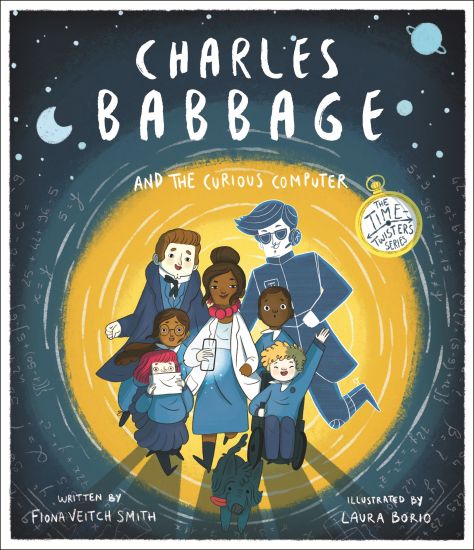
Charles Babbage and the Curious Computer

Charles Babbage and the Curious Computer

Fiona Veitch Smith

SPCK Publishing
2021
pokkari
One ordinary meeting of the science club at Parkview Primary School becomes extraordinary when their teacher takes them back in time to 1843 to meet Christian inventor Charles Babbage. There they learn about his latest invention, the Difference Engine, but they have to be careful – if they’re not back in an hour they’ll be stuck in the nineteenth century forever! This brilliantly fun graphic novel for 7- to 9-year olds is a fantastic time travel adventure that will keep kids on the edge of their seats. Children will love the memorable characters and colourful artwork from illustrator Laura Borio that brings to life Fiona Veitch Smith’s entertaining story, and the graphic novel format is perfect for kids beginning to explore their own independent reading. As they follow the journey of the science club, children will learn about the history of the computer and its inventor, Charles Babbage, and about how science and faith go hand in hand. Produced in partnership with the Faraday Institute, it ties in with the National Science Curriculum for Key Stage 2, making it ideal for reading in the classroom as well as at home.
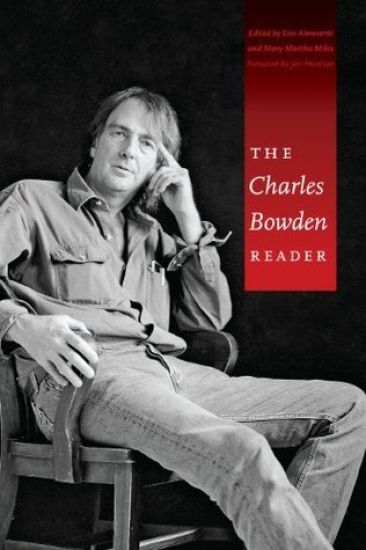
The Charles Bowden Reader

The Charles Bowden Reader

Charles Bowden

University of Texas Press
2010
pokkari
“I will make bold to say that Bowden is America’s most alarming writer. Just when you think you’ve heard it all you learn you haven’t in the most pungent manner possible. . . . With The Charles Bowden Reader in hand you get a taste of it all, and any literate resident or visitor should want this book. It will lead them back to a close, alarming reading of the entire oeuvre. It is to ride in a Ferrari without brakes. There’s lots of oxygen but no safe way to stop. . . . Read him at your risk. You have nothing to lose but your worthless convictions about how things are.” -Jim Harrison, from the forewordFrom his first book, Killing the Hidden Waters, to his most recent, Murder City: Cuidad JuÁrez and the Global Economy's New Killing Fields, Charles Bowden has been sounding an alarm about the rapacious appetites of human beings and the devastation we inflict on the natural world we arrogantly claim to possess. His own corner of the world, the desert borderlands between the United States and Mexico, is Bowden's prime focus, and through books, magazine articles, and newspaper journalism he has written eloquently about key issues roiling the border-drug-related violence that is shredding civil society, illegal immigration and its toll on human lives and the environment, destruction of fragile ecosystems as cities sprawl across the desert and suck up the limited supplies of water.This anthology gathers the best and most representative writing from Charles Bowden's entire career. It includes excerpts from his major books-Killing the Hidden Waters, Blue Desert, Desierto: Memories of the Future, Blood Orchid,Blues for Cannibals, A Shadow in the City, Inferno, Exodus, and Some of the Dead Are Still Breathing-as well as articles that appeared in Esquire, Harper's, Mother Jones, and other publications. Imbued with Bowden's distinctive rhythm and lyrical prose, these pieces also document his journey of exploration-a journey guided, in large part, by the question posed in Some of the Dead Are Still Breathing: "How do we live a moral life in a culture of death?" This is no metaphor; Bowden is referring to the people, history, animals, and ecosystems that are being extinguished in the onslaught of twenty-first-century culture.The perfect introduction to his work, The Charles Bowden Reader is also essential for those who know him well and want to see the whole panorama of his passionate, intense writing.
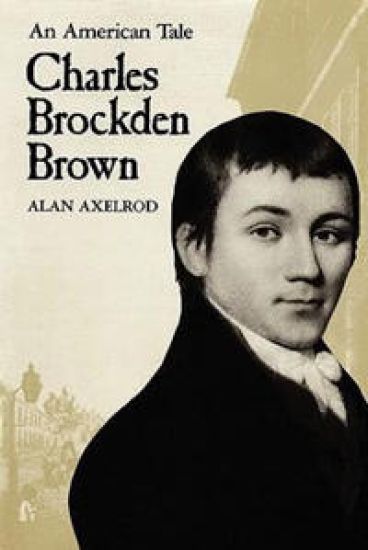
Charles Brockden Brown

Charles Brockden Brown

Alan Axelrod

University of Texas Press
1983
pokkari
Charles Brockden Brown: An American Tale is the first comprehensive literary, biographical, and cultural study of the novelist whom critic Leslie Fiedler has dubbed "the inventor of the American writer." The author of Wieland, Arthur Mervyn, Ormond, and Edgar Huntly, Charles Brockden Brown (1771-1810) is considered the first American professional author. He introduced Indian characters into American fiction. His keen interest in character delineation and abnormal psychology anticipates the stories of Poe, Hawthorne, and later masters of the psychological novel. Brown was eager to establish for himself an American identity as a writer, to become what Crèvecoeur called "the new man in the New World." It is especially this intimate identification of writer with country that makes Brown a telling precursor of our most characteristic authors from Poe, Hawthorne, and Cooper to Fitzgerald, Hemingway, and Faulkner. To understand its significance, Brown's work must be examined as both art and artifact. Accordingly, Charles Brockden Brown: An American Tale is literary history as well as criticism, embued with insights into a writer's sources and influences and the psychology of literary composition. It is also a fascinating examination of a nation's emotional and intellectual impact on a young man in search of his identity as creative artist.
Charles Olson

Charles Olson

Paul Christensen

University of Texas Press
1978
nidottu
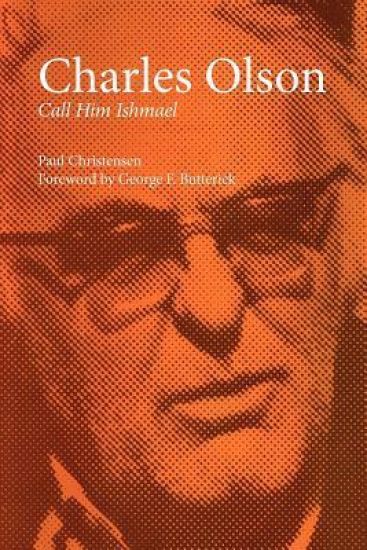
Charles Olson was an important force behind the raucous, explicit, jaunty style of much of twentieth-century poetry in America. This study makes a major contribution to our understanding of his life and work. Paul Christensen draws upon a wide variety of source materials-from letters, unpublished essays, and fragments and sketches from the Olson Archives to the full range of Olson's published prose and poetry. Under Christensen's critical examination, Olson emerges as a stunning theorist and poet, whose erratic and often unfinished writings obscured his provocative intellect and the coherence of his perspective on the arts. Soon after World War II, Olson emerged as one of America's leading poets with his revolutionary document on poetics, "Projective Verse," and his now-classic poem, "The Kingfishers," both of which declared a new set of techniques for verse composition. Throughout the 1950s Olson wrote many polemical essays on literature, history, aesthetics, and philosophy that outlined a new stance to experience he called objectism. A firm advocate of spontaneous self-expression in the arts, Olson regarded the poet's return to an intense declaration of individuality as a force to combat the decade's insistence on conformity. Throughout his life Olson fought against the depersonalization of the artist in the modern age; his resources, raw verve and unedited tumultuous lyricism, were weapons he used against generalized life and identity. This volume begins with an overview of Olson's life from his early years as a student at Harvard through his short-lived political career, his rectorship at Black Mountain College, and his retirement to Gloucester to finish writing the Maximus poems. Christensen provides a systematic review of Olson's prose works, including a close examination of his brilliant monograph on Melville, Call Me Ishmael. Considerable attention is devoted to Olson's theory of projectivism, the themes and techniques of his short poems, and the strategies and content of his major work, the Maximus series. In addition, there is a critical survey of the works of Robert Creeley, Robert Duncan, Denise Levertov, Paul Blackburn, and other poets who show Olson's influence in their own innovative, self-exploratory poetry.
Charles Ives

Charles Ives

Stuart Feder

YALE UNIVERSITY PRESS
1992
sidottu
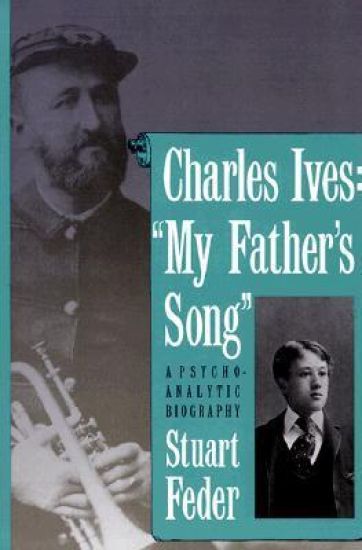
"A sound of a distant hornO'er shadowed lake is borne—my father's song."—Charles Ives Charles Ives, perhaps the quintessential American composer of the twentieth century, drew on his childhood experiences in a small New England town in his music. Through his close relationship with his father, George, a Civil War bandmaster, Ives developed a powerful feeling for nineteenth-century rural America. This book—the first full-scale psychoanalytic biography of a major composer—examines the lives of the two men and shows how a knowledge of their relationship as father and son, teacher and pupil, is central to an understanding of Ives’s work. Stuart Feder, a psychoanalyst with training in musicology, demonstrates that George exerted so pervasive an influence on Charles’s creative life that Ives’s music may be seen as the result of an unconscious fantasy of posthumous collaboration between father and son. The music bears George’s mark, not only in its incorporation of hymn tunes, parlor ballads, Civil War marches, and other homely sources that derived from his youth, but also in its use of technical musical devices attributed to George. Moreover, the span of Ives’s creative life reveals another connection to his father: Charles’s musical productivity began to wane in his forties, as he approached the age at which his father died. Dr. Feder examines the influence of George’s teaching and storytelling on Charles’s years as a composer. Ives’s later decline is traced psychologically and medically. Using Ives’s music as an essential part of his data, Dr. Feder demonstrates how music can illuminate and be expressive of the inner life of its creator.
Charles Ives and the Classical Tradition
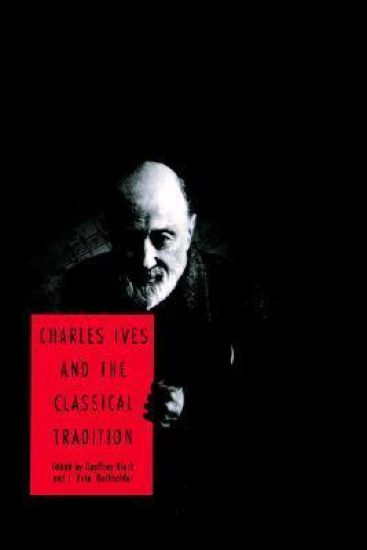
Although Charles Ives has long been viewed as the quintessential American composer, he placed himself in the European classical tradition, drew on it heavily for his aesthetic philosophy and musical techniques, and extended it to create something new. This book illuminates Ives's music by comparing it with that of other composers in Europe and the United States.Edited by two highly regarded Ives scholars, the book begins with essays that examine the influences on Ives of his musical predecessors and concludes with essays that find extensive parallels between Ives and such European contemporaries as Mahler, Schoenberg, Berg, and Stravinsky, whose music he knew little or not at all, but with whom he shared influences and concerns. Taken together, these chapters demonstrate that even apparently strange or distinctively American aspects of Ives's music--from his penchant for quotation to his juxtaposition of disparate styles--have strong precedents and parallels among European composers. Ives emerges as a composer at home in the classical tradition, engaged in exploring the same issues that confronted composers of his generation on both sides of the Atlantic.
Charles Dickens

Charles Dickens

Michael Slater

Yale University Press
2011
pokkari
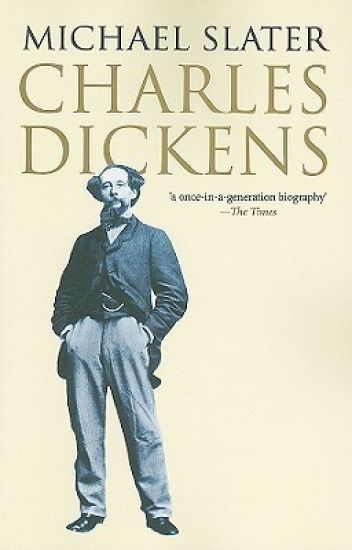
A magnificent new biography of the man who gave us David Copperfield, Oliver Twist, and Ebenezer Scrooge This long-awaited biography, twenty years after the last major account, uncovers Dickens the man through the profession in which he excelled. Drawing on a lifetime’s study of this prodigiously brilliant figure, Michael Slater explores the personal and emotional life, the high-profile public activities, the relentless travel, the charitable works, the amateur theatricals and the astonishing productivity. But the core focus is Dickens’ career as a writer and professional author, covering not only his big novels but also his phenomenal output of other writing--letters, journalism, shorter fiction, plays, verses, essays, writings for children, travel books, speeches, and scripts for his public readings, and the relationships among them.Slater’s account, rooted in deep research but written with affection, clarity, and economy, illuminates the context of each of the great novels while locating the life of the author within the imagination that created them. It highlights Dickens’ boundless energy, his passion for order and fascination with disorder, his organizational genius, his deep concern for the poor and outrage at indifference towards them, his susceptibility towards young women, his love of Christmas and fairy tales, and his hatred of tyranny.Richly and precisely illustrated with many rare images, this masterly work on the complete Dickens, man and writer, becomes the indispensable guide and companion to one of the greatest novelists in the language.
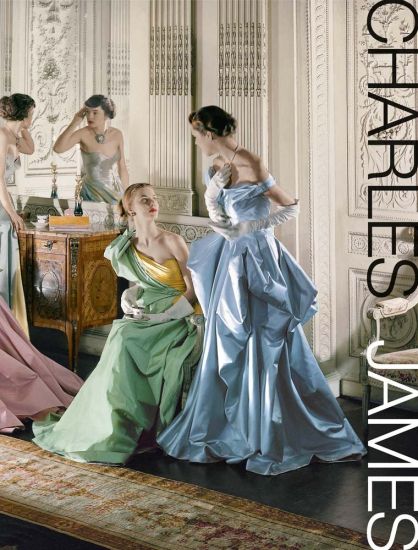
Charles James

Charles James

Harold Koda; Jan Giler Reeder

Yale University Press
2014
sidottu
"His work went beyond fashion and was a fine art." —a Charles James patron Charles James, often considered to be America’s first couturier, was renowned in the 1940s and 1950s as a master at sculpting fabric for the female form and creating fashions that defined mid-century glamour. Although James had no formal training as a dressmaker, he created strikingly original and complex designs, including intricate ball gowns worn by members of high society in New York and Europe. This lavishly illustrated book offers a comprehensive study of James’ life and work, highlighting his virtuosity and inventiveness as well as his influence on subsequent fashion designers. Featuring exciting new photography of the spectacular evening dresses James produced between 1947 and 1955, this publication includes enlightening details of these intricate creations alongside vintage photographs and rarely seen archival items, such as patterns, muslins, dress forms, and sketches. A detailed and illustrated chronology of James’ life describes his magnetic personality, his unorthodox design processes, his colorful supporters—such as Salvador Dalí, Elsa Schiaparelli, Christian Dior, and Cristobal Balenciaga—and profiles of a number of his famous clients, such as Gypsy Rose Lee. With flair and style echoing that of its subject, Charles James brings to life one of the most fascinating and creative figures in American fashion. Published by The Metropolitan Museum of Art/Distributed by Yale University Press Exhibition Schedule: The Metropolitan Museum of Art (05/08/14–08/10/14)
Charles Darwin's Barnacle and David Bowie's Spider

Charles Darwin's Barnacle and David Bowie's Spider

Stephen B. Heard

Yale University Press
2020
sidottu
An engaging history of the surprising, poignant, and occasionally scandalous stories behind scientific names and their cultural significance, “More fun than you’ve ever had with taxonomy in your whole entire life!" (Diana Gabaldon, author of the Outlander series and PhD in Quantitative Behavioral Ecology) Ever since Carl Linnaeus’s binomial system of scientific names was adopted in the eighteenth century, scientists have been eponymously naming organisms in ways that both honor and vilify their namesakes. This charming, informative, and accessible history examines the fascinating stories behind taxonomic nomenclature, from Linnaeus himself naming a small and unpleasant weed after a rival botanist to the recent influx of scientific names based on pop-culture icons—including David Bowie’s spider, Frank Zappa’s jellyfish, and Beyoncé’s fly. Exploring the naming process as an opportunity for scientists to express themselves in creative ways, Stephen B. Heard’s fresh approach shows how scientific names function as a window into both the passions and foibles of the scientific community and as a more general indicator of the ways in which humans relate to, and impose order on, the natural world.