Kirjojen hintavertailu. Mukana 12 390 323 kirjaa ja 12 kauppaa.

Kirjahaku

Etsi kirjoja tekijän nimen, kirjan nimen tai ISBN:n perusteella.

1000 tulosta hakusanalla Christopher B. Booker

Open World Empire

Open World Empire

Christopher B. Patterson

New York University Press
2020
pokkari
Finalist, 2021 John Hope Franklin Prize, given by the American Studies Association Seeking ways to understand video games beyond their imperial logics, Patterson turns to erotics to re-invigorate the potential passions and pleasures of play Video games vastly outpace all other mediums of entertainment in revenue and in global reach. On the surface, games do not appear ideological, nor are they categorized as national products. Instead, they seem to reflect the open and uncontaminated reputation of information technology. Video games are undeniably imperial products. Their very existence has been conditioned upon the spread of militarized technology, the exploitation of already-existing labor and racial hierarchies in their manufacture, and the utopian promises of digital technology. Like literature and film before it, video games have become the main artistic expression of empire today: the open world empire, formed through the routes of information technology and the violences of drone combat, unending war, and overseas massacres that occur with little scandal or protest. Though often presented as purely technological feats, video games are also artistic projects, and as such, they allow us an understanding of how war and imperial violence proceed under signs of openness, transparency, and digital utopia. But the video game, as Christopher B. Patterson argues, is also an inherently Asian commodity: its hardware is assembled in Asia; its most talented e-sports players are of Asian origin; Nintendo, Sony, and Sega have defined and dominated the genre. Games draw on established discourses of Asia to provide an "Asiatic" space, a playful sphere of racial otherness that straddles notions of the queer, the exotic, the bizarre, and the erotic. Thinking through games like Overwatch, Call of Duty 4: Modern Warfare, Shenmue II, and Alien: Isolation, Patterson reads against empire by playing games erotically, as players do—seeing games as Asiatic playthings that afford new passions, pleasures, desires, and attachments.
How to Maximize the Caloric Costs of Exercise

How to Maximize the Caloric Costs of Exercise

Christopher B Scott

Archway Publishing
2017
pokkari
Regular physical activity creates a myriad of physiological changes within the human body, almost all of it good. Exercise is, in fact, the heart and soul of physical and athletic development. The book you are reading however is not about that - you?ll need to read about the enhancement of muscular performance elsewhere.This is a book about the hows and whys of maximizing the caloric expenditure of exercise with the hopeful achievement of losing body fat. From such a perspective, I am at a current understanding that exercise designed to increase athletic ability does not necessarily carry-over to weight loss?the goal of weight reduction and the enhancement of physical performance require separate program designs.As part of my learning (data collecting) and teaching (data promoting) background, I count calories for a living and have been happily at it for over 30 years. The following chapters present energy cost estimates ? aka, calories (kcal) burned - based on numbers collected from actual laboratory measurements as well as speculative interpretations that have all been converted into an energy cost and fat loss appraisal: More vs. Less.I continue to search for those specific types of exercises and activities that yield the largest numbers, with my primary objective being to find those physical movements with the best potential to maximize caloric costs and fat burning.It is not a straightforward story?
How to Maximize the Caloric Costs of Exercise

How to Maximize the Caloric Costs of Exercise

Christopher B Scott

Archway Publishing
2017
sidottu
Regular physical activity creates a myriad of physiological changes within the human body, almost all of it good. Exercise is, in fact, the heart and soul of physical and athletic development. The book you are reading however is not about that - you?ll need to read about the enhancement of muscular performance elsewhere.This is a book about the hows and whys of maximizing the caloric expenditure of exercise with the hopeful achievement of losing body fat. From such a perspective, I am at a current understanding that exercise designed to increase athletic ability does not necessarily carry-over to weight loss?the goal of weight reduction and the enhancement of physical performance require separate program designs.As part of my learning (data collecting) and teaching (data promoting) background, I count calories for a living and have been happily at it for over 30 years. The following chapters present energy cost estimates ? aka, calories (kcal) burned - based on numbers collected from actual laboratory measurements as well as speculative interpretations that have all been converted into an energy cost and fat loss appraisal: More vs. Less.I continue to search for those specific types of exercises and activities that yield the largest numbers, with my primary objective being to find those physical movements with the best potential to maximize caloric costs and fat burning.It is not a straightforward story?
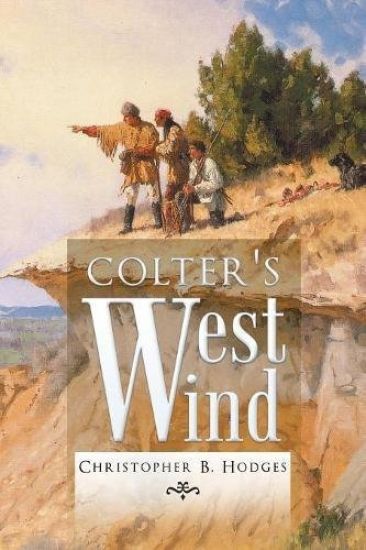
Colter's West Wind

Colter's West Wind

Christopher B Hodges

Lulu.com
2017
pokkari
Colter's West Wind tells the story of John Colter who was a member of the Lewis and Clark Expedition and an explorer and fur trapper in the Rocky Mountains. Colter's humble beginnings on the Kentucky frontier were followed by years of exploring the newly acquired Louisiana Territory and bringing commerce into the area. Colter found himself in the cross currents of British and American interests and the geopolitical struggles of the indigenous people who inhabited the area. While much mystery still surrounds much of Colter's life, Colter's West Wind builds a narrative on what is known about him and how a humble Kentuckian became part of history.
Deep Waters

Deep Waters

Christopher B. Teuton

University of Nebraska Press
2018
pokkari
Weaving connections between indigenous modes of oral storytelling, visual depiction, and contemporary American Indian literature, Deep Waters demonstrates the continuing relationship between traditional and contemporary Native American systems of creative representation and signification. Christopher B. Teuton begins with a study of Mesoamerican writings, Diné sand paintings, and Haudenosaunee wampum belts. He proposes a theory of how and why indigenous oral and graphic means of recording thought are interdependent, their functions and purposes determined by social, political, and cultural contexts. The center of this book examines four key works of contemporary American Indian literature by N. Scott Momaday, Gerald Vizenor, Ray A. Young Bear, and Robert J. Conley. Through a textually grounded exploration of what Teuton calls the oral impulse, the graphic impulse, and the critical impulse, we see how and why various types of contemporary Native literary production are interrelated and draw from long-standing indigenous methods of creative representation. Teuton breaks down the disabling binary of orality and literacy, offering readers a cogent, historically informed theory of indigenous textuality that allows for deeper readings of Native American cultural and literary expression.
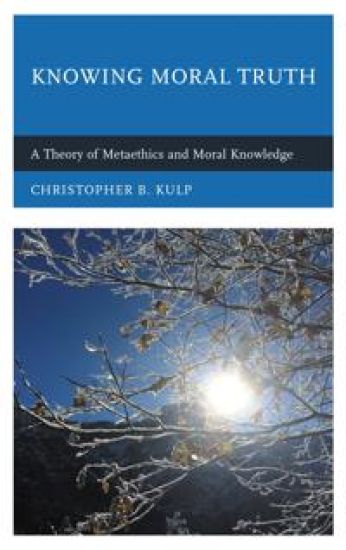
Knowing Moral Truth

Knowing Moral Truth

Christopher B. Kulp

Lexington Books
2017
sidottu
This is a book on metaethics and moral epistemology. It asks two fundamental questions: (i) Is there any such thing as (non-relative) moral truth?; and (ii) If there is such truth, how do we come into epistemic contact with it? Roughly the first half of the book is aimed at answering the first question. Its animating idea is that we should take our ordinary, tutored moral judgments seriously—judgments typified by our conviction that it is clearly true that some acts, policies, social norms et al. are morally right or wrong, permissible or impermissible, praiseworthy or condemnable, etc., no matter when, where, or by whom they are performed. In order to provide a firm conceptual basis for such judgments, the book develops a theory of moral truth, based on a theory of moral facts. The account of moral truth and moral facts is further grounded on a theory of moral properties. In short, the book develops a theory of moral realism, roughly, the view that there are indeed non-relative, first-order moral truths. The second half of the book is aimed at answering the second question above. Building squarely on the metaethical theories developed earlier, the book argues for a non-empiricist theory of justified moral belief and knowledge. Pivotal to this project is a careful analysis of various forms of moral skepticism, by which I mean any conception of morality substantially at odds with the general contours of our ordinary moral thinking. All such skepticisms are rejected, and in their place a broadly intuitionist, epistemically fallibilist theory of moral knowledge is advanced. The conclusion reached is that we have very strong reason to believe that our ordinary moral thinking, although certainly liable to error, is fundamentally sound. Moral knowledge is ubiquitous.
Knowing Moral Truth

Knowing Moral Truth

Christopher B. Kulp

Lexington Books
2020
nidottu
This is a book on metaethics and moral epistemology. It asks two fundamental questions: (i) Is there any such thing as (non-relative) moral truth?; and (ii) If there is such truth, how do we come into epistemic contact with it? Roughly the first half of the book is aimed at answering the first question. Its animating idea is that we should take our ordinary, tutored moral judgments seriously—judgments typified by our conviction that it is clearly true that some acts, policies, social norms et al. are morally right or wrong, permissible or impermissible, praiseworthy or condemnable, etc., no matter when, where, or by whom they are performed. In order to provide a firm conceptual basis for such judgments, the book develops a theory of moral truth, based on a theory of moral facts. The account of moral truth and moral facts is further grounded on a theory of moral properties. In short, the book develops a theory of moral realism, roughly, the view that there are indeed non-relative, first-order moral truths. The second half of the book is aimed at answering the second question above. Building squarely on the metaethical theories developed earlier, the book argues for a non-empiricist theory of justified moral belief and knowledge. Pivotal to this project is a careful analysis of various forms of moral skepticism, by which I mean any conception of morality substantially at odds with the general contours of our ordinary moral thinking. All such skepticisms are rejected, and in their place a broadly intuitionist, epistemically fallibilist theory of moral knowledge is advanced. The conclusion reached is that we have very strong reason to believe that our ordinary moral thinking, although certainly liable to error, is fundamentally sound. Moral knowledge is ubiquitous.
Kierkegaard and the Question Concerning Technology

Kierkegaard and the Question Concerning Technology

Christopher B. Barnett

Bloomsbury Academic USA
2021
nidottu
Over the last several decades, technology has emerged as an important area of interest for both philosophers and theologians. Yet, despite his status as one of modernity’s seminal thinkers, Søren Kierkegaard is not often seen as one who contributed to the field. Kierkegaard and the Question Concerning Technology argues otherwise. Christopher B. Barnett shows that many of Kierkegaard’s criticisms of "the present age" relate to the increasing dominance of technology in the West, and he puts Kierkegaard’s thought in conversation with subsequent thinkers who grappled with technological issues, from Martin Heidegger to Thomas Merton.Barnett shows that Kierkegaard’s writing, with its marked emphases on personal "upbuilding," stands as a place where deeper, non-technical modes of thinking are both commended and nurtured. In doing so, Barnett presents a Kierkegaard who remains relevant--perhaps all too relevant--in today’s digital age.
God's Island

God's Island

Christopher B. Smith

Createspace Independent Publishing Platform
2012
nidottu
God's Island is a finely-veiled parody of church life, as many people experience it. Satirical and humourous, it comes from the heart of one who has lived on "God's Island" for sixty seven years. Here is a look at the self-imposed banishment of the Church that hides from the world the magnificent treasures committed to her. As Paul says: "We have this treasure in earthen vessels." What a beautiful simile: treasures hidden in terracotta pots. Isn't it time the world saw the real beauty of the Church instead of the crackpots? And shouldn't we get out more, and give the world a look at what the Church has to offer instead of keeping it locked up? We've spent far too long on God's Island. "I am just finishing "God's Island". I love it. You've hit the nail on the head " - Pastor, New York City, USA.