Kirjojen hintavertailu. Mukana 12 419 190 kirjaa ja 12 kauppaa.

Kirjahaku

Etsi kirjoja tekijän nimen, kirjan nimen tai ISBN:n perusteella.

1000 tulosta hakusanalla Christopher Charles

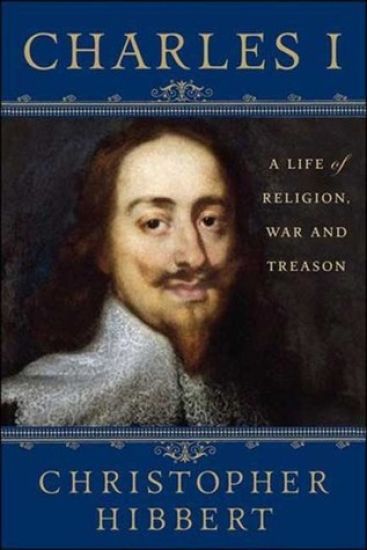
Charles I

Charles I

Christopher Durston

Routledge
1995
nidottu
Charles Carlton's biography of the `monarch of the Civil Wars' was praised for its distinctive psychological portrait of Charles I when it was first published in 1983. Challenging conventional interpretations of the king, as well as questioning orthodox historical assumptions concerning the origins and development of the Civil Wars, the book quickly established itself as the definitive biography. In the eleven years since Charles I: The Personal Monarch was published an immense amount of new material on the king and his reign have emerged and yet no new biography has been written. Professor Carlton's second edition includes a substantial new preface which takes account of the new work. Addressing and analysing the furious historiographical debates which have surrounded the period, Carlton offers a fresh and lucid perspective. The text and bibliography have been thoroughly updated.
Charles I

Charles I

Christopher W. Daniels; John Morrill

Cambridge University Press
1988
pokkari
Charles I's accession to the throne in 1625 was probably the most untroubled for over 200 years. Yet after seventeen years he found himself involved in a civil war that split the nation in two; he was later deposed, convicted of treason and publicly executed. Through an excellent selection of primary sources this book looks at the personality and policies of Charles I, and considers how far he was responsible for his own destruction. It includes not only written documents, but also paintings, coins and architectural drawings, which help to throw light on this enigmatic monarch and deeply private man. This successful volume in the Cambridge Topics in History series is reprinted with a full colour cover.
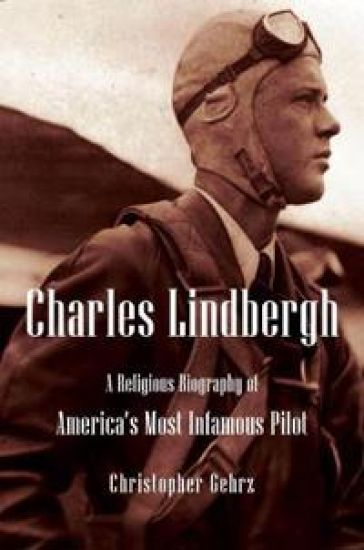
Charles Lindbergh

Charles Lindbergh

Christopher Gehrz

William B Eerdmans Publishing Co
2021
sidottu
The narrative surrounding Charles Lindbergh's life has been as varying and complex as the man himself. Once best known as an aviator--the first to complete a solo nonstop transatlantic flight--he has since become increasingly identified with his sympathies for white supremacy, eugenics, and the Nazi regime in Germany. Underexplored amid all this is Lindbergh's spiritual life; what beliefs drove the contradictory impulses of this twentieth-century icon? An apostle of technological progress who encountered God in the wildernesses he sought to protect, an anti-Semitic opponent of US intervention in World War II who had a Jewish scripture inscribed on his gravestone, and a critic of Christianity who admired Christ, Lindbergh defies conventional categories. But spirituality undoubtedly mattered to him a great deal. Influenced by his wife, Anne Morrow Lindbergh--a self-described "lapsed Presbyterian" who longed to live "in grace"--and friends like Alexis Carrel (a Nobel Prize-winning surgeon, eugenicist, and Catholic mystic) and Jim Newton (an evangelical businessman), he spent much of his adult life reflecting on mortality, divinity, and metaphysics. In this short biography, Christopher Gehrz represents Lindbergh as he was, neither an adherent nor a skeptic, a historical case study of an increasingly familiar contemporary phenomenon: the "spiritual but not religious." For all his earnest curiosity, Lindbergh remained unwilling throughout his life to submit to any spiritual authority beyond himself and ultimately rejected the ordering influence of church, tradition, scripture, or creed. In the end, the man who flew solo across the Atlantic insisted on charting his own spiritual path, drawing on multiple sources in such a way that satisfied his spiritual hunger but left some of his cruelest convictions unchallenged.
Stede Bonnet: Charleston's Gentleman Pirate

Stede Bonnet: Charleston's Gentleman Pirate

Christopher Byrd Downey

History Press Library Editions
2012
sidottu
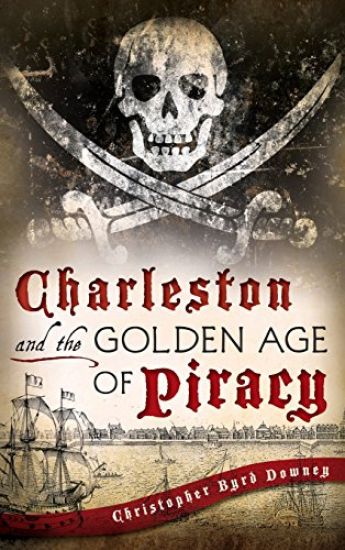
Hundreds of pirates traversed the waters of the Atlantic during America's colonial period, but few had a more adventurous tale than Stede Bonnet. Originally a wealthy plantation owner from Barbados, Bonnet abandoned his wife and children in 1717 to set sail on the pirate ship Revenge. He soon fell into company with Blackbeard in the Bahamas and headed for America. In May 1718, they arrived in Charleston and held the entire city hostage in a daring siege. Bonnet was eventually captured in North Carolina and transported back to Charleston, where he was brought to justice and executed on December 10, 1718. Join local pirate tour guide Captain Christopher Byrd Downey as he recounts the swashbuckling life of the most infamous pirate to ever darken the Holy City's waters.
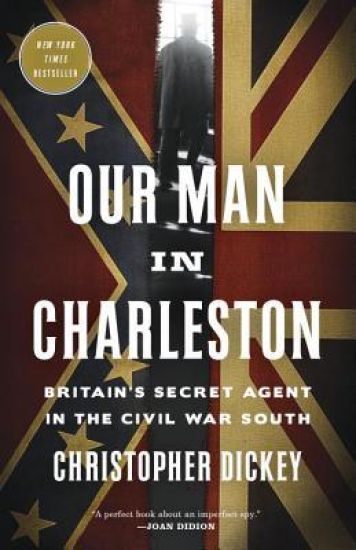
Our Man in Charleston

Our Man in Charleston

Christopher Dickey

Random House Inc
2016
pokkari
Between the Confederacy and recognition by Great Britain stood one unlikely Englishman who hated the slave trade. His actions helped determine the fate of a nation. When Robert Bunch arrived in Charleston to take up the post of British consul in 1853, he was young and full of ambition, but even he couldn't have imagined the incredible role he would play in the history-making events to unfold. In an age when diplomats often were spies, Bunch's job included sending intelligence back to the British government in London. Yet as the United States threatened to erupt into Civil War, Bunch found himself plunged into a double life, settling into an amiable routine with his slavery-loving neighbors on the one hand, while working furiously to thwart their plans to achieve a new Confederacy. As secession and war approached, the Southern states found themselves in an impossible position. They knew that recognition from Great Britain would be essential to the survival of the Confederacy, and also that such recognition was likely to be withheld if the South reopened the Atlantic slave trade. But as Bunch meticulously noted from his perch in Charleston, secession's red-hot epicenter, that trade was growing. And as Southern leaders continued to dissemble publicly about their intentions, Bunch sent dispatch after secret dispatch back to the Foreign Office warning of the truth--that economic survival would force the South to import slaves from Africa in massive numbers. When the gears of war finally began to turn, and Bunch was pressed into service on an actual spy mission to make contact with the Confederate government, he found himself in the middle of a fight between the Union and Britain that threatened, in the boast of Secretary of State William Seward, to "wrap the world in flames." In this masterfully told story, Christopher Dickey introduces Consul Bunch as a key figure in the pitched battle between those who wished to reopen the floodgates of bondage and misery, and those who wished to dam the tide forever. Featuring a remarkable cast of diplomats, journalists, senators, and spies, Our Man in Charleston captures the intricate, intense relationship between great powers on the brink of war. From the Hardcover edition.
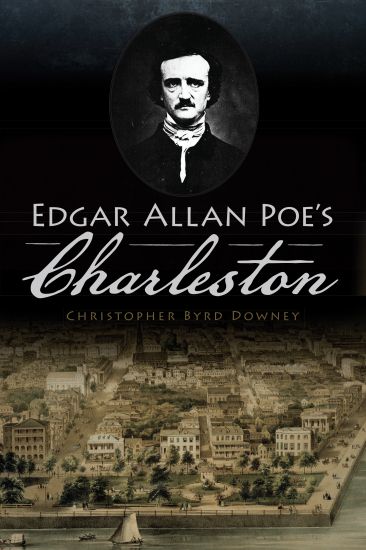
Edgar Allan Poe's Charleston

Edgar Allan Poe's Charleston

Christopher Byrd Downey

History Press
2020
nidottu
Edgar Allan Poe arrived in Charleston in November 1827 chased by storms, both literal and figurative. Some of the author's previous indiscretions caused him to enlist in the U.S. Army six months earlier under the pseudonym Edgar A. Perry. The more than one year that Poe spent stationed at Fort Moultrie on Sullivan's Island has been shrouded in mystery for nearly two centuries because Poe deliberately tried to hide his stint in the army. But despite Poe's deceptions, the influences and impressions of the Lowcountry permeated his life and writing, providing the setting for Poe's most popular and widely read short story during his lifetime, "The Gold-Bug," and perhaps providing the inspiration for the real Annabel Lee. Author Christopher Byrd Downey details the hidden history of Poe in Charleston.