Data Mining and Predictive Analysis: Intelligence Gathering and Crime Analysis, 2nd Edition, describes clearly and simply how crime clusters and other intelligence can be used to deploy security resources most effectively. Rather than being reactive, security agencies can anticipate and prevent crime through the appropriate application of data mining and the use of standard computer programs. Data Mining and Predictive Analysis offers a clear, practical starting point for professionals who need to use data mining in homeland security, security analysis, and operational law enforcement settings.This revised text highlights new and emerging technology, discusses the importance of analytic context for ensuring successful implementation of advanced analytics in the operational setting, and covers new analytic service delivery models that increase ease of use and access to high-end technology and analytic capabilities. The use of predictive analytics in intelligence and security analysis enables the development of meaningful, information based tactics, strategy, and policy decisions in the operational public safety and security environment.
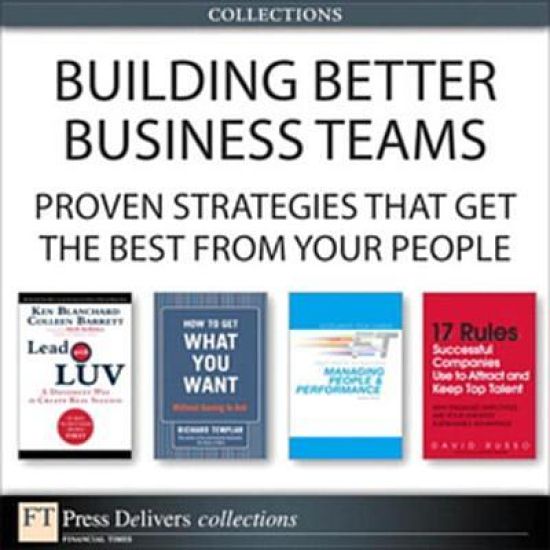
A brand new collection of powerful insights into business team-building… 4 pioneering books, now in a convenient e-format, at a great price! 4 remarkable eBooks help you create and inspire great teams to unprecedented levels of performance Your success is crucially dependent on your ability to create, lead, and inspire teams to achieve extraordinary results. The comprehensive resources in this 4 eBook package will help you do precisely that. In Lead with LUV: A Different Way to Create Real Success, the legendary Ken Blanchard ("The One Minute Manager") and former Southwest Airlines CEO Colleen Barrett help you achieve breakthrough performance by leading with love. They explain what "love" really means in the organizational context, why leading with love is not "soft" management, how to handle inappropriate behavior, how to make "servant leadership" work, and how to sustain leadership with love. Next, in 17 Rules Successful Companies Use to Attract and Keep Top Talent: Why Engaged Employees Are Your Greatest Sustainable Advantage, David Russo top workforce optimization consultant David Russo identifies exactly what great organizations do differently when it comes to managing people. Russo distills these differences into actionable rules covering everything from resourcing and compensation to leadership development, risk-taking to change management. You'll learn how to build genuine esprit de corps in any environment, ensuring that your employees' efforts, minds, and hearts stay focused on your mission, and stay committed to results and competitive advantage. In Managing People and Performance: Fast Track to Success, David Ross reveals how to get the best possible performance out of every member of your team, whatever their personality or skill set. Using Ross's breakthrough tools, techniques, checklists, and guidance, you'll master indispensable skills for creating, developing, and managing high performance teams--and, at the same time, accelerating your own career development. Finally, in How to Get What You Want...Without Having to Ask, international best-selling author Richard Templar brings his inimitable blend of originality, imagination, wisdom, and straight talk to the challenges of negotiation, persuasion, and influence. The world-renowned author of best-sellers like The Rules of Life, Templar offers up 100 clever, simple, pain-free ways to get people throughout your organization to happily say "yes" to you, and smooth your team's path to success! From world-renowned leaders and performance experts Ken Blanchard, Colleen Barrett, David Russo, David Ross, and Richard Templar
The play-focused, step-by-step guide to creating great game designs This book offers a play-focused, process-oriented approach for designing games people will love to play. Drawing on a combined 35 years of design and teaching experience, Colleen Macklin and John Sharp link the concepts and elements of play to the practical tasks of game design. Using full-color examples, they reveal how real game designers think and work, and illuminate the amazing expressive potential of great game design. Focusing on practical details, this book guides you from idea to prototype to playtest and fully realized design. You’ll walk through conceiving and creating a game’s inner workings, including its core actions, themes, and especially its play experience. Step by step, you’ll assemble every component of your “videogame,” creating practically every kind of play: from cooperative to competitive, from chance-based to role-playing, and everything in between. Macklin and Sharp believe that games are for everyone, and game design is an exciting art form with a nearly unlimited array of styles, forms, and messages. Cutting across traditional platform and genre boundaries, they help you find inspiration wherever it exists. Games, Design and Play is for all game design students, and for beginning-to-intermediate-level game professionals, especially independent game designers. Bridging the gaps between imagination and production, it will help you craft outstanding designs for incredible play experiences! Coverage includes: Understanding core elements of play design: actions, goals, rules, objects, playspace, and playersMastering “tools” such as constraint, interaction, goals, challenges, strategy, chance, decision, storytelling, and contextComparing types of play and player experiencesConsidering the demands videogames make on playersEstablishing a game’s design valuesCreating design documents, schematics, and tracking spreadsheetsCollaborating in teams on a shared design visionBrainstorming and conceptualizing designsUsing prototypes to realize and playtest designsImproving designs by making the most of playtesting feedbackKnowing when a design is ready for productionLearning the rules so you can break them!
For non-majors biology courses Engage students in science with stories that relate to their lives Biology: Science for Life weaves a compelling storyline throughout each chapter to grab student attention through the exploration of high-interest topics such as genetic testing, global warming, and the Zika virus. The authors return to the storyline again and again, using it as the basis on which they introduce the biological concepts behind each story. In the 6th Edition, new active learning features and author-created resources help instructors implement the storyline approach in their course. The Big Question is a new feature that helps students learn how to use data to determine what science can answer while developing their ability to critically evaluate information. Also available with Mastering Biology or as an easy-to-use, standalone Pearson eText Mastering(TM) is the teaching and learning platform that empowers you to reach every student. By combining trusted author content with digital tools developed to engage students and emulate the office-hour experience, Mastering personalizes learning and often improves results for each student. New to the 6th edition are author-created Figure Walkthrough videos that guide students to solidify their understanding of the concepts within challenging illustrations as well as Make the Connection activities that help students bridge the gap between each storyline and the science behind it, as well as Ready-to-Go Teaching Modules for select chapters that provide instructors with assignments to use before and after class, as well as in-class activities. Pearson eText allows educators to easily share their own notes with students so they see the connection between their reading and what they learn in class--motivating them to keep reading, and keep learning. Portable access lets students study on the go, even offline. And, reading analytics offer insight into how students use the eText, helping educators tailor their instruction. Note: You are purchasing a standalone product; Mastering Biology and Pearson eText do not come packaged with this content. Students, if interested in purchasing this title with Mastering Biology or Pearson eText, ask your instructor for the correct package ISBN and Course ID. Instructors, contact your Pearson representative for more information. If you would like to purchase both the physical text and Mastering Biology, search for: 0134794672 / 9780134794679 Biology: Science for Life with Physiology Plus MasteringBiology with Pearson eText -- Access Card Package Package consists of: 0134787056 / 9780134787053 MasteringBiology with Pearson eText -- ValuePack Access Card -- for Biology: Science for Life with Physiology 0134555430 / 9780134555430 Biology: Science for Life with Physiology If you would like to purchase the standalone Pearson eText, search for: 0135214092 / 9780135214091 Pearson eText Biology: Science for Life with Physiology -- Access Card OR 0135214114 / 9780135214114 Pearson eText Biology: Science for Life with Physiology -- Instant Access
For non-majors biology courses Engage students in science with stories that relate to their lives Biology: Science for Life weaves a compelling storyline throughout each chapter to grab student attention through the exploration of high-interest topics such as genetic testing, global warming, and the Zika virus. The authors return to the storyline again and again, using it as the basis on which they introduce the biological concepts behind each story. In the 6th Edition, new active learning features and author-created resources help instructors implement the storyline approach in their course. The Big Question is a new feature that helps students learn how to use data to determine what science can answer while developing their ability to critically evaluate information. Also available with Mastering Biology or as an easy-to-use, standalone Pearson eText MasteringTM is the teaching and learning platform that empowers you to reach every student. By combining trusted author content with digital tools developed to engage students and emulate the office-hour experience, Mastering personalizes learning and often improves results for each student. New to the 6th edition are author-created Figure Walkthrough videos that guide students to solidify their understanding of the concepts within challenging illustrations as well as Make the Connection activities that help students bridge the gap between each storyline and the science behind it, as well as Ready-to-Go Teaching Modules for select chapters that provide instructors with assignments to use before and after class, as well as in-class activities. Pearson eText allows educators to easily share their own notes with students so they see the connection between their reading and what they learn in class–motivating them to keep reading, and keep learning. Portable access lets students study on the go, even offline. And, reading analytics offer insight into how students use the eText, helping educators tailor their instruction. Note: You are purchasing a standalone product; Mastering Biology and Pearson eText do not come packaged with this content. Students, if interested in purchasing this title with Mastering Biology or Pearson eText, ask your instructor for the correct package ISBN and Course ID. Instructors, contact your Pearson representative for more information. If you would like to purchase both the physical text and Mastering Biology, search for: 0134814967 / 9780134814964 Biology: Science for Life Plus Mastering Biology with Pearson eText -- Access Card Package Package consists of: 0134787056 / 9780134787053 Mastering Biology with Pearson eText -- ValuePack Access Card -- for Biology: Science for Life0134675479 / 9780134675473 Biology: Science for Life If you would like to purchase the standalone Pearson eText, search for: 0135214076 / 9780135214077 Pearson eText Biology: Science for Life -- Access CardOR 0135214084 / 9780135214084 Pearson eText Biology: Science for Life -- Instant Access
This loose-leaf, three-hole punched version of the textbook gives students the flexibility to take only what they need to class and add their own notes-all at an affordable price. For non-majors biology courses. Engage students in science with stories that relate to their lives Biology: Science for Life weaves a compelling storyline throughout each chapter to grab student attention through the exploration of high-interest topics such as genetic testing, global warming, and the Zika virus. The authors return to the storyline again and again, using it as the basis on which they introduce the biological concepts behind each story. In the 6th Edition, new active learning features and author-created resources help instructors implement the storyline approach in their course. The Big Question is a new feature that helps students learn how to use data to determine what science can answer while developing their ability to critically evaluate information.
A San Francisco Chronicle Best Book of the Year - A Publishers Weekly Best Book of the Year "Vivid prose as electrifying as any beach novel you're likely to find this summer." --San Francisco Chronicle In June 2008 more than two thousand wildfires, all started by a single lightning storm, blazed across the state of California. Tassajara, the oldest Zen Buddhist monastery in the United States, was at particular risk. Set deep in the Ventana wilderness north of Big Sur, the center is connected to the outside world by a single unpaved road. If fire entered the canyon, there would be no way out. Disaster struck during the summer months, when Tassajara opens its doors to visitors, and the grounds fill with guests expecting a restful respite. Instead, the mountain air filled with smoke, and monks broke from regular meditation to conduct fire drills. All visitors were evacuated, and many Zen students followed. A small crew of residents and firefighters remained, preparing to defend Tassajara. But nothing could have prepared them for what came next. When a treacherous shift in weather conditions brought danger nearer still, firefighters made the flash decision to completely evacuate the monastery. As the firefighters and remaining residents caravanned out the long road to Tassajara, five monks turned back, risking their lives to save the monastery. Fire Monks is their story. A gripping narrative as well as an insider's portrait of the Zen path, Fire Monks reveals what it means to meet an emergency with presence of mind. In tracking the four men and one woman who returned--all novices in fire but experts in readiness--we witness them take their unique experiences facing the fires in their own lives and apply that wisdom to the crisis at hand. Relying on their Zen training, the monks accomplished the seemingly impossible--greeting the fire not as an enemy to defeat, but as a friend to guide. Fire Monks pivots on the kind of moment some seek and some run from, when life and death hang in simultaneous view. Drawing on the strength of community, the practice of paying attention, and the power of an open, flexible mind, the Tassajara monks were able to remain in the moment and act with startling speed and clarity. In studying an event marked by great danger and uncertainty, Fire Monks reveals the bravery that lives within every heart.
The specter of polygamy haunts Mormonism. More than a century after the practice was banned, it casts a long shadow that obscures people's perceptions of the lives of today's Latter-day Saint women. Many still see them as second-class citizens, oppressed by the church and their husbands, and forced to stay home and take care of their many children. Sister Saints offers a history of modern Mormon women that takes aim at these stereotypes, showing that their stories are much more complex than previously thought. Women in the Utah territory received the right to vote in 1870—fifty years before the nineteenth amendment—only to have it taken away by the same federal legislation that forced the end of polygamy. Progressive and politically active, Mormon women had a profound impact on public life in the first few decades of the twentieth century. They then turned inward, creating a domestic ideal that shaped Mormon culture for generations. The women's movement of the 1970s sparked a new, vigorous—and hotly contested—Mormon feminism that divided Latter-day Saint women. By the twenty-first century more than half of all Mormons lived outside the United States, and what had once been a small community of pioneer women had grown into a diverse global sisterhood. Colleen McDannell argues that we are on the verge of an era in which women are likely to play a greater role in the Mormon church. Well-educated, outspoken, and deeply committed to their faith, these women are defying labels like liberal and conservative, traditional and modern. This deeply researched and eye-opening book ranges over more than a century of history to tell the stories of extraordinary—and ordinary—Latter-day Saint women with empathy and narrative flair.
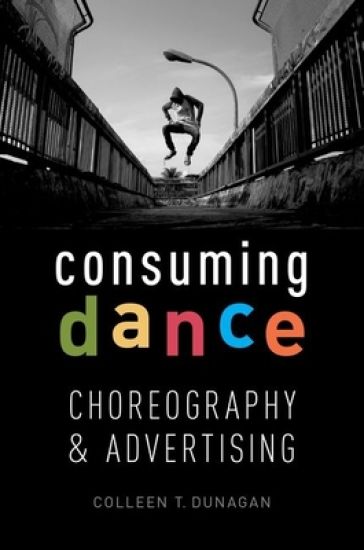
Dance in TV advertisements has long been familiar to Americans as a silhouette dancing against a colored screen, exhibiting moves from air guitar to breakdance tricks, all in service of selling the latest Apple product. But as author Colleen T. Dunagan shows in Consuming Dance, the advertising industry used dance to market items long before iPods. In this book, Dunagan lays out a comprehensive history and analysis of dance commercials to demonstrate the ways in which the form articulates with, informs, and reflects U.S. culture. In doing so, she examines dance commercials as cultural products, looking at the ways in which dance engages with television, film, and advertising in the production of cultural meaning. Throughout the book, Dunagan interweaves semiotics, choreographic analysis, cultural studies, and critical theory in an examination of contemporary dance commercials while placing the analysis within a historical context. She draws upon connections between individual dance-commercials and the discursive and production histories to provide a thorough look into brand identity and advertising's role in constructing social identities.
Dance in TV advertisements has long been familiar to Americans as a silhouette dancing against a colored screen, exhibiting moves from air guitar to breakdance tricks, all in service of selling the latest Apple product. But as author Colleen T. Dunagan shows in Consuming Dance, the advertising industry used dance to market items long before iPods. In this book, Dunagan lays out a comprehensive history and analysis of dance commercials to demonstrate the ways in which the form articulates with, informs, and reflects U.S. culture. In doing so, she examines dance commercials as cultural products, looking at the ways in which dance engages with television, film, and advertising in the production of cultural meaning. Throughout the book, Dunagan interweaves semiotics, choreographic analysis, cultural studies, and critical theory in an examination of contemporary dance commercials while placing the analysis within a historical context. She draws upon connections between individual dance-commercials and the discursive and production histories to provide a thorough look into brand identity and advertising's role in constructing social identities.
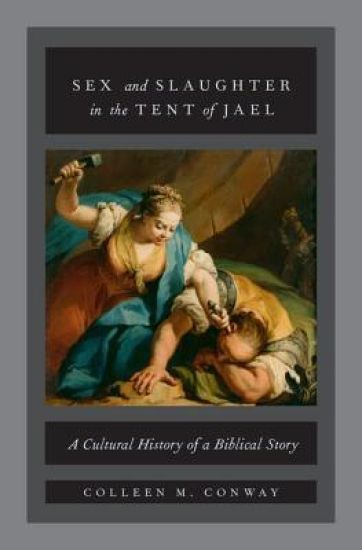
In the Hebrew Bible, Judges 4-5 tells the lurid story of the heroic figure of Jael, a woman who seduces the Canaanite general Sisera and then nails his head to the ground with a tent-peg, thus saving Israel from the troops of King Sabin. This gruesome tale has long intrigued scholars and artists alike. The many versions of the story that have appeared in art and literature have repeatedly and creatively built on the gendered themes of the tradition, often seeing in the encounter between Jael and Sisera some fundamental truth about the relationship between women and men. In Sex and Slaughter in the Tent of Jael, Colleen Conway offers the first sustained look at how this biblical tradition has been used artistically to articulate and inform cultural debates about gender. She traces the cultural retellings of this story in poems, prints, paintings, plays, and narratives across many centuries, beginning with its appearance in Judges 4-5 and continuing up to the present day. Once separated from its original theological context, the Jael/Sisera tradition becomes largely about gender identity, particularly the conflict between the sexes. Conway examines the ways in which Jael has been reimagined by turns as a wily seductress, passionate lover, frustrated and bored mother, peace-bringing earth goddess, and deadly cyborg assassin. Meanwhile, Sisera variously plays the enemy general, the seduced lover, the noble but tragically duped victim, and the violent male chauvinist. Ultimately, Conway demonstrates that the ways in which Jael's actions are explained and assessed all depend on when, by whom, and for whom the Jael and Sisera story is being told. In examining the varying artistic renditions of the story, this book also provides a case study of the Bible's role as a common cultural resource in secular western culture.
How does pollution impact our daily quality of life? What are the effects of pollution on children's development? Why do industry and environmental experts disagree about what levels of pollutants are safe? This clearly written book, traces the debates over five key pollutants - lead, mercury, noise, pesticides, and dioxins and PCBs - and provides an overview of the history of each pollutant, basic research findings, and the scientific and regulatory controversies surrounding it. It focuses, in particular, on the impact of these pollutants on children's psychological development, their intellectual functioning, behaviour, and emotional states. Only by understanding the impact of pollution can we prevent future negative effects on quality of life and even pollution disasters from occurring. This volume will be of great interest to parents, child health care experts, public health officials, regulators, and health and environmental lawyers.
In this book, Colleen Conway looks at the construction of masculinity in New Testament depictions of Jesus. She argues that the New Testament writers necessarily engaged the predominant gender ideology of the Roman empire, whether consciously or unconsciously. Although the notion of what constituted ideal masculinity in Greek and Roman cultures certainly pre-dated the Roman Empire, the emergence of the Principate concentrated this gender ideology on the figure of the emperor. Indeed, critical to the success of the empire was the portrayal of the emperor as the ideal man and the Roman citizen as one who aspired to be the same. Any person or power that was held up alongside the emperor as another source of authority would be assessed in terms of the cultural values represented in this Roman image of the 'manly man.' Conway details how the New Testament writings reflect different approaches to the issue of Jesus' gender identity, including resistance to, accommodation to, and imitation of, imperial masculinity. The themes that emerge from her study include the relationship between divinity and masculinity in the Roman world and in depictions of Jesus; the role of the body in relation to gender identity; and belief in Jesus as a means of achieving a more ideal form of masculinity. Conway's work will be of interest to the broad range of biblical scholars who are interested in gender critical issues and in the emergence of Christianity in the Roman Empire.
At the height of the Civil War in 1863, the Union instated the first-ever federal draft. Patriotism By Proxy develops a new understanding of the connections between American literature and American lives by focusing on this historic moment when the military transformed both. Paired with the Emancipation Proclamation, the 1863 draft inaugurated new relationships between the nation and its citizens. A massive bureaucratic undertaking, it redefined the American people as a population, laying bare social divisions as wealthy draftees hired substitutes to serve in their stead. The draft is the context in which American politics met and also transformed into a new kind of biopolitics, and these substitutes reflect the transformation of how the state governed American life. Censorship and the suspension of habeas corpus prohibited free discussions over the draft's significance, making literary devices and genres the primary means for deliberating over the changing meanings of political representation and citizenship. Assembling an extensive textual and visual archive, Patriotism by Proxy examines the draft as a cultural formation that operated at the nexus of political abstraction and embodied specificity, where the definition of national subjectivity was negotiated in the interstices of what it means to be a citizen-soldier. It brings together novels, poems, letters, and newspaper editorials that show how Americans discussed the draft at a time of censorship, and how the federal draft changed the way that Americans related to the state and to each other.
Irish Materialisms: The Nonhuman and the Making of Colonial Ireland, 1690-1830, is the first book to apply recent trends in new materialist criticism to Ireland. It radically shifts familiar colonial stereotypes of the feminized, racialized cottier according to the Irish peasantry's subversive entanglement with nonhuman materiality. Each of the chapters engages a focused case study of an everyday object in colonial Ireland (coins, flax, spinning wheels, mud, and pigs) to examine how each object's unique materiality contributed to the colonial ideology of British paternalism and afforded creative Irish expression. The main argument of Irish Materialisms is its methodology: of reading literature through the agency of materiality and nonhuman narrative in order to gain a more egalitarian and varied understanding of colonial experience. Irish Materialisms proves that new materialism holds powerful postcolonial potential. Through an intimate understanding of the materiality Irish peasants handled on a daily basis, this book presents a new portrait of Irish character that reflects greater empowerment, resistance, and expression in the oppressed Irish than has been previously recognized.
A sweeping history of the American health care state that reveals the public has been intentionally misled about the true role of government. The US government has always invested federal, state and local dollars in public health protection and prevention. Despite this public funding, however, Americans typically believe the current system is predominantly comprised of private actors with little government interference. In Grow & Hide, Colleen M. Grogan details the history of the American health care state and argues that the public has been intentionally misled about the true role of government. The US created a publicly financed system while framing it as the opposite in what Grogan terms the "grow-and-hide regime." Today, the state's role is larger than ever, yet it remains largely hidden because stakeholders-namely, private actors and their allies in government-have repeatedly, and successfully, presented the illusion of minimal government involvement. The consequences of this narrative are scarce accountability and a highly unequal distribution of benefits. In the wake of a pandemic that has killed over one million Americans--with the highest death rates among minorities and lower-income people--the time has come for an honest discussion about the health care system. As Grogan reveals, America has never had a system that resembles a competitive, free-market model. Given how much the government already invests in the health care system, means how these funds are distributed and administered are fundamental political questions for the American public, not questions that should be decided by the private sector. If we want to fix care in America, we need to reimagine the way it is organized, prioritized, funded, and, perhaps most importantly, discussed. Grow & Hide is an important contribution to this reimagining.
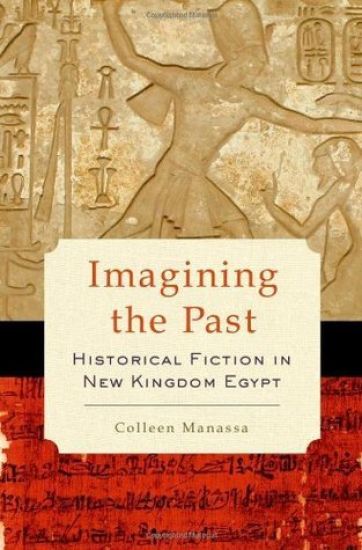
Five hundred years before Homer immortalized the Trojan Horse, the ancient Egyptians had already composed a tale of soldiers hiding Ali Baba-like in baskets to capture a besieged city. Shortly after the rise to power of the warrior pharaoh Ramesses II ("the Great"), Egyptian authors began to write stories about battles and conquest. However, these stories were not set in the present, but in the past--they were the world's first works of historical fiction. These literary recreations of past events, which preserve fascinating mixtures of fact and fiction, provide unparalleled information about topics as diverse as ancient Egyptian historiography, religion, and notions of humor and wit. Imagining the Past is the first volume to provide complete translations and commentary for the historical fiction composed during Egypt's New Kingdom. The four tales included here represent a multifaceted approach to history and its actors. The Quarrel of Apepi and Seqenenere, set at the end of the Second Intermediate Period, preserves details of political history and taxation that are attested in contemporaneous sources. In The Capture of Joppa, a historically-attested general Djehuty from the reign of Thutmose III successfully defeats the ruler of Joppa through one of the first attested stratagems in world military history. Royalty takes center stage with Thutmose III in Asia, whose fragmentary narrative may be a fictional presentation of the Battle of Megiddo. The Libyan Battle Story, composed only a generation after the Battle of Perire, contains abundant historical details attested in hieroglyphic and hieratic sources and borders on fictionalized history. A concluding analysis summarizes the audience and function of historical fiction as well as theology and historiography within the tales. An appendix of the hieroglyphic texts, all transliterated with philological commentary, make these texts accessible to a wide audience, while representing the first critical scholarly edition of them available. Colleen Manassa's thorough research into the literary, political, and social context of each tale will further stimulate current discussions of genres and the transmission of texts in Egyptolology and comparative literature studies.
During the 1990s, an unprecedented number of Americans turned to complementary and alternative medicine (CAM), an umbrella term encompassing chiropractic, energy healing, herbal medicine, homeopathy, meditation, naturopathy, and traditional Chinese medicine. By 1997, nearly half the US population was seeking CAM, spending at least $27 billion out of pocket.Bounding Biomedicine centers on this boundary-changing era, looking at how consumer demand shook the health care hierarchy. Drawing on scholarship in rhetoric and science and technology studies, the book examines how the medical profession scrambled to maintain its position of privilege and prestige, even as its foothold appeared to be crumbling. Colleen Derkatch analyzes CAM-themed medical journals and related discourse to illustrate how members of the medical establishment applied Western standards of evaluation and peer review to test health practices that did not fit easily (or at all) within standard frameworks of medical research. And she shows that, despite many practitioners’ efforts to eliminate the boundaries between “regular” and “alternative,” this research on CAM and the forms of communication that surrounded it ultimately ended up creating an even greater division between what counts as safe, effective health care and what does not. At a time when debates over treatment choices have flared up again, Bounding Biomedicine gives us a possible blueprint for understanding how the medical establishment will react to this new era of therapeutic change.
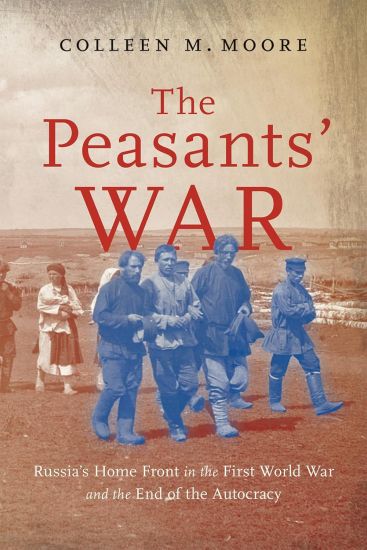
During the First World War, Russia relied on the mass mobilization of its peasant population. In the summer of 1914, approximately four million peasants answered the state’s call to arms, while the millions who remained at home donated labour and other resources to the cause. Within three short years these same peasants were refusing to pay taxes or turn over their grain, dooming the autocracy to collapse.The Peasants’ War argues that the experience of total war convinced peasants that the measure of a state’s legitimacy was its ability to safeguard the wellbeing of its subjects. When the autocracy failed to meet this standard, peasants rejected its authority by challenging four areas of wartime policy: the prohibition of vodka, the conscription of peasant families’ only workers, the redistribution of land belonging to enemy subjects, and the provisioning of the home front. The war awakened peasants to the reciprocal nature of the relationship between a state and its people. Colleen Moore investigates how peasants leveraged their wartime service to negotiate with the state for improved rights and privileges and how they used this power to shape the contours and legitimize the authority of the world’s first socialist state.The Peasants’ War charts the timing and success of the 1917 Russian Revolution by showing how total war flipped the script on peasant–state relations, transforming the state from something that peasants existed to serve into something that existed to serve peasants.