

Kirjahaku
Etsi kirjoja tekijän nimen, kirjan nimen tai ISBN:n perusteella.
1000 tulosta hakusanalla Content Team Audiolearn
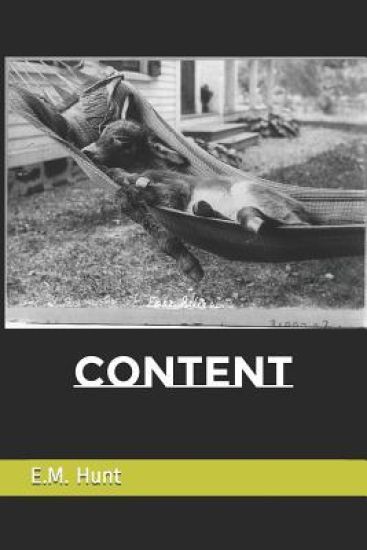
Collection of essays originally published by the author while working for various newspapers and magazines over a ten year period. The overall theme is learning to be content with one's life while learning to see the world of wonder all around.


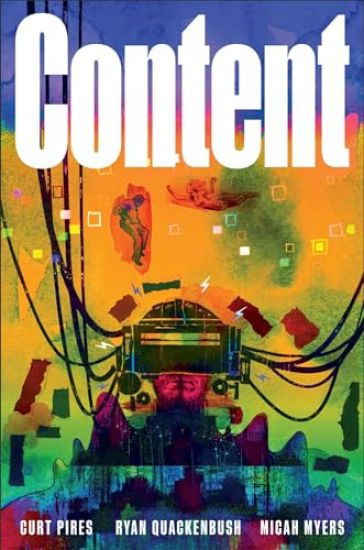
Inspired by author Curt Pires' own time in the Hollywood dream factory, CONTENT is a bold, dark, and razor-sharp sci-fi thriller for the age of infinite scroll—perfect for fans of Severance, Eternal Sunshine of the Spotless Mind, and The Social Network. In a near-future ruled by streaming services, Trip Cruise is the most valuable mind in entertainment—the visionary architect behind CONTENT, the world’s biggest platform. When a rushed experimental AI helmet meant to extract stories straight from his brain malfunctions, Trip becomes trapped inside the service itself—forced to navigate an endless hellscape of shows, memories, and weaponized algorithms. His only shot at escape? Margot—a junior programmer barely scraping by, and the only person with a human connection deep enough to go in after him. Now, together, they’ll have to outsmart the machine designed to replace them.
Content Delivery Networks: Web Switching for Security, Availability, and Speed
Hull Scott
McGraw-Hill Professional
2002
nidottu
Learn how to accelerate network-based delivery of rich applications and content. This book provides an introduction to the Content Networking market, and describes the players, the problems, and the solutions to the problems facing companies seeking to provide services via the Internet. It also covers the underlying technologies, such as HTTP and SSL.
Content is king… and the new kingmaker… and your message needs to align with your model and metrics and other mumbo jumbo, right? Whether you’re slogging through theory or buzzwords, there’s no denying content strategy is coming of age. But what’s in it for you? And if you’re not a content strategist, why should you care? Because even if content strategy isn’t your job, content’s probably your problem—and probably more than you think. You or your business has a message you want to deliver, right? You can deliver that message through various channels and content types, from Tweets to testimonials and photo galleries galore, and your audience has just as many ways of engaging with it. So many ways, so much content… so where’s the problem? That is the problem. And you can measure it in time, creativity, money, lost opportunity, and the sobs you hear equally from creative directors, project managers, and search engine marketing specialists. The solution is content strategy, and this book offers real-world examples and approaches you can adopt, no matter your role on the team. Put content strategy to work for you by gathering this book into your little hands and gobbling up never-before seen case studies from teams at Johns Hopkins Medicine, MINI, Icebreaker, and more. Content Strategy at Work is a book for designers, information architects, copywriters, project managers, and anyone who works with visual or verbal content. It discusses how you can communicate and forge a plan that will enable you, your company, or your client get that message across and foster better user experiences.
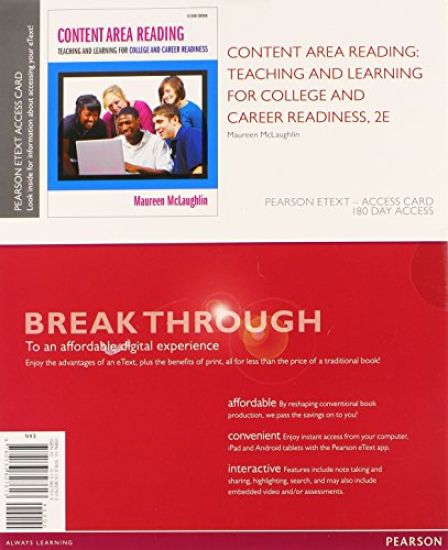
A unique, Common Core-based, complete, student-centered resource for grades 6-12 designed to help students make connections between what they read and how they apply it in the classroom. Theory into practice through a wide range of innovative instruction approaches.A desktop resource to be used throughout a teaching career, this is a practical guide to teaching for understanding in the content areas at middle and high school level—a complete information source. The book helps reader understand the innovations in content area teaching, help students learn course content, teach students how to actively engage in learning, and deal effectively with assessment and professional development. The new edition features an entirely new chapter on the Common Core, in which both the College and Career Readiness Standards and the Common Core State Standards are emphasized and "rich instructional tasks" are introduced; a new "Making Connections to the Common Core" feature that appears throughout the text; updated theoretical information; revised websites; and numerous new student examples integrated throughout. In addition, the Appendixes have been revitalized to include a variety of new graphic organizers that focus on using multi-modal text and recognizing and creating text structures, plus new examples of completed student projects. Pearson eText is an easy-to-use digital textbook that instructors can assign for their course. The mobile app lets you keep on learning, no matter where your day takes you — even when you're offline. You can also add highlights, bookmarks, and notes in your Pearson eText to study how you like. NOTE: You are purchasing an access card only. Pearson eText is a fully digital delivery of Pearson content. Before purchasing, check with your instructor to confirm the correct ISBN. To register for and use Pearson eText, you may also need a course invite link, which your instructor will provide. Follow the instructions provided on the access card to learn more.
Content Area Reading and Literacy
Victoria Gillis; George Boggs; Donna Alvermann
Pearson
2016
lisenssiavain
This title is only available as a loose-leaf version with Pearson eText. To order the Pearson eText packaged with the loose-leaf version, use ISBN 0133846547. A focus on learning content through discipline-appropriate literacy practices, a strong emphasis on writing, and a current look at the use of media in teaching are hallmarks of the new edition of this widely popular text. Throughout, middle and secondary school teachers get a readable presentation of discipline-appropriate literacy practices and examples and adaptions of selected strategies. Set up to ensure comprehension, the chapters link to the Learning Cycle presented in the beginning of the book, graphic organizers help readers navigate chapter content, and questions, summaries, vignettes, and examples make the concepts clear. This edition of Content Area Reading and Literacy features three full chapters focusing on writing instruction, integrates culture and diversity throughout, and expands or reemphasizes important topics, such as life-long readers and learners beyond the printed text, close and critical reading in discipline-appropriate ways, evidence-based writing, and multimodal texts.
Content Analysis offers a comprehensive overview of the variation within content analysis, along with detailed descriptions of three approaches found in the contemporary literature: basic content analysis, interpretive content analysis and qualitative content analysis. This book provides an inclusive, and carefully differentiated, examination of contemporary content analysis research purposes and methods. Such a book is not currently available. Chapter One examines the conceptual base and history of content analysis, then the next three chapters examine each approach to content analysis in depth, using brief illustrative exemplar studies. Each of the methodology chapters employs a consistent outline to help readers compare and contrast the three different approaches. Chapter 5 examines rigor in content analysis and highlights steps to ensure the internal coherence of studies. This book concludes with exploration of two full-length studies: Chapter 6 examines the use of content analysis for advocacy and building public awareness to promote human rights and social justice. Chapter 7 reviews a full-length study of older adults in prison to detail how content analysis is completed and how different approaches may be usefully combined.
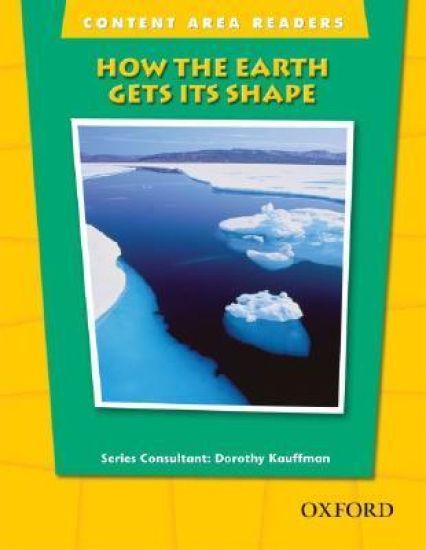
Content Area Readers: How the Earth Gets Its Shape
Oxford University Press
2005
nidottu
Ten colourful 24-page books present content area readings in science, maths, history, and social studies.
Nathan Salmon presents a selection of his essays from the early 1980s to 2006, on a set of closely connected topics central to analytic philosophy. The book is divided into four thematic sections. The first contains six essays on the theme of direct reference, and associated issues regarding names and descriptions, demonstratives and reflexivity. The four essays in the second section, under the heading of apriority, concern particular consequences of Millianism with respect to the semantic-epistemological status of certain special kinds of sentences. The five essays in the third section develop Salmon's project of reconciling Millianism with a host of problems posed by locutions of propositional attitude, especially by attributions of belief. The volume concludes with four essays about the distinction between meaning and use, or more generally, the distinction between semantics and pragmatics.
Content and Modality
Clarendon Press
2006
sidottu
Eleven distinguished philosophers have contributed specially written essays on a set of topics much debated in recent years, including physicalism, qualia, semantic competence, conditionals, presuppositions, two-dimensional semantics, and the relation between logic and metaphysics. All these topics are prominent in the work of Robert Stalnaker, a major presence in contemporary philosophy, in honour of whom the volume is published. It also contains a substantial new essay in which Stalnaker replies to his critics, and sets out his current views on the topics discussed. Contributors: Richard Heck, Frank Jackson, William Lycan, Vann McGee, John Perry, Paul Pietroski, Sydney Shoemaker, Scott Soames, Daniel Stoljar, Timothy Williamson, and Stephen Yablo.
Nathan Salmon presents a selection of his essays from the early 1980s to 2006, on a set of closely connected topics central to analytic philosophy. The book is divided into four thematic sections. The first contains six essays on the theme of direct reference, and associated issues regarding names and descriptions, demonstratives and reflexivity. The four essays in the second section, under the heading of apriority, concern particular consequences of Millianism with respect to the semantic-epistemological status of certain special kinds of sentences. The five essays in the third section develop Salmon's project of reconciling Millianism with a host of problems posed by locutions of propositional attitude, especially by attributions of belief. The volume concludes with four essays about the distinction between meaning and use, or more generally, the distinction between semantics and pragmatics.
Content and Justification presents a series of essays by Paul Boghossian on the theory of content and on its relation to the phenomenon of a priori knowledge. Part one comprises essays on the nature of rule-following and its relation to the problem of mental content; on the intelligibility of eliminativist views of the mental; on the prospects for a naturalistic reduction of mental content; and on the currently influential view that meaning is a normative notion. Part two includes three widely discussed papers on the phenomenon of self-knowledge and its compatibility with externalist conceptions of mental content. Part three concerns the classical but ill-understood phenomenon of knowledge that is based upon knowledge of meaning or conceptual competence. Finally, part four turns its attention from general issues about mental content to an account of a specific class of mental contents. It contains two widely discussed papers on the nature of colour concepts, and colour properties.
Content and Justification presents a series of essays by Paul Boghossian on the theory of content and on its relation to the phenomenon of a priori knowledge. Part one comprises essays on the nature of rule-following and its relation to the problem of mental content; on the intelligibility of eliminativist views of the mental; on the prospects for a naturalistic reduction of mental content; and on the currently influential view that meaning is a normative notion. Part two includes three widely discussed papers on the phenomenon of self-knowledge and of its compatibility with externalist conceptions of mental content. Part three concerns the classical but ill-understood phenomenon of knowledge that is based upon knowledge of meaning of conceptual competence. Finally, part four turns its attention from general issues about mental content to an account of a specific class of mental contents. It contains two widely discussed papers on the nature of colour concepts, and colour properties.
Content Rights for Creative Professionals
Focal Press
2002
nidottu
Content Rights for Creative Professionals is for professionals and students working in all areas of media (film/video, photography, multimedia, web, graphics, and broadcast) who need to know what the law requires and how they should properly utilize copyrights and trademarks. This book outlines critical concepts and applies them with explanations in real-life applications, including many cases from the author's own practice as well as those of various media professionals. This 256 page text is a practical guide designed to provide its reader with a firm understanding of the principles underlying the ownership and use of content, so that when questions arise, they will be able to make correct, well-informed decisions-whether concerning their personal works, or works of others that a company wishes to copyright or trademark. In addition, the reader will be more capable of exercising sound judgment in structuring employment and contract relationships and of acquiring and/or licensing works, which are at the core of the business of communicating.

Content Confusion: News Media, Native Advertising, and Policy in an Era of Disinformation
Michelle A. Amazeen
MIT PRESS
2025
nidottu
How mainstream news organizations and advertisers contribute to and legitimize disinformation by blurring the line between ads and journalism. We often blame social media for the rampant problem of disinformation, but the truth is that mainstream news media is often equally at fault. Not only do news outlets disguise paid content to look like online news articles, a practice called "native advertising," but new research suggests that this form of advertising even influences the real journalism that appears next to it--both perceptions of the journalism as well as its actual substance. In Content Confusion, Michelle Amazeen explores the origins and evolution of this mainstream media practice, how it affects audiences and the industry, and what the implications are for an accurately informed democracy. For policy makers, in particular, the book highlights the longstanding principles from governmental regulation as well as industry professional codes that serve to support clear identification of the provenance of content, an issue that will no doubt intensify with the release of generative artificial intelligence in the wild.

FROM CONSTANT CRISIS TO SUSTAINABLE SUCCESS BETTER CONTENT MEANS BETTER BUSINESS. Your content is a mess: the website redesigns didn’t help, and the new CMS just made things worse. Or, maybe your content is full of potential: you know new revenue and cost-savings opportunities exist, but you’re not sure where to start. How can you realize the value of content while planning for its long-term success? For organizations all over the world, Content Strategy for the Web is the go-to content strategy handbook. Read it to: Understand content strategy and its business value Discover the processes and people behind a successful content strategy Make smarter, achievable decisions about what content to create and how Find out how to build a business case for content strategy With all-new chapters, updated material, case studies, and more, the second edition of Content Strategy for the Web is an essential guide for anyone who works with content.
Content-Area Writing
Steven Zemelman; Harvey Smokey Daniels; Nancy Steineke
Heinemann Educational Books,U.S.
2007
nidottu
There are three truths about teaching writing, one that's widely known, one that isn't, and one that will change your teaching forever: the ability to write is essential for students in every subject area writing is the most powerful and efficient tool that teachers have for helping students connect with content and deepen their understanding of it every teacher, including you, is ready to coach middle and secondary writers successfully right now. No matter what subject you teach, "Content-Area Writing" is for you, especially if you're juggling broad curriculum mandates, thick textbooks, and severe time constraints. It not only shows that incorporating carefully structured writing activities into your lessons actually increases understanding and achievement, but also proves how writing can save, not consume, valuable instructional time. Following up on "Subjects Matter" - the book that changed how tens of thousands of language arts, math, science, and social studies teachers use reading in their classrooms - Harvey Daniels, Steven Zemelman, and Nancy Steineke now present the most thorough and practical exploration available of writing in the subject areas. "Content-Area Writing" guides you strategically through the two major types of writing that every student must know: Writing to Learn the quick, exploratory, and extemporaneous in-class writing that helps kids engage deeply with content, build connections, and retain what they've learned Public Writing planned, constructed, and polished writing in which students demonstrate knowledge and reflect on what they've learned. With their contagious combination of humor, irreverence, and classroom smarts, Daniels, Zemelman, and Steineke give you dozens of valuable lessons for encouraging growth in both types of writing with subject-specific ideas for planning, organizing, and teaching, as well as samples of student work and guidelines for evaluation and assessment. They also include detailed information on how their strategies fit into the writing process, how they can be used in writing workshops across the curriculum, and how they prepare students for testing and other on-demand writing situations. With writing, you can help students learn better, retain more, meet content- and skills-based standards, and tackle any test with confidence. No matter what you teach, read "Content-Area Writing" and discover for yourself that classroom time spent writing is classroom time well spent.