A sweeping history of linguistic and colonial encounter in the early Americas, anchored by the unlikely story of how Boston’s most famous Puritan came to write the first Spanish-language publication in the English New World.The Boston minister Cotton Mather was the first English colonial to refer to himself as an American. He was also the first to author a Spanish-language publication: La Fe del Christiano (The Faith of the Christian), a Protestant tract intended to evangelize readers across the Spanish Americas. Kirsten Silva Gruesz explores the conditions that produced La Fe del Christiano, from the intimate story of the “Spanish Indian” servants in Mather’s household, to the fragile business of printing and bookselling, to the fraught overlaps of race, ethnicity, and language that remain foundational to ideas of Latina/o/x belonging in the United States today.Mather’s Spanish project exemplifies New England’s entanglement within a partially Spanish Catholic, largely Indigenous New World. British Americans viewed Spanish not only as a set of linguistic practices, but also as the hallmark of a rival empire and a nascent racial-ethnic category. Guided by Mather’s tract, Gruesz explores English settlers’ turbulent contacts with the people they called “Spanish Indians,” as well as with Black and local native peoples. Tracing colonial encounters from Boston to Mexico, Florida, and the Caribbean, she argues that language learning was intimately tied with the formation of new peoples. Even as Spanish has become the de facto second language of the United States, the story of La Fe del Christiano remains timely and illuminating, locating the roots of latinidad in the colonial system of the early Americas.Cotton Mather’s Spanish Lessons reinvents our understanding of a key colonial intellectual, revealing notions about language and the construction of race that endure to this day.
Cotton Mathis is a young man alone in the world. Devastated after the loss of his mother, the young farmhand must deal with the death of his brother in Vietman and his alcholic father's suicide. Isolated and angry, Cotton wrestles his demons, including the suspicion his brother--lauded as a war hero--might actually have been a coward. With little thought of consequence, Cotton joins the National Guard to avoid serving in Vietnam and is plunged into the midst of the civil rights movement. Sixty miles away the, Martin Luther King, Jr. face off against the Memphis mayor.When Cotton's unit is deployed to Memphis to control rioting he and his friends naively sense only excitment with no understanding for the racial tensions raging across the nation.Once in the city, Cotton encounters a black war hero and the soldier's remarkable. book-loving father-a man who reignties Cotton's long-buried dreams. Yet these new friend harbor secrets about Cotton's family, including the true story of his brother's death.Faced with personal tragedy, betrayal, and overwhelming anger in the aftermath of Dr. King's assassination, Cotton faces a life-changing decison. Will he forgive and move on, or will he allow his family's ghosts to haunt him forever?
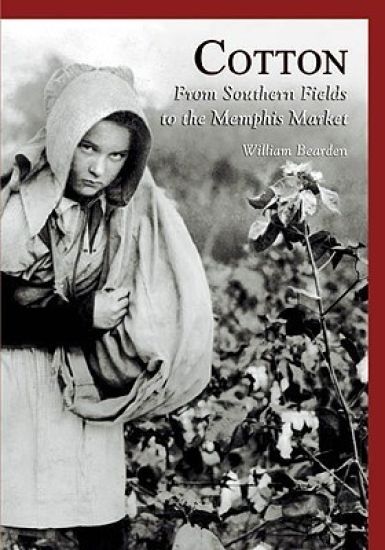
In the barbeque joints and plate lunch cafes off Memphis's Front Street, one is easily reminded of the days when cotton was king, of a society of characters and cads; the big time and the small time; the rich and the richer; the hangers-on, anointed, powerful, and busted. Cotton created empires in agriculture, transportation, banking, and warehousing. It also shackled the dreams and lives of those born into slavery and sharecropping. Although many of the day-to-day dealings have moved to manicured office parks and high-rise buildings, cotton's influence still remains at the core of the Southern economy and Southern society. Cotton propelled technological advances that have changed the face and soul of the South. It was the wellspring that gave birth to modern music. Cotton triggered the migrations of millions of blacks and poor whites, shaping the culture of Northern cities. Its allure has called out to writers, artists, and photographers from around the world, attracted by the tragedy, irony, and power of cotton's story. In this book of vivid images and intriguing text, Memphis historian and author William Bearden presents the captivating history of cotton's profound influence on American society.
Uzbekistan is the world's fifth largest producer and second largest exporter of cotton in the world, and unlike other countries where child labor is common, it is the totalitarian state of Uzbekistan's official policy to employ children. This book discusses the use of child labor in cotton cultivation in Uzbekistan following the fall of the Soviet Union, drawing on an extensive field investigation and in-depth interviews with human rights activists, government officials, and social workers.
Whether we are out on the streets or between the sheets, cotton is our constant companion. But behind this ubiquitous fibre prized for its softness lies a darker story of exploitation and hardship. In this penetrating analysis, Adam Sneyd explores the power politics that envelop cotton as major corporate players and countries across Africa, Asia and the Americas compete to control it. In the aftermath of sweatshop scandal exposés and factory collapse disasters, merchants and retailers have called for ?better? cotton farming practices. But in seeking to prevent the next transnational media circus, will companies simply end up cementing business-as-usual? Corporate public relations strategy now competes directly with the voices of an alternative global community that seeks to fundamentally transform the way that cotton is farmed. Yet these demands for cotton to work better for people and the planet have flown under the radar as media attention has focused instead on farmer subsidies and prices. From the local to the global, this book takes the reader on an illuminating journey through the multifaceted and often grubby politics of the fluffy white stuff in the world economy. The pile of political laundry it uncovers is voluminous but, as Sneyd argues, must be aired in the interests of sustainability and development.
Whether we are out on the streets or between the sheets, cotton is our constant companion. But behind this ubiquitous fibre prized for its softness lies a darker story of exploitation and hardship. In this penetrating analysis, Adam Sneyd explores the power politics that envelop cotton as major corporate players and countries across Africa, Asia and the Americas compete to control it. In the aftermath of sweatshop scandal exposés and factory collapse disasters, merchants and retailers have called for ?better? cotton farming practices. But in seeking to prevent the next transnational media circus, will companies simply end up cementing business-as-usual? Corporate public relations strategy now competes directly with the voices of an alternative global community that seeks to fundamentally transform the way that cotton is farmed. Yet these demands for cotton to work better for people and the planet have flown under the radar as media attention has focused instead on farmer subsidies and prices. From the local to the global, this book takes the reader on an illuminating journey through the multifaceted and often grubby politics of the fluffy white stuff in the world economy. The pile of political laundry it uncovers is voluminous but, as Sneyd argues, must be aired in the interests of sustainability and development.
The behind-the-scenes story of how two enduring plants— cotton and indigo— power today's fiber artists worldwide. More than 300 colorful photos and behind-the-scenes details reveal the fascinating story of Japan's cotton and indigo, and their enormous contribution to fiber arts worldwide. Learn how Japan and its top fabric designers, quilters, scientists, and artists combine tradition and high tech to weave the thread, fabrics, and stunning designs that are so coveted in today's fiber art world. Take a tour of Japan’s elite textile printing mills to understand why Japan is considered the world's finest producer of quilting cotton. Learn where all this cotton comes from, and its close connection to another prized plant, indigo. Dozens of beautiful fabric designs and quilts by Shizuko Kuroha, Keiko Goke, Yoshiko Jinzenji, Yoko Saito, and others are featured, as well as cotton and indigo folk textiles through the ages. This journey gives a deeper understanding of the connection between contemporary textile art and Japan's cotton, indigo, and traditions.
This sweeping work of history explains the westward spread of cotton agriculture and slave labor across the South and into Texas during the decades before the Civil War. In arguing that the U.S. acquisition of Texas originated with planters' need for new lands to devote to cotton cultivation, celebrated author Roger G. Kennedy takes a long view. Locating the genesis of Southern expansionism in the Jeffersonian era, Cotton and Conquest stretches from 1790 through the end of the Civil War, weaving international commerce, American party politics, technological innovation, Indian-white relations, frontier surveying practices, and various social, economic, and political events into the tapestry of Texas history.The innumerable dots the author deftly connects take the story far beyond Texas. Kennedy begins with a detailed chronicle of the commerce linking British and French textile mills and merchants with Southern cotton plantations. When the cotton states seceded from the Union, they overestimated British and French dependence on Southern cotton. As a result, the Southern plantocracy believed that the British would continue supporting the use of slaves in order to sustain the supply of cotton - a miscalculation with dire consequences for the Confederacy.As cartographers and surveyors located boundaries specified in new international treaties and alliances, they violated earlier agreements with Indian tribes. The Indians were to be displaced yet again, now from Texas cotton lands. The plantation system was thus a prime mover behind Indian removal, Kennedy shows, and it yielded power and riches for planters, bankers, merchants, millers, land speculators, Indian-fighting generals and politicians, and slave traders.In Texas, at the plantation system's farthest geographic reach, cotton scored its last triumphs. No one who seeks to understand the complex history of Texas can overlook this book.
Snyder traces the factors that led to the crisis--abundant crops, optimistic forecasts, surpluses, and labor unrest--and describes the proposed solutions. The suggested cotton holiday"" met with opposition from the conservatives, but others greeted the plan with enthusiasm, calling state legislatures into special session to act on the proposal. Snyder sees the doomed holiday as the last gasp of the family farmer before the overwhelming tide of American agribusiness.""A UNC Press Enduring Edition -- UNC Press Enduring Editions use the latest in digital technology to make available again books from our distinguished backlist that were previously out of print. These editions are published unaltered from the original, and are presented in affordable paperback formats, bringing readers both historical and cultural value.
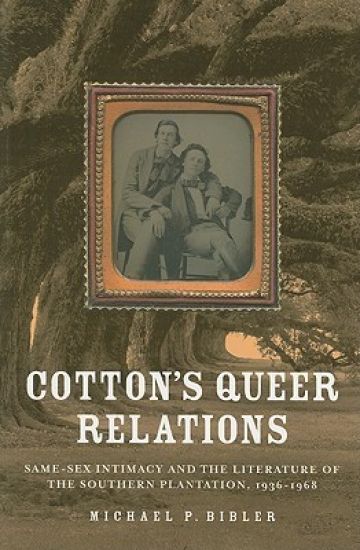
Finally breaking through heterosexual cliches of flirtatious belles and cavaliers, sinister black rapists and lusty 'Jezebels', ""Cotton's Queer Relations"" exposes the queer dynamics embedded in myths of the southern plantation. Focusing on works by Ernest J. Gaines, William Faulkner, Tennessee Williams, Lillian Hellman, Katherine Anne Porter, Margaret Walker, William Styron, and Arna Bontemps, Michael P. Bibler shows how each one uses figures of same-sex intimacy to suggest a more progressive alternative to the pervasive inequalities tied historically and symbolically to the South's most iconic institution. Bibler looks specifically at relationships between white men of the planter class, between plantation mistresses and black maids, and between black men, arguing that while the texts portray the plantation as a rigid hierarchy of differences, these queer relations privilege a notion of sexual sameness that joins the individuals as equals in a system where equality is rare indeed. Bibler reveals how these models of queer egalitarianism attempt to reconcile the plantation's regional legacies with national debates about equality and democracy, particularly during the eras of the New Deal, World War II, and the civil rights movement. ""Cotton's Queer Relations"" charts bold new territory in southern studies and queer studies alike, bringing together history and cultural theory to offer innovative readings of classic southern texts.
Finally breaking through heterosexual cliches of flirtatious belles and cavaliers, sinister black rapists and lusty 'Jezebels', ""Cotton's Queer Relations"" exposes the queer dynamics embedded in myths of the southern plantation. Focusing on works by Ernest J. Gaines, William Faulkner, Tennessee Williams, Lillian Hellman, Katherine Anne Porter, Margaret Walker, William Styron, and Arna Bontemps, Michael P. Bibler shows how each one uses figures of same-sex intimacy to suggest a more progressive alternative to the pervasive inequalities tied historically and symbolically to the South's most iconic institution. Bibler looks specifically at relationships between white men of the planter class, between plantation mistresses and black maids, and between black men, arguing that while the texts portray the plantation as a rigid hierarchy of differences, these queer relations privilege a notion of sexual sameness that joins the individuals as equals in a system where equality is rare indeed. Bibler reveals how these models of queer egalitarianism attempt to reconcile the plantation's regional legacies with national debates about equality and democracy, particularly during the eras of the New Deal, World War II, and the civil rights movement. ""Cotton's Queer Relations"" charts bold new territory in southern studies and queer studies alike, bringing together history and cultural theory to offer innovative readings of classic southern texts.
Normal0falsefalsefalseMicrosoftInternetExplorer4Cotton-Patch Schoolhouse is a memoir of the author's year as a young and inexperienced teacher in rural Marengo County, several miles from Linden, Alabama, in 1926. Seeking to earn money to continue college after her freshman year at AlabamaCollege in Montevallo, the author welcomed the opportunity to teach eight children at five different grade levels in a one-room schoolhouse in the middle of a cotton field. Youthful enthusiasm, native wit, and a sense of adventure helped her transform the simple schoolhouse into a place of learning and excitement.
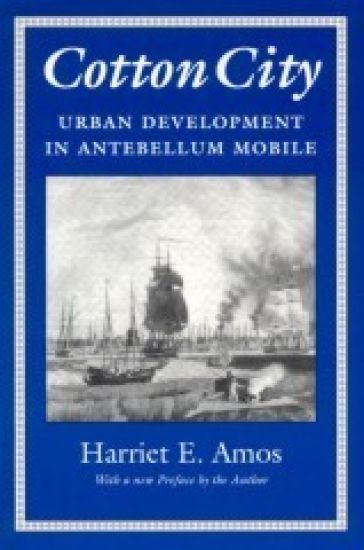
Antebellum Mobile was a cotton port city, and economic dependence upon the North created by the cotton trade controlled the city\u2019s development. Mobile\u2019s export trade placed the city third after New York and New Orleans in total value of exports for the nation by 1860. Because the exports consisted almost entirely of cotton headed for Northern and foreign textile mills, Mobile depended on Northern businessmen for marketing services. Nearly all the city\u2019s imports were from New York: Mobile had the worst export-import imbalance of all antebellum ports. As the volume of cotton exports increased, so did the city\u2019s population—from1,500 in 1820 to 30,000 in 1860. Amos\u2019s study delineates the basis for Mobile\u2019s growth and the ways in which residents and their government promoted growth and adapted to it. Because some of the New York banking, shipping, and marketing firms maintained local agencies, a significant number of Northern-born businessmen participated widely in civic affairs. This has afforded the author the opportunity to explore the North-South relationship in economic and personal terms, in one important city, during a period of increasing sectional tension.
This book discusses the key areas that every stock market investor should consider. Starting with the reason for buying shares in the first place it then goes on to consider a host of essential topics, including: ratios, dividends, diversification, directors' deals, technical analysis, ETFs, commodities, dealing techniques and much more. Cotter On Investing is your straightforward guide to the not always straightforward world of stock market investment.The markets can be a dangerous place and the risk involved can put people off the whole concept of stock investing. It shouldn't. Successful investors are those who manage risk and use mechanisms that reduce it to a level they are comfortable with. The stock market is potentially extremely rewarding in financial terms, but when the investor takes control of his or her own money it can also be fun, interesting and immensely satisfying.Throughout the book the author gives his own opinions not only on the different investment vehicles you can use but also on the ways in which you can improve your performance as a self-directed investor. With nearly 40 years of stock market experience, John Cotter is the ideal guide to help you make your investment decisions. Slicing through the jargon and with a solid, 'keep it simple' approach, this book is the ideal companion for anyone building and running their own share portfolio.