Kirjojen hintavertailu. Mukana 11 244 527 kirjaa ja 12 kauppaa.

Kirjahaku

Etsi kirjoja tekijän nimen, kirjan nimen tai ISBN:n perusteella.

1000 tulosta hakusanalla Cyril Methodius Jansky

A Study of Cyril Tourneur

A Study of Cyril Tourneur

Peter B. Murray

University of Pennsylvania Press
2017
sidottu
Cyril Tourneur was a significant Jacobean poet and dramatist, yet until now there has been now full scale interpretation of his works. Critics have perhaps hesitated to undertake such a study because much of Tourneur's writing has been regarded as neurotic self-expression rather than art, and almost nothing is known of his life. In this penetrating study, however, Peter B. Murray analyzes the art and relates them to the artistic conventions and the thought of their day. Murray finds that Tourneur was not a neurotic but an objective, artistic craftsman. In both techniques and themes, Tourneur emerges as a defender of Elizabethan ideals-a follower of Spenser and Shakespeare and a supporter of the Anglican center against the extremes of Puritanism and atheism. In his study of The Revenger's Tragedy, commonly attributed to Tourneur, Murray turns up new and possibly conclusive linguistic evidence that the play was written by Thomas Middleton and has therefore discussed it apart from Tourneur's work. Murray's examination of The Revenger's Tragedy shows that its author, like Middleton, is a detached ironist and not despairing and obsessed with vice as he has often been supposed to be.
A Stick Called Cyril

A Stick Called Cyril

Alison Falkonakis

Windmill Books
2024
sidottu
Cyril is more than a stick--it is a lifelong friend, a helpful tool, and a source of pure imagination. This simple token from nature becomes pivotal in a young man's life, as he grows from playful child to climate activist to wise grandfather. Life has its moments of pleasure and challenges, but Cyril the stick is a constant companion. In a busy world overrun by throwaway gadgets and consumerism, this heartwarming tale about a simple stick is sure to inspire readers to look at the world around them in a new way--and work to protect it.
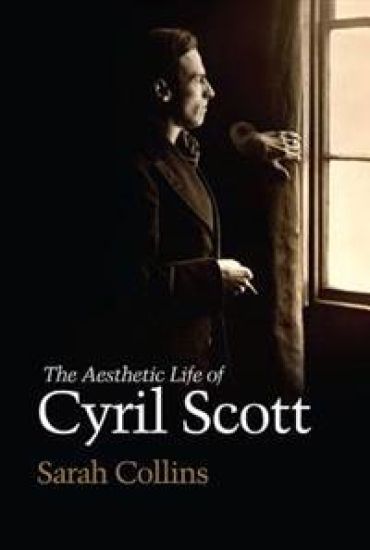
The Aesthetic Life of Cyril Scott

The Aesthetic Life of Cyril Scott

Sarah Collins

The Boydell Press
2013
sidottu
The first comprehensive account of the life and influences of Cyril Scott, not merely a composer but an artist in the broadest possible sense of the term. Prolific and personable, innovative and contentious, Cyril Scott (1879 - 1970) was considered to be one of the most promising young talents in modern British music at the turn of the twentieth century. He was a member of the 'Frankfurt Group' (together with Percy Grainger, Norman O'Neill, Roger Quilter and Balfour Gardiner), his music was performed by some of the leading conductors of the time in Britain and on the Continent, and his friends included highly influential figures in European literature, art and politics. Apart from his music, Scott was the author of many books on alternative medicine, psychology, Occultism, Theosophy and comparative religion. He also wrote fiction, autobiography, and poetry. Scott embodied a unique time in a particularly unique way. His aesthetic ideas informed both his professional creative practice and his manner of living. He was not merely a composer, but an artist in thebroadest possible sense of the term. This book provides the first comprehensive account of Scott's life and influences as well as an outline and contextualization of his aesthetic thinking. It traces his changing conceptionof the function of art and the role of the artist from his formative exposure to Symbolism through his friendship with the German poet Stefan George, to his exploration of Western and Eastern esoteric traditions, showing how the prevailing cross-pollination of ideas allowed him to develop a fully integrated rationale for his art and life. The story of Scott's development guides the reader through some of the most fascinating intellectual discourses of late-nineteenth and early-twentieth-century Europe. Sarah Collins' current research focuses on British music aesthetics and criticism in the late-nineteenth and early-twentieth centuries. She has a particular interest in the interaction between turn-of-the-century conceptions of the function of criticism, theories of critical intuition and questions of moral philosophy. She lectured at the University of Queensland from 2006 and joined the faculty ofMonash University in 2012.
A Stick Called Cyril

A Stick Called Cyril

Alison Falkonakis

Faros Books
2021
sidottu
Age 4 years & over. In a busy world, where things are easily thrown away and replaced by new ones, its rare to find a true friend. A friend who stands by you no matter what, a friend who shares your dreams, a friend who is there through lifes ups and downs, a friend like Cyril.
Transgression in Cyril Tourneur's 'a Revenger's Tragedy' - An Analysis According to George Bataille
Studienarbeit aus dem Jahr 2004 im Fachbereich Anglistik - Literatur, Note: 1,0, Eberhard-Karls-Universit t T bingen (Neuphilologie), Veranstaltung: PS II: The Ethics of Reading, 9 Quellen im Literaturverzeichnis, Sprache: Deutsch, Abstract: Vindice, the protagonist of A Revenger's Tragedy, is not easy to judge. When it comes to the question whether to condemn, applaud or pity him, we are caught within conflicting emotions. Undoubtedly, he and his brother commit acts of horrible violence - they nail down the dukes tongue with a dagger, force him to see his wife commit adultery with his own 'bastard son' and finally kill him. But nevertheless, and not without an uncanny after-taste, Vindice also inspires our sympathy. The surrealist philosopher Georges Bataille has, within the frame of his integral work on life itself, worked out a theory of the social function of taboos and the necessity of their very definition by transgression. It is a concept of temporary permeability of inviolable borders which could provide an interesting and helpful framework for a closer examination of Vindice's behaviour and its results. After getting familiar with some of Bataille's most basic concepts and particular features of his thought, we will try to determine the role Bataille attributes to the concept of taboo and transgression within society. A brief look at Michel Foucault's discussion of this concept will complement to this. After having considered some complications concerning the Christian tradition, we should be able to concern ourselves with an according analysis of the play. A few introductory observations about plot, protagonist and underlying ideas will be necessary until we can finally try to employ the concept of transgression as our guide through the labyrinth of revenge.
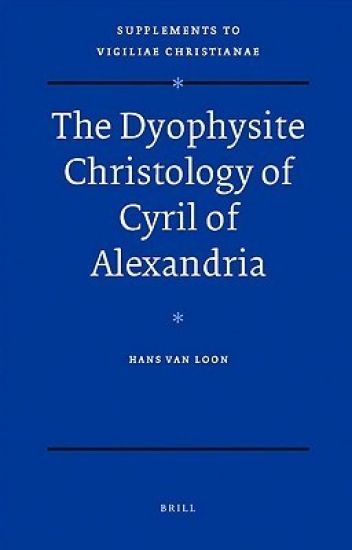
The Dyophysite Christology of Cyril of Alexandria
The formula 'one incarnate nature of the Word of God' has often been depicted as a summary of Cyril of Alexandria's (ca 378-444) christology. But no systematic study into his christological works has been published. Besides, there is no consensus regarding the meaning of the key terms and expressions in these works. This book addresses this deficiency by an integral investigation of the archbishop's christological writings during the first two years of the Nestorian controversy, and comes to the conclusion that his christology is basically dyophysite. This re-appraisal of his christology bears on the understanding of the Council of Chalcedon and on contemporary ecumenical relations, especially those between the Eastern Orthodox and the Oriental Orthodox.
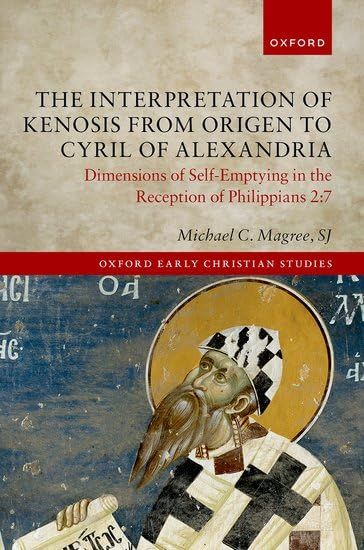
The Interpretation of Kenosis from Origen to Cyril of Alexandria
The self-emptying of Christ, proclaimed in the letter to the Philippians 2:7, remains a much-debated topic in modern theology and exegesis. The Interpretation of Kenosis from Origen to Cyril of Alexandria brings the insights of Greek Christianity to the understanding of kenosis to illustrate that new dimensions of the topic open up when it is examined in the historical era of early Christianity. Origen of Alexandria showed that his understanding of kenosis allowed him to resist overly confining understandings of divine immutability, yet retain the conviction that the immutable Word's self-emptying calls the Christian believer to awe and wonder. Gregory of Nyssa found in kenosis a way to emphasize the Son of God's embrace of all of human life, including historical development. Cyril of Alexandria, finally, the term kenosis more than anyone else in Greek-speaking Christianity. It was a theme across all major eras and genres of his writing, from scriptural exegesis to doctrinal disputes, including those about the divinity of the Son and the natural union of the Son with human reality. Cyril found in kenosis an anchor point for two themes: first, that the strangeness and shocking quality of the term kenosis reminds the believer that God's categories always stretch beyond human "who emptied himself?" can only be answered by a single-subject Christology that proclaims the kenosis of the Word. This book opens and closes with chapters relating early Christian teaching on Christ's self-emptying to modern scripture scholarship and to concerns of feminist systematic theology.