Kirjojen hintavertailu. Mukana 11 342 296 kirjaa ja 12 kauppaa.

Kirjahaku

Etsi kirjoja tekijän nimen, kirjan nimen tai ISBN:n perusteella.

1000 tulosta hakusanalla D Castleton

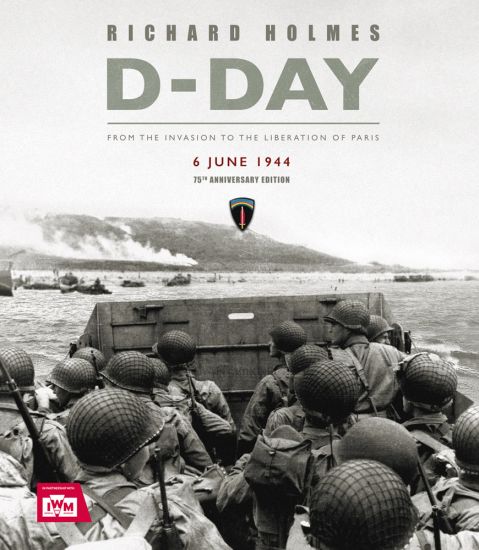
D-Day Remembered

D-Day Remembered

Richard Holmes

Andre Deutsch Ltd
2019
sidottu
D-Day, the largest amphibious invasion in history, took place on 6 June 1944. The subsequent battle of Normandy involved over a million men, and helped seal the fate of The Third Reich. This is a graphic account of the planning and execution of Operation Overlord, as well as the campaign which effectively destroyed the German forces in France, opening the way for the Allied advance. Including a wealth of superb photographs and maps, the book also contains 30 facsimile items of rare memorabilia, including diaries, letters and memos, bringing this 'Day of Days' dramatically to life.
D-Day

D-Day

Antony Beevor

Penguin Books Ltd
2014
pokkari
THE NUMBER ONE BESTSELLER 'Magnificent, vivid, moving, superb' Max Hastings, Sunday Times______________This is the closest you will ever get to war - the taste, the smell, the noise and the fearThe Normandy Landings that took place on D-Day involved by far the largest invasion fleet ever known. The scale of the undertaking was awesome and what followed was some of the most cunning and ferocious fighting of the war. As casualties mounted, so too did the tensions between the principal commanders on both sides. Meanwhile, French civilians caught in the middle of these battlefields or under Allied bombing endured terrible suffering. Even the joys of Liberation had their darker side.Antony Beevor's inimitably gripping narrative conveys the true experience of war. He lands the reader on the beach alongside the heroes whose stories he so masterfully renders in their full terrifying glory.______________'A thrilling story, with all Beevor's narrative mastery' Chris Patten, Financial Times'Beevor's D-Day has all the qualities that have made his earlier works so successful: an eye for telling and unusual detail, an ability to make complex events understandable, and a wonderful graphic style' Ian Kershaw, Guardian, Books of the Year'D-Day's phenomenal success is both understandable and justified' James Holland'D-Day is a triumph . . . on almost every page there's some little detail that sticks in the mind or tweaks the heart. This is a terrific, inspiring, heart-breaking book' Sam Leith, Daily Mail
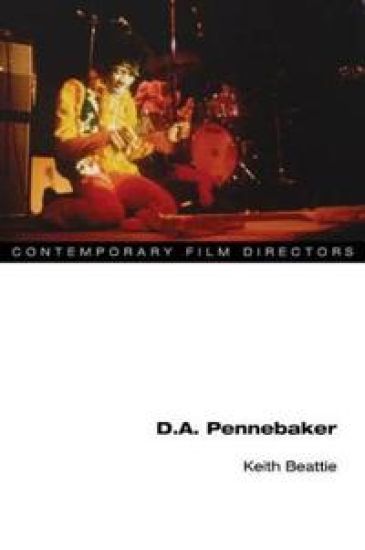
D.A. Pennebaker

D.A. Pennebaker

Keith Beattie

University of Illinois Press
2011
sidottu
This volume is the first book-length study of the extensive career and prolific works of D.A. Pennebaker, one of the pioneers of direct cinema, a documentary form that emphasizes observation and a straightforward portrayal of events. With a career spanning decades, Pennebaker's many projects have included avant-garde experiments (Daybreak Express), ground-breaking television documentaries (Primary), celebrity films (Dont Look Back), concert films (Monterey Pop), and innovative fusions of documentary and fiction (Maidstone). Exploring the concept of "performing the real," Keith Beattie interprets Pennebaker's films as performances in which the act of filming is in itself a performative transgression of the norms of purely observational documentary. He examines the ways in which Pennebaker's presentation of unscripted everyday performances is informed by connections between documentary filmmaking and other experimental movements such as the New American Cinema. Through his collaborations with such various artists as Richard Leacock, Shirley Clarke, Norman Mailer, and Jean-Luc Godard, Pennebaker has continually reworked and redefined the forms of documentary filmmaking. This book also includes a recent interview with the director and a full filmography.
D.W. Griffith and the Origins of American Narrative Film

D.W. Griffith and the Origins of American Narrative Film

Tom Gunning

University of Illinois Press
1993
nidottu
The legendary filmmaker D. W. Griffith directed nearly 200 films during 1908 and 1909, his first years with the Biograph Company. While those one-reel films are a testament to Griffith's inspired genius as a director, they also reflect a fundamental shift in film style from "cheap amusements" to movie storytelling complete with characters and narrative impetus. In this comprehensive historical investigation, drawing on films preserved by the Library of Congress and the Museum of Modern Art, Tom Gunning reveals that the remarkable cinematic changes between 1900 and 1915 were a response to the radical reorganization within the film industry and the evolving role of film in American society. The Motion Picture Patents Company, the newly formed Film Trust, had major economic aspirations. The newly emerging industry's quest for a middle-class audience triggered Griffith's early experiments in film editing and imagery. His unique solutions permanently shaped American narrative film.
D.A. Pennebaker

D.A. Pennebaker

Keith Beattie

University of Illinois Press
2011
nidottu
This volume is the first book-length study of the extensive career and prolific works of D.A. Pennebaker, one of the pioneers of direct cinema, a documentary form that emphasizes observation and a straightforward portrayal of events. With a career spanning decades, Pennebaker's many projects have included avant-garde experiments (Daybreak Express), ground-breaking television documentaries (Primary), celebrity films (Dont Look Back), concert films (Monterey Pop), and innovative fusions of documentary and fiction (Maidstone). Exploring the concept of "performing the real," Keith Beattie interprets Pennebaker's films as performances in which the act of filming is in itself a performative transgression of the norms of purely observational documentary. He examines the ways in which Pennebaker's presentation of unscripted everyday performances is informed by connections between documentary filmmaking and other experimental movements such as the New American Cinema. Through his collaborations with such various artists as Richard Leacock, Shirley Clarke, Norman Mailer, and Jean-Luc Godard, Pennebaker has continually reworked and redefined the forms of documentary filmmaking. This book also includes a recent interview with the director and a full filmography.
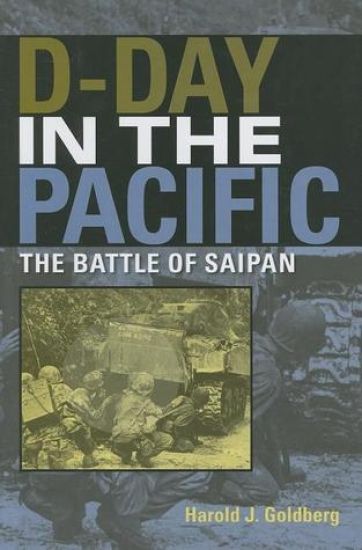
D-Day in the Pacific

D-Day in the Pacific

Harold J. Goldberg

Indiana University Press
2007
sidottu
In June 1944 the attention of the nation was riveted on events unfolding in France. But in the Pacific, the Battle of Saipan was of extreme strategic importance. This is a gripping account of one of the most dramatic engagements of World War II. The conquest of Saipan and the neighboring island of Tinian was a turning point in the war in the Pacific as it made the American victory against Japan inevitable. Until this battle, the Japanese continued to believe that success in the war remained possible. While Japan had suffered serious setbacks as early as the Battle of Midway in 1942, Saipan was part of her inner defense line, so victory was essential. The American victory at Saipan forced Japan to begin considering the reality of defeat. For the Americans, the capture of Saipan meant secure air bases for the new B-29s that were now within striking distance of all Japanese cities, including Tokyo.
D'Orléans à R'morantin; Poésies et Nouvelles de Sologne
This work has been selected by scholars as being culturally important, and is part of the knowledge base of civilization as we know it. This work was reproduced from the original artifact, and remains as true to the original work as possible. Therefore, you will see the original copyright references, library stamps (as most of these works have been housed in our most important libraries around the world), and other notations in the work.This work is in the public domain in the United States of America, and possibly other nations. Within the United States, you may freely copy and distribute this work, as no entity (individual or corporate) has a copyright on the body of the work.As a reproduction of a historical artifact, this work may contain missing or blurred pages, poor pictures, errant marks, etc. Scholars believe, and we concur, that this work is important enough to be preserved, reproduced, and made generally available to the public. We appreciate your support of the preservation process, and thank you for being an important part of keeping this knowledge alive and relevant.
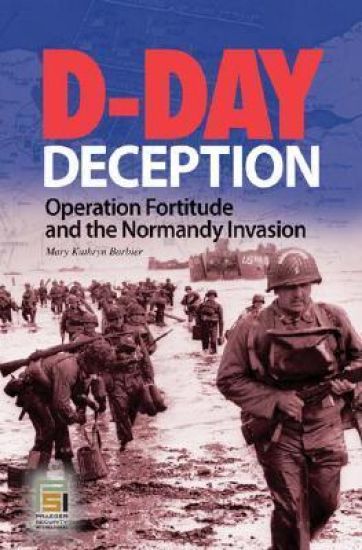
D-Day Deception

D-Day Deception

Mary K. Barbier

Praeger Publishers Inc
2007
sidottu
On 6 June 1944, Allied forces stormed the beaches at Normandy. The invasion followed several years of argument and planning by Allied leaders, who remained committed to a return to the European continent after the Germans had forced the Allies to evacuate at Dunkirk in May 1940. Before the spring of 1944, however, Prime Minister Winston Churchill and other British leaders remained unconvinced that the invasion was feasible. At the Teheran Conference in November 1943, Franklin D. Roosevelt and Winston Churchill promised Josef Stalin that Allied troops would launch Operation Overlord, the invasion of Normandy, in the spring. Because of their continuing concerns about Overlord, the British convinced the Americans to implement a cover plan to help ensure the invasion's success. The London Controlling Section (LCS) devised an elaborate two-part plan called Operation Fortitude that SHAEF (Supreme Headquarters, Allied Expeditionary Force) helped to fine tune and that both British and American forces implemented Historians analyzing the Normandy invasion frequently devote some discussion to Operation Fortitude. Although they admit that Fortitude North did not accomplish all that the Allied deception planners had hoped, many historians heap praise on Fortitude South, using phrases such as, unquestionably the greatest deception in military history. Many of these historians assume that the deception plan played a crucial role in the June 1944 assault. A reexamination of the sources suggests, however, that other factors contributed as much, if not more, to the Allied victory in Normandy and that Allied forces could have succeeded without the elaborate deception created by the LCS. Moreover, the persistent tendency to exaggerate the operational effect of Fortitude on the German military performance at Normandy continues to draw attention away from other, technical-military reasons for the German failures there.
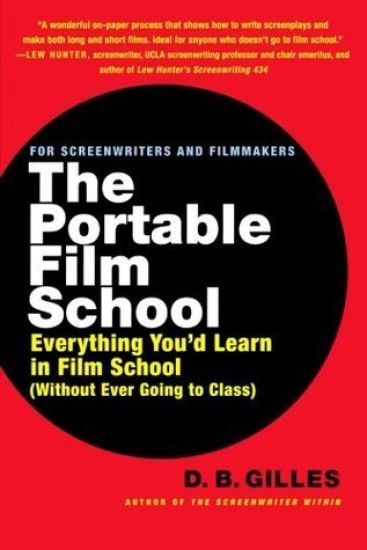
The Portable Film School: Everything You'd Learn in Film School Without Ever Going to Class
"The Portable Film School" is a private tutorial from an instructor at one of the nation's most prestigious film schools. D.B. Gilles explains the fundamental skills and techniques of screenwriting and making a short film arming you with the two calling cards you'll need to break into Hollywood without having spent the tuition or a minute in a classroom."
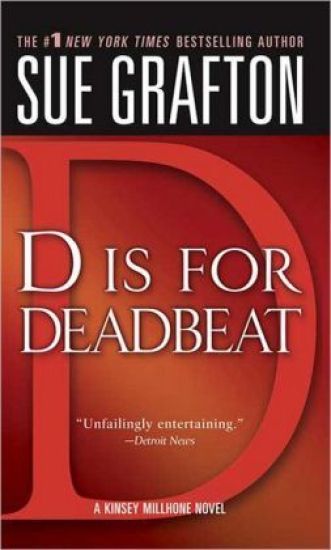
D Is for Deadbeat: A Kinsey Millhone Mystery

D Is for Deadbeat: A Kinsey Millhone Mystery

Sue Grafton

St. Martin's Press
2005
pokkari
Sue Grafton's #1 New York Times bestselling series, reissued for a whole new generation of readers D IS FOR DEADBEAT When Alvin Limardo walks into P.I. Kinsey Millhone's office, she smells bad news. He wants Kinsey to deliver $25,000. The recipient: A fifteen-year-old boy. It's a simple matter. So simple that Kinsey wonders why he doesn't deliver the money himself. She's almost certain something is off. But with rent due, Kinsey accepts Limardo's retainer against her better judgment... When Limardo's check bounces, Kinsey discovers she's been had big time. Alvin Limardo is really John Daggett--an ex-con with a drinking problem, two wives to boot, and a slew of people who would like to see him dead. Now Kinsey is out four hundred dollars and in hot pursuit of Daggett. When Daggett's corpse shows up floating in the Santa Teresa surf, the cops rule the death an accident. Kinsey thinks it's murder. But seeking justice for a man who everyone seemed to despise is going to be a lot tougher than she bargained for--and what awaits her at the end of the road is much more disturbing than she could've ever imagined... "A" Is for Alibi"B" Is for Burglar"C" Is for Corpse"D" Is for Deadbeat"E" Is for Evidence"F" Is for Fugitive"G" Is for Gumshoe"H" Is for Homicide"I" Is for Innocent"J" Is for Judgment"K" Is for Killer"L" is for Lawless"M" Is for Malice"N" Is for Noose"O" Is for Outlaw"P" Is for Peril "Q" Is for Quarry"R" Is for Ricochet "S" Is for Silence "T" Is for Trespass"U" Is for Undertow "V" Is for Vengeance "W" Is for Wasted "X"
D. H. Lawrence

D. H. Lawrence

Paul Poplawski

Greenwood Press
1996
sidottu
D.H. Lawrence remains one of the most popular and studied authors of the 20th century. This book is a comprehensive but easy to use reference guide to Lawrence's life, works, and critical reception. The volume has been systematically structured to convey a coherent overall sense of Lawrence's achievement and critical reputation, but it is also designed to enable the reader who may be interested in only one aspect of Lawrence's career, perhaps even in only one of his novels or stories, to find relevant information quickly and easily without having to read other parts of the text. The book begins with an original biography by John Worthen, one of the world's foremost authorities on Lawrence's life and work. The chapters that follow provide separate entries for all of Lawrence's works, except for individual poems and paintings, with critical summaries, discussions of characters, and details of settings. There is also a complete overview of Lawrence and film, with the most complete listing available of film adaptations of his works and of criticism relating to them. Each section of the book provides comprehensive primary and secondary bibliographical data, including citations for the most recent scholarly studies. Maps and chronologies further trace Lawrence's travels and his development over time.
D.W. The Picky Eater

D.W. The Picky Eater

Brown Marc

Little, Brown Young Readers
2008
nidottu
There's a whole slew of edibles that D.W. finds disgusting, but spinach is at the top of her list. Dining out with her family, she causes a scene when her parents suggest that she give her salad greens a try - no more restaurants for the picky little aardvark after that. Staying home with a sitter is boring, though, so when she hears about her grandmother's birthday dinner at a fancy restaurant, she wants to come, too. She orders the Little Bo Peep Pot Pie, devours it with relish, amazing everybody, including herself, and learns a lesson. The text is spare and funny, and while all the coloured-pencil illustrations reflect Brown's sense of humour and familiarity with the little details of childhood, some are downright hilarious. Charming endpapers feature some of the foods D.W. loves to hate. Although she wears an expression of pure horror when she discovers the main ingredient of her pie, readers will suspect that she'll keep that delicious spinach down and her mind and mouth open to new eating possibilities in the future.
D. H. Lawrence and the Art of Translation
This study of D.H.Lawrence as a translator is concerned particularly with the European Lawrence; a writer in touch with and responding vividly to works of European literature which struck a chord in his own creative sensibility. German, French, Spanish and above all Italian he knew well; Russian he failed to learn, despite more than one attempt and in his translations from Russian he always collaborated with S.S. Koteliansky, the Russian émigré. The author is not concerned with the theory of translation as such, but shows how an engagement with the style and sensibility of European authors in the translation process set up a kind of dialectic with far-reaching implications, so that translation came to mean for Lawrence a process of interpretation and evaluation in which his own fiction played an active part. The act of translation not only stimulated Lawrence to define his position in relation to other European cultures, especially the Italian and the Russian, it also served as an important focus of the philosophy of Love and Law set out in his Study of Thomas Hardy. In addition, a consideration of Lawrence's translations of Verga throws new light on the function of dialect in Lawrence's own work. Very little has been written on Lawrence's work as a translator, partly, no doubt, because he was himself anxious that his translating activities should not attract too much attention. It is clear from his own comments, however, that when he undertook a translation he was responding to a specific cultural or linguistic challenge and saw the translated text as meeting some spiritual need not only in terms of his own creative work, but also in terms of the imaginative life of his civilisation.