Kirjojen hintavertailu. Mukana 11 244 527 kirjaa ja 12 kauppaa.

Kirjahaku

Etsi kirjoja tekijän nimen, kirjan nimen tai ISBN:n perusteella.

1000 tulosta hakusanalla DEVIN MADSON

The Boat Runner

The Boat Runner

Devin Murphy

HarperPerennial
2017
nidottu
In the tradition of All The Light We Cannot See and The Nightingale, comes an incandescent debut novel about a young Dutch man who comes of age during the perilousness of World War II. Beginning in the summer of 1939, fourteen-year-old Jacob Koopman and his older brother, Edwin, enjoy lives of prosperity and quiet contentment. Many of the residents in their small Dutch town have some connection to the Koopman lightbulb factory, and the locals hold the family in high esteem. On days when they aren't playing with friends, Jacob and Edwin help their Uncle Martin on his fishing boat in the North Sea, where German ships have become a common sight. But conflict still seems unthinkable, even as the boys' father naively sends his sons to a Hitler Youth Camp in an effort to secure German business for the factory. When war breaks out, Jacob's world is thrown into chaos. The Boat Runner follows Jacob over the course of four years, through the forests of France, the stormy beaches of England, and deep within the secret missions of the German Navy, where he is confronted with the moral dilemma that will change his life-and his life's mission-forever. Epic in scope and featuring a thrilling narrative with precise, elegant language, The Boat Runner tells the little-known story of the young Dutch boys who were thrown into the Nazi campaign, as well as the brave boatmen who risked everything to give Jewish refugees safe passage to land abroad. Through one boy's harrowing tale of personal redemption, here is a novel about the power of people's stories and voices to shine light through our darkest days, until only love prevails.

Tiny Americans

Tiny Americans

Devin Murphy

HARPER PERENNIAL
2019
nidottu
From the National Bestselling author of The Boat Runner comes a poignant, luminous novel that follows one family over decades and across the world--perfect for fans of the film Boyhood.Western New York, 1978: Jamie, Lewis, and Connor Thurber watch their parents' destructive dance of loving, hating, and drinking. Terrance Thurber spends this year teaching his children about the natural world: they listen to the heartbeat of trees, track animal footprints, sleep under the star-filled sky. Despite these lessons, he doesn't show them how to survive without him. And when these seasons of trying and failing to quit booze and be a better man are over, Terrance is gone.Alone with their artist mother, Catrin, the Thurber children are left to grapple with the anger they feel for the one parent who deserted them and a growing resentment for the one who didn't. As Catrin withdraws into her own world, Jamie throws herself into painting while her brothers smash out their rage in brutal, no-holds-barred football games with neighborhood kids. Once they can leave--Jamie for college, Lewis for the navy, and Connor for work--they don't look back.But Terrance does. Crossing the country, sobering up, and starting over has left him with razor-sharp regret. Terrance doesn't know that Jamie, now an academic, inhabits an ever-shrinking circle of loneliness; that Lewis, a merchant marine, fears life on dry land; that Connor struggles to connect with the son he sees teetering on an all-too-familiar edge. He only knows that he has one last try to build a bridge, through the years, to his family.Composed of a series of touchstone moments, Tiny Americans is a thrilling and bittersweet rendering of a family that, much like the tides, continues to come together and drift apart.
So Many Ways to Lose: The Amazin' True Story of the New York Mets--The Best Worst Team in Sports
"This is a weird, wonderful, and essential book about both America and its pastime. It's about a place as vast as New York City and as intimate as the human heart. Fred Exley meets Richard Ben Cramer--a funny, wild, heartfelt, and keenly observed portrait of yearning itself."--Wright Thompson, New York Times bestselling author of The Cost of These Dreams"Mr. Gordon's ability to explain the Sisyphean plight of all Mets fans is truly remarkable. Bravo "--Ron Darling, New York Times bestselling author of Game 7, 1986The Mets lose when they should win. They win when they should lose. And when it comes to being the worst, no team in sports has ever done it better than the Mets. In So Many Ways to Lose, author and lifelong Mets fan Devin Gordon sifts through the detritus of Queens for a baseball history like no other. Remember the time the Mets lost an All-Star after Yoenis C spedes got charged by a wild boar? Or the time they blew a six-run ninth-inning lead at the peak of a pennant race? Or the time they fired their manager before he ever managed a game? Sure you do. It was only two years ago, and it was all in the same season. The Mets have an unrivaled gift for getting it backward, doing the impossible, snatching victory from the jaws of defeat, and then snatching defeat right back again. And yet, just ask any Mets fan: Amazing and/or miraculous postseason runs are as much a part of our team's identity as losing 120 games in 1962. The DNA of seasons like 1969, the original Miracle Mets, and the 1973 "Ya Gotta Believe" Mets, who went from last place to Game 7 of the World Series in two months, and the powerhouse 1986 Mets, has encoded in us this hapless instinct that a reversal of fortune is always possible. It's happened before. It's kind of our thing. And now we've got Steve Cohen's hedge-fund billions to play with What could go wrong?In this hilarious history of the Mets and love letter to the art of disaster, Devin Gordon presents baseball the way it really is, not in the wistful sepia tones we've come to expect from other sportswriters. Along the way, he explains the difference between being bad and being gifted at losing, and why this distinction holds the key to understanding the true amazin' magic of the New York Mets.
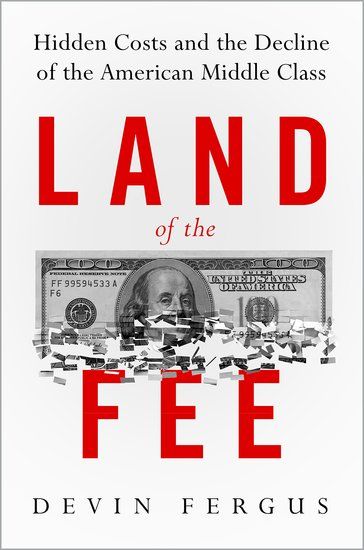
Land of the Fee

Land of the Fee

Devin Fergus

Oxford University Press Inc
2020
nidottu
The loans ordinary Americans take out to purchase homes and attend college often leave them in a sea of debt. As Devin Fergus explains in Land of the Fee, a not-insignificant portion of that debt comes in the form of predatory hidden fees attached to everyday transactions. Beginning in the 1980s, lobbyists for the financial industry helped dismantle consumer protections, resulting in surreptitious fees-often waived for those who can afford them but not for those who can't. Bluntly put, these hidden fees unfairly keep millions of Americans from their hard-earned money. Journalists and policymakers have identified the primary causes of increasing wealth inequality-fewer good working class jobs, a rise in finance-driven speculative capitalism, and a surge of tax policy decisions that benefit the ultra-rich, among others. However, they miss one commonplace but substantial contributor to the widening divide between the rich and the rest: the explosion of fees on every transaction people make in their daily lives. Land of the Fee traces the system of fees from its origins in the deregulatory wave of the late 1970s to the present. The average consumer now pays a dizzying array of charges for mortgage contracts, banking transactions, auto insurance rates, college payments, and payday loans. These fees are buried in the pages of small-print agreements that few consumers read or understand. Because these fees do not fall under usury laws, they have redistributed wealth to large corporations and their largest shareholders. By exposing this predatory and nearly invisible system of fees, Land of the Fee reshapes our understanding of wealth inequality in America.
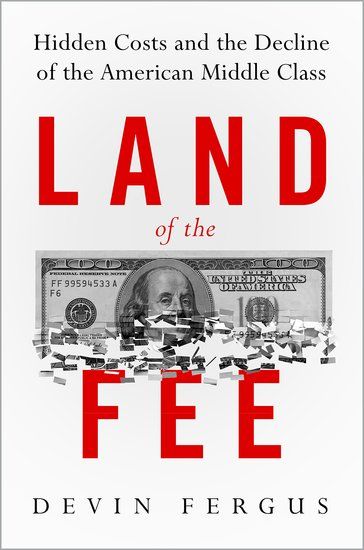
Land of the Fee

Land of the Fee

Devin Fergus

Oxford University Press Inc
2018
sidottu
Politicians, economists, and the media have put forth no shortage of explanations for the mounting problem of wealth inequality - a loss of working class jobs, a rise in finance-driven speculative capitalism, and a surge of tax policy decisions that benefit the ultra-rich, among others. While these arguments focus on the macro problems that contribute to growing inequality, they overlook one innocuous but substantial contributor to the widening divide: the explosion of fees accompanying virtually every transaction that people make. As Devin Fergus shows in Land of the Fee, these perfectly legal fees are buried deep within the verbose agreements between vendors and consumers - agreements that few people fully read or comprehend. The end effect, Fergus argues, is a massive transfer of wealth from the many to the few: large banking corporations, airlines, corporate hotel chains, and other entities of vast wealth. Fergus traces the fee system from its origins in the deregulatory wave of the late 1970s to the present, placing the development within the larger context of escalating income inequality. He organizes the book around four of the basics of existence: housing, work, transportation, and schooling. In each category, industry lobbyists successfully influenced legislatures into transforming the law until surreptitious fees became the norm. The average consumer is now subject to a dizzying array of charges in areas like mortgage contracts, banking transactions, auto insurance rates, college payments, and payday loans. The fees that accompany these transactions are not subject to usury laws and have effectively redistributed wealth from the lower and middle classes to ultra-wealthy corporations and the individuals at their pinnacles. By exposing this predatory and nearly invisible system of fees, Land of the Fee will reshape our understanding of wealth inequality in America.
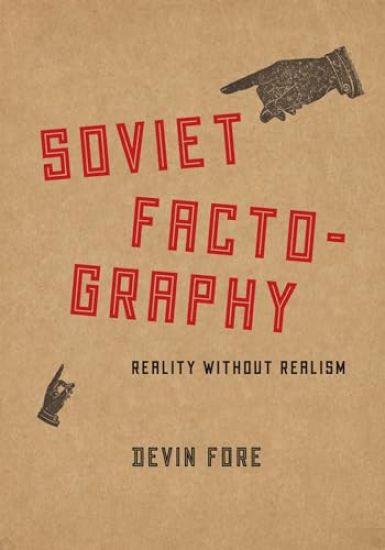
Soviet Factography

Soviet Factography

Devin Fore

THE UNIVERSITY OF CHICAGO PRESS
2024
sidottu
A study of Soviet factography, an avant-garde movement that employed photography, film, journalism, and mass media technologies. This is the first major English-language study of factography, an avant-garde movement of 1920s modernism. Devin Fore charts this style through the work of its key figures, illuminating factography’s position in the material culture of the early Soviet period and situating it as a precursor to the genre of documentary that arose in the 1930s. Factographers employed photography and film practices in their campaign to inscribe facts and to chronicle modernization as it transformed human experience and society. Fore considers factography in light of the period’s explosion of new media technologies—including radio broadcasting, sound in film, and photo-media innovations—that allowed the press to transform culture on a massive scale. This theoretically driven study uses material from Moscow archives and little-known sources to highlight factography as distinct from documentary and Socialist Realism and to establish it as one of the major twentieth-century avant-garde forms. Fore covers works of photography, film, literature, and journalism together in his considerations of Soviet culture, the interwar avant-gardes, aesthetics, and the theory of documentary.
Hobbes's Kingdom of Light

Hobbes's Kingdom of Light

Devin Stauffer

University of Chicago Press
2018
sidottu
Was Hobbes the first great architect of modern political philosophy? Highly critical of the classical tradition in philosophy, particularly Aristotle, Hobbes thought that he had established a new science of morality and politics. Devin Stauffer here delves into Hobbes's critique of the classical tradition, making this oft-neglected aspect of the philosopher's thought the basis of a new, comprehensive interpretation of his political philosophy. In Hobbes's Kingdom of Light, Stauffer argues that Hobbes was engaged in a struggle on multiple fronts against forces, both philosophic and religious, that he thought had long distorted philosophy and destroyed the prospects of a lasting peace in politics. By exploring the twists and turns of Hobbes's arguments, not only in his famous Leviathan but throughout his corpus, Stauffer uncovers the details of Hobbes's critique of an older outlook, rooted in classical philosophy and Christian theology, and reveals the complexity of Hobbes's war against the "Kingdom of Darkness." He also describes the key features of the new outlook--the "Kingdom of Light"--that Hobbes sought to put in its place. Hobbes's venture helped to prepare the way for the later emergence of modern liberalism and modern secularism. Hobbes's Kingdom of Light is a wide-ranging and ambitious exploration of Hobbes's thought.
Hobbes's Kingdom of Light

Hobbes's Kingdom of Light

Devin Stauffer

University of Chicago Press
2021
nidottu
Was Hobbes the first great architect of modern political philosophy? Highly critical of the classical tradition in philosophy, particularly Aristotle, Hobbes thought that he had established a new science of morality and politics. Devin Stauffer here delves into Hobbes’s critique of the classical tradition, making this oft-neglected aspect of the philosopher’s thought the basis of a new, comprehensive interpretation of his political philosophy. In Hobbes’s Kingdom of Light, Stauffer argues that Hobbes was engaged in a struggle on multiple fronts against forces, both philosophic and religious, that he thought had long distorted philosophy and destroyed the prospects of a lasting peace in politics. By exploring the twists and turns of Hobbes’s arguments, not only in his famous Leviathan but throughout his corpus, Stauffer uncovers the details of Hobbes’s critique of an older outlook, rooted in classical philosophy and Christian theology, and reveals the complexity of Hobbes’s war against the “Kingdom of Darkness.” He also describes the key features of the new outlook—the “Kingdom of Light”—that Hobbes sought to put in its place. Hobbes’s venture helped to prepare the way for the later emergence of modern liberalism and modern secularism. Hobbes’s Kingdom of Light is a wide-ranging and ambitious exploration of Hobbes’s thought.
Dynamic Democracy

Dynamic Democracy

Devin Caughey; Christopher Warshaw

THE UNIVERSITY OF CHICAGO PRESS
2022
sidottu
A new perspective on policy responsiveness in American government. Scholars of American politics have long been skeptical of ordinary citizens’ capacity to influence, let alone control, their governments. Drawing on over eight decades of state-level evidence on public opinion, elections, and policymaking, Devin Caughey and Christopher Warshaw pose a powerful challenge to this pessimistic view. Their research reveals that although American democracy cannot be taken for granted, state policymaking is far more responsive to citizens’ demands than skeptics claim. Although governments respond sluggishly in the short term, over the long term, electoral incentives induce state parties and politicians—and ultimately policymaking—to adapt to voters’ preferences. The authors take an empirical and theoretical approach that allows them to assess democracy as a dynamic process. Their evidence across states and over time gives them new leverage to assess relevant outcomes and trends, including the evolution of mass partisanship, mass ideology, and the relationship between partisanship and ideology since the mid-twentieth century; the nationalization of state-level politics; the mechanisms through which voters hold incumbents accountable; the performance of moderate candidates relative to extreme candidates; and the quality of state-level democracy today relative to state-level democracy in other periods.
Dynamic Democracy

Dynamic Democracy

Devin Caughey; Christopher Warshaw

THE UNIVERSITY OF CHICAGO PRESS
2022
nidottu
A new perspective on policy responsiveness in American government. Scholars of American politics have long been skeptical of ordinary citizens’ capacity to influence, let alone control, their governments. Drawing on over eight decades of state-level evidence on public opinion, elections, and policymaking, Devin Caughey and Christopher Warshaw pose a powerful challenge to this pessimistic view. Their research reveals that although American democracy cannot be taken for granted, state policymaking is far more responsive to citizens’ demands than skeptics claim. Although governments respond sluggishly in the short term, over the long term, electoral incentives induce state parties and politicians—and ultimately policymaking—to adapt to voters’ preferences. The authors take an empirical and theoretical approach that allows them to assess democracy as a dynamic process. Their evidence across states and over time gives them new leverage to assess relevant outcomes and trends, including the evolution of mass partisanship, mass ideology, and the relationship between partisanship and ideology since the mid-twentieth century; the nationalization of state-level politics; the mechanisms through which voters hold incumbents accountable; the performance of moderate candidates relative to extreme candidates; and the quality of state-level democracy today relative to state-level democracy in other periods.
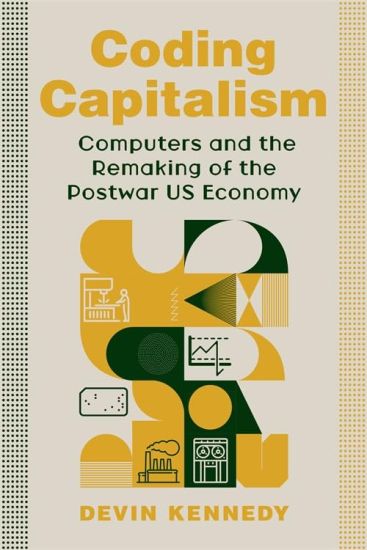
Coding Capitalism

Coding Capitalism

Devin Kennedy

Columbia University Press
2026
sidottu
Long before Google, Amazon, or Microsoft, computer technology shaped how people worked, how markets operated, and how businesses became big. After World War II, military officials and their partners in industry looked to the newly invented electronic computer as they sought to cut costs, speed up labor, manage supply chains, and—they hoped—bring stability to the postwar economy. Their efforts would shape early computer science and the first applications of computer technology in manufacturing and business, with profound consequences for workers and managers alike. By the 1960s, practices originally developed to improve industrial efficiency were being used by Wall Street, influencing how markets worked and even how traders thought. Digital technology became central to finance, tying together far-flung trading floors and automating decision making—with alarming consequences, including the 1987 Black Monday crash. Devin Kennedy offers a new history of the digital economy, showing how the computer emerged from—and transformed—capitalism in the United States. He traces how computer science and technology were made by industry, which molded computation to manage factories, financial markets, and entire firms. Drawing on the archives of businesses, computer researchers, regulators, and financial institutions, Coding Capitalism retells the story of the postwar economy and the computer, revealing how midcentury business laid the foundations of the digital world. Bridging business and economic history with the history of science and technology, this book uncovers the prehistory of big tech and demonstrates how capitalism has shaped computing since its invention.
Coding Capitalism

Coding Capitalism

Devin Kennedy

Columbia University Press
2026
pokkari
Long before Google, Amazon, or Microsoft, computer technology shaped how people worked, how markets operated, and how businesses became big. After World War II, military officials and their partners in industry looked to the newly invented electronic computer as they sought to cut costs, speed up labor, manage supply chains, and—they hoped—bring stability to the postwar economy. Their efforts would shape early computer science and the first applications of computer technology in manufacturing and business, with profound consequences for workers and managers alike. By the 1960s, practices originally developed to improve industrial efficiency were being used by Wall Street, influencing how markets worked and even how traders thought. Digital technology became central to finance, tying together far-flung trading floors and automating decision making—with alarming consequences, including the 1987 Black Monday crash. Devin Kennedy offers a new history of the digital economy, showing how the computer emerged from—and transformed—capitalism in the United States. He traces how computer science and technology were made by industry, which molded computation to manage factories, financial markets, and entire firms. Drawing on the archives of businesses, computer researchers, regulators, and financial institutions, Coding Capitalism retells the story of the postwar economy and the computer, revealing how midcentury business laid the foundations of the digital world. Bridging business and economic history with the history of science and technology, this book uncovers the prehistory of big tech and demonstrates how capitalism has shaped computing since its invention.
My Book of Rocks and Minerals

My Book of Rocks and Minerals

Devin Dennie

DK Children
2017
sidottu
A stunning visual reference book for little geologists who love to find fascinating stones around them. Identify colourful gemstones, sparkly crystals, the toughest rocks and ancient fossils. Packed with fun facts, information and extensive photos all about the rocks and minerals that make up the world around us.Interactive learning that engages young scholar minds. Learn about 64 different types of rocks and minerals, how to tell the difference between them, and where to find them. Have a dig into all the interesting geological materials from deep space to the deepest caves. You'll even discover glow in the dark minerals and living gems!Find out about the stuff our world is made of, and how rocks and minerals form over time. This captivating book introduces children to hands-on science with fun activities such as starting your own impressive rock collection and how to stay safe on your rock finding missions.Written for kids aged 6 to 9 with bite-sized information and explanations. The easy to understand language gives them a rock-solid foundation for science subjects. The geology book includes the phonetic pronunciation of the rock and mineral names so your little one will sound like a rock expert in no time. Rockin' It With Stones And Minerals- Stunning high-quality photographs.- Inspiring activities for little earth scientists.- Over 64 types of rocks, their properties, and how they are formed.
Why Does the Earth Need the Moon?

Why Does the Earth Need the Moon?

Devin Dennie

DK Children
2019
sidottu
Explore the science behind what makes the world spin, in over 200 questions children ask about our own planet.You'll find out fun facts like how the Earth was formed, why we can't live on Mars if the Earth is getting warmer, and many more. This book is perfect for all those curious young minds ages 6-8 that want to discover the wonders of the world.Children have some of the most enquiring minds on the planet, making them the perfect group for DK's exciting Earth encyclopedia, Why Does The Earth Need The Moon?, which covers all the greatest subjects - from geography, geology and science, to questions about living things, humans and history.Ideally written for children ages 6-8, this encyclopedia covers all their best and weirdest questions, and some they haven't even thought to ask yet! Did you know that the Earth's biggest waterfall is underwater, or that mountains grow? The genius of this book is the question and answer format that leads children to learn fun facts accompanied by beautiful visual illustrations and photos of our stunning planet. Follow along and take the quizzes along the way to test your general knowledge or even compete with your friends for the best score!Fantastic Facts For Curious Minds!Why Does The Earth Need The Moon? answers all the amazing questions children have about the planet they live on. Can you freeze in a desert? Can a cliff turn into sand? Why are places hot or cold? Be surprised by how many answers you get from over 200 questions.This incredible encyclopedia helps children tackle their burning questions about the massive topic that is our planet. Learn about how oceans start and land begins to form, what lies at the bottom of the sea, and the awesome power of weather. This is an essential book for getting kids to learn about the key issues facing the world today. Discover how global warming is threatening our future and why recycling is so important in keeping the Earth healthy.Children will love learning from this amazing encyclopedia that is overflowing with questions and answers. This educational book breaks down questions into easy-to-read chunks that will satisfy any curious young mind.Packed with fantastic facts here's what you'll learn about:- The formation of the Earth- Rocks, minerals and mountains- Our vast oceans- The sky and weather- The past, present and future of life on the planet
An Anthology of Rocks and Minerals

An Anthology of Rocks and Minerals

Devin Dennie

DORLING KINDERSLEY LTD
2024
sidottu
A beautiful field guide featuring notes, photos, and illustrations of more than 100 rocks, minerals, and gemsA compact version of DK’s bestselling anthology series, An Anthology of Rocks and Minerals is perfect for young geologists aged 7-9 for taking on the go.Children can marvel at many different minerals that no collection would be complete without, including quartz, pyrite, amethyst, lapis lazuli, and much more, as well as rock types that children will love spotting when they are out and about.This impressive rocks and minerals anthology for kids offers:The first book in the new compact spin-off of the bestselling Children’s Anthologies series, selling more than 130,000 copies in the US.A wide selection of rocks and minerals featured throughout, each accompanied by a beautiful photograph and an illustration.A quality gift book, with metallic foil and striking photographs on every page.An Anthology of Rocks and Minerals pairs photography with storybook descriptions that will captivate young readers, whether it's finding out about grasslands and meadows, mushroom shapes, and species. Featuring photographs of striking specimens and illustrations by the artist behind DK’s bestselling Anthology series, as well as plenty of intriguing information, this book will be one to treasure for young nature enthusiasts.More in the seriesAn Anthology of Rocks and Minerals is part of the beautiful, new and compact Anthology spin-off series. Complete the series and nurture your child's curiosity as they explore different mushroom species with An Anthology of Fungi.
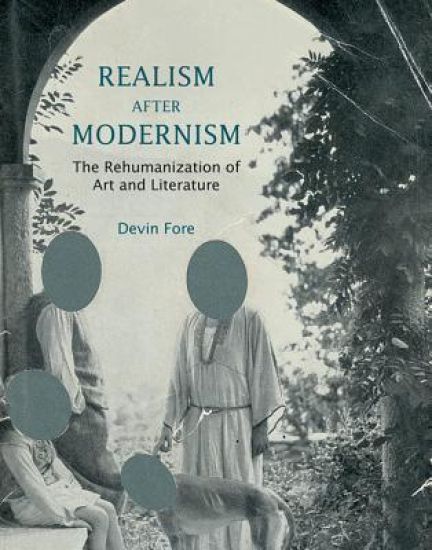
Realism after Modernism

Realism after Modernism

Devin Fore

MIT Press
2015
pokkari
The paradox at the heart of the return to realism in the interwar years, as seen in work by Moholy-Nagy, Brecht, and others.The human figure made a spectacular return in visual art and literature in the 1920s. Following modernism's withdrawal, nonobjective painting gave way to realistic depictions of the body and experimental literary techniques were abandoned for novels with powerfully individuated characters. But the celebrated return of the human in the interwar years was not as straightforward as it may seem. In Realism after Modernism, Devin Fore challenges the widely accepted view that this period represented a return to traditional realist representation and its humanist postulates. Interwar realism, he argues, did not reinstate its nineteenth-century predecessor but invoked realism as a strategy of mimicry that anticipates postmodernist pastiche.Through close readings of a series of works by German artists and writers of the period, Fore investigates five artistic devices that were central to interwar realism. He analyzes Bauhaus polymath Laszlo Moholy-Nagy's use of linear perspective; three industrial novels riven by the conflict between the temporality of capital and that of labor; Brecht's socialist realist plays, which explore new dramaturgical principles for depicting a collective subject; a memoir by Carl Einstein that oscillates between recollection and self-erasure; and the idiom of physiognomy in the photomontages of John Heartfield.Fore's readings reveal that each of these "rehumanized" works in fact calls into question the very categories of the human upon which realist figuration is based. Paradoxically, even as the human seemed to make a triumphal return in the culture of the interwar period, the definition of the human and the integrity of the body were becoming more tenuous than ever before. Interwar realism did not hearken back to earlier artistic modes but posited new and unfamiliar syntaxes of aesthetic encounter, revealing the emergence of a human subject quite unlike anything that had come before.
Islamization and Native Religion in the Golden Horde

Islamization and Native Religion in the Golden Horde

Devin DeWeese

Pennsylvania State University Press
1994
pokkari
This book is the first substantial study of Islamization in any part of Inner Asia from any perspective and the first to emphasize conversion narratives as important sources for understanding the dynamics of Islamization. Challenging the prevailing notions of the nature of Islam in Inner Asia, it explores how conversion to Islam was woven together with indigenous Inner Asian religious values and thereby incorporated as a central and defining element in popular discourse about communal origins and identity. The book traces the many echoes of a single conversion narrative through six centuries, the previously unknown recounting of the dramatic "contest" in which the khan Özbek adopted Islam at the behest of a Sufi saint named Baba Tükles. DeWeese provides the English-language translation of this and another text as well as translations and analyses of a wide range of passages from historical sources and epic and folkloric materials. Not only does this study deepen our understanding of the peoples of Central Asia, involved in so much turmoil today, but it also provides a model for other scholars to emulate in looking at the process of Islamization and communal religious conversion in general as it occurred elsewhere in the world.
Islamization and Native Religion in the Golden Horde

Islamization and Native Religion in the Golden Horde

Devin DeWeese

Pennsylvania State University Press
1994
pokkari
This book is the first substantial study of Islamization in any part of Inner Asia from any perspective and the first to emphasize conversion narratives as important sources for understanding the dynamics of Islamization. Challenging the prevailing notions of the nature of Islam in Inner Asia, it explores how conversion to Islam was woven together with indigenous Inner Asian religious values and thereby incorporated as a central and defining element in popular discourse about communal origins and identity. The book traces the many echoes of a single conversion narrative through six centuries, the previously unknown recounting of the dramatic "contest" in which the khan Özbek adopted Islam at the behest of a Sufi saint named Baba Tükles. DeWeese provides the English-language translation of this and another text as well as translations and analyses of a wide range of passages from historical sources and epic and folkloric materials. Not only does this study deepen our understanding of the peoples of Central Asia, involved in so much turmoil today, but it also provides a model for other scholars to emulate in looking at the process of Islamization and communal religious conversion in general as it occurred elsewhere in the world.
No Justice, No Peace

No Justice, No Peace

Devin Allen

Hachette Books
2022
sidottu
A MOVEMENT IN WORDS AND IMAGESAward-winning photographer Devin Allen has devoted the last six years to documenting the protests of the Black Lives Matter movement, from its early days in Baltimore, Maryland, up to the present day. The riveting images in No Justice, No Peace provide a lens on the resistance that has empowered Black lives generation after generation. Allen's signature black-and-white photos bear witness to the profound history of African Americans and allies in the fight for social justice and portray the collective action over decades in stunning, timeless portraits.Allen's remarkable photos of today's Black Lives Matter protests, which have been featured in the New York Times, the Washington Post, and twice on the cover of Time magazine, were inspired by Gordon Parks of the Civil Rights Movement, and create a vision of the past and future of Black activism and leadership in America. With contributions from twenty-six bestselling and influential writers and activists of today such as Clint Smith, DeRay Mckesson, D. Watkins, Jacqueline Woodson, Emmanuel Acho, Keeanga-Yamahtta Taylor, and more, alongside the words of past writers and activists such as Martin Luther King Jr, Frederick Douglass, Malcolm X, Maya Angelou, and John Lewis, No Justice, No Peace is a reminder of the moral responsibility of Americans to break unjust laws and take direct action.In words and pictures, No Justice, No Peace honors the connection between activism today and that of the past. If indeed hindsight is 20/20, this artistic look back is a lens on history that enlarges our understanding of the lasting predicament of racism in the United States of America. At once deeply intimate and profoundly uplifting, No Justice, No Peace is a visual tribute to Black resistance and a stern missive on the tough, but necessary, road that lies ahead.
Unworthy Hero

Unworthy Hero

Devin Higgins

Lulu.com
2019
nidottu
My name is Time Turner. I am the protector of Captain Hope City, a college student in disguise, and...The most disliked Hero of all time.I, like all Heroes, save the day and defeat Villains, but unlike them, I don't throw punches.Because of that, to the citizens I am sworn to protect, I am the Unworthy Hero.