Kirjojen hintavertailu. Mukana 11 509 923 kirjaa ja 12 kauppaa.

Kirjahaku

Etsi kirjoja tekijän nimen, kirjan nimen tai ISBN:n perusteella.

1000 tulosta hakusanalla Daniel B. Levin

Romania Basic Travel Guide 2020 Edition

Romania Basic Travel Guide 2020 Edition

Daniel B. Smith

Independently Published
2019
nidottu
This book addresses tourists and people who want to know more about Romania.The guide is organized into 41 main chapters, each presenting corresponding county and some "need to know" advice.This book teaches you general knowledge about traveling and will also get you familiar with Romanian cuisine.Please keep in mind that there are many to be discovered by yourself. You will find basic information about the main tourist attractions, pictures of them and accommodation for each county. Have a great holiday
The Atlantic Slave Trade from West Central Africa, 1780–1867

The Atlantic Slave Trade from West Central Africa, 1780–1867

Daniel B. Domingues da Silva

Cambridge University Press
2017
sidottu
The Atlantic Slave Trade from West Central Africa, 1780–1867 traces the inland origins of slaves leaving West Central Africa at the peak period of the transatlantic slave trade. Drawing on archival sources from Angola, Brazil, England, and Portugal, Daniel B. Domingues da Silva explores not only the origins of the slaves forced into the trade but also the commodities for which they were exchanged and their methods of enslavement. Further, the book examines the evolution of the trade over time, its organization, the demographic profile of the population transported, the enslavers' motivations to participate in this activity, and the Africans' experience of enslavement and transportation across the Atlantic. Domingues da Silva also offers a detailed 'geography of enslavement', including information on the homelands of the enslaved Africans and their destination in the Americas.
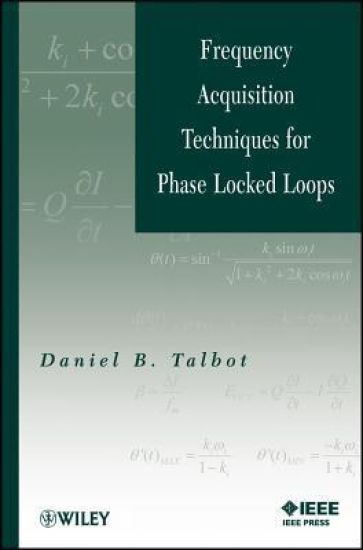
Frequency Acquisition Techniques for Phase Locked Loops
How to acquire the input frequency from an unlocked state A phase locked loop (PLL) by itself cannot become useful until it has acquired the applied signal's frequency. Often, a PLL will never reach frequency acquisition (capture) without explicit assistive circuits. Curiously, few books on PLLs treat the topic of frequency acquisition in any depth or detail. Frequency Acquisition Techniques for Phase Locked Loops offers a no-nonsense treatment that is equally useful for engineers, technicians, and managers. Since mathematical rigor for its own sake can degenerate into intellectual "rigor mortis," the author introduces readers to the basics and delivers useful information with clear language and minimal mathematics. With most of the approaches having been developed through years of experience, this completely practical guide explores methods for achieving the locked state in a variety of conditions as it examines: Performance limitations of phase/frequency detector–based phase locked loopsThe quadricorrelator method for both continuous and sampled modesSawtooth ramp-and-sample phase detector and how its waveform contains frequency error information that can be extractedThe benefits of a self-sweeping, self-extinguishing topologySweep methods using quadrature mixer-based lock detectionThe use of digital implementations versus analog Frequency Acquisition Techniques for Phase Locked Loops is an important resource for RF/microwave engineers, in particular, circuit designers; practicing electronics engineers involved in frequency synthesis, phase locked loops, carrier or clock recovery loops, radio-frequency integrated circuit design, and aerospace electronics; and managers wanting to understand the technology of phase locked loops and frequency acquisition assistance techniques or jitter attenuating loops. Errata can be found by visiting the Book Support Site at: http://booksupport.wiley.com
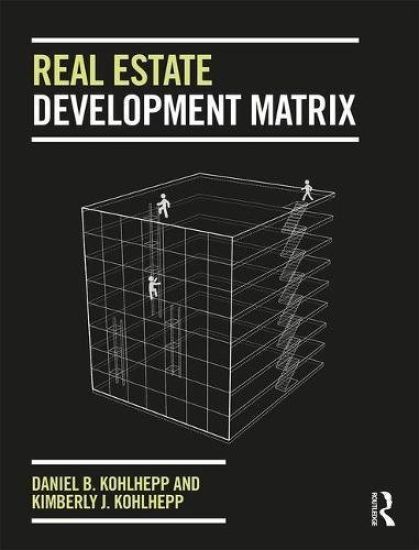
Real Estate Development Matrix

Real Estate Development Matrix

Daniel B Kohlhepp; Kimberly J. Kohlhepp

Routledge
2018
sidottu
This book presents a new way of thinking about, teaching, learning, and practicing real estate development.Real Estate Development Matrix describes the process in a two-dimensional model and presents seven Development Stages which form the horizontal axis, and eight sets of Development Tasks which form the vertical axis to define a 56-cell matrix. In each cell, money is spent and risks are taken to achieve certain tasks and thereby create (or destroy) value. This holistic process considers the entire life cycle of real estate from its "green field" inception to its "brown field" state. The book is written by a real estate developer and academic, and the presented material is conceptual, practical, and non-technical. Jargon has been minimized as much as possible as the author introduces an entirely new model for real estate development that is both academically authoritative and developed in practice. It is aimed at a general professional audience participating in the development process, but equally the book is ideal for use as a textbook in undergraduate and graduate courses in real estate development, and an excellent supplemental text for business courses discussing real estate finance and investment. It may also be used as a textbook for professional courses, workshops, or seminars in real estate development. The book is supported by an interactive website at http://realestatedevelopmentmatrix.com/
Outsiders

Outsiders

Daniel B. Meltzer

Lulu.com
2014
nidottu
Twelve "hilariously entertaining"stories (Bob Chacochis, author of Easy in the Islands) by an award-winning author and humorist about rugged and not-so-rugged individualists who survive and thrive in a conformist society. Meltzer has won both the O. Henry and Pushcart Prizes for his fiction. From PEOPLE: What did he think of my idea, I wanted to know. He'd be talking with his people, he said. He wanted to run it by his people. He would want to run some numbers. I could touch base in a week or so, or one of my people. He himself would be out of pocket for a while, but I could check in with his girl, or one of my people could check in with his girl or my girl could check in with his girl. From KAFKA ON PROZAC: Monday: I am on my back, it's hard to roll over, and there are all these legs. Long, hairy legs. I feel no alarm or distress. It is just different; things were a certain way yesterday and today they are a different way.
The Atlantic Slave Trade from West Central Africa, 1780–1867

The Atlantic Slave Trade from West Central Africa, 1780–1867

Daniel B. Domingues da Silva

Cambridge University Press
2019
pokkari
The Atlantic Slave Trade from West Central Africa, 1780–1867 traces the inland origins of slaves leaving West Central Africa at the peak period of the transatlantic slave trade. Drawing on archival sources from Angola, Brazil, England, and Portugal, Daniel B. Domingues da Silva explores not only the origins of the slaves forced into the trade but also the commodities for which they were exchanged and their methods of enslavement. Further, the book examines the evolution of the trade over time, its organization, the demographic profile of the population transported, the enslavers' motivations to participate in this activity, and the Africans' experience of enslavement and transportation across the Atlantic. Domingues da Silva also offers a detailed 'geography of enslavement', including information on the homelands of the enslaved Africans and their destination in the Americas.
Shepp's Photographs of the World

Shepp's Photographs of the World

Daniel B Shepp; James W Shepp

Palala Press
2018
pokkari
This work has been selected by scholars as being culturally important, and is part of the knowledge base of civilization as we know it. This work was reproduced from the original artifact, and remains as true to the original work as possible. Therefore, you will see the original copyright references, library stamps (as most of these works have been housed in our most important libraries around the world), and other notations in the work.This work is in the public domain in the United States of America, and possibly other nations. Within the United States, you may freely copy and distribute this work, as no entity (individual or corporate) has a copyright on the body of the work.As a reproduction of a historical artifact, this work may contain missing or blurred pages, poor pictures, errant marks, etc. Scholars believe, and we concur, that this work is important enough to be preserved, reproduced, and made generally available to the public. We appreciate your support of the preservation process, and thank you for being an important part of keeping this knowledge alive and relevant.
First (and Second) Steps in Statistics

First (and Second) Steps in Statistics

Daniel B. Wright; Kamala London

SAGE Publications Inc
2009
sidottu
'This engagingly written and nicely opinionated book is a blend of friendly introduction and concisely applicable detail. No-one can recall every statistical formula, but if they have this book they will know where to look' - Professor Jon May, University of Plymouth 'This is one of the best books I have come across for teaching introductory statistics. The illustrative examples are engaging and often humorous and the explanations of 'difficult' concepts are written in a wonderfully clear and intuitive way' - Nick Allum, University of Essex Selected as an Outstanding Academic Title by Choice Magazine, January 2010 First (and Second) Steps in Statistics, Second Edition provides a clear and concise introduction to the main statistical procedures used in the social and behavioural sciences and is perfect for the statistics student starting their journey. The rationale and procedure for analyzing data are presented through exciting examples with an emphasis on understanding rather than computation. It is ideally suited for introductory courses in statistics given its gentle beginning, yet progressive treatment of topics. In addition to descriptive statistics, graphs, t-tests, oneway ANOVAs, Chi-square, and simple linear regression, this Second Edition now includes some new, more advanced topic areas as well as a host of additional examples to help students confidently progress through their studies and apply the techniques in lab work, reports and research projects. Key features of this new edition: - the reoganization of the first three chapters giving more attention to univariate statistics and providing more examples to work through at this level - more advanced 'second step' content has been added on factorial ANOVA and multiple regression - the robust methods chapter from the first edition is now spread throughout the book, and is linked with common teaching practices. - many more examples have been added to enhance the book's practical potential. - a host of exercises as well as further reading sections at the end of every chapter. An accompanying Web page includes information for each chapter using the statistical packages SPSS and R.