

Kirjahaku
Etsi kirjoja tekijän nimen, kirjan nimen tai ISBN:n perusteella.
1000 tulosta hakusanalla Daniel P. Todes


A Photogrammetry-Based Hybrid System for Dynamic Tracking and Measurement
Daniel P Magree
Hutson Street Press
2025
sidottu

A Photogrammetry-Based Hybrid System for Dynamic Tracking and Measurement
Daniel P Magree
Hutson Street Press
2025
pokkari
Policy, Theory, and Research Lessons From an Evaluation of an Agricultural Crime Prevention Program
Daniel P Mears; Michelle A Scott
Hutson Street Press
2025
sidottu
Policy, Theory, and Research Lessons From an Evaluation of an Agricultural Crime Prevention Program
Daniel P Mears; Michelle A Scott
Hutson Street Press
2025
pokkari
Maritime Patrol and Reconnaissance Forces in Counterinsurgency Operations
Daniel P Papp
Hutson Street Press
2025
sidottu
Maritime Patrol and Reconnaissance Forces in Counterinsurgency Operations
Daniel P Papp
Hutson Street Press
2025
pokkari
Modeling the Pre-Positioning of Air Force Precision Guided Munitions
Daniel P Johnstone
Hutson Street Press
2025
sidottu
Modeling the Pre-Positioning of Air Force Precision Guided Munitions
Daniel P Johnstone
Hutson Street Press
2025
pokkari

Updated and revised in response to developments in the field, this fifth edition of Hypnosis with Children describes the research and clinical historical underpinnings of hypnosis with children and adolescents, and presents an up-to-date compendium of the pertinent world literature regarding this arena.The authors focus on the wide variety and scope of applications for therapeutic hypnosis; including an integrated description of both clinical and evidence-based research as it relates to understanding approaches to various clinical situations, case studies of practical aspects, and how-to elements of teaching therapeutic hypnosis skills to clients. This new edition includes new chapters on helping children in disasters and pandemics with hypnosis, and helping parents.This book is essential for therapists and students who wish to gain a complete overview of hypnosis with children and adolescents.

Updated and revised in response to developments in the field, this fifth edition of Hypnosis with Children describes the research and clinical historical underpinnings of hypnosis with children and adolescents, and presents an up-to-date compendium of the pertinent world literature regarding this arena.The authors focus on the wide variety and scope of applications for therapeutic hypnosis; including an integrated description of both clinical and evidence-based research as it relates to understanding approaches to various clinical situations, case studies of practical aspects, and how-to elements of teaching therapeutic hypnosis skills to clients. This new edition includes new chapters on helping children in disasters and pandemics with hypnosis, and helping parents.This book is essential for therapists and students who wish to gain a complete overview of hypnosis with children and adolescents.
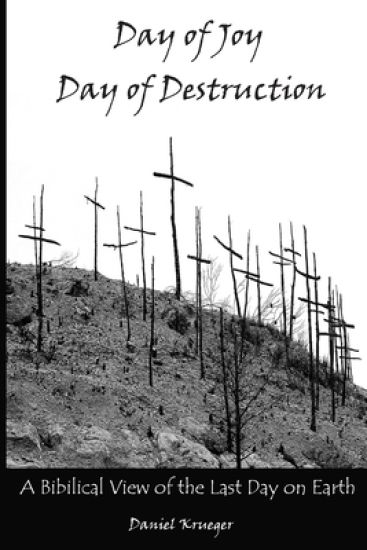
The Biblical end of the world apocalypse is a powerful event filled with both terrifying horror and shouts of jubilant elation.Modern global catastrophic fears like zombies running amuck, meteor strikes, ecological disasters or nuclear vaporization are tame compared to the universal destruction predicted in both Old and New Testaments.This book explores explore the descriptive verses of various Biblical authors spanning centuries of history. It is divided into two major sections: The biblical prophecies listed in the approximate chronological order they were given.The same prophecies grouped by category, illustrating the various perspectives surrounding the events of a truly unique day in the future of mankind.The author's commentary on the passages is given to assist with context and encourage the reader to evaluate them for themselves. What impressions/concerns come to mind when you read the biblical account? Does it make sense when you look at the world around you? What did Jesus say regarding the Judgment Day?The book provides insight on the almost universal concern that the world as we know it will come to an end. For Christians, and perhaps non-Christians as well, this book will prompt them to ask what the experience will be like. There are only two options.


Out-of-Control Criminal Justice shows that our system of criminal justice is broken; it is out of control. The author writes that a research-based strategy is needed that builds on the insights of those who work within criminal justice or are affected by it. Such a strategy must entail continuous evaluation and improvement, so that what works can be expanded and what does not can be eliminated. Out-of-Control Criminal Justice identifies how systems problems plague our criminal justice systems. It then presents a comprehensive strategy for bringing these systems under control to reduce crime, to increase justice and accountability, and to do so at less cost. The strategy can be used, too, to create greater responsiveness to victims and communities, effectiveness in reducing racial and ethnic disparities, and understanding of the causes and consequences of crime. After describing this new approach, the book identifies the tools needed to implement a systems solution to create a safer and more just society.

Fundamentals of Criminological and Criminal Justice Inquiry
Daniel P. Mears; Joshua C. Cochran
Cambridge University Press
2019
sidottu
How to think about, conduct, and evaluate research is fundamental to the study and understanding of criminology and criminal justice. Students take methods, statistics, theory, and topic-specific classes, but they struggle to integrate what they learn and to see how it fits within the broader field of criminology and criminal justice research. This book directly tackles this problem by helping students to develop a 'researcher sensibility', and demonstrates how the 'nuts and bolts' of criminal justice research - including research design, theory, data, and analysis - are and can be combined. Relying on numerous real-world examples and illustrations, this book reveals how anyone can 'think like a researcher'. It reveals, too, why that ability is critical for being a savvy producer or consumer of criminological and criminal justice research.

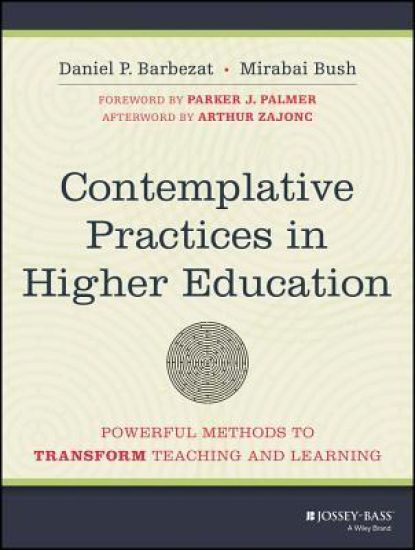
Contemplative Practices in Higher Education
Daniel P. Barbezat; Mirabai Bush
John Wiley Sons Inc
2014
nidottu
Contemplative pedagogy is a way for instructors to: empower students to integrate their own experience into the theoretical material they are being taught in order to deepen their understanding;help students to develop sophisticated problem-solving skills;support students’ sense of connection to and compassion for others; andengender inquiries into students’ most profound questions. Contemplative practices are used in just about every discipline—from physics to economics to history—and are found in every type of institution. Each year more and more faculty, education reformers, and leaders of teaching and learning centers seek out best practices in contemplative teaching, and now can find them here, brought to you by two of the foremost leaders and innovators on the subject. This book presents background information and ideas for the practical application of contemplative practices across the academic curriculum from the physical sciences to the humanities and arts. Examples of contemplative techniques included in the book are mindfulness, meditation, yoga, deep listening, contemplative reading and writing, and pilgrimage, including site visits and field trips.
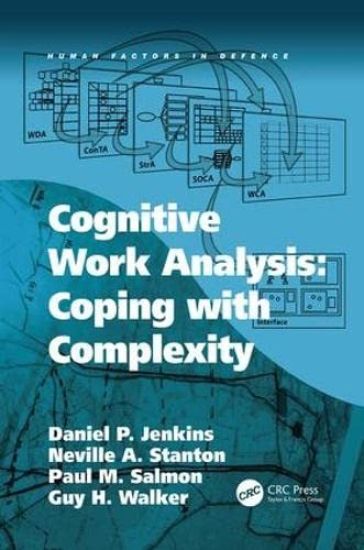
Cognitive Work Analysis: Coping with Complexity
Daniel P. Jenkins; Neville A. Stanton; Guy H. Walker
CRC Press
2017
nidottu
'Complex sociotechnical systems' are systems made up of numerous interacting parts, both human and non-human, operating in dynamic, ambiguous and safety critical domains. Cognitive Work Analysis (CWA) is a structured framework specifically developed for considering the development and analysis of these complex socio-technical systems. Unlike many human factors approaches, CWA does not focus on how human-system interaction should proceed (normative modelling) or how human-system interaction currently works (descriptive modelling). Instead, through a focus on constraints, it develops a model of how work can be conducted within a given work domain, without explicitly identifying specific sequences of actions (formative modelling). The framework leads the analyst to consider the environment the task takes place within, and the effect of the imposed constraints on the way work can be conducted. It provides guidance through the process of answering the questions of why the system exists, what activities can be conducted within the domain as well as how these activities can be achieved, and who can perform them. The first part of the book contains a comprehensive description of CWA, introducing it to the uninitiated. It then presents a number of applications in complex military domains to explore and develop the benefits of CWA. Unlike much of the previous literature, particular attention is placed on exploring the CWA framework in its entirety. This holistic approach focuses on the system environment, the activity that takes place within it, the strategies used to conduct this activity, the way in which the constituent parts of the system (both human and non-human) interact and the behaviour required. Each stage of this analysis identifies the constraints governing the system; it is contended that through this holistic understanding of constraints, recommendations can be made for the design of system interaction; increasing the ability of users to cope with unanticipated, unexpected situations. This book discusses the applicability of the approach in system analysis, development and evaluation. It provides process to what was previously a loosely defined framework.