Kirjojen hintavertailu. Mukana 11 518 949 kirjaa ja 12 kauppaa.

Kirjahaku

Etsi kirjoja tekijän nimen, kirjan nimen tai ISBN:n perusteella.

1000 tulosta hakusanalla Daniel R. Faust

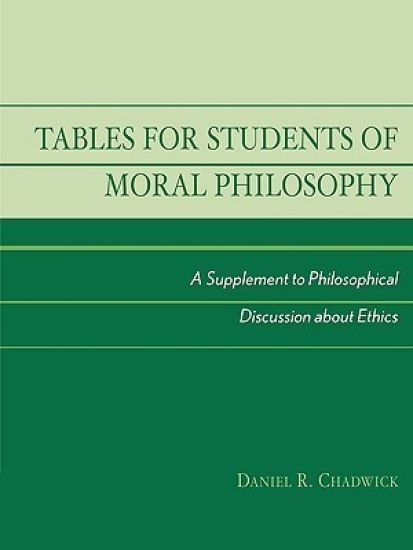
Tables for Students of Moral Philosophy

Tables for Students of Moral Philosophy

Daniel R. Chadwick

University Press of America
2003
nidottu
Organized by the major ethical subjects of Metaethics, Moral Values and Justification, Moral Philosophies and Philosophers, Citizen Ethics, and Bioethics, Tables for Students of Moral Philosophy presents an excellent introduction to moral philosophy. Chadwick offers clear explanations of complex topics in Ethics using tables that compare, contrast, and summarize arguments. This work is intended for the beginning student and also provides a solid review for the undergraduate philosophy major.
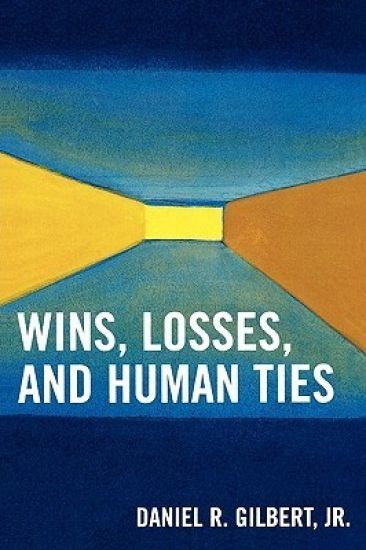
Wins, Losses, and Human Ties

Wins, Losses, and Human Ties

Daniel R. Gilbert

University Press of America
2008
nidottu
Wins, Losses, and Human Ties presents an historical and ethical interpretation of the football playing relationship that links Moravian College, in Bethlehem, Pennsylvania, and Muhlenberg College, in Allentown, Pennsylvania. Through his historical account of human ties, an account that is woven from game statistics, uniform styles, football schedules, and meteorological data, Daniel R. Gilbert Jr. presents a new way of thinking about accomplishments in intercollegiate athletic competition. Intercollegiate athletic competitors create layered relationships when they become opponents. These opponents must then defend and reaffirm these relationships. In time, they leave a relational legacy to their successors. By working together, these competitors create an ethical accomplishment: their human ties. Daniel R. Gilbert Jr.'s study of the Moravian-and-Muhlenberg football relationship reveals new layers of meaning hidden within intercollegiate athletic competition, layers that point to several important and oft-overlooked ethical components of such competition. Scholars and football enthusiasts alike will appreciate Gilbert's carefully researched analysis of a playing relationship that celebrates its 50th anniversary in 2008.
Economic Lessons from the Transition: The Basic Theory Re-examined
Economic Lessons from the Transition focuses on major transitions in the 1990s: the transition from central planning and communism to market capitalism and the global integration of national financial systems. The transitions were supposed to raise most peoples' standard of living; instead they dramatically worsened the lives of most people in the countries involved. While most attempts to explain this failure focus on policies, the authors of this book argue that failure of economic theory to fully understand these transitions has led to bad policies that made the transitions unnecessarily painful and costly. The book suggests answers to the following questions: How should basic economic theory as taught in introductory economics courses be revised in light of the failure of market-oriented economics to effect a successful transition in so many former communist economies? Could the theory be revised and presented in a different manner? How can basic economic theory be used to help explain the past failures in understanding transition problems and to avoid future mistakes? This volume is a "must read" for all who teach economics or apply economics to the real world.
Economic Lessons from the Transition: The Basic Theory Re-examined
Economic Lessons from the Transition focuses on major transitions in the 1990s: the transition from central planning and communism to market capitalism and the global integration of national financial systems. The transitions were supposed to raise most peoples' standard of living; instead they dramatically worsened the lives of most people in the countries involved. While most attempts to explain this failure focus on policies, the authors of this book argue that failure of economic theory to fully understand these transitions has led to bad policies that made the transitions unnecessarily painful and costly. The book suggests answers to the following questions: How should basic economic theory as taught in introductory economics courses be revised in light of the failure of market-oriented economics to effect a successful transition in so many former communist economies? Could the theory be revised and presented in a different manner? How can basic economic theory be used to help explain the past failures in understanding transition problems and to avoid future mistakes? This volume is a "must read" for all who teach economics or apply economics to the real world.
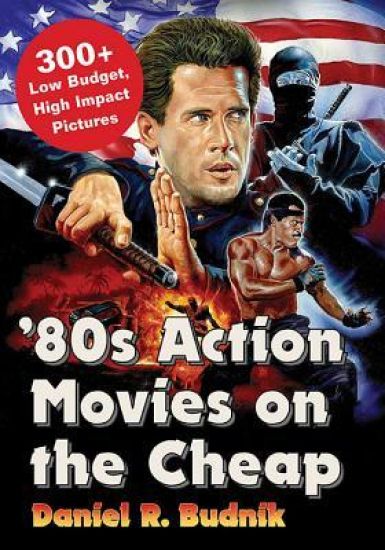
'80s Action Movies on the Cheap

'80s Action Movies on the Cheap

Daniel R. Budnik

McFarland Co Inc
2017
pokkari
The 1980s was the decade when the action film as it's now known came into being. Nonstop, big-budget excitement became the standard as epic adventures like Raiders of the Lost Ark and The Road Warrior set the tone for the summer blockbusters of Sylvester Stallone, Arnold Schwarzenegger and Chuck Norris. Homages (and ripoffs) made with lesser budgets followed every hit, especially with the advent of direct-to-video releases. Providing detailed commentary on 284 films, this book explores the excitement, audacity and sheer weirdness of '80s low budget action cinema, from the American Ninja series to dime-a-dozen barbarian pictures to such bargain-basement productions as The Courier of Death, Kill Squad and Samurai Cop.
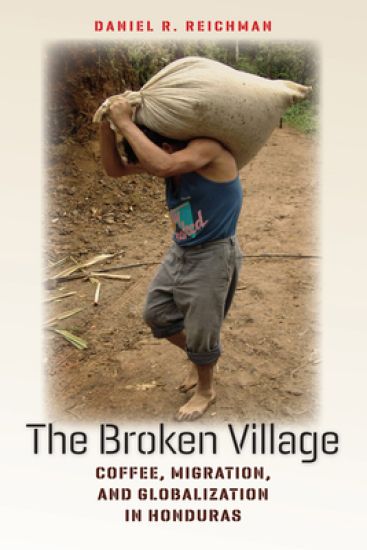
The Broken Village

The Broken Village

Daniel R. Reichman

ILR Press
2011
sidottu
In The Broken Village, Daniel R. Reichman tells the story of a remote village in Honduras that transformed almost overnight from a sleepy coffee-growing community to a hotbed of undocumented migration to and from the United States. The small village—called here by the pseudonym La Quebrada—was once home to a thriving coffee economy. Recently, it has become dependent on migrants working in distant places like Long Island and South Dakota, who live in ways that most Honduran townspeople struggle to comprehend or explain. Reichman explores how the new "migration economy" has upended cultural ideas of success and failure, family dynamics, and local politics. During his time in La Quebrada, Reichman focused on three different strategies for social reform—a fledgling coffee cooperative that sought to raise farmer incomes and establish principles of fairness and justice through consumer activism; religious campaigns for personal morality that were intended to counter the corrosive effects of migration; and local discourses about migrant "greed" that labeled migrants as the cause of social crisis, rather than its victims. All three phenomena had one common trait: They were settings in which people presented moral visions of social welfare in response to a perceived moment of crisis. The Broken Village integrates sacred and secular ideas of morality, legal and cultural notions of justice, to explore how different groups define social progress.
The Broken Village

The Broken Village

Daniel R. Reichman

ILR Press
2011
pokkari
In The Broken Village, Daniel R. Reichman tells the story of a remote village in Honduras that transformed almost overnight from a sleepy coffee-growing community to a hotbed of undocumented migration to and from the United States. The small village—called here by the pseudonym La Quebrada—was once home to a thriving coffee economy. Recently, it has become dependent on migrants working in distant places like Long Island and South Dakota, who live in ways that most Honduran townspeople struggle to comprehend or explain. Reichman explores how the new "migration economy" has upended cultural ideas of success and failure, family dynamics, and local politics. During his time in La Quebrada, Reichman focused on three different strategies for social reform—a fledgling coffee cooperative that sought to raise farmer incomes and establish principles of fairness and justice through consumer activism; religious campaigns for personal morality that were intended to counter the corrosive effects of migration; and local discourses about migrant "greed" that labeled migrants as the cause of social crisis, rather than its victims. All three phenomena had one common trait: They were settings in which people presented moral visions of social welfare in response to a perceived moment of crisis. The Broken Village integrates sacred and secular ideas of morality, legal and cultural notions of justice, to explore how different groups define social progress.
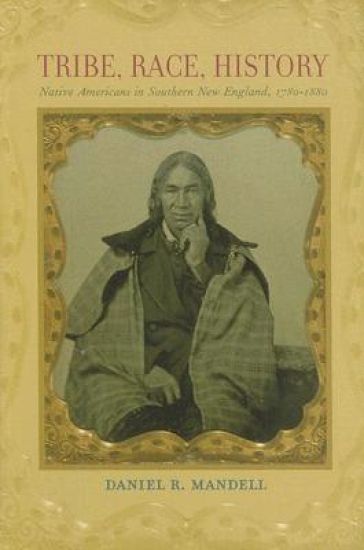
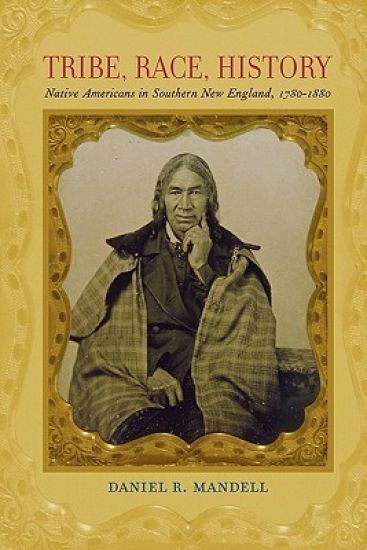
Tribe, Race, History

Tribe, Race, History

Daniel R. Mandell

Johns Hopkins University Press
2008
sidottu
Tribe, Race, History examines American Indian communities in southern New England between the Revolution and Reconstruction, when Indians lived in the region's socioeconomic margins, moved between semiautonomous communities and towns, and intermarried extensively with blacks and whites. Drawing from a wealth of primary documentation, Daniel R. Mandell centers his study on ethnic boundaries, particularly how those boundaries were constructed, perceived, and crossed. He analyzes connections and distinctions between Indians and their non-Indian neighbors with regard to labor, landholding, government, and religion; examines how emerging romantic depictions of Indians (living and dead) helped shape a unique New England identity; and looks closely at the causes and results of tribal termination in the region after the Civil War. Shedding new light on regional developments in class, race, and culture, this groundbreaking study is the first to consider all Native Americans throughout southern New England.
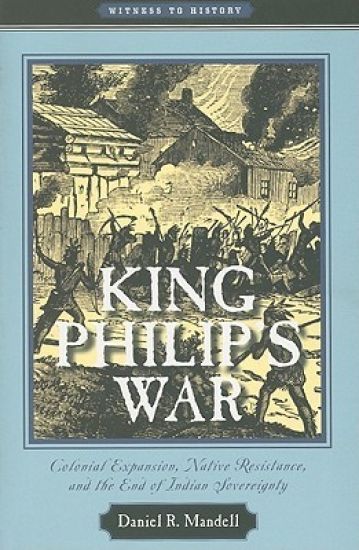
King Philip's War

King Philip's War

Daniel R. Mandell

Johns Hopkins University Press
2010
pokkari
King Philip's War was the most devastating conflict between Europeans and Native Americans in the 1600s. In this incisive account, award-winning author Daniel R. Mandell puts the war into its rich historical context. The war erupted in July 1675, after years of growing tension between Plymouth and the Wampanoag sachem Metacom, also known as Philip. Metacom's warriors attacked nearby Swansea, and within months the bloody conflict spread west and erupted in Maine. Native forces ambushed militia detachments and burned towns, driving the colonists back toward Boston. But by late spring 1676, the tide had turned: the colonists fought more effectively and enlisted Native allies while from the west the feared Mohawks attacked Metacom's forces. Thousands of Natives starved, fled the region, surrendered (often to be executed or sold into slavery), or, like Metacom, were hunted down and killed. Mandell explores how decades of colonial expansion and encroachments on Indian sovereignty caused the war and how Metacom sought to enlist the aid of other tribes against the colonists even as Plymouth pressured the Wampanoags to join them. He narrates the colonists' many defeats and growing desperation; the severe shortages the Indians faced during the brutal winter; the collapse of Native unity; and the final hunt for Metacom. In the process, Mandell reveals the complex and shifting relationships among the Native tribes and colonists and explains why the war effectively ended sovereignty for Indians in New England. This fast-paced history incorporates the most recent scholarship on the region and features nine new maps and a bibliographic essay about Native-Anglo relations.
Tribe, Race, History

Tribe, Race, History

Daniel R. Mandell

Johns Hopkins University Press
2011
pokkari
Tribe, Race, History examines American Indian communities in southern New England between the Revolution and Reconstruction, when Indians lived in the region's socioeconomic margins, moved between semiautonomous communities and towns, and intermarried extensively with blacks and whites. Drawing from a wealth of primary documentation, Daniel R. Mandell centers his study on ethnic boundaries, particularly how those boundaries were constructed, perceived, and crossed. He analyzes connections and distinctions between Indians and their non-Indian neighbors with regard to labor, landholding, government, and religion; examines how emerging romantic depictions of Indians (living and dead) helped shape a unique New England identity; and looks closely at the causes and results of tribal termination in the region after the Civil War. Shedding new light on regional developments in class, race, and culture, this groundbreaking study is the first to consider all Native Americans throughout southern New England.
Ed Barrow

Ed Barrow

Daniel R Levitt

University of Nebraska Press
2010
nidottu
Before the feuding owners turned to Ed Barrow to be general manager in 1920, the Yankees had never won a pennant. They won their first in 1921 and during Barrow's tenure went on to win thirteen more as well as ten World Series. This biography of the incomparable Barrow is also the story of how he built the most successful sports franchise in American history. Barrow spent fifty years in baseball. He was in the middle of virtually every major conflict and held practically every job except player. Daniel R. Levitt describes Barrow's pre-Yankees years, when he managed Babe Ruth and the Boston Red Sox to their last World Series Championship before the "curse." He then details how Barrow assembled a winning Yankees team both by purchasing players outright and by developing talent through a farm system. The story of the making of the great Yankees dynasty reveals Barrow's genius for organizing, for recognizing baseball talent, and for exploiting the existing economic environment. Because Barrow was a player in so many of baseball's key events, his biography gives a clear and eye-opening picture of how America's sport was played in the twentieth century, on the field and off. A complex portrait of a larger-than-life character in the annals of baseball, this book is also an inside history of how the sport's competitive environment evolved and how the Yankees came to dominate it.
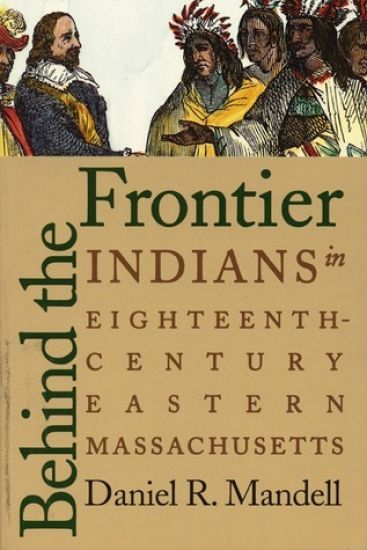
Behind the Frontier

Behind the Frontier

Daniel R. Mandell

University of Nebraska Press
2000
pokkari
Behind the Frontier tells the story of the Indians in Massachusetts as English settlements encroached on their traditional homeland between 1675 and 1775, from King Philip's War to the Battle of Bunker Hill. Daniel R. Mandell explores how local needs and regional conditions shaped an Indian ethnic group that transcended race, tribe, village, and clan, with a culture that incorporated new ways while maintaining a core of "Indian" customs. He examines the development of Native American communities in eastern Massachusetts, many of which survive today, and observes emerging patterns of adaptation and resistance that were played out in different settings as the American nation grew westward in the nineteenth century.
Action Research for Educators

Action Research for Educators

Daniel R. Tomal

Rowman Littlefield Education
2003
nidottu
Most research methods are too impractical and painstaking for educators. Teachers and administrators at all levels—elementary, secondary, and university—need a simple, yet powerful book on conducting action research as a viable method for making educational improvements. This user-friendly book covers the principles and history of action research, ethical and legal considerations, how to conduct both formal and informal action research, data collection methods, data analysis and interpretation, planning and initiating action, and evaluating the results of action. Illustrations are included in each chapter. Features: · A procedure model for using action research in the school environment. · A model of action research with examples. · A comprehensive description of how action research varies from the use of qualitative and quantitative research methodology. · Examples of benchmarking techniques that can aid an educator in using action research. · Examples of how to conduct literature reviews. · A detailed explanation of collecting data and analyzing this data in a practical manner. · Practical tips and strategies to analyze data using basic statistical methods. · Samples of teacher action research projects and references. · How to construct graphs using Microsoft Excel. · Methods of evaluating action research. · Explanation of how to conduct a formal action research proposal. · Strategies in conducting interviews and surveys. Designed for elementary and secondary teachers and administrators as a practical guide, and for university professors as a required textbook or supplemental book.
Action! In the Classroom

Action! In the Classroom

Daniel R. Greenwood

Rowman Littlefield Education
2003
nidottu
Today's students are attracted to video and readily engage in any project that incorporates the medium. Digital video is easier to manipulate and much less expensive than analog video. Students can create video content and the software can be taught in less than one hour. There is great potential to employ student-produced video as an educational tool and this book explains and instructs teachers how to exploit this potential. This comprehensive work, divided into four sections, covers all aspects of video production including: foundation concepts; the video production process; equipment review; and an appendix. The companion Web site offers downloadable forms used in the book and support presentation material. Features: · Up-to-date information on software and hardware for both Macintosh and Windows · Details on teaching communications skills and aesthetic education and methods for evaluation · Authentic methods and procedures used in the entertainment and video industry · Explains how the teacher can re-create a realistic video environment K-12 teachers, computer coordinators, directors of technology, librarians, and teachers-in-training, will use the information and guidance offered to teach communication aesthetics and higher-order thinking skills.
Mythic Frontiers

Mythic Frontiers

Daniel R. Maher

University Press of Florida
2016
sidottu
The history of the Wild West has long been fictionalized in novels, films, and television shows. Catering to these popular representations, towns across America have created tourist sites connecting such tales with historical monuments. Yet these attractions stray from known histories in favor of the embellished past visitors expect to see.In Mythic Frontiers, Daniel Maher illustrates how aggrandized versions of the past have been used to turn a profit. Examining the imagined frontier town of Fort Smith, Arkansas, Maher warns that disconnecting cultural heritage tourism from history minimizes the devastating consequences of imperialism, racism, and sexism and relegitimizes the privilege bestowed upon white men.
Mythic Frontiers

Mythic Frontiers

Daniel R. Maher

University Press of Florida
2019
nidottu
The history of the Wild West has long been fictionalized in novels, films, and television shows. Catering to these popular representations, towns across America have created tourist sites connecting such tales with historical monuments. Yet these attractions stray from known histories in favor of the embellished past visitors expect to see and serve to craft a cultural memory that reinforces contemporary ideologies.In Mythic Frontiers, Daniel Maher illustrates how aggrandized versions of the past, especially those of the “American frontier,” have been used to turn a profit. These imagined historical sites have effectively silenced the violent, oppressive, colonizing forces of manifest destiny and elevated principal architects of it to mythic heights. Examining the frontier complex in Fort Smith, Arkansas—where visitors are greeted at a restored brothel and the reconstructed courtroom and gallows of “Hanging Judge” Isaac Parker feature prominently—Maher warns that creating a popular tourist narrative and disconnecting cultural heritage tourism from history minimizes the devastating consequences of imperialism, racism, and sexism and relegitimizes the privilege bestowed upon white men.
The Jackson County War

The Jackson County War

Daniel R. Weinfeld

THE UNIVERSITY OF ALABAMA PRESS
2022
nidottu
Offers original conclusions explaining why Jackson County became the bloodiest region in Reconstruction Florida From early 1869 through the end of 1871, citizens of Jackson County, Florida, slaughtered their neighbors by the score. The nearly three year frenzy of bloodshed became known as the Jackson County War. The killings, close to one hundred and by some estimates twice that number, brought Jackson County the notoriety of being the most violent county in Florida during the Reconstruction era. Daniel R. Weinfeld has made a thorough investigation of contemporary accounts. He adds an assessment of recently discovered information, and presents a critical evaluation of the standard secondary sources. The Jackson County War focuses on the role of the Freedmen’s Bureau, the emergence of white “Regulators,” and the development of African American political consciousness and leadership. It follows the community’s descent after the Civil War into disorder punctuated by furious outbursts of violence until the county settled into uneasy stability seven years later. The Jackson County War emerges as an emblem of all that could and did go wrong in the uneasy years after Appomattox and that left a residue of hatred and fear that endured for generations.
Good Influence

Good Influence

Daniel R. Heischman

Morehouse Publishing
2009
pokkari
Young people desperately seek to develop an inner core that will not only rescue them in times of distress, but also help them to define and shape moral convictions, passions, and interests in building a better world. To find this inner coherence, they turn to their parents and teachers — the adults who are supposed to know them better than they know themselves. But these same adults are often driven and desperate to stay young, and are unclear how to achieve the wisdom and maturity of an elder to put the needs of their children and students above their own.Young people do not want us to become part of “their” world, according to author Dan Heischman, but they invite us — and need us — to be different… to be adults, for them.This book will help adults understand what young people are searching for, describe how to have a lasting impact on your children’s or student’s development, teach credible models of adulthood, and guide adults towards achieving the passion and wisdom for spiritual mentorship.Drawing on thirty years of experience with parents, teachers, and students, the author uses stories and sound principles not so much to help bridge the generation gap, but to use the natural difference in maturity as a basis and guideline for more effective communication and connection.
Preaching in Medieval Florence

Preaching in Medieval Florence

Daniel R. Lesnick

University of Georgia Press
2012
pokkari
In the thirteenth century, expansions in international commerce brought a new class of merchants and bankers to Florence who displaced the old, semifeudal aristocracy from power. Heavy migration from the countryside created a prosperous class of craftsmen, shopkeepers, and professionals who sought to share the power of the new, nonaristocratic elite. In Preaching in Medieval Florence, Daniel Lesnick reveals that the mendicant orders of St. Dominic and St. Francis assumed responsibility for ministering to the new urban laity and did so by embracing ideologies that corresponded to their audiences’ secular needs.