The format of this book is unique in that it combines features of a traditional text with those of a problem book. The material is presented through a series of problems, about 250 in all, with connecting text; this is supplemented by a further 250 problems suitable for homework assignment. The problems are structured in order to introduce concepts in a logical order, and in a thought-provoking way. The first four sections of the book deal with basic combinatorial entities; the last four cover special counting methods. Many applications to probability are included along the way. Students from a wide range of backgrounds, mathematics, computer science or engineering will appreciate this appealing introduction.
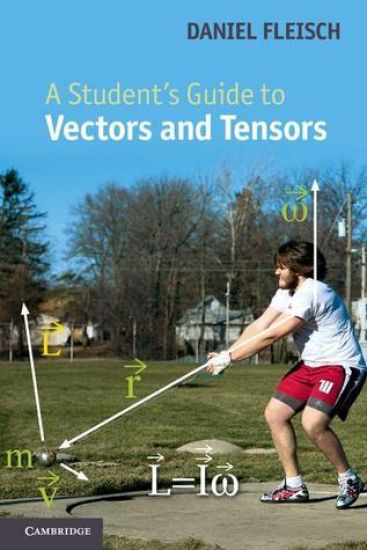
Vectors and tensors are among the most powerful problem-solving tools available, with applications ranging from mechanics and electromagnetics to general relativity. Understanding the nature and application of vectors and tensors is critically important to students of physics and engineering. Adopting the same approach used in his highly popular A Student's Guide to Maxwell's Equations, Fleisch explains vectors and tensors in plain language. Written for undergraduate and beginning graduate students, the book provides a thorough grounding in vectors and vector calculus before transitioning through contra and covariant components to tensors and their applications. Matrices and their algebra are reviewed on the book's supporting website, which also features interactive solutions to every problem in the text where students can work through a series of hints or choose to see the entire solution at once. Audio podcasts give students the opportunity to hear important concepts in the book explained by the author.
Since the mid-1970s an amazing philosopher has blazed across the philosophic sky - Stephen R. L. Clark. To date he has written twelve books, including From Athens to Jerusalem, Aristotle's Man, Animals and Their Moral Standing, Civil Peace and Sacred Order, God's World and the Great Awakening, The Mysteries of Religion, The Moral Status of Animals, The Nature of the Beast, and A Parliament of Souls, as well as dozens of articles.Critics find him "arresting", "profound", "amusing", and, paradoxically, "irritating". In this first critical work on Stephen Clark, Daniel Dombrowski provides a complete view of this intriguing philosopher and his work. Primarily, Clark's writing has focussed on three seemingly distinct philosophical spheres: philosophy of religion, the moral status of animals, and political philosophy. Unfortunately however, those familiar with one realm of his work, tend not to be familiar with what he has done in the other areas. To truly understand any one of Clark's specific concepts, one must comprehend the overlying philosophy that weaves them together.Dombrowski meticulously and critically assesses a wealth of important ideas and philosophical and theological topics to provide us with a firm grasp of Clark's ideas about God, animals, the environment, and politics. Not Even A Sparrow Falls also tackles the difficult problem of determining Clark's stance among the many ideas he presents with varying degrees of seriousness and with various rhetorical goals in mind, as expressed in The Moral Status of Animals: I am Aristotelian on Mondays and Wednesdays, a Pyrrhonian Sceptic on Tuesdays and Fridays, a Neo- Platonist on Thursdays and Saturdays and worship in the local Episcopalian church on Sundays.
""Lines Of A Layman: The Golden Rule In Everyday Living"" by James Cash Penney is a book that provides practical guidance on how to live a fulfilling life by following the Golden Rule. The author, who was the founder of the J.C. Penney department store chain, shares his personal experiences and insights on how to treat others with kindness, respect, and empathy.The book is divided into short chapters, each focusing on a specific aspect of the Golden Rule. Penney discusses topics such as honesty, forgiveness, gratitude, and the importance of building strong relationships. He also provides examples from his own life and from history to illustrate the power of living by this principle.Throughout the book, Penney emphasizes the importance of living a life of purpose and meaning. He encourages readers to reflect on their values and to strive to make a positive impact on the world. He also offers practical advice on how to overcome challenges and obstacles that may arise in the pursuit of a fulfilling life.Overall, ""Lines Of A Layman"" is a thoughtful and inspiring book that offers practical wisdom for anyone seeking to live a more meaningful and fulfilling life.This scarce antiquarian book is a facsimile reprint of the old original and may contain some imperfections such as library marks and notations. Because we believe this work is culturally important, we have made it available as part of our commitment for protecting, preserving, and promoting the world's literature in affordable, high quality, modern editions, that are true to their original work.
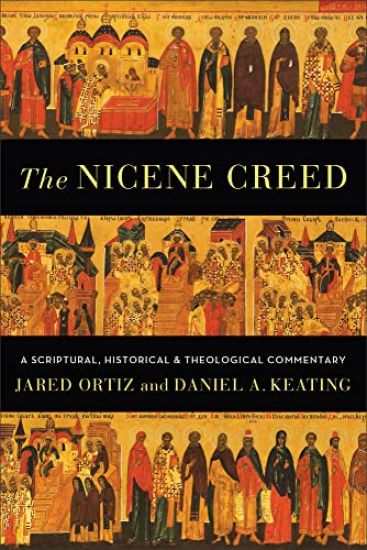
Though the Nicene Creed is regularly recited in weekly church services, few understand its historical origins and connections to Scripture and key Christian doctrines.This volume bridges the gap, providing an accessible introduction that explains how the Creed is anchored in the Bible and how it came to be written and confessed in the early history of the church. The authors show how the Creed reflects the purpose of God in salvation, especially in relation to Christians' divine adoption as sons and daughters, leading to glorification. Each chapter includes sidebars highlighting how the Creed has been received in the church's liturgy.Professors, students, clergy, and religious educators will benefit from this illuminating and edifying guide to the Nicene Creed.
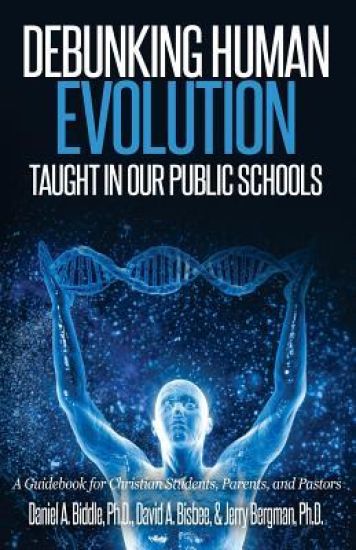
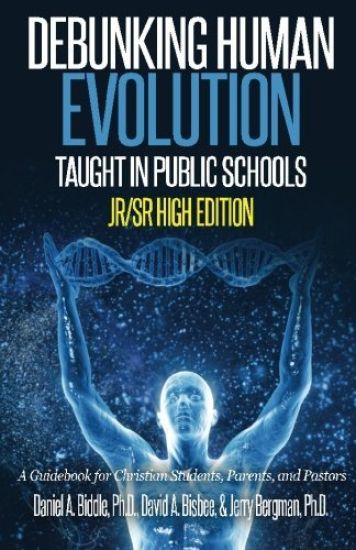
This book is essential for Christians attending public high school or college-especially before they take biology and other science classes. Most biology classes in today's public schools teach evolutionary theory as fact, and only rarely mention creation possibilities outside of this theory, such as Biblical Creation. This book, written by leading Creation Scientists, will help Christian high school and college students solidify their faith and grow roots to withstand evolution-based teaching. The topics include: - Differences between Apes and Humans- A Brief History of Human Evolution in Textbooks- Typical Ape-to-Human Progression in Public School Textbooks- What about the Different "Races" of People?- Are Humans and Chimps 98% Similar?- How Modern Genetics Supports a Recent Creation- The Problem of Over-design for Darwinism- Vestigial Structures in Humans and Animals- Biblical Authority
Doctors Newberg and Monti's team at Thomas Jefferson University's Marcus Institute of Integrative Health are at the forefront of research in brain functioning and applications of the most advanced understanding in real-world strategies to expand options for optimizing our complex neurophysiology. Their findings show that optimal brain health is achievable by successfully weaving together a tapestry of our bio-psycho-social-spiritual dimensions. Brain Weaver also coincides with a decades-long surge in the public's interest in whole-person treatments--body, mind and spirit evidence-based integrative therapies that include pharmaceuticals, electromagnetics, nutrition and meditation. Brain Weaver's timeliness is all the more important now to address a new paradigm for post-pandemic wellness that emphasizes our individual and collective responsibility for proactive healthcare
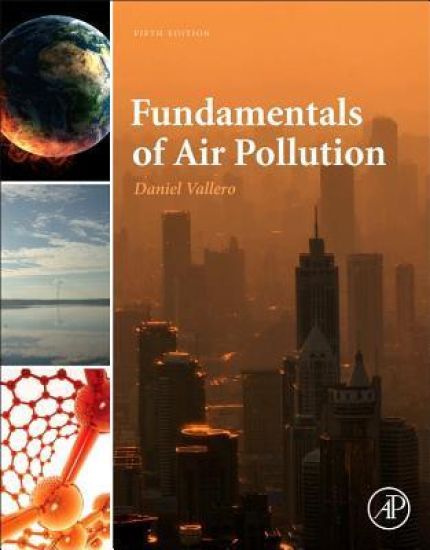
Fundamentals of Air Pollution is an important and widely used textbook in the environmental science and engineering community. This thoroughly revised fifth edition of Fundamentals of Air Pollution has been updated throughout and remains the most complete text available, offering a stronger systems perspective and more coverage of international issues relating to air pollution. Sections on pollution control have been reorganized and updated to demonstrate the move from regulation and control approaches to green and sustainable engineering approaches. The fifth edition maintains a strong interdisciplinary approach to the study of air pollution, covering such topics as chemistry, physics, meteorology, engineering, toxicology, policy, and regulation. New material includes near-road air pollution, new risk assessment approaches, indoor air quality, the impact of biofuels and fuel additives, mercury emissions, forecasting techniques, and the most recent results from the National Air Toxics Assessment.
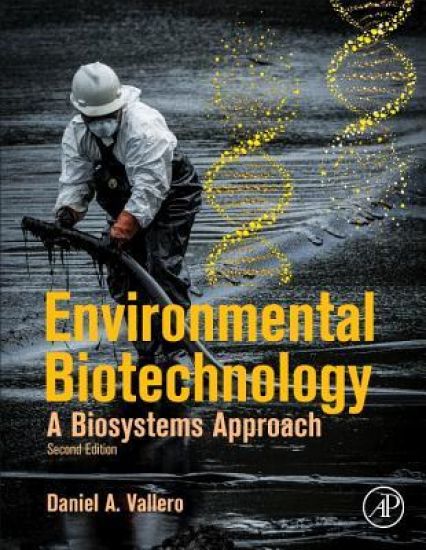
Environmental Biotechnology: A Biosystems Approach, Second Edition presents valuable information on how biotechnology has acted as a vital buffer among people, pollution, and the environment. It answers the most important questions on the topic, including how, and why, a knowledge and understanding of the physical, chemical, and biological principles of the environment must be achieved in order to develop biotechnology applications. Most texts address either the applications or the implications of biotechnology. This book addresses both. The applications include biological treatment and other environmental engineering processes. The risks posed by biotechnologies are evaluated from both evidence-based and precautionary perspectives. Using a systems biology approach, the book provides a context for researchers and practitioners in environmental science that complements guidebooks on the necessary specifications and criteria for a wide range of environmental designs and applications. Users will find crucial information on the topics scientific researchers must evaluate in order to develop further technologies.
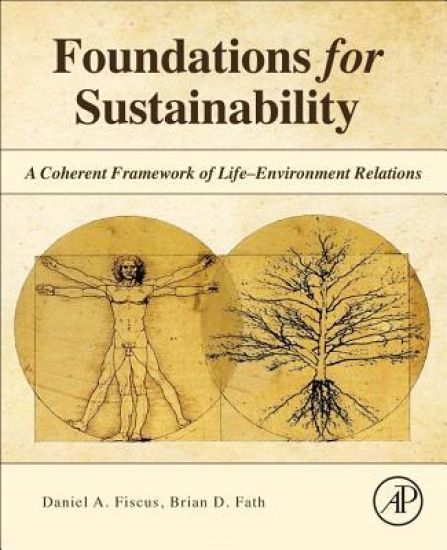
Foundations for Sustainability: A Coherent Framework of Life-Environment Relations challenges existing assumptions on environmental issues and lays the groundwork for a new paradigm, bringing a greater understanding of what is needed to help create an environmentally and economically sustainable future, which to date has been an uphill battle and not an obvious choice. The book presents the case for a paradigm based on a multi-model of life as organism, life as ecosystem, and life as biosphere, as opposed to the singular assumption that life can be viewed solely as an organism. All backed with well-cited research from top investigators from around the world, this book is a must-have resource for anyone working in ecology, environmental science or sustainability.
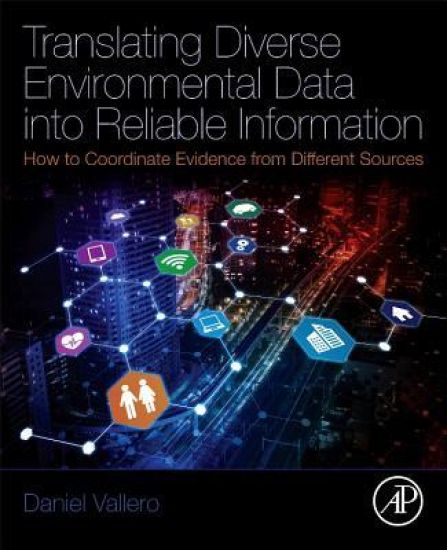
Translating Diverse Environmental Data into Reliable Information: How to Coordinate Evidence from Different Sources is a resource for building environmental knowledge, particularly in the era of Big Data. Environmental scientists, engineers, educators and students will find it essential to determine data needs, assess their quality, and efficiently manage their findings. Decision makers can explore new open access databases and tools, especially portals and dashboards. The book demonstrates how environmental knowledgebases are and can be built to meet the needs of modern students and professionals. Topics covered include concepts and principles that underpin air, water, and other public health and ecological topics. Integrated and systems perspectives are woven throughout, with clues on how to build and apply interdisciplinary data, which can increasingly be obtained from sources ranging from peer-reviewed research appearing in scientific journals to information gathered by citizen scientists. This opens the door to using vast amounts of open data and the necessary quality assurance and metadata considerations for their countless applications.
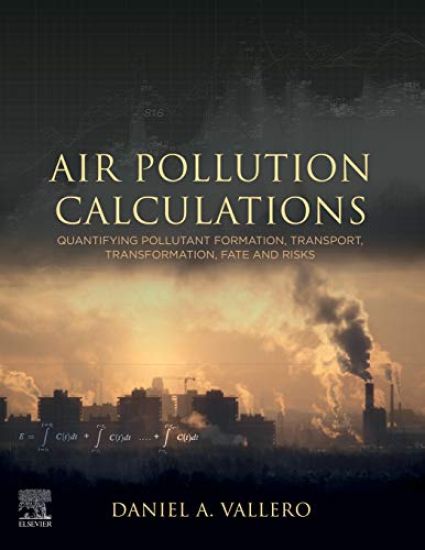
Air Pollution Calculations introduces the equations and formulae that are most important to air pollution, but goes a step further. Most texts lack examples of how these equations and formulae apply to the quantification of real-world scenarios and conditions. The ample example calculations apply to current air quality problems, including emission inventories, risk estimations, biogeochemical cycling assessments, and efficiencies in air pollution control technologies. In addition, the book explains thermodynamics and fluid dynamics in step-by-step and understandable calculations using air quality and multimedia modeling, reliability engineering and engineering economics using practical examples likely to be encountered by scientists, engineers, managers and decision makers. The book touches on the environmental variables, constraints and drivers that can influence pollutant mass, volume and concentrations, which in turn determine toxicity and adverse outcomes caused by air pollution. How the pollutants form, move, partition, transform and find their fate are explained using the entire range of atmospheric phenomena. The control, prevention and mitigation of air pollution are explained based on physical, chemical and biological principles which is crucial to science-based policy and decision-making. Users will find this to be a comprehensive, single resource that will help them understand air pollution, quantify existing data, and help those whose work is impacted by air pollution.
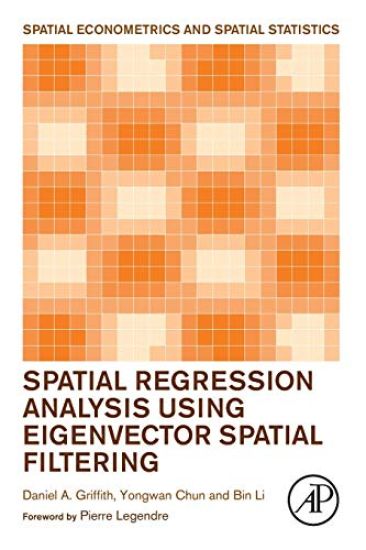
Spatial Regression Analysis Using Eigenvector Spatial Filtering provides theoretical foundations and guides practical implementation of the Moran eigenvector spatial filtering (MESF) technique. MESF is a novel and powerful spatial statistical methodology that allows spatial scientists to account for spatial autocorrelation in their georeferenced data analyses. Its appeal is in its simplicity, yet its implementation drawbacks include serious complexities associated with constructing an eigenvector spatial filter. This book discusses MESF specifications for various intermediate-level topics, including spatially varying coefficients models, (non) linear mixed models, local spatial autocorrelation, space-time models, and spatial interaction models. Spatial Regression Analysis Using Eigenvector Spatial Filtering is accompanied by sample R codes and a Windows application with illustrative datasets so that readers can replicate the examples in the book and apply the methodology to their own application projects. It also includes a Foreword by Pierre Legendre.
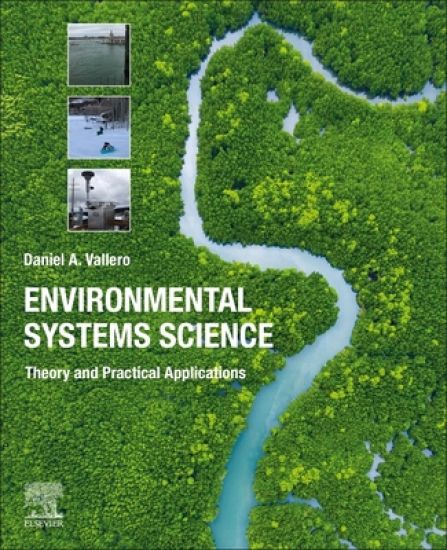
Environmental Systems Science: Theory and Practical Applications looks at pollution and environmental quality from a systems perspective. Credible human and ecological risk estimation and prediction methods are described, including life cycle assessment, feasibility studies, pollution control decision tools, and approaches to determine adverse outcome pathways, fate and transport, sampling and analysis, and cost-effectiveness. The book brings translational science to environmental quality, applying groundbreaking methodologies like informatics, data mining, and applications of secondary data systems. Multiple human and ecological variables are introduced and integrated to support calculations that aid environmental and public health decision making. The book bridges the perspectives of scientists, engineers, and other professionals working in numerous environmental and public health fields addressing problems like toxic substances, deforestation, climate change, and loss of biological diversity, recommending sustainable solutions to these and other seemingly intractable environmental problems. The causal agents discussed include physical, chemical, and biological agents, such as per- and polyfluoroalkyl substances (PFAS), SARS-CoV-2 (the COVID-19 virus), and other emerging contaminants.
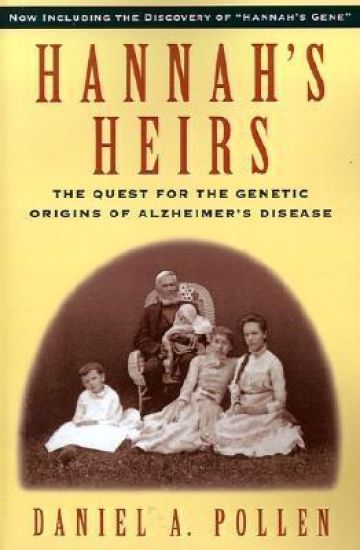
In the late 1800s, in the Ukrainian town of Ekaterinoslav, Hannah, a woman only in her forties, began suffering from progressive memory loss and eventually became unable to care for herself. What seemed an isolated incident remained unexplained at her death in the 1890s. Years later, Hannah's grandson Charles, a physician, spurred by his painful observations that many members of his family were all suffering from the same disease, began charting the family's medical history over five generations. In 1985, when this pedigree--one of the most extensive of its kind--fortuitously fell into the caring hands of neurologist Dr. Dan Pollen, Hannah's family would find themselves immersed in one of the most enduring scientific searches of the century--the quest for the Alzheimer's disease genes. In Hannah's Heirs, Dr. Pollen himself tells the compelling story of Hannah's family and their monumental contributions to the fight against Alzheimer's. We are there in 1985 when Charles presents Pollen with three decades' worth of family medical records as well as data from studies that even Pollen and his associates did not then know existed. We see the selfless acts of Hannah's descendants in their struggle against Alzheimer's: great-grandson Jeff's conviction that after his death his brain be used for all possible research; great-granddaughter Lucy's decision to overcome her dread of flying in order to reach the research centre for testing; and Charles's continued research in the face of a disease that might strike him at any moment. Pollen sets this gripping story within the larger context of the efforts to solve the mysteries of Alzheimer's. He presents the foundations of modern genetic research, from Gregor Mendel's classic discovery of genes, to Alois Alzheimer's work on the brains of presenile dementia victims, to Watson and Crick's double helix model for the structure of DNA. He narrates the latter-twentieth century efforts of scientists to systematically narrow down the causes of Alzheimer's: Carlton Gajdusek's research excluding slow viruses as a cause of Alzheimer's; and the stunning success of Peter St. George- Hyslop's group in Toronto in September 1992 in decisively linking Alzheimer's in Hannah's family to chromosome 14. At the same time, Pollen offers a penetrating look at the ongoing conflicts involved in scientific research, revealing how intense competition for prestige and funding has driven some scientists to hoard precious cell lines. These practices have impeded efforts to discover both the causes and the treatment of Alzheimer's in the shortest possible time. As Hannah's great-grandson Ben has written, "This is a story that had to be told. Aspirations were transcendent, but because it involved people it could not be told without tears." Written by a physician-scientist who has been a central figure in the study of familial Alzheimer's, Hannah's Heirs is an inspiring portrait of the efforts of a courageous family to confront and overcome a "personal biological Holocaust," and an encouraging look at the advances in science that have created the basis for the eventual understanding and treatment of Alzheimer's disease. And for those who have seen the horrors of Alzheimer's, for all who fear the aging process that will take its toll on everyone, here is an inside look at one of the great medical detective stories of our time.