Seventeen-year-old Catherine Morland is one of ten children of a country clergyman. Although a tomboy in her childhood, by the age of 17 she is "in training for a heroine" and is excessively fond of reading Gothic novels, among which Ann Radcliffe's Mysteries of Udolpho is a favourite. Catherine is invited by the Allens, her wealthier neighbours in Fullerton, to accompany them to visit the town of Bath and partake in the winter season of balls, theatre and other social delights. She is soon introduced to a clever young gentleman, Henry Tilney, with whom she dances and converses. Through Mrs. Allen's old schoolfriend Mrs. Thorpe, she meets her daughter Isabella, a vivacious and flirtatious young woman, and the two quickly become friends. Mrs. Thorpe's son John is also a friend of Catherine's older brother, James, at Oxford where they are both students. The Thorpes are not happy about Catherine's friendship with the Tilneys, as they correctly perceive Henry as a rival for Catherine's affections, though Catherine is not at all interested in the crude John Thorpe. Catherine tries to maintain her friendships with both the Thorpes and the Tilneys, though John Thorpe continuously tries to sabotage her relationship with the Tilneys. This leads to several misunderstandings, which put Catherine in the awkward position of having to explain herself to the Tilneys. Isabella and James become engaged. James' father approves of the match and offers his son a country parson's living of a modest sum, 400 annually, but they must wait until he can obtain the benefice in two and a half years. Isabella is dissatisfied, but to Catherine she misrepresents her distress as being caused solely by the delay, and not by the value of the sum. Isabella immediately begins to flirt with Captain Tilney, Henry's older brother. Innocent Catherine cannot understand her friend's behaviour, but Henry understands all too well, as he knows his brother's character and habits. The Tilneys invite Catherine to stay with them for a few weeks at their home, Northanger Abbey. Catherine, in accordance with her novel reading, expects the abbey to be exotic and frightening. Henry teases her about this, as it turns out that Northanger Abbey is pleasant and decidedly not Gothic. However, the house includes a mysterious suite of rooms that no one ever enters; Catherine learns that they were the apartments of Mrs. Tilney, who died nine years earlier. As General Tilney no longer appears to be ill affected by her death, Catherine decides that he may have murdered her or even imprisoned her in her chamber. Catherine discovers that her over-active imagination has led her astray, as nothing is strange or distressing in the apartments. Unfortunately, Henry questions her; he surmises, and informs her that his father loved his wife in his own way and was truly upset by her death. 6] She leaves, crying, fearing that she has lost Henry's regard entirely. Realizing how foolish she has been, Catherine comes to believe that, though novels may be delightful, their content does not relate to everyday life. Henry does not mention this incident to her again. James writes to inform her that he has broken off his engagement to Isabella and that she has become engaged instead to Captain Tilney. Henry and Eleanor Tilney are sceptical that their brother has actually become engaged to Isabella Thorpe. Catherine is terribly disappointed, realising what a dishonest person Isabella is. A subsequent letter from Isabella herself confirms the Tilney siblings' doubts, and shows that Frederick Tilney was merely flirting with Isabella. The General goes off to London, and the atmosphere at Northanger Abbey immediately becomes lighter and pleasanter for his absence. Catherine passes several enjoyable days with Henry and Eleanor until, in Henry's absence, the General returns abruptly, in a temper.

Frances "Fanny" Price, at age 10, is sent from her family home to live with her uncle and aunt in the country in Northamptonshire. It is a jolting change, from the elder sister of many, to the youngest at the estate of Sir Thomas Bertram, husband of her mother's older sister. Her cousin Edmund finds her alone one day and helps her. She wants to write to her older brother William. Edmund provides the writing materials, the first kindness to her in this new family. Her cousins are Tom Jr. (age 17), Edmund (16), Maria (13) and Julia (12). Her aunt is kind but her uncle frightens her with his authoritative demeanour. Fanny's mother has another sister, Mrs Norris. She is the wife of the clergyman at Mansfield parsonage. Mrs Norris has no children and takes a great interest in her nieces and nephews. Mrs Norris makes a strict distinction between her Bertram nieces and lowly Fanny. Sir Thomas helps the sons of the Price family find occupations when they are old enough. William joins the Navy as a midshipman not long after Fanny arrives at Mansfield Park. He visits them once before going to sea, and writes to his sister. When Fanny is fifteen, Aunt Norris is widowed and moves into a cottage of her own. The frequency of her visits to Mansfield Park increases, as does her mistreatment of Fanny. Tom Bertram incurs a large debt and to pay it, Sir Thomas sells the living of the parsonage, freed up by the death of Uncle Norris, to clergyman Dr Grant. When Fanny is sixteen, Sir Thomas leaves to deal with problems on his plantation in Antigua. He takes Tom along and trusts to Aunt Norris for the others. Mrs Norris takes on the task of finding a husband for Maria and finds James Rushworth, with income of 12,000 a year, but weak-willed and stupid. Maria accepts his marriage proposal, subject to Sir Thomas's approval on his return. After a year in Antigua, Sir Thomas sends Tom home to Mansfield Park. One year later, the fashionable, wealthy, and worldly Henry Crawford and his sister, Mary Crawford, arrive at the parsonage to stay with Mrs. Grant, their half-sister. The arrival of the Crawfords enlivens life in Mansfield and sparks romantic entanglements. Mary and Edmund begin to form an attachment. She is disappointed to learn that Edmund will be a clergyman. Fanny fears that Mary's charms and attractions have blinded Edmund to her flaws. On a visit to Mr Rushworth's estate Sotherton, Henry deliberately plays with the affections of both Maria and Julia. Maria believes Henry is falling in love with her and treats Mr Rushworth dismissively, provoking his jealousy. Fanny observes this while Aunt Norris, blinded by her own self-importance and Edmund, infatuated with Mary, fail to perceive the various flirtations. Encouraged by Tom and his friend Mr Yates, the young people decide to put on an amateur performance of the play Lovers' Vows. Edmund objects, believing Sir Thomas would disapprove and feeling that the subject matter of the play is inappropriate for his sisters. Edmund reluctantly agrees to take on the role of Anhalt, the lover of the character played by Mary Crawford. The play provides a pretext for Henry and Maria to flirt in public. Fanny observes this, but again Aunt Norris, caught up in the excitement of staging a play, does not. Sir Thomas arrives home earlier than expected, while all are in the midst of rehearsal. He stops the theatricals. Henry, from whom Maria had imminently expected a marriage proposal, instead takes his leave, and she is not pleased. She goes ahead with marriage to Rushworth, with her father's permission. They honeymoon in Brighton and then settle in London, taking Julia with them. Fanny's improved appearance and gentle disposition endear her to Sir Thomas. With Maria and Julia gone, Fanny and Mary Crawford visit often.
Austin is a young African American boy with Autism. Austin recognizes that Autism makes him do things a bit differently, but that shouldn't change other's outlook of him. Every person in the world was created differently. No one does things the exact same as someone else. With this knowledge, Austin decided to take us on a journey with him as he shows us what makes him great
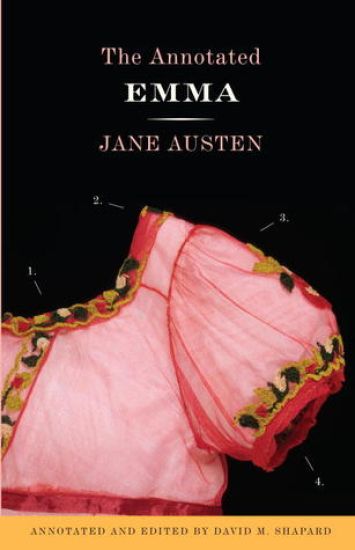
From the editor of the popular Annotated Pride and Prejudice comes an annotated edition of Jane Austen's Emma that makes her beloved tale of an endearingly inept matchmaker an even more satisfying read. Here is the complete text of the novel with more than 2,200 annotations on facing pages, including: - Explanations of historical context - Citations from Austen's life, letters, and other writings - Definitions and clarifications - Literary comments and analysis - Maps of places in the novel - An introduction, bibliography, and detailed chronology of events - Nearly 200 informative illustrations Filled with fascinating information about everything from the social status of spinsters and illegitimate children to the shopping habits of fashionable ladies to English attitudes toward gypsies, David M. Shapard's Annotated Emma brings Austen's world into richer focus.
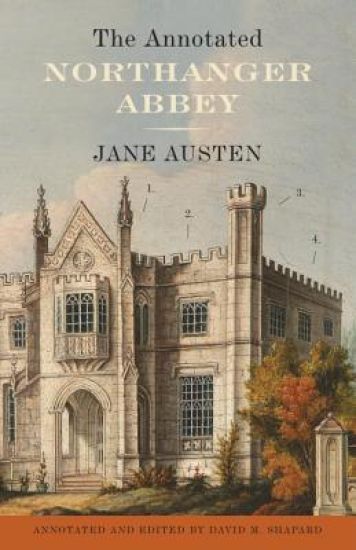
From the editor of the popular Annotated Pride and Prejudice comes an annotated edition of Jane Austen's Northanger Abbey that makes her lighthearted satire of the gothic novel an even more satisfying read. Here is the complete text of the novel with more than 1,200 annotations on facing pages, including: -Explanations of historical context-Citations from Austen's life, letters, and other writings-Definitions and clarifications-Literary comments and analysis-Maps of places in the novel-An introduction, bibliography, and detailed chronology of events-225 informative illustrations Filled with fascinating details about the characters' clothing, furniture, and carriages, and illuminating background information on everything from the vogue for all things medieval to the opportunities for socializing in the popular resort town of Bath, David M. Shapard's Annotated Northanger Abbey brings Austen's world into richer focus.
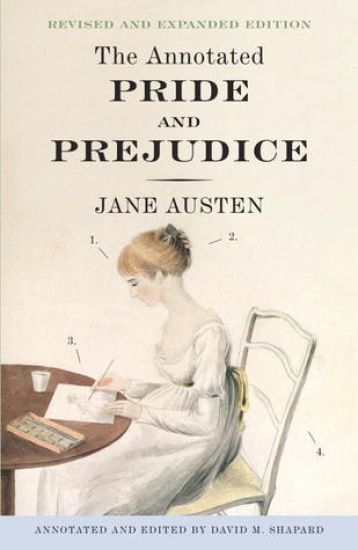
This Revised and Expanded Edition contains hundreds of new notes and illustrations.The first-ever fully annotated edition of one of the most beloved novels in the world is a sheer delight for Jane Austen fans. Here is the complete text of Pride and Prejudice with thousands of annotations on facing pages, including: - Explanations of historical contextRules of etiquette, class differences, the position of women, legal and economic realities, leisure activities, and more. - Citations from Austen's life, letters, and other writingsParallels between the novel and Austen's experience are revealed, along with writings that illuminate her beliefs and opinions. - Definitions and clarifications Archaic words, words still in use whose meanings have changed, and obscure passages are explained. - Literary comments and analysesInsightful notes highlight Austen's artistry and point out the subtle ways she develops her characters and themes. - Maps and illustrations of places and objects mentioned in the novel. - An introduction, a bibliography, and a detailed chronology of events Of course, one can enjoy the novel without knowing the precise definition of a gentleman, or what it signifies that a character drives a coach rather than a hack chaise, or the rules governing social interaction at a ball, but readers of The Annotated Pride and Prejudice will find that these kinds of details add immeasurably to understanding and enjoying the intricate psychological interplay of Austen's immortal characters.
Jane Austen collected her childhood writings into three manuscript notebooks, both as a record of her earliest work and for the convenience of reading aloud to her family and friends. Volume the First (as she entitled it) contains fourteen pieces - literary skits and family jokes - dating from about 1787, when she was eleven, to 1793. Amusing in themselves, they give us a direct picture of the lively literary and family milieu in which the novelist's juvenilia was formed. This new edtion carries a Foreword by Lord David Cecil, a former president of the Jane Austen Society and Professor of English Literature at the University of Oxford. There is also a Publisher's Preface by Brian Southam, author of Jane Austen's Literary Manuscripts and other works on Jane Austen.
Providing translations of and commentaries on primary source materials of modern Japanese philosophy, this sourcebook centers on the creative philosophical writings of the Kyoto School broadly conceived, featuring the thought of Nishida Kitarô, Tanabe Hajime, Kuki Shûzô, Watsuji Tetsurô, Miki Kiyoshi, Tosaka Jun, and Nishitani Keiji. The 22 selections include unabridged whole works, essays, or chapters of books. Also included is exhaustive bio-bibliographical information as well as editorial commentary. For most scholars, this will be the first look in English at the thought of Kuki Shûzô, Miki Kiyoshi, and the Marxist critic Tosaka Jun. The sourcebook will be of interest to scholars, The selections show the intensely dialogic character of the philsophical writing of the Kyoto School of the early Showa period (1926-1949) and are of particular interest as representing philosophical strains of a golden age of Japanese thought during the war years between 1935 and 1945. In the interstices of the thought of the seven authors, the reader will find a mine of commentary on, and assimilation of, the schools of Western thought and the world's religions, accompanied (with the exception of the internationalist Tosaka Jun) by very resilient affirmations of the strength of Asian traditions.
This book describes the principles and equations required for evaluating the performance of an aircraft. After introductory chapters on the atmosphere, basic flight theory and drag, the book goes on to consider in detail the estimation of climbing performance, the relevant characteristics of power plants, take-off and landing performance, range and turning performance. There is then a short account of the use of vectored thrust and a final chapter on transonic and supersonic flight. The emphasis is on deriving and applying simple analytical expressions rather than on computations from extensive numerical data, but all the exemplary calculations refer to current types of aircraft and the few necessary data are provided. The greater part of the book refers to subsonic aircraft flying at subcritical speeds, which can be dealt with using relatively simple equations, but it is shown that some of this simplicity can be carried over to transonic and supersonic speeds.
Preaching The Luminous Word features insights from one of the most distinctive and eloquent scholar-preachers of our time. Inviting serious theological engagement with texts from all parts of the Christian Bible, noted preacher Ellen F. Davis offers fifty-one engaging sermons. A brief preface sets each sermon in its geographic and liturgical context, highlights distinctive themes, and draws attention to elements of structure and rhetorical style. The sermons are arranged in canonical order and cover a wide scope of texts - Torah, Prophets, Writings (including Psalms, Proverbs, Lamentations, Song of Songs, and Job), Gospels, Epistles, and Revelation. Also included in the volume are five choice essays by Davis that discuss various aspects of biblical preaching. At once accessible, theologically informed, and richly instructive, these sermons will engage Christian readers at any stage of their faith journey.
Miriam Matthews; John A Ausink; Shirley M Ross; Matthew Walsh; Albert A Robbert; John S Crown; David Schulker; Philip Armour; Irina a Chindea; Emily Hoch; Sean Robson