Kirjojen hintavertailu. Mukana 11 627 067 kirjaa ja 12 kauppaa.

Kirjahaku

Etsi kirjoja tekijän nimen, kirjan nimen tai ISBN:n perusteella.

1000 tulosta hakusanalla David M Pack

Happiness Is not My Companion

Happiness Is not My Companion

David M. Jordan

Indiana University Press
2001
sidottu
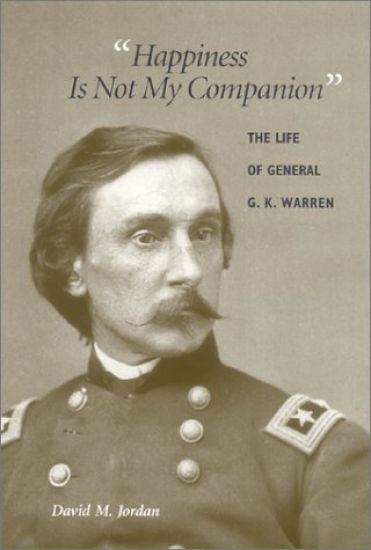
"Happiness Is Not My Companion" The Life of General G. K. Warren David M. Jordan The valorous but troubled career of the Civil War general, best known for his quick action to defend Little Round Top and avert a Union defeat at Gettysburg. Gouverneur K. Warren, a brilliant student at West Point and a topographical engineer, earned early acclaim for his explorations of the Nebraska Territory and the Black Hills in the 1850s. With the start of the Civil War, Warren moved from teacher at West Point to lieutenant colonel of a New York regiment and was soon a rising star in the Army of the Potomac. His fast action at Little Round Top, bringing Federal troops to an undefended position before the Confederates could seize it, helped to save the Battle of Gettysburg. For his service at Bristoe Station and Mine Run, he was awarded command of the Fifth Corps for the 1864 Virginia campaign. Warren's peculiarities of temperament and personality put a cloud over his service at the Wilderness and Spotsylvania and cost him the confidence of his superiors, Grant and Meade. He was summarily relieved of his command by Philip Sheridan after winning the Battle of Five Forks, just eight days before Appomattox. Warren continued as an engineer of distinction in the Army after the war, but he was determined to clear his name before a board of inquiry, which conducted an exhaustive investigation into the battle, Warren's conduct, and Sheridan's arbitrary action. However, the findings of the court vindicating Warren were not made public until shortly after his death. For this major biography of Gouverneur Warren, David M. Jordan utilizes Warren's own voluminous collection of letters, papers, orders, and other items saved by his family, as well as the letters and writings of such contemporaries as his aide and brother-in-law Washington Roebling, Andrew Humphreys, Winfield Hancock, George Gordon Meade, and Ulysses S. Grant. Jordan presents a vivid account of the life and times of a complex military figure. David M. Jordan, a native of Philadelphia, a graduate of Princeton University, and a practicing attorney, has previously published biographies of New York political boss Roscoe Conkling, Union general Winfield Scott Hancock, and pitcher Hal Newhouser, as well as a history of the Philadelphia Athletics. May 2001 400 pages, 13 b&w photos, 11 maps, 6 1/8 x 9 1/4, index, append. cloth 0-253-33904-9$35.00 t / £26.50 Contents Cold Spring and West Point Topographical Engineer Into the West with Harney The Black Hills The Explorer Becomes a Soldier On the Virginia Peninsula Second Manassas to Fredericksburg With Hooker To Little Round Top The Aftermath of Gettysburg Second Corps Interlude Fallout 1863–1864 Into the Dark Woods Bloody Spotsylvania Around Lee's Right Standoff at Petersburg The Mine and the Railroad West to Peebles' Farm To the End of 1864 Beginning of the End To the White Oak Road All Fools' Day A Soldier's Good Name An Engineer, Again Newport The Court Begins The Court Resumes The Lawyers Have Their Say The Frustration of Waiting Where Malevolence Cannot Reach

Inventing ELIZA

Inventing ELIZA

David M. Berry; Sarah Ciston

MIT PRESS LTD
2026
nidottu
How the infamous ELIZA chatbot transformed ideas about AI and society's response to them. As we reach the 60th anniversary of ELIZA's public debut, Inventing ELIZA offers the first comprehensive critical analysis of Joseph Weizenbaum's groundbreaking chatbot system through the lens of critical code studies. Drawing upon extensive archival research at MIT, Stanford, and UCLA, this book presents the rediscovered original source code of ELIZA alongside previously unseen scripts (missing for decades), revealing a far more sophisticated system than previously documented. Sarah Ciston, David Berry, Anthony Hay, Mark Marino, Peter Millican, Arthur Schwarz, Jeff Shrager, and Peggy Weil trace ELIZA's development (1965-1968), reveals that Weizenbaum created a chatbot within a conversational programming environment with previously unknown innovations well ahead of its time. Through close reading of both code and paratexts, the book reconstructs ELIZA's conceptual evolution and situates it within the historical context of early AI development. Book website: https: //findingeliza.org and elizagen.org. The website includes a faithful recreation of the first Chatbot and news about continued research.
Religion and the New Ecology

Religion and the New Ecology

David M. Lodge

University of Notre Dame Press
2006
nidottu
For many years, ecologists and the environmentalists who looked to ecology for authority depicted a dichotomy between a pristine, stable nature and disruptive human activity. Most contemporary ecologists, however, conceive of nature as undergoing continual change and find that "flux of nature" is a more accurate and fruitful metaphor than "balance of nature." The contributors to this volume address how this new paradigm fits into the broader history of ecological science and the cultural history of the West and, in particular, how environmental ethics and ecotheology should respond to it. Their discussions ask us to reconsider the intellectual foundations on which theories of human responsibility to nature are built. The provisional answer that develops throughout the book is to reintegrate scientific understanding of nature and human values, two realms of thought severed by intellectual and cultural forces during the last two centuries. Religious reflection and practice point the way toward a new humility in making the tough decisions and trade-offs that will always characterize environmental management. Timely and challenging, the essays suggest avenues toward a new framework for interdisciplinary conversation among theologians, philosophers, historians, and environmental ethicists. Contributors: David M. Lodge, Christopher Hamlin, Elspeth Whitney, Mark Stoll, Eugene Cittadino, Kyle S. Van Houtan, Stuart L. Pimm, Gary E. Belovsky, Peter S. White, Patricia A. Fleming, John F. Haught, and Larry Rasmussen.
Faith, Nationalism, and the Future of Liberal Democracy

Faith, Nationalism, and the Future of Liberal Democracy

David M. Elcott; C. Colt Anderson; Tobias Cremer; Volker Haarmann

University of Notre Dame Press
2021
sidottu
Faith, Nationalism, and the Future of Liberal Democracy highlights the use of religious identity to fuel the rise of illiberal, nationalist, and populist democracy. In Faith, Nationalism, and the Future of Liberal Democracy, David Elcott, C. Colt Anderson, Tobias Cremer, and Volker Haarmann present a pragmatic and modernist exploration of how religion engages in the public square. Elcott and his co-authors are concerned about the ways religious identity is being used to foster the exclusion of individuals and communities from citizenship, political representation, and a role in determining public policy. They examine the ways religious identity is weaponized to fuel populist revolts against a political, social, and economic order that values democracy in a global and strikingly diverse world. Included is a history and political analysis of religion, politics, and policies in Europe and the United States that foster this illiberal rebellion. The authors explore what constitutes a constructive religious voice in the political arena, even in nurturing patriotism and democracy, and what undermines and threatens liberal democracies. To lay the groundwork for a religious response, the book offers chapters showing how Catholicism, Protestantism, and Judaism can nourish liberal democracy. The authors encourage people of faith to promote foundational support for the institutions and values of the democratic enterprise from within their own religious traditions and to stand against the hostility and cruelty that historically have resulted when religious zealotry and state power combine. Faith, Nationalism, and the Future of Liberal Democracy is intended for readers who value democracy and are concerned about growing threats to it, and especially for people of faith and religious leaders, as well as for scholars of political science, religion, and democracy.
Faith, Nationalism, and the Future of Liberal Democracy

Faith, Nationalism, and the Future of Liberal Democracy

David M. Elcott; C. Colt Anderson; Tobias Cremer; Volker Haarmann

UNIVERSITY OF NOTRE DAME PRESS
2025
nidottu
Faith, Nationalism, and the Future of Liberal Democracy highlights the use of religious identity to fuel the rise of illiberal, nationalist, and populist democracy. In Faith, Nationalism, and the Future of Liberal Democracy, David Elcott, C. Colt Anderson, Tobias Cremer, and Volker Haarmann present a pragmatic and modernist exploration of how religion engages in the public square. Elcott and his co-authors are concerned about the ways religious identity is being used to foster the exclusion of individuals and communities from citizenship, political representation, and a role in determining public policy. They examine the ways religious identity is weaponized to fuel populist revolts against a political, social, and economic order that values democracy in a global and strikingly diverse world. Included is a history and political analysis of religion, politics, and policies in Europe and the United States that foster this illiberal rebellion. The authors explore what constitutes a constructive religious voice in the political arena, even in nurturing patriotism and democracy, and what undermines and threatens liberal democracies. To lay the groundwork for a religious response, the book offers chapters showing how Catholicism, Protestantism, and Judaism can nourish liberal democracy. The authors encourage people of faith to promote foundational support for the institutions and values of the democratic enterprise from within their own religious traditions and to stand against the hostility and cruelty that historically have resulted when religious zealotry and state power combine. Faith, Nationalism, and the Future of Liberal Democracy is intended for readers who value democracy and are concerned about growing threats to it, and especially for people of faith and religious leaders, as well as for scholars of political science, religion, and democracy.
Sacred Plunder

Sacred Plunder

David M. Perry

Pennsylvania State University Press
2015
sidottu
In Sacred Plunder, David Perry argues that plundered relics, and narratives about them, played a central role in shaping the memorial legacy of the Fourth Crusade and the development of Venice's civic identity in the thirteenth century. After the Fourth Crusade ended in 1204, the disputes over the memory and meaning of the conquest began. Many crusaders faced accusations of impiety, sacrilege, violence, and theft. In their own defense, they produced hagiographical narratives about the movement of relics-a medieval genre called translatio-that restated their own versions of events and shaped the memory of the crusade. The recipients of relics commissioned these unique texts in order to exempt both the objects and the people involved with their theft from broader scrutiny or criticism. Perry further demonstrates how these narratives became a focal point for cultural transformation and an argument for the creation of the new Venetian empire as the city moved from an era of mercantile expansion to one of imperial conquest in the thirteenth century.
Sacred Plunder

Sacred Plunder

David M. Perry

Pennsylvania State University Press
2016
pokkari
In Sacred Plunder, David Perry argues that plundered relics, and narratives about them, played a central role in shaping the memorial legacy of the Fourth Crusade and the development of Venice’s civic identity in the thirteenth century. After the Fourth Crusade ended in 1204, the disputes over the memory and meaning of the conquest began. Many crusaders faced accusations of impiety, sacrilege, violence, and theft. In their own defense, they produced hagiographical narratives about the movement of relics—a medieval genre called translatio—that restated their own versions of events and shaped the memory of the crusade. The recipients of relics commissioned these unique texts in order to exempt both the objects and the people involved with their theft from broader scrutiny or criticism. Perry further demonstrates how these narratives became a focal point for cultural transformation and an argument for the creation of the new Venetian empire as the city moved from an era of mercantile expansion to one of imperial conquest in the thirteenth century.
The Decline of Thrift in America

The Decline of Thrift in America

David M. Tucker

Praeger Publishers Inc
1990
sidottu
From the beginning of our nation's history, with the Puritan and Protestant work ethics, through the 1950s, thrift was considered an important virtue, both with regard to the moral fiber of the country and as a support for its continuing economic well-being. The idea that deferring immediate pleasures to accumulate wealth for increased future value was considered virtuous, not just by the citizens but by politicians and the government as well. In this fascinating history of thrift, David Tucker describes how, after the Eisenhower period, thrift became an outdated, outmoded concept, and how the abandonment of thrift is in large part responsible for our current economic position.Tucker begins his study by tracing the thrift culture in which America was born, which continued its dominance for more than a century. The notion that frugality was the best means for promoting the general welfare remained unchanged until the late nineteenth century, when an angry protest against more thrifty Chinese immigrants led to a reversal in cultural attitudes. A new ideal of a higher standard of living--supported by spending, consumption, and debt-- undercut the old virtue of thrift. Throughout the twentieth century, advertising, consumer credit, and a self-indulgent psychology have eroded the practice of frugality. In addition to this history, Tucker explores the dangers of the thriftless society, comparing America's current position to the economic rise and decline of the United Kingdom. With a savings rate that has fallen from 15 percent to 4 percent, and a government that routinely appropriates more than 100 percent of tax revenues, Tucker sees a moral deficiency in Americans. Thrift is no obsolescent virtue, he observes, if the nation is concerned with preserving a standard of living. This unique history and commentary will be a useful supplement to courses in current affairs, American history, and economics, as well as a significant addition to college, university, and public libraries.
Gorbachev and the German Question

Gorbachev and the German Question

David M. Shumaker

Praeger Publishers Inc
1995
sidottu
Traces the transformation of Soviet relations with West Germany from 1985 to 1990 while challenging views that Gorbachev caved in to the West on German reunification. The author gives fullest account to date of how Gorbachev translated new political thinking into actual policy change examines how internal and external factors interacted in the development of Soviet policies that helped transform postwar Europe and describes the importance of public diplomacy. Graduate students, scholars, experts, and policymakers interested in Soviet and European politics will find this analytical history and its use of English, Russian, and German-language sources and newly available memoirs of key Soviet participants invaluable. Upon taking office in 1985, Gorbachev inherited a Soviet foreign policy intent on punishing West Germany for its support of U.S. security policy. The Soviet elite generally viewed the Federal Republic of Germany as irresponsible and inherently aggressive. But by 1990 Gorbachev acceded to the veritable incorporation of East Germany into West Germany. Upon his promotion to leadership Gorbachev began to struggle and connive to construct a foreign policy consensus around his evolving new vision of international relations. With each political victory he and his supporters advanced more profound changes in Moscow's external behavior. As a result, powerful conservative forces centered in the party apparatus grew increasingly opposed to Gorbachev's reforms and especially Moscow's new Germany policy. Yet despite the domestic political costs, Gorbachev eventually agreed to unification on terms favorable to the West because he no longer viewed this outcome as a threat to Soviet interests. Students of Soviet and European politics, Cold War historians, and international relations specialists will find this analytical history and its use of English, Russian, and German-language sources and newly available memoirs of key Soviet participants invaluable.
The Legacy of Woodrow Wilson

The Legacy of Woodrow Wilson

David M. Esposito

Praeger Publishers Inc
1996
sidottu
Contrary to popular belief, Woodrow Wilson coordinated foreign and defense policies. Wilson viewed Imperial Germany as a threat to U.S. national security and acted accordingly. His urgent desire to mediate an end to World War I was driven by geo-political concerns. Forced into the war by tertiary issues, he decided to throw a great deal of weight upon the scale by intervening decisively in the Great War in order to dominate the postwar peace conference. There he intended to dictate a scientific peace and to create a League of Nations to insure collective security.
Psychological Issues in Adoption

Psychological Issues in Adoption

David M. Brodzinsky; Jesús Palacios

Praeger Publishers Inc
2005
sidottu
In this book, leading researchers spotlight how dramatically the practice of adoption has changed both in North America and Europe in recent decades due to, among other factors, a falling rate of domestically born infants being placed for adoption. This has resulted in a rise in international adoption, children of color being placed with Caucasian parents, increased foster care and special needs adoptions including children exposed to prenatal alcohol and drug use as well as maltreatment by birth parents. Also examined is the far more diverse group of adults being granted adoption rights, including single and homosexual parents. Research findings demonstrate the trend across countries toward open adoption, wherein the birth parents and adoptive parents meet to share information. As the editors note, there is no longer a typical adopted child or a typical adoptive family. Paralleling these changes has been a growing interest in the study of adopted children and adoptive parents. Although earlier research showed adoptees more likely to experience school problems and psychological disorders, recent studies show the differences in these areas between adoptees and non-adoptees to be relatively small. Models guiding adoption research are beginning to emphasize resilience and positive adaptation, rather than risk and psychopathology. This handbook will be of interest to all involved with adoption policy and practice.
Fantastic Literature

Fantastic Literature

David M. Sandner

Praeger Publishers Inc
2004
sidottu
Unprecedented in range and scope, this volume serves as a record of and reference for the development of fantasy literature. Working to be inclusive, rather than exclusive, opening a dialogue wherever possible, Sandner presents the full range of debates concerning the fantastic and its relationship to the sublime, the Gothic, children's literature, romance and comedy, and the purposes of imaginative literature. Introductions to each essay, presented in full or excerpted for the most relevant commentary, situate the reader in the history of fantasy literature and the criticism it has inspired. New and important here are the claims for the early development of fantasy literature from the 18th century sublime. Previous histories of the genre regard Romanticism as a limit, but this reader draws from 18th, 19th, 20th, and even 21st century texts, revealing the unimagined scope of the field and developing a map of its early history for the first time. This important new volume presents, ultimately, the development of critical debates about the fantastic and its relationship to literature generally.
Pilgrimage and the Jews

Pilgrimage and the Jews

David M. Gitlitz; Linda Kay Davidson

Praeger Publishers Inc
2005
sidottu
The history and breadth of Jewish pilgrimage traditions is rich and varied. Here Gitlitz and Davidson tell the fascinating, and sometimes harrowing, story of Jewish pilgrimage from the beginnings of Judaism to the present time. They trace the history of Jewish pilgrimage and show how the repeated cycles of exile and return to Israel serve the Jews as a kind of pilgrimage in reverse. This lively account is sure to appeal to anyone interested in religious pilgrimage, tourism, and travel.From Jerusalem and the Mt. of Olives, to the tombs of King David, Rachel, and Joseph, from Galilee to Curacao, Jewish pilgrims seek out spiritual transcendence, a return to their roots, communion with those who have gone before, and connection to their common heritage as they visit holy shrines, important synagogues around the world, Nazi death camps, and the graves of leaders, among other holy places. But what makes these places holy? And what purpose do the pilgrimages serve? How has recent unrest in the Middle East contributed to, or detracted from, modern Jewish pilgrimage and its future? These questions and others are answered in these pages.
Living Through Bereavement

Living Through Bereavement

David M. Owen

SPCK Publishing
2008
nidottu
All of us are confronted by death at various times in our lives. Some bereavements are particularly devastating - it may be we are very close to the one who has died, or death has come suddenly, unnaturally or even violently. This anthology of quotations is divided into two sections. The first contains material on the Bible's teaching on life after death; the concept of the soul; the need to face the truth of our own mortality; living to the full; untimely death; suicide; death as the result of disaster and of war. The second focuses on solace in grief; the comfort of Christ; our hope of life in heaven; being reunited with those we love, and the great communion of saints. Each chapter has its own introduction and ends with a selection of prayers.
Regulation in the White House

Regulation in the White House

David M. Welborn

University of Texas Press
2009
pokkari
Regulation in the White House is an examination of regulatory policy and its development in the Johnson administration and the first comprehensive study of any presidency and regulation. Based upon a thorough analysis of presidential papers in the Lyndon B. Johnson Library, the book investigates the working relationships linking the presidency, regulatory commissions, and executive agencies with regulatory responsibilities in both the economic and social spheres.David Welborn finds that the president's business included regulation as a major component. Johnson's concerns in regulation were varied and complex. He and his aides worked assiduously and successfully to establish effective, cooperative relationships with regulators and to avoid the exercise of undue influence on particular regulatory determinations. In Welborn's view, Johnson traversed the treacherous ground of regulatory politics with adeptness and achieved his major purposes in regulation.
Intergovernmental Relations in the American Administrative State

Intergovernmental Relations in the American Administrative State

David M. Welborn; Jesse Burkhead

University of Texas Press
1989
nidottu
During the 1960s, President Lyndon Johnson and his administration substantially altered the structure of the American administrative state. Creating intergovernmental programs to forward the goal of the Great Society, they changed the contours of national-state-local relationships, and these changes largely have remained, despite the attempts of later administrations to reverse them. Intergovernmental Relations in the American Administrative State is the first comprehensive study of how and why these changes occurred. Drawn from a wealth of primary material in the Lyndon Baines Johnson Library, the study probes the objectives of the president and other framers of new policies and programs, within the institutional and political context of the time. The authors give special attention to the inherent incongruities that arise when intergovernmental programs are used to address problems defined in national terms. In addition, they reveal how certain programs actually challenged the power of established national bureaucracies. They conclude with a thoughtful overview of the Johnson legacy in intergovernmental relations during subsequent administrations.
Realizing Metaphors

Realizing Metaphors

David M. Bethea

University of Wisconsin Press
1998
nidottu
Readers often have regarded with curiosity the creative life of the poet. In this study, David Bethea illustrates the relation between the art and life of 19th-century poet Alexander Pushkin, the central figure in Russian thought and culture. Bethea shows how Pushkin, on the eve of this 200th anniversary, still speaks to our time. He indicates how we, as modern readers, might ""realize"" the promethean metaphors central to the poet's intensely ""sculpted"" life. The Pushkin who emerges from Bethea's portrait is one who, long unknown to English-language readers, closely resembles the original both psychologically and artistically. Bethea begins by addressing the influential thinkers Freud, Bloom, Jakobson and Lotman to show that their premises do not, by themselves, adequately account for Pushkin's psychology of creation or his version of the ""Life of the Poet"". He then proposes his own versatile model of reading, and goes on to sketch the tangled connections between Pushkin and his great compatriot, the 18th-century poet Gavrila Derzhavin.
Geology of the Ice Age National Scenic Trail

Geology of the Ice Age National Scenic Trail

David M. Mickelson; Louis J. Maher Jr.; Susan L. Simpson

University of Wisconsin Press
2011
nidottu
The Ice Age National Scenic Trail meanders across the state of Wisconsin through scenic glacial terrain dotted with lakes, steep hills, and long, narrow ridges. David M. Mickelson, Louis J. Maher Jr., and Susan L. Simpson bring this landscape to life and help readers understand what Ice Age Wisconsin was like. An overview of Wisconsin’s geology and key geological concepts helps readers understand geological processes, materials, and land forms. The authors detail geological features along each segment of the Ice Age Trail and at each of the nine National Ice Age Scientific Reserve sites. Readers can experience the Ice Age Trail through more than one hundred full colour photographs, scores of beautiful maps, and helpful diagrams. Science briefs explain glacial features such as eskers, drumlins, and moraines. Geology of the Ice Age National Scenic Trail also includes detailed trail descriptions that are cross referenced with the science briefs to make it easy to find the geological terms used in the trail descriptions. Whatever your level of experience with hiking or knowledge of glaciers, this book will provide lively, informative, and revealing descriptions for a new understanding of the shape of the land beneath our feet.