Kirjojen hintavertailu. Mukana 12 401 432 kirjaa ja 12 kauppaa.

Kirjahaku

Etsi kirjoja tekijän nimen, kirjan nimen tai ISBN:n perusteella.

1000 tulosta hakusanalla David R. Mason

Quirky Sides of Scientists

Quirky Sides of Scientists

David R Topper

Springer-Verlag New York Inc.
2007
sidottu
These historical narratives of scientific behavior reveal the often irrational way scientists arrive at and assess their theories. There are stories of Einstein’s stubbornness leading him to reject a correct interpretation of an experiment and miss an important deduction from his own theory, and Newton missing the important deduction from one of his most celebrated discoveries. Copernicus and Galileo are found suppressing information. A theme running throughout the book is the notion that what is obvious today was not so in the past. Scientists seen in their historical context shatter myths and show them to be less modern than we often like to think of them.

Model Based Inference in the Life Sciences

Model Based Inference in the Life Sciences

David R. Anderson

Springer-Verlag New York Inc.
2007
nidottu
The abstract concept of “information” can be quantified and this has led to many important advances in the analysis of data in the empirical sciences. This text focuses on a science philosophy based on “multiple working hypotheses” and statistical models to represent them. The fundamental science question relates to the empirical evidence for hypotheses in this set—a formal strength of evidence. Kullback-Leibler information is the information lost when a model is used to approximate full reality. Hirotugu Akaike found a link between K-L information (a cornerstone of information theory) and the maximized log-likelihood (a cornerstone of mathematical statistics). This combination has become the basis for a new paradigm in model based inference. The text advocates formal inference from all the hypotheses/models in the a priori set—multimodel inference. This compelling approach allows a simple ranking of the science hypothesis and their models. Simple methods are introduced for computing the likelihood of model i, given the data; the probability of model i, given the data; and evidence ratios. These quantities represent a formal strength of evidence and are easy to compute and understand, given the estimated model parameters and associated quantities (e.g., residual sum of squares, maximized log-likelihood, and covariance matrices). Additional forms of multimodel inference include model averaging, unconditional variances, and ways to rank the relative importance of predictor variables. This textbook is written for people new to the information-theoretic approaches to statistical inference, whether graduate students, post-docs, or professionals in various universities, agencies or institutes. Readers are expected to have a background in general statistical principles, regression analysis, and some exposure to likelihood methods. This is not an elementary text as it assumes reasonable competence in modeling and parameterestimation.
Introduction to the Theory of Stability

Introduction to the Theory of Stability

David R. Merkin

Springer-Verlag New York Inc.
1996
sidottu
Many books on stability theory of motion have been published in various lan­ guages, including English. Most of these are comprehensive monographs, with each one devoted to a separate complicated issue of the theory. Generally, the examples included in such books are very interesting from the point of view of mathematics, without necessarily having much practical value. Usually, they are written using complicated mathematical language, so that except in rare cases, their content becomes incomprehensible to engineers, researchers, students, and sometimes even to professors at technical universities. The present book deals only with those issues of stability of motion that most often are encountered in the solution of scientific and technical problems. This allows the author to explain the theory in a simple but rigorous manner without going into minute details that would be of interest only to specialists. Also, using appropriate examples, he demonstrates the process of investigating the stability of motion from the formulation of a problem and obtaining the differential equations of perturbed motion to complete analysis and recommendations. About one fourth of the examples are from various areas of science and technology. Moreover, some of the examples and the problems have an independent value in that they could be applicable to the design of various mechanisms and devices. The present translation is based on the third Russian edition of 1987.
C Programming: The Essentials for Engineers and Scientists

C Programming: The Essentials for Engineers and Scientists

David R. Brooks

Springer-Verlag New York Inc.
1999
sidottu
1 The Purpose of This Text This text has been written in response to two trends that have gained considerable momentum over the past few years. The first is the decision by many undergraduate engineering and science departments to abandon the traditional programming course based on the aging Fortran 77 standard. This decision is not surprising, considering the more modem features found in languages such as Pascal and C. However, Pascal never developed a strong following in scientific computing, and its use is in decline. The new Fortran 90 standard defines a powerful, modem language, but this long-overdue redesign of Fortran has come too late to prevent many colleges and universities from switching to C. The acceptance of C by scientists and engineers is based perhaps as. much on their perceptions of C as an important language, which it certainly is, and on C programming experience as a highly marketable skill, as it is on the suitability of C for scientific computation. For whatever reason, C or its derivative C++ is now widely taught as the first and often only programming language for undergraduates in science and engineering. The second trend is the evolving nature of the undergraduate engineering curriculum. At a growing number of institutions, the traditional approach of stressing theory and mathematics fundamentals in the early undergraduate years, and postponing real engineering applications until later in the curriculum, has been turned upside down.
The Rocks Don't Lie

The Rocks Don't Lie

David R. Montgomery

WW Norton Co
2013
nidottu
In Tibet, geologist David R. Montgomery heard a local story about a great flood that bore a striking similarity to Noah’s Flood. Intrigued, Montgomery began investigating the world’s flood stories and—drawing from historic works by theologians, natural philosophers, and scientists—discovered the counterintuitive role Noah’s Flood played in the development of both geology and creationism. Steno, the grandfather of geology, even invoked the Flood in laying geology’s founding principles based on his observations of northern Italian landscapes. Centuries later, the founders of modern creationism based their irrational view of a global flood on a perceptive critique of geology. With an explorer’s eye and a refreshing approach to both faith and science, Montgomery takes readers on a journey across landscapes and cultures. In the process we discover the illusive nature of truth, whether viewed through the lens of science or religion, and how it changed through history and continues changing, even today.
The Hidden Half of Nature

The Hidden Half of Nature

David R. Montgomery; Anne Biklé

WW Norton Co
2016
nidottu
Our world is built on an invisible one we are barely beginning to understand. In The Hidden Half of Nature, geologist David R. Montgomery and biologist Anne Biklé argue that Earth’s smallest creatures—microbes—could fundamentally change how we grow food, what we eat and how we practise medicine. The Hidden Half of Nature shares Montgomery and Biklé’s efforts to turn a barren patch of ground into a flourishing garden, and Biklé’s struggle with cancer. Taking readers deep into the science and history of agriculture and immunology, they show that microbes can provide powerful solutions to the problems plaguing modern agriculture as well as our own bodies. A spellbinding story, The Hidden Half of Nature reveals how we can restore fertility to the land and defeat chronic diseases.
Growing a Revolution

Growing a Revolution

David R. Montgomery

WW Norton Co
2018
nidottu
Since the dawn of agriculture, great civilizations have sunk into poverty after destroying their once fertile land. Today, few people realise how close we are to the same fate if we don’t take action. In Growing a Revolution, David R. Montgomery leads us on a journey through history and around the world to see how innovative farmers ditch the plough, mulch cover crops and adopt complex rotations to restore the soil, finding the foundation for the next agricultural revolution: a soil health revolution. Cutting through the debates about conventional versus organic agriculture, Montgomery shows how new regenerative methods heal damaged environments and improve farmers’ bottom lines. Ancient wisdom merges with modern science and Growing a Revolution shows how agriculture can help solve modern environmental woes.
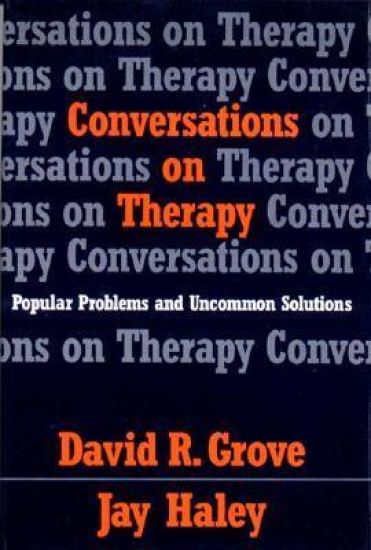
Conversations on Therapy

Conversations on Therapy

David R. Grove; Jay Haley

WW Norton Co
1993
sidottu
Grove, who trained for many years with Haley, has been in this enviable position. In this book, which Haley calls "not profound, but practical", the two authors discuss cases typical of what therapists in mental health centers face: serious and chronic problems, threats of family dissolution or violence, and involvement of several systems, such as the court and protective services. Grove presents provocative questions: Should he try to reunite a couple even though the husband has been violent in the past and may be again? How can one empower a stepfather who is inept and unemployed and acts like a teenager himself? When a woman can't remember much of her childhood and so suspects she was abused, is remembering necessary? How does a couple's current sexual relationship relate to past abuse? If one partner of a divorcing couple is having an affair, should the therapist help the other partner become aware of the affair - and how? Together he and Haley devise innovative strategies for these problematic situations. While starting with individual cases, the discussion ranges widely over the dilemmas that arise in hypnotic and strategic family therapy. Haley clarifies many of his positions, shows where his position has changed over the years, and introduces new techniques. This is a marvelous chance to interact with a master of psychotherapy.
Headache Prevention Cookbook

Headache Prevention Cookbook

David R Marks; Laura Marks

Houghton Mifflin (Trade)
2000
nidottu
Many of the fifty million Americans who suffer from headaches can eliminate the pain entirely simply by changing the way they eat, says Dr. David Marks, who treats thousands of patients a year at his internationally known clinic. Using fascinating anecdotes from his own practice, Marks explains which ingredients can cause headaches. The potential triggers include a wide list of ordinary foods, such as beans, chili peppers, dried fruits, canned soup, certain cheeses, certain vinegars, nuts, chocolate, and ice cream. To help people with undiagnosed food sensitivities steer clear of the headache-causing culprits, Laura Marks, a doctor and an accomplished cook, has created more than one hundred easy-to-prepare recipes. With such delectable dishes as Roast Garlic Linguine, Lemon-Glazed Chicken, Jewish-Style Baby Artichokes, and Moist Orange Pound Cake, no one is likely to feel deprived.
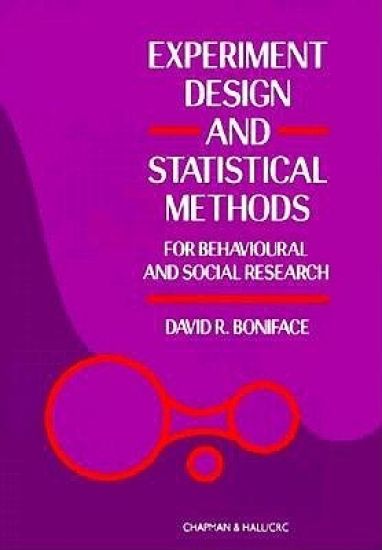
Experiment Design and Statistical Methods For Behavioural and Social Research
Experiment Design and Statistical Methods introduces the concepts, principles, and techniques for carrying out a practical research project either in real world settings or laboratories - relevant to studies in psychology, education, life sciences, social sciences, medicine, and occupational and management research.The text covers:repeated measures unbalanced and non-randomized experiments and surveys choice of design adjustment for confounding variables model building and partition of variance covariance multiple regressionExperiment Design and Statistical Methods contains a unique extension of the Venn diagram for understanding non-orthogonal design, and it includes exercises for developing the reader's confidence and competence. The book also examines advanced techniques for users of computer packages or data analysis, such as Minitab, SPSS, SAS, SuperANOVA, Statistica, BMPD, SYSTAT, Genstat, and GLIM.
Food Chemical Risk Analysis

Food Chemical Risk Analysis

David R. Tennant

Chapman and Hall
1997
sidottu
Food Chemical Risk Analysis provides an introduction to the sciences of food chemistry and risk analysis and demonstrates how the potential hazards associated with food chemicals can be assessed and managed. Food scares are never far from the news and particular attention is therefore focused on the consumer perception of risk and risk communication. Leading international experts provide unique insights in the future of food chemical risk analysis. Chapters on alternatives to animal testing show how emerging methods offer the prospect of a more rational human-based approach to toxicity testing. Discussions about relative risks and protective factors highlight the possibility that risks from food can be over-estimated and approaches to avoid such risks are proposed. The science of risk management is presented as more than just a method for translating science into policy by demonstrating how social, psychological, economic ethical and other factors can, and shouldbe taken into account. The book makes it clear that if risk communication is to be effective, an integrated approach to risk analysis must be adopted.
Art and the Christian Apocrypha

Art and the Christian Apocrypha

David R. Cartlidge; J. Keith Elliot

Routledge
2001
sidottu
The Christian canon of scripture, known as the New Testament, excluded many of the Church's traditional stories about its origins. Although not in the Bible, these popular stories have had a powerful influence on the Church's traditions and theology, and a particularly marked effect on visual representations of Christian belief. This book provides a lucid introduction to the relationship between the apocryphal texts and the paintings, mosaics, and sculpture in which they are frequently paralleled, and which have been so significant in transmitting these non-Biblical stories to generations of churchgoers.
Art and the Christian Apocrypha

Art and the Christian Apocrypha

David R. Cartlidge; J. Keith Elliot

Routledge
2001
nidottu
The Christian canon of scripture, known as the New Testament, excluded many of the Church's traditional stories about its origins. Although not in the Bible, these popular stories have had a powerful influence on the Church's traditions and theology, and a particularly marked effect on visual representations of Christian belief. This book provides a lucid introduction to the relationship between the apocryphal texts and the paintings, mosaics, and sculpture in which they are frequently paralleled, and which have been so significant in transmitting these non-Biblical stories to generations of churchgoers.
Propaganda, the Press and Conflict

Propaganda, the Press and Conflict

David R. Willcox

Routledge
2005
sidottu
An incisive analysis of the use of the press for propaganda purposes during conflicts, using the first Gulf War and the intervention in Kosovo as case studies. As the contemporary analysis of propaganda during conflict has tended to focus considerably upon visual and instant media coverage, this book redresses the imbalance and contributes to the growing discourse on the role of the press in modern warfare.Through an innovative comparative analysis of press treatment of the two conflicts it reveals the existence of five consistent propaganda themes: portrayal of the leader figure, portrayal of the enemy, military threat, threat to international stability and technological warfare. As these themes construct a fluid model for the analysis and understanding of propaganda content in the press during conflicts involving British forces, they also provide the background against which the author can discuss general issues regarding propaganda. Amongst the issues which have become increasingly relevant to both recent academic debate and popular culture, the author tackles the role of the journalist in war coverage, the place of the press in a news market dominated by 'instant' visual media and the effectiveness of propaganda in specific cultural and political context.This book will appeal to advanced students and researchers in war studies, media studies/propaganda and psychology.
Propaganda, the Press and Conflict

Propaganda, the Press and Conflict

David R. Willcox

Routledge
2006
nidottu
An incisive analysis of the use of the press for propaganda purposes during conflicts, using the first Gulf War and the intervention in Kosovo as case studies. As the contemporary analysis of propaganda during conflict has tended to focus considerably upon visual and instant media coverage, this book redresses the imbalance and contributes to the growing discourse on the role of the press in modern warfare.Through an innovative comparative analysis of press treatment of the two conflicts it reveals the existence of five consistent propaganda themes: portrayal of the leader figure, portrayal of the enemy, military threat, threat to international stability and technological warfare. As these themes construct a fluid model for the analysis and understanding of propaganda content in the press during conflicts involving British forces, they also provide the background against which the author can discuss general issues regarding propaganda. Amongst the issues which have become increasingly relevant to both recent academic debate and popular culture, the author tackles the role of the journalist in war coverage, the place of the press in a news market dominated by 'instant' visual media and the effectiveness of propaganda in specific cultural and political context.This book will appeal to advanced students and researchers in war studies, media studies/propaganda and psychology.
Globalization and Self-Determination

Globalization and Self-Determination

David R. Cameron; Gustav Ranis; Annalisa Zinn

Routledge
2012
nidottu
Is the nation state under siege? A common answer is that globalization poses two fundamental threats to state sovereignty. The first concerns the unleashing of centrifugal and centripetal forces - such as increasing market integration and the activities of institutions like the IMF, World Bank, and WTO - that imperil state sovereignty from 'outside' the nation state. The second threat emanates from self-determination movements that jeopardize state sovereignty from 'inside'.Rigorously analyzing popular hypotheses on globalization's effect on state sovereignty from a broad social sciences perspective, the authors use empirical evidence to suggest that globalization's multilevel threats to state sovereignty have been overestimated. In most instances globalization is likely to generate pressure for increased government spending while only one form of market integration - foreign direct investment by multinational enterprises - appears to increase any feeling of economic insecurity. This volume will be invaluable to course instructors at both graduate and undergraduate levels, policy makers and members of the general public who are concerned about the effects of globalization on the nation-state.
Latin America and the Illusion of Peace
This book explores interstate conflict and its dynamics in the context of Latin America’s contemporary conflict management experience. The myth of Latin America as a region of peace means that each time the use of force rises to the level of global attention (e.g., Ecuador-Peru 1995 or Colombia-Ecuador 2008) analysts and the press ask, "how could that happen here?" Yet the official uses of military force in interstate relations are significantly more prevalent than most analysts within and outside the region understand, and the region is facing new and potentially destabilizing challenges. It is the contention of this book that mitigating the threat raised by militarized interstate relations requires understanding the various ways in which military force can be employed short of war; this in turn requires illuminating the decision making process that produces militarization of a disagreement, considering options for dissuading the decision makers from choosing to militarize and limiting escalations when militarization does occur.
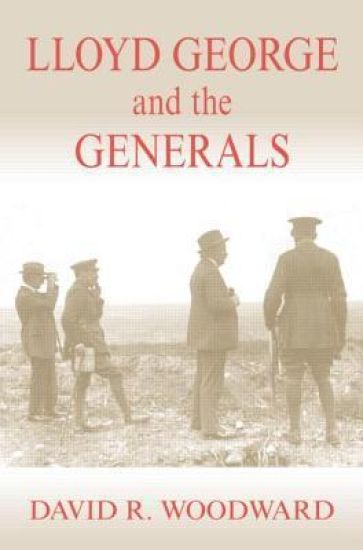
Lloyd George and the Generals

Lloyd George and the Generals

David R. Woodward

Routledge
2014
nidottu
The frustrating stalemate on the western front with its unprecedented casualties provoked a furious debate in London between the civil and military authorities over the best way to defeat Germany. The passions aroused continued to the present day. The mercurial and dynamic David Lloyd George stood at the centre of this controversy throughout the war. His intervention in military questions and determination to redirect strategy put him at odds with the leading soldiers and admirals of his day. Professor Woodward, a student of the Great War for some four decades, explores the at times Byzantine atmosphere at Whitehall by exhaustive archival research in official and private papers. The focus is on Lloyd George and his adversaries such as Lord Kitchener, General Sir William Robertson, and Field Marshall Sir Douglas Haig. The result is a fresh, compelling and detailed account of the interaction between civil and military authorities in total war.
Globalization and Self-Determination

Globalization and Self-Determination

David R. Cameron; Gustav Ranis; Annalisa Zinn

Routledge
2006
sidottu
Is the nation state under siege? A common answer is that globalization poses two fundamental threats to state sovereignty. The first concerns the unleashing of centrifugal and centripetal forces - such as increasing market integration and the activities of institutions like the IMF, World Bank, and WTO - that imperil state sovereignty from 'outside' the nation state. The second threat emanates from self-determination movements that jeopardize state sovereignty from 'inside'.Rigorously analyzing popular hypotheses on globalization's effect on state sovereignty from a broad social sciences perspective, the authors use empirical evidence to suggest that globalization's multilevel threats to state sovereignty have been overestimated. In most instances globalization is likely to generate pressure for increased government spending while only one form of market integration - foreign direct investment by multinational enterprises - appears to increase any feeling of economic insecurity. This volume will be invaluable to course instructors at both graduate and undergraduate levels, policy makers and members of the general public who are concerned about the effects of globalization on the nation-state.