Kirjojen hintavertailu. Mukana 11 342 296 kirjaa ja 12 kauppaa.

Kirjahaku

Etsi kirjoja tekijän nimen, kirjan nimen tai ISBN:n perusteella.

1000 tulosta hakusanalla David Ross

Intervention of the Other

Intervention of the Other

David Ross Fryer

Other Press Professional
2004
nidottu
The Intervention of the Other deftly brings the thought of Emmanuel Levinas and Jacques Lacan into fruitful dialogue through a comparative analysis of these two seemingly disparate thinkers. Emmanuel Levinas, Lithuanian-born French phenomenologist of the nonphenomenon, and Jacques Lacan, controversial French psychoanalyst and (post)structuralist theorist of the Freudian Unconscious, lived and wrote in the same city, at the same time, among the same colleagues, often using the same language and the same sources, sometimes writing to the same audiences and yet they never wrote to or about one another. Following Sartre, Levinas thought that Freud had fundamentally misunderstood the nature of consciousness when he posited the Unconscious as a second, but hidden, consciousness. Despite this suspicion of psychoanalysis, however, Levinas own work celebrated a certain something that could not be contained by thought. For his part, Lacan was suspicious of philosophical ethics. He subscribed to a Freudian critique of ethics as pathogenic. Nevertheless, he saw his own work as fundamentally about a kind of ethics, specifically an ethics concerned with how people live their lives in an already normative society. While the two never engaged with each other s thought directly, Levinas and Lacan were interested in many of the same questions: What is the nature of the self? What is it to be a subject? Can the ethical be grounded in a post-foundationalist world? Through close textual analysis, David Ross Fryer shows how Levinas and Lacan offer two ways of positing the ethical subject in the post-humanist landscape of contemporary thought.
Thinking Queerly

Thinking Queerly

David Ross Fryer

Paradigm
2010
sidottu
Queer theory and the gay rights movement historically have been in tension, with the former critiquing precisely the identity politics on which the latter relies. Yet neither queer theory, in its predominately poststructuralist form, nor the gay rights movement, with its conservative "inclusionary" aspirations, has adequately addressed questions of identity or the political struggles against normativity that mark the lives of so many queer people. Taking on issues of race, sex, gender, and what he calls "the ethics of identity," Fryer offers a new take on queer theory-one rooted in phenomenology rather than poststructuralism-that seeks to put postnormative thinking at its center. This provocative book gives us a glimpse of what "thinking queer" can look like in our "posthumanist age."
Thinking Queerly

Thinking Queerly

David Ross Fryer

Paradigm
2011
nidottu
Queer theory and the gay rights movement historically have been in tension, with the former critiquing precisely the identity politics on which the latter relies. Yet neither queer theory, in its predominately poststructuralist form, nor the gay rights movement, with its conservative "inclusionary" aspirations, has adequately addressed questions of identity or the political struggles against normativity that mark the lives of so many queer people. Taking on issues of race, sex, gender, and what he calls "the ethics of identity," Fryer offers a new take on queer theory-one rooted in phenomenology rather than poststructuralism-that seeks to put postnormative thinking at its center. This provocative book gives us a glimpse of what "thinking queer" can look like in our "posthumanist age."
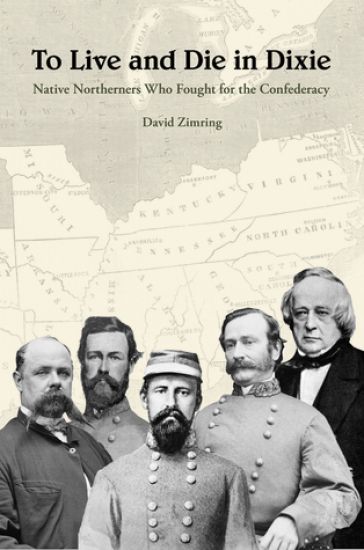
To Live and Die in Dixie

To Live and Die in Dixie

David Ross Zimring

University of Tennessee Press
2014
sidottu
According to the 1860 census, nearly 350,000 native northerners resided in a southern state by the time of the Civil War. Although northern in birth and upbringing, many of these men and women identified with their adopted section once they moved south. In this innovative study, David Ross Zimring examines what motivated these Americans to change sections, support (or not) the Confederate cause, and, in many cases, rise to considerable influence in their new homeland. By analyzing the lives of northern emigrants in the South, Zimring deepens our understanding of the nature of sectional identity as well as the strength of Confederate nationalism.Focusing on a representative sample of emigrants, Zimring identifies two subgroups: “adoptive southerners,” individuals born and raised in a state above the Mason-Dixon line but who but did not necessarily join the Confederacy after they moved south, and “Northern Confederates,” emigrants who sided with the Confederacy during the Civil War. After analyzing statistical data on states of origin, age, education, decade of migration, and, most importantly, the reasons why these individuals embarked for the South in the first place, Zimring goes on to explore the prewar lives of adoptive southerners, the adaptations they made with regard to slavery, and the factors that influenced their allegiances during the secession crisis. He also analyzes their contributions to the Confederate military and home front, the emergence of their Confederate identities and nationalism, their experiences as prisoners of war in the North, and the reactions they elicited from native southerners.In tracing these journeys from native northerner to Confederate veteran, this book reveals not only the complex transformations of adoptive southerners but also the flexibility of sectional and national identity before the war and the loss of that flexibility in its aftermath. To Live and Die in Dixie is a thought-provoking work that provides a novel perspective on the revolutionary changes the Civil War unleashed on American society.
Highland Herald

Highland Herald

David Ross; Harry Reid

Birlinn Ltd
2018
nidottu
From 1988 to 2017 David Ross was the Highland Correspondent of The Herald. His patch stretched from the Mull of Kintyre in the south to the Shetland island of Unst in the north; and from St Kilda, in the West, to the whisky country of Speyside in the east. From his home on the Black Isle he covered all the big stories, from the fight against a nuclear waste dump in Caithness to plans to remove half a mountain on the island of Harris. He helped the first community land buyout in modern times in Assynt, covered in depth the anti-toll campaign on the Skye Bridge, the efforts to save Gaelic and protect ferry services. In Highland Herald he reflects on the important issues which affected the Highlands and Islands during his time. He tells how his late father-in-law, the Gaelic poet Sorley MacLean, helped him. He had never written in depth about Sorley when he was alive, as it would have been ‘excruciatingly embarrassing for both of us’, but does so now.
Strikers: World Cup

Strikers: World Cup

David Ross; Bob Cattell

Carlton Books Ltd
2010
pokkari
England hosts the World Cup finals - and Sherwood Strikers provide the home squad with five players, including midfielder Thomas Headley. But the national coach is under a cloud, the team is no happy family and the opposition is the world's best. They say that England likes to win through from an underdog position - but can it really be done?
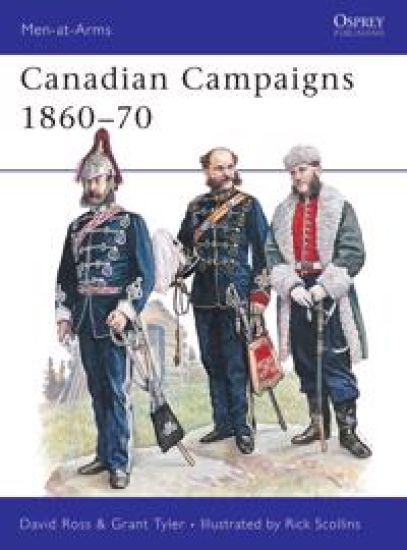
Canadian Campaigns 1860–70

Canadian Campaigns 1860–70

David Ross; Grant Tyler

Osprey Publishing
1992
nidottu
Although the US never attempted another invasion of British Canada after the war of 1812, during which British regulars and Canadian militia fought major pitched battles against US invaders, the threat lingered in the air for much of the 19th century. A series of brushfire wars disturbed Canada's peaceful development and in 1866 and again in 1870, large bodies of fanatical Irish-American volunteers attempted to stir up war between the two countries by mounting the "Fenian Raids" - serious campaigns, involving troops of brigade strength. In the later years of the decade, Louis Riel led two rebellions by Indians and French-Canadians which required considerable efforts to put them down. Significantly it was not British regulars but local Canadian troops that suppressed the last rebellion. This book details the rebel forces and the British force and fledgling Canadian army which fought them.
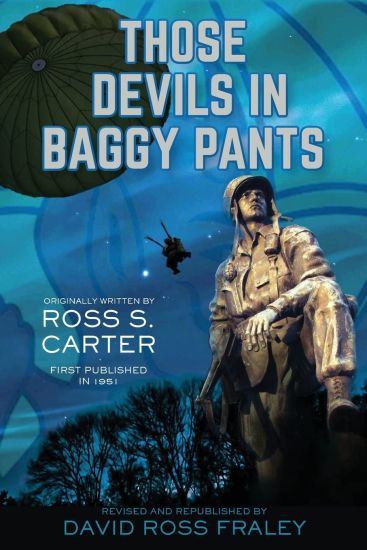
Those Devils in Baggy Pants

Those Devils in Baggy Pants

David Ross Fraley

Mountain Girl Press
2021
pokkari
Those Devils in Baggy Pants was originally published in 1951 by Ross S. Carter, a member of the 82nd Airborne Division during WWII. Carter, one of the three surviving members of his original platoon and Silver Star and Purple Heart awardee, sadly, was never able to see his book in print. Instead, the final chapters were pieced together by his brother, shortly after Carter's passing, with the help of Carter's meticulous notes.After its original publication in 1951, Those Devils in Baggy Pants sold one million copies, was a Reader's Digest condensed book, and was translated into multiple languages. Now, years after being out of print, the hit bestseller is being republished by a member of Carter's own family-David Ross Fraley.In republishing his relative's incredible tale it is Fraley's hope to honor both story and storyteller.Those Devils in Baggy Pants invites readers to join the C Company of the 504th Parachute Infantry Regiment 82nd Airborne Division. Within Carter's WWII memoir is a love story unlike any other- one that depicts the unparalleled affection between comrades.With the novel's republish come additions to Carter's tale, including the history of his book and a journey through Carter's writing process. Those Devils in Baggy Pants, and Carter himself, will leave a lasting impression on any reader.
Those Devils in Baggy Pants

Those Devils in Baggy Pants

David Ross Fraley

Mountain Girl Press
2021
sidottu
Those Devils in Baggy Pants was originally published in 1951 by Ross S. Carter, a member of the 82nd Airborne Division during WWII. Carter, one of the three surviving members of his original platoon and Silver Star and Purple Heart awardee, sadly, was never able to see his book in print. Instead, the final chapters were pieced together by his brother, shortly after Carter's passing, with the help of Carter's meticulous notes.After its original publication in 1951, Those Devils in Baggy Pants sold one million copies, was a Reader's Digest condensed book, and was translated into multiple languages. Now, years after being out of print, the hit bestseller is being republished by a member of Carter's own family-David Ross Fraley.In republishing his relative's incredible tale it is Fraley's hope to honor both story and storyteller.Those Devils in Baggy Pants invites readers to join the C Company of the 504th Parachute Infantry Regiment 82nd Airborne Division. Within Carter's WWII memoir is a love story unlike any other- one that depicts the unparalleled affection between comrades.With the novel's republish come additions to Carter's tale, including the history of his book and a journey through Carter's writing process.Those Devils in Baggy Pants, and Carter himself, will leave a lasting impression on any reader.