Kirjojen hintavertailu. Mukana 11 699 587 kirjaa ja 12 kauppaa.

Kirjahaku

Etsi kirjoja tekijän nimen, kirjan nimen tai ISBN:n perusteella.

1000 tulosta hakusanalla David T. Robison

Criminal Ancestors

Criminal Ancestors

David T Hawkings

The History Press Ltd
2009
nidottu
When a genealogist discovers a criminal way back in the family tree, he or she needs to know how to trace that person. David Hawkings here offers practical in-depth guidelines for researching these criminal ancestors, many of whom were 'obliged' to steal for mere survival and suffered imprisonment for the most trivial offences. His pioneering study includes surveys of material held by all County and Borough Record Offices, the Public Record Office, police archives and other repositories, as well as numerous example cases and illustrations, appendices with source material and a case history to show the extent to which one individual criminal can be researched. This unique and richly illustrated book provides the essential research and reference tool which no genealogist, social historian, criminologist or the merely curious should be without.
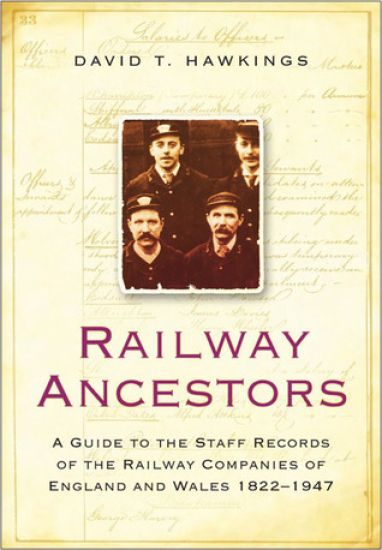
Railway Ancestors

Railway Ancestors

David T Hawkings

The History Press Ltd
2008
nidottu
Almost every family tree will have in one of its branches a railway employee. Railway Ancestors is a comprehensive and illustrated guide which opens up to genealogists and railway enthusiasts the vast range of unique information stored in the documentary archives of the railway companies of England and Wales.It describes in detail the sources available for the researcher and how to gain access to them, giving examples of the many different types of records, and includes (among extensive appendices) the a complete alphabetical listing of all the known railway companies which existed in England and Wales prior to nationalisation - almost a thousand in total - with their dates of opening in each county, and the location of their staff records.‘invaluable to family and railway historians..’ - Reviewed in Heritage Railway Magazine, 18th Feb ’10
Sheerness Naval Dockyard and Garrison

Sheerness Naval Dockyard and Garrison

David T Hughes

The History Press Ltd
2002
nidottu
Over 200 images recount the history of Sheerness Naval Dockyard and its garrison since their foundation in the mid-seventeenth century until the official closing ceremony in 1960, including impressive images of the venerable old hulk Cornwallis, a survivor from the time of the Napoleonic wars.
Chatham Naval Dockyard and Barracks

Chatham Naval Dockyard and Barracks

David T Hughes

The History Press Ltd
2004
nidottu
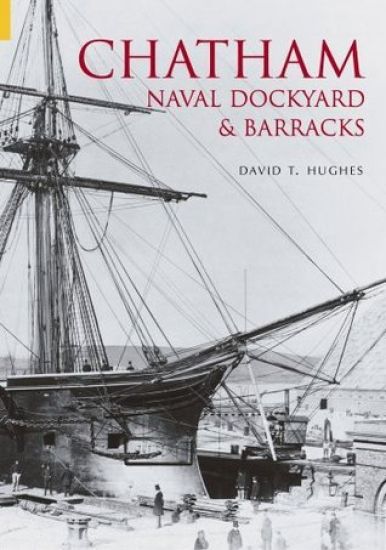
The history of Chatham Dockyard has been an eventful one. It owes its inception to King Henry VIII who, in 1547, selected the River Medway at Gillingham to be his main fleet anchorage. As more ships were added to the royal fleet the work of the dockyard was increased, until it was deemed necessary to build a small castle to protect the yard and anchorage from attack. In the wars and conflicts of the eighteenth and nineteenth centuries, Chatham Dockyard would be called upon again to play its part in maintaining an effective battle fleet. David T. Hughes has compiled a thoughtful and insightful volume of photographs and ephemera on the Chatham Naval Dockyard and Barracks, looking at it from its early days of existence until its role in more recent years, from the First and Second World Wars to the Falklands.
Flying Past: A History of Sheppey Aviation

Flying Past: A History of Sheppey Aviation

David T Hughes

The History Press Ltd
2009
nidottu
The Isle of Sheppey in north Kent was the birthplace of aviation in the UK and early pioneers, including the Wright Bros and Charles Rolls, gathered on its low, flat ground to undertake experimental flights. By 1909 the Short bros had established the first British aircraft factory and from there events snowballed. By 1911 the first naval aviators began training at nearby Eastchurch, which site became the first Royal Naval Air Station. Its popular first course had over 200 volunteers for just 4 places. The station served with distinction in the war that soon followed, as it did again through WW2, until its closure in the late 1940s. This year aviation enthusiasts will flock to Sheppey to celebrate the centenary of British aviation, enjoying the flypasts and displays of 25 vintage aircraft and other vehicles. This book serves as a timely reminder of the island's great contribution to the story of flight in the UK.
Pauper Ancestors

Pauper Ancestors

David T Hawkings

The History Press Ltd
2011
sidottu
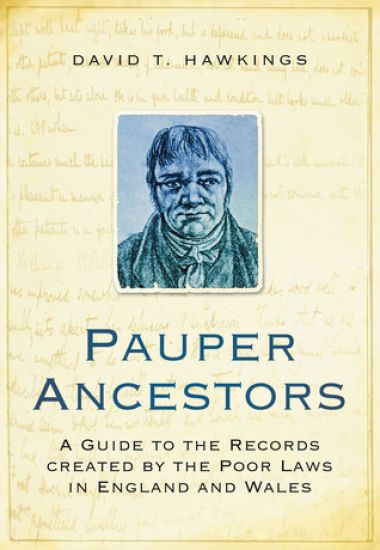
The first Poor Law was enacted in 1601, and this system of social security, which was supposed to ensure that those who could not work had food, drink and a roof over their heads, but which is inextricably linked in the public imagination with the cruelty of the workhouse, was not finally abolished until the creation of the NHS in 1948. Being part of the government bureaucracy, detailed records were kept of everything: rate-payers, collectors of rates, workhouse overseers and the staff and inmates of workhouses, as well poor people who were helped to move to the North of England to work in industry, those given assisted passage to Australia and children sent to Canada. David T. Hawkings, one of Britain’s leading genealogists, here explains for the first time how to use these records to trace your family history, providing an important, must-have resource for genealogists and family historians who want to make use of this comprehensive repository of information.
Bound for Australia

Bound for Australia

David T Hawkings

The History Press Ltd
2012
nidottu
2012 marked the 225th anniversary of the sailing of the eleven vessels of the First Fleet from England, bound for Australia. From the arrival of the first 788 convicts in 1788, to the end of transportation in 1868, a staggering 165,000 criminals were sent to Australia for a range of crimes. In addition to those transported, hundreds of thousands of free persons emigrated from Britain and Ireland to colonies in Australia. Because of the vast distance involved, few returned, and the descendants of many of them now live in Australia. Tracing those ancestors today may seem like a daunting task, with The National Archives alone holding over 100 miles of shelving for historical records. Now completely revised and expanded to include new research, Bound for Australia is the essential guide to these records. By directing the reader straight to the relevant files and providing a case study to follow the stages necessary to research your Antipodean relatives, Hawkings makes locating you Australian ancestors more achievable than ever before. Who knows, you may even trace your ancestor to the victualling list of 788 criminals on the First Fleet.
Emergency Services Leadership

Emergency Services Leadership

David T. Foster III; Chris Nollette; Frank P. Nollette; Brent J. Goertzen

Jones and Bartlett Publishers, Inc
2012
nidottu
Emergency Services Leadership: A Contemporary Approach offers a comprehensive view of the historical developments of leadership models, presents a variety of leadership theories, and explores how various theories apply to current emergency services leadership roles. The authors address how leadership has evolved from the theories of “position and authority” to more contemporary approaches in which leadership is expressed in terms of influence relations, servitude, risk agencies, and transformational change agents. Best practices for making ethical, compassionate, and competent leadership decisions are also discussed. The ideal introduction to leadership concepts in modern-day emergency services agencies, Emergency Services Leadership: A Contemporary Approach is appropriate for EMS, fire services, law enforcement, emergency management, and military courses and is an ideal resource for department-specific training programs, especially for officer development. The authors weave personal experiences, interviews with current emergency services leaders, and leadership points to ponder throughout the chapters. End-of-chapter activities allow readers to explore their leadership capabilities and apply concepts presented in the text. The author team brings their extensive experience in emergency services, military application, and leadership research to this text. All of the authors are involved in higher education levels and serve in leadership capacities in various arenas.
Collectible Enameled Ware

Collectible Enameled Ware

David T. Pikul

Schiffer Publishing Ltd
1998
sidottu
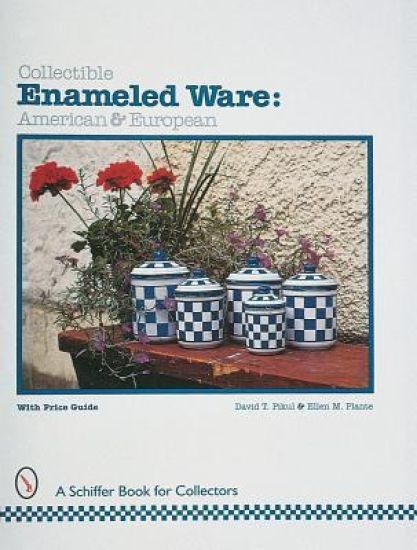
Collectible Enameled Ware: American & European is a celebration of those vintage wares that humbly served in the kitchens and households of the past, but have since achieved status as highly sought-after antiques. It's not only American-made enameled ware that's creating such a stir.European enameled ware, with its vibrant colors and spectacular graphic designs, is also highly in demand. A concise text and over 375 color photographs with value ranges offer antiques dealers, collectors, and interior designers a close-up look at the beautiful examples of enameled ware produced throughout Europe and the United States between the late 1800s and 1940. Decorative patterns, floral graphic designs, one-of-a-kind items-these are but a few of the attributes that lead many collectors to think of antique enameled ware as relics of a lost art.
Antique Enameled Ware

Antique Enameled Ware

David T. Pikul

Schiffer Publishing Ltd
2003
sidottu
Before the age of Pyrex*TM and plastic, attractive, utilitarian, enameled metal wares adorned kitchens and homes throughout Europe and America. Decorative and durable, enameled ware was made for almost every household purpose - brewing, storing, food preparation, cooking, serving, toting, pouring, and washing. This handsome book showcases, identifies, and explains the myriad of uses that enameled ware provided from the 1880s to the 1940s. Decorations abound - from plain and simple to bold geometrics and lively florals. Many of the most desirable patterns and designs, including the highly collectible End of the Day, Chrysolite, and the coveted cobalt blue pieces are featured here. Today, they provide charming vintage decoration to brighten interior and garden spaces alike. This book will be cherished by beginning collectors and seasoned decorators familiar with two previous books on the subject by the same author. The book includes over 475 color photos with identifying captions and values for the collector, dealer, decorator, and designer.
No Place for Fairness

No Place for Fairness

David T. McNab

McGill-Queen's University Press
2009
sidottu
Aboriginal policy and claims negotiation in Canada is seen to be a murky and perplexing world that has become an important public issue and has significant policy implications for government spending. Aboriginal land policy in Canada began as an Aboriginal initiative. In "No Place for Fairness", David McNab - a long time adviser on land and treaty rights for both government and First Nations groups - looks at the Bear Island Indigenous rights case, initiated by the Teme-Augama Anishinabe, to explore why governments fail to deal effectively with Aboriginal land claims. The book, divided into two sections, includes a survey of the historical background of the Bear Island claim followed by a more personal series of reflections about what happened as the claim encountered decades of policy hurdles, court cases, public protests, and above all resistance by the Temagami First Nation. McNab provides details of how ministers and their senior officials resisted real efforts to resolve problems as well as examples of field staff resisting government attempts at resolution. He also shows that government entities such as the Indian Commission of Ontario and the Native Affairs Directorate were largely used as 'mailboxes' where successive federal and provincial governments sent things they wanted to bury. "No Place for Fairness" is the story of what happens when Aboriginal people's political rights are crammed into the Euro-Canadian legal system. McNab makes a clear case that a legalistic approach to these problems is wholly inadequate and that more important things - like fairness - must be recognized as paramount if a just and lasting Aboriginal land policy is to be created.
No Place for Fairness

No Place for Fairness

David T. McNab

McGill-Queen's University Press
2009
nidottu
Aboriginal policy and claims negotiation in Canada is seen to be a murky and perplexing world that has become an important public issue and has significant policy implications for government spending. Aboriginal land policy in Canada began as an Aboriginal initiative. In No Place for Fairness, David McNab - a long time advisor on land and treaty rights for both government and First Nations groups - looks at the Bear Island Indigenous rights case, initiated by the Teme-Augama Anishinabe, to explore why governments fail to deal effectively with Aboriginal land claims. The book, divided into two sections, includes a survey of the historical background of the Bear Island claim followed by a more personal series of reflections about what happened as the claim encountered decades of policy hurdles, court cases, public protests, and above all resistance by the Temagami First Nation. McNab provides details of how ministers and their senior officials resisted real efforts to resolve problems as well as examples of field staff resisting government attempts at resolution. He also shows that government entities such as the Indian Commission of Ontario and the Native Affairs Directorate were largely used as "mailboxes" where successive federal and provincial governments sent things they wanted to bury. No Place for Fairness is the story of what happens when Aboriginal peoples' political rights are crammed into the Euro-Canadian legal system. McNab makes a clear case that a legalistic approach to these problems is wholly inadequate and that more important things - like fairness - must be recognized as paramount if a just and lasting Aboriginal land policy is to be created.
W.C. Fields--An Annotated Guide

W.C. Fields--An Annotated Guide

David T. Rocks

McFarland Co Inc
2014
pokkari
A documented chronology traces Fields' work in all media. The bibliographies cover 16 typescripts and more than 525 books and periodicals, with full annotations describing the work and setting it in context. Studio, date of release, length, director and cast credits are listed in the filmography. The discography includes all albums on which Fields appeared. Also detailed are the 17 cigarette cards that featured Fields.
College Knowledge

College Knowledge

David T. Conley

Jossey-Bass Inc.,U.S.
2008
nidottu
Although more and more students have the test scores and transcripts to get into college, far too many are struggling once they get there. These students are surprised to find that college coursework demands so much more of them than high school. For the first time, they are asked to think deeply, write extensively, document assertions, solve non-routine problems, apply concepts, and accept unvarnished critiques of their work. College Knowledge confronts this problem by looking at the disconnect between what high schools do and what colleges expect and proposes a solution by identifying what students need to know and be able to do in order to succeed. The book is based on an extensive three-year project sponsored by the Association of American Universities in partnership with The Pew Charitable Trusts. This landmark research identified what it takes to succeed in entry-level university courses. Based on the project's findings - and interviews with students, faculty, and staff - this groundbreaking book delineates the cognitive skills and subject area knowledge that college-bound students need to master in order to succeed in today's colleges and universities. These Standards for Success cover the major subject areas of English, mathematics, natural sciences, social sciences, second languages, and the arts.
Education for Public Democracy

Education for Public Democracy

David T. Sehr

State University of New York Press
1997
pokkari
Examines the kinds of school structures and educational practices that nurture the development of young people as public, democratic citizens.Education for Public Democracy identifies two competing traditions of American democracy and citizenship: a dominant, privately-oriented citizenship tradition and an alternative tradition of public democratic citizenship. Based on the second tradition, public democracy, the author outlines a set of qualities an effective democratic citizen must possess, as well as a number of ideal school practices that promote these qualities in young people. This discussion provides a framework for analyzing two democratic urban alternative high schools.The book provides an essential bridge between democratic theory and promising school practices that promote public democratic citizenship. Its insights will be indispensable to teachers, school administrators, teacher educators, and theorists who seek to recreate American education in the service of a revitalized democracy.
Philo in Early Christian Literature

Philo in Early Christian Literature

David T Runia

Fortress Press,U.S.
1993
sidottu
It is a remarkable fact that the writings of Philo, the Jew from Alexandria, were preserved because they were taken up in the Christian tradition. But the story of how this process of reception and appropriation took place has never been systematically research. In this book the author first examines how Philo's works are related to the New Testament and the earliest Chritian writing, and then how they were used by Greek and Latin church fathers up to 400 c.e., with special attention to the contributions of Clement, Origen, Didymus, Eusebius, Gregory of Nyssa, Ambrose, and Augstine. Philo in Early Christian Literature is a valuable guide to the state of scholarly research on a subject that has thus far been investigated in a rather piecemeal fashion.
Social Regulation in Markets for Consumer Goods and Services

Social Regulation in Markets for Consumer Goods and Services

David T. Scheffman; Elie Appelbaum

University of Toronto Press
1982
pokkari
This study has two parts: In the first, the economics of rational policy formulation and the economic theory of social regulation in markets for consumer goods and services are developed. Building on the economic analysis developed formerly, the second part of the study summarizes the legal basis of social regulation in Canada, summarizes and critically reviews social regulation in Ontario, and provides our policy recommendations. The latter chapters address social regulation by the provincial government in Ontario and conclude with a brief summary of the preceding chapters and statement of the major policy conclusions.This research is intended to provide four main contributions: to develop an economic analysis of social regulation in markets for consumer goods and services, examine the division of regulatory powers between the federal and provincial governments, summarize the social regulatory activities of the provincial government in Ontario, and provide an extensive bibliography of the literature relating to social regulation.
Eccentric Spaces, Hidden Histories

Eccentric Spaces, Hidden Histories

David T. Bialock

Stanford University Press
2007
sidottu
After The Tale of Genji (c. 1000), the greatest work of classical Japanese literature is the historical narrative The Tale of the Heike (13th-14th centuries). In addition to opening up fresh perspectives on the Heike narratives, this study also draws attention to a range of problems centered on the interrelationship between narrative, ritual space, and Japan's changing views of China as they bear on depictions of the emperor's authority, warriors, and marginal population going all the way back to the Nara period. By situating the Heike in this long temporal framework, the author sheds light on a hidden history of royal authority that was entangled in Daoist and yin-yang ideas in the Nara period, practices centered on defilement in the Heian period, and Buddhist doctrines pertaining to original enlightenment in the medieval period, all of which resurface and combine in Heike's narrative world. In introducing for the first time the full range of Heike narrative to students and scholars of Japanese literature, the author argues that we must also reexamine our understanding of the literature, ritual, and culture of the Heian and Nara periods.