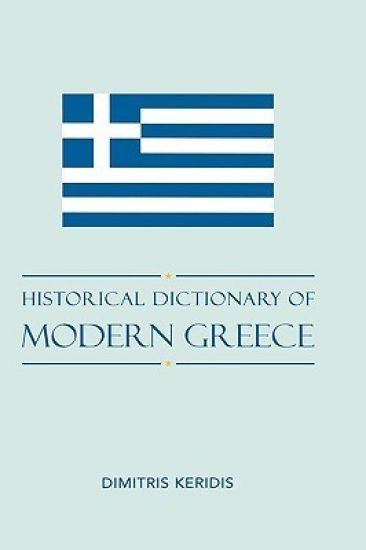
Located on the southern-most tip of the Balkan peninsula in Europe's southeast, Greece is a small country of some 11 million people. And while few people have a longer history than the Greeks, Modern Greece is a fairly young country, having been founded in 1830. Greece has come a long way since then; it has been a client state, first of Britain and then of the United States, for much of its modern existence but now it has secured an equal place at the top tables of NATO and the EU. The Historical Dictionary of Modern Greece explores the modern history of this country through a chronology, an introductory essay, a bibliography, and hundreds of cross-referenced dictionary entries on important persons, places, events, and institutions, as well as on significant political, economic, social, and cultural aspects.
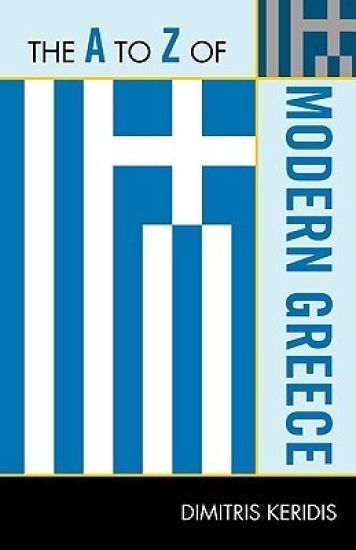
Located on the southern-most tip of the Balkan peninsula in Europe's southeast, Greece is a small country of some 11 million people. And while few people have a longer history than the Greeks, Modern Greece is a fairly young country, having been founded in 1830. Greece has come a long way since then; it has been a client state, first of Britain and then of the United States, for much of its modern existence but now it has secured an equal place at the top tables of NATO and the EU. The A to Z of Modern Greece explores the modern history of this country through a chronology, an introductory essay, a bibliography, and hundreds of cross-referenced dictionary entries on important persons, places, events, and institutions, as well as on significant political, economic, social, and cultural aspects.
In Paradoxes of Emancipation, Dimitris Soudias traces the formation of political subjectivity in times of crisis, by attending to the 2011 occupation of Syntagma Square in Athens: the heart of the Greek anti-austerity movement. Soudias conceives of the Syntagma Square occupation as a lens through which we can critically engage with broader theoretical and political issues about the crumbling promises of the capitalist imaginary, the epistemic "spirit" of neoliberal rationalities, the spatialized practices of navigating precarity and uncertainty, and the prospects for a radically better tomorrow.By challenging both the romanticization of anti-austerity activism and the reduction of neoliberalism to mere free market thinking, Soudias reveals that the relationship between political subject formation and emancipation in neoliberalism is utterly paradoxical: in their effort to overcome neoliberal rationalities, individuals also partly stabilize them. Interweaving the stories and insights of activists with light-touch sociology, geography, and political theory, this book makes bold claims about the future of emancipation by envisioning an "alter-neoliberal critique." In so doing, Paradoxes of Emancipation presents an illuminating inquiry into how our experiences with capitalist crises lead to profound reevaluations of ourselves in ways that challenge our expectations of the future.
In Paradoxes of Emancipation, Dimitris Soudias traces the formation of political subjectivity in times of crisis, by attending to the 2011 occupation of Syntagma Square in Athens: the heart of the Greek anti-austerity movement. Soudias conceives of the Syntagma Square occupation as a lens through which we can critically engage with broader theoretical and political issues about the crumbling promises of the capitalist imaginary, the epistemic "spirit" of neoliberal rationalities, the spatialized practices of navigating precarity and uncertainty, and the prospects for a radically better tomorrow.By challenging both the romanticization of anti-austerity activism and the reduction of neoliberalism to mere free market thinking, Soudias reveals that the relationship between political subject formation and emancipation in neoliberalism is utterly paradoxical: in their effort to overcome neoliberal rationalities, individuals also partly stabilize them. Interweaving the stories and insights of activists with light-touch sociology, geography, and political theory, this book makes bold claims about the future of emancipation by envisioning an "alter-neoliberal critique." In so doing, Paradoxes of Emancipation presents an illuminating inquiry into how our experiences with capitalist crises lead to profound reevaluations of ourselves in ways that challenge our expectations of the future.
The Doppelgänger or Double presents literature as the "double" of philosophy. There are historical reasons for this. The genesis of the Doppelgänger is literature's response to the philosophical focus on subjectivity. The Doppelgänger was coined by the German author Jean Paul in 1796 as a critique of Idealism's assertion of subjective autonomy, individuality and human agency. This critique prefigures post-War extrapolations of the subject as decentred. From this perspective, the Doppelgänger has a "family resemblance" to current conceptualizations of subjectivity. It becomes the emblematic subject of modernity. This is the first significant study on the Doppelgänger's influence on philosophical thought. The Doppelgänger emerges as a hidden and unexplored element both in conceptions of subjectivity and in philosophy's relation to literature. Vardoulakis demonstrates this by employing the Doppelgänger to read literature philosophically and to read philosophy as literature. The Doppelgänger then appears instrumental in the self-conception of both literature and philosophy.
The Doppelgänger or Double presents literature as the "double" of philosophy. There are historical reasons for this. The genesis of the Doppelgänger is literature's response to the philosophical focus on subjectivity. The Doppelgänger was coined by the German author Jean Paul in 1796 as a critique of Idealism's assertion of subjective autonomy, individuality and human agency. This critique prefigures post-War extrapolations of the subject as decentred. From this perspective, the Doppelgänger has a "family resemblance" to current conceptualizations of subjectivity. It becomes the emblematic subject of modernity. This is the first significant study on the Doppelgänger's influence on philosophical thought. The Doppelgänger emerges as a hidden and unexplored element both in conceptions of subjectivity and in philosophy's relation to literature. Vardoulakis demonstrates this by employing the Doppelgänger to read literature philosophically and to read philosophy as literature. The Doppelgänger then appears instrumental in the self-conception of both literature and philosophy.
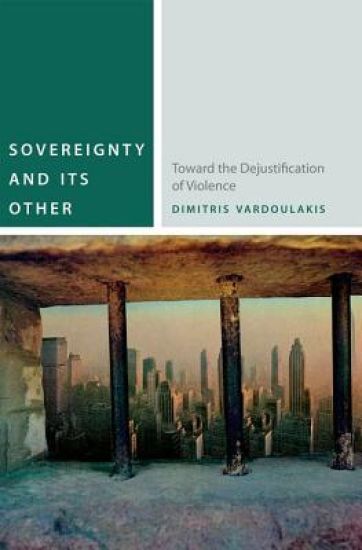
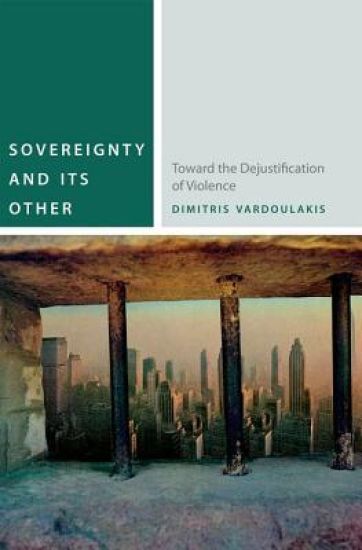
In this new book, Dimitris Vardoulakis asks how it is possible to think of a politics that is not commensurate with sovereignty. For such a politics, he argues, sovereignty is defined not in terms of the exception but as the different ways in which violence is justified. Vardoulakis shows how it is possible to deconstruct the various justifications of violence. Such dejustifications can take place only by presupposing an other to sovereignty, which Vardoulakis identifies with radical democracy. In doing so, Sovereignty and Its Other puts forward both a novel critique of sovereignty and an original philosophical theory of democratic practice.
In this new book, Dimitris Vardoulakis asks how it is possible to think of a politics that is not commensurate with sovereignty. For such a politics, he argues, sovereignty is defined not in terms of the exception but as the different ways in which violence is justified. Vardoulakis shows how it is possible to deconstruct the various justifications of violence. Such dejustifications can take place only by presupposing an other to sovereignty, which Vardoulakis identifies with radical democracy. In doing so, Sovereignty and Its Other puts forward both a novel critique of sovereignty and an original philosophical theory of democratic practice.
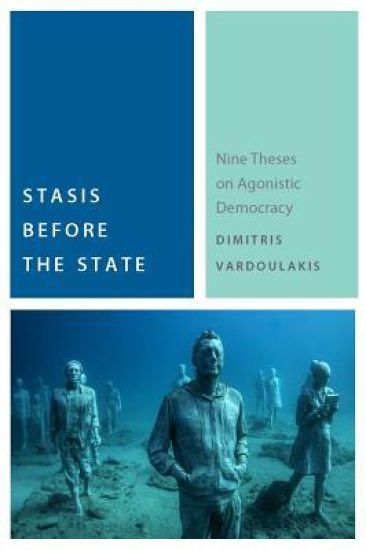
This book critiques the relation between sovereignty and democracy. Across nine theses, Vardoulakis argues that sovereignty asserts its power by establishing exclusions: the sovereign excluding other citizens from power and excludes refugees and immigrants from citizenship. Within this structure, to resist sovereignty is to reproduce the logic of exclusion characteristic of sovereignty. In contrast to this "ruse of sovereignty," Vardoulakis proposes an alternative model for political change. He argues that democracy can be understood as the structure of power that does not rely on exclusions and whose relation to sovereignty is marked not by exclusion but of incessant agonism. The term stasis, which refers both to the state and to revolution against it, offers a tension that helps to show how the democratic imperative is presupposed by the logic of sovereignty, and how agonism is more primary than exclusion. In elaborating this ancient but only recently recovered concept of stasis, Vardoulakis illustrates the radical potential of democracy to move beyond the logic of exclusion and the ruse of sovereignty.
This book critiques the relation between sovereignty and democracy. Across nine theses, Vardoulakis argues that sovereignty asserts its power by establishing exclusions: the sovereign excluding other citizens from power and excludes refugees and immigrants from citizenship. Within this structure, to resist sovereignty is to reproduce the logic of exclusion characteristic of sovereignty. In contrast to this "ruse of sovereignty," Vardoulakis proposes an alternative model for political change. He argues that democracy can be understood as the structure of power that does not rely on exclusions and whose relation to sovereignty is marked not by exclusion but of incessant agonism. The term stasis, which refers both to the state and to revolution against it, offers a tension that helps to show how the democratic imperative is presupposed by the logic of sovereignty, and how agonism is more primary than exclusion. In elaborating this ancient but only recently recovered concept of stasis, Vardoulakis illustrates the radical potential of democracy to move beyond the logic of exclusion and the ruse of sovereignty.
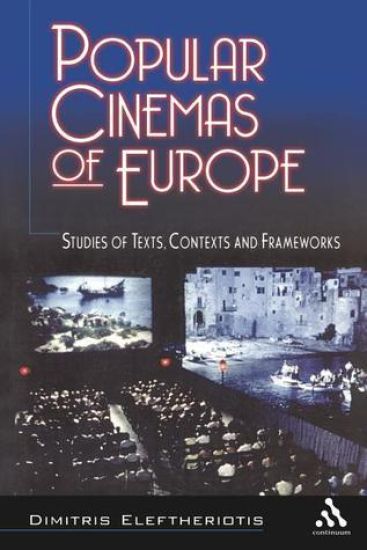
This book challenges the established conceptual and historical paradigm in Anglo-American film studies that perceives European cinema as essentially 'high art.' Through a study of the specific contexts in which popular European films are produced, distributed and exhibited, the book proposes new analytical and critical frameworks for their study. Films analyzed in the book include Cinema Paradiso, Mediterraneo, Bhaji on the Beach, Until the End of the World, Underground, and Jam=n Jam=n.
Although it is one of the most dynamic and controversial areas of Greek culture, Greek modernism has received little scholarly attention as a literary and cultural phenomenon. A wide variety of competing, often clashing discourses and approaches characterize the study of Greek modernism. In this landmark volume, scholars from three continents provide a framework in which developments in prose, poetry, and drama can be studied together. The contributors seek to redefine the contours of Greek modernism, to reassess its impact on Greek culture, to explore the fringes of the movement. Special attention is paid to the role of the avant-garde in Greece and the emergence of postmodern trends in Greek culture. Greek Modernism and Beyond is valuable reading for students and scholars of Greek and European literature.
The Social Structure of the Early Christian Communities deals with a small number of topics which, in one way or another, have long attracted the attention of students of early Christianity. Above all, it is an attempt to investigate the social origins and the social positions of the early Christians. Recent studies are arriving at the conclusion, contrary to long-held views, that the primitive Christian communities, those which emerge after the first chapters of Acts, did not consist of the 'dregs of the populace'. However, in spite of the important work which is being done on the subject, few of the recent books concerned with such sociological issues go far beyond the New Testament age. What still requires investigation is the composition of the early communities from the first years of the mission to the Gentiles down to the age of Constantine, when large sections of the population, from all social classes, started joining the Christian churches.
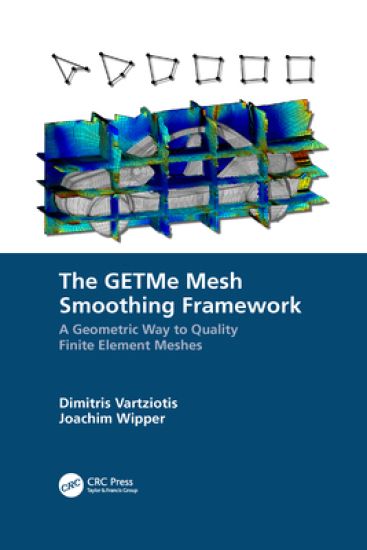
High quality meshes play a key role in many applications based on digital modeling and simulation. The finite element method is a paragon for such an approach and it is well known that quality meshes can significantly improve computational efficiency and solution accuracy of this method. Therefore, a lot of effort has been put in methods for improving mesh quality. These range from simple geometric approaches, like Laplacian smoothing, with a high computational efficiency but possible low resulting mesh quality, to global optimization-based methods, resulting in an excellent mesh quality at the cost of an increased computational and implementational complexity.The geometric element transformation method (GETMe) aims to fill the gap between these two approaches. It is based on geometric mesh element transformations, which iteratively transform polygonal and polyhedral elements into their regular counterparts or into elements with a prescribed shape. GETMe combines a Laplacian smoothing-like computational efficiency with a global optimization-like effectiveness. The method is straightforward to implement and its variants can also be used to improve tangled and anisotropic meshes.This book describes the mathematical theory of geometric element transformations as foundation for mesh smoothing. It gives a thorough introduction to GETMe-based mesh smoothing and its algorithms providing a framework to focus on effectively improving key mesh quality aspects. It addresses the improvement of planar, surface, volumetric, mixed, isotropic, and anisotropic meshes and addresses aspects of combining mesh smoothing with topological mesh modification.The advantages of GETMe-based mesh smoothing are demonstrated by the example of various numerical tests. These include smoothing of real world meshes from engineering applications as well as smoothing of synthetic meshes for demonstrating key aspects of GETMe-based mesh improvement. Results are compared with those of other smoothing methods in terms of runtime behavior, mesh quality, and resulting finite element solution efficiency and accuracy.Features:• Helps to improve finite element mesh quality by applying geometry-driven mesh smoothing approaches.• Supports the reader in understanding and implementing GETMe-based mesh smoothing.• Discusses aspects and properties of GETMe smoothing variants and thus provides guidance for choosing the appropriate mesh improvement algorithm.• Addresses smoothing of various mesh types: planar, surface, volumetric, isotropic, anisotropic, non-mixed, and mixed.• Provides and analyzes geometric element transformations for polygonal and polyhedral elements with regular and non-regular limits.• Includes a broad range of numerical examples and compares results with those of other smoothing methods.
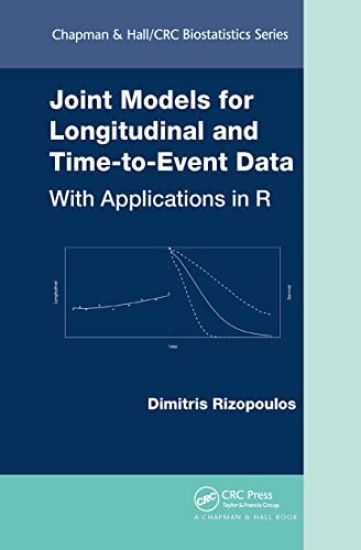
In longitudinal studies it is often of interest to investigate how a marker that is repeatedly measured in time is associated with a time to an event of interest, e.g., prostate cancer studies where longitudinal PSA level measurements are collected in conjunction with the time-to-recurrence. Joint Models for Longitudinal and Time-to-Event Data: With Applications in R provides a full treatment of random effects joint models for longitudinal and time-to-event outcomes that can be utilized to analyze such data. The content is primarily explanatory, focusing on applications of joint modeling, but sufficient mathematical details are provided to facilitate understanding of the key features of these models. All illustrations put forward can be implemented in the R programming language via the freely available package JM written by the author.All the R code used in the book is available at:http://jmr.r-forge.r-project.org/