Kirjojen hintavertailu. Mukana 11 515 149 kirjaa ja 12 kauppaa.

Kirjahaku

Etsi kirjoja tekijän nimen, kirjan nimen tai ISBN:n perusteella.

1000 tulosta hakusanalla Dmitri Mereschkowski

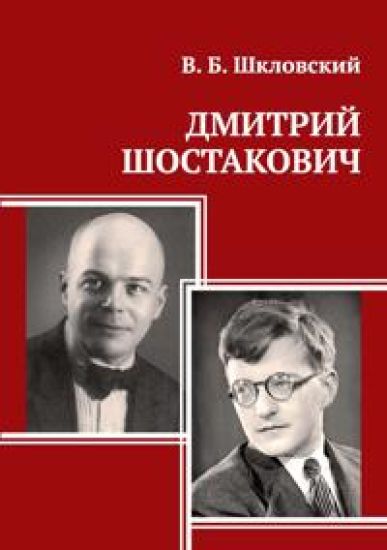
V. Shklovsky Dmitri Shostakovich

V. Shklovsky Dmitri Shostakovich

Viktor Shklovskij; Mikhail Alejnikov

Compozitor (SPb.)
2023
muu
The book is in Russian. Preparation of texts for publication, introductory article, comments by M. I. AleinikovThe essay by V. B. Shklovsky is one of the few texts written about Shostakovich by outstanding writers during his lifetime. Appearing during the World War II, this essay was published twice at the same time, but - a paradox of history! - remained completely outside the attention of both researchers and ordinary music lovers of the great composer. Readers are offered two versions of the text: the original, author's, kept in the archive for many years, and with editorial corrections, published in 1943 in the collection "Stalin's Tribe". The publication is accompanied by an introductory article devoted to the history of the essay and the peculiarities of its content, as well as detailed textual and reference comments.
Symphony No. 4, Op. 43: New Collected Works of Dmitri Shostakovich - Volume 19
(DSCH). Composer's arrangements for 2 pianos 4 hands. These volumes are the first releases of an ambitious series started in 1999 by DSCH, the exclusive publisher of the works of Dmitri Shostakovich. Each volume contains new engravings; articles regarding the history of the compositions; facsimile pages of Shostakovich's manuscripts, outlines, and rough drafts; as well as interpretations of the manuscripts. In total, 150 volumes are planned for publication.
Symphony No. 5, Op. 47: New Collected Works of Dmitri Shostakovich - Volume 5
(DSCH). These volumes are the first releases of an ambitious series by DSCH, the exclusive publisher of the works of Shostakovich. Each volume contains: new engravings; articles regarding the history of the compositions; facsimile pages of Shostakovich's manuscripts, outlines and rough drafts; plus interpretations of the manuscripts. In total, 150 volumes are planned for publication.
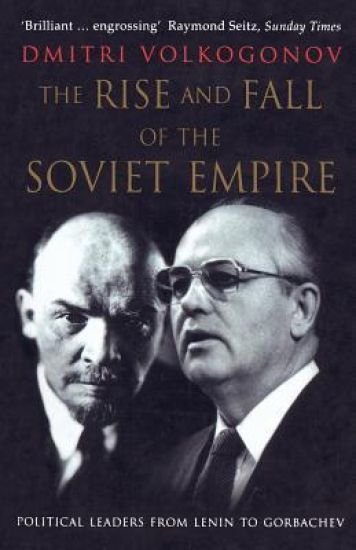
Rise and Fall of the Soviet Empire

Rise and Fall of the Soviet Empire

Dmitri Volkogonov

HARPERCOLLINS PUBLISHERS
1999
pokkari
Following his great trilogy of biographies of the giants who dominated the history of the Soviet Union - Stalin (1991), Lenin (1994) and Trotsky (1996) - Dmitri Volkogonov delves deeper into the Soviet archives to produce new character evaluations and political assessments of the seven leaders who ruled the Soviet Union from 1917 to 1991.
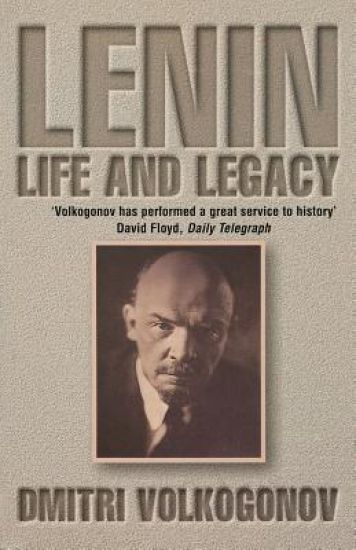
Lenin

Lenin

Dmitri Volkogonov

HARPERCOLLINS PUBLISHERS
2008
nidottu
'Based on research among thousands of unpublished documents concealed in the Communist Party archives until the fall of the regime, Lenin: Life and Legacy is a crushing indictment of the regime's founder...' Sally Laird, Observer
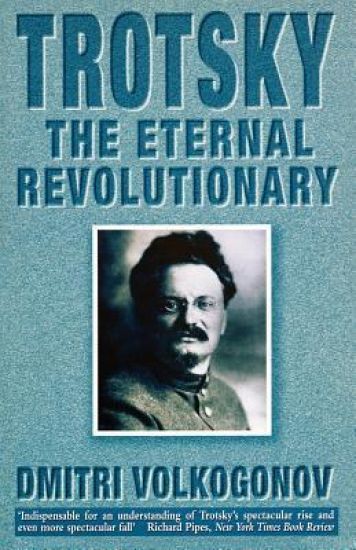
Trotsky

Trotsky

Dmitri Volkogonov

HARPERCOLLINS PUBLISHERS
2008
pokkari
'Absorbing... I now place Volkogonov's great biographical triptych [Stalin, Lenin, Trotsky] at the top of my reading list on the Russian revolution.'Niall Ferguson, Sunday Times
PEM Water Electrolysis

PEM Water Electrolysis

Dmitri Bessarabov; Pierre Millet

Academic Press Inc.(London) Ltd
2018
nidottu
PEM Water Electrolysis, a volume in the Hydrogen Energy and Fuel Cell Primers series presents the most recent advances in the field. It brings together information that has thus far been scattered in many different sources under one single title, making it a useful reference for industry professionals, researchers and graduate students. Volumes One and Two allow readers to identify technology gaps for commercially viable PEM electrolysis systems for energy applications and examine the fundamentals of PEM electrolysis and selected research topics that are top of mind for the academic and industry community, such as gas cross-over and AST protocols. The book lays the foundation for the exploration of the current industrial trends for PEM electrolysis, such as power to gas application and a strong focus on the current trends in the application of PEM electrolysis associated with energy storage.
PEM Water Electrolysis

PEM Water Electrolysis

Dmitri Bessarabov; Pierre Millet

Academic Press Inc
2018
nidottu
Hydrogen Energy and Fuel Cell Primers is a series of concise books that present those coming into this broad and multidisciplinary field the most recent advances in each of its particular topics. Its volumes bring together information that has thus far been scattered in many different sources under one single title, which makes them a useful reference for industry professionals, researchers and graduate students, especially those starting in a new topic of research. These volumes, PEM Water Electrolysis vol 1 and 2, allows these readers to identify the technology gaps for the development of commercially viable PEM electrolysis systems for energy applications. This primer examines the fundamentals of PEM electrolysis and selected research topics that are currently subject of attention by academic and industry community, such as gas cross-over and AST protocols. This lays the foundation for the exploration of the current industrial trends for PEM electrolysis, such as power to gas application, are discussed, with strong focus on the current trends in the application of PEM electrolysis associated with energy storage. These include durability aspects of PEM electrolysis systems and components, accelerated stress test protocols, manufacturing aspects of large-scale electrolyzers and components, gas crossover problems in PEM electrolyzer safety, and challenges associated with high-current density operation of PEM electrolyzers. A technology development matrix for systems and components requirements will also be covered, as well as unconventional PEM water electrolysis systems, such as ozone generators
Neoplatonism in Late Antiquity

Neoplatonism in Late Antiquity

Dmitri Nikulin

Oxford University Press Inc
2019
sidottu
This book is a philosophical study of two major thinkers who span the period of late antiquity. While Plotinus stands at the beginning of its philosophical tradition, setting the themes for debate and establishing strategies of argument and interpretation, Proclus falls closer to its end, developing a grand synthesis of late ancient thought. The book discusses many central topics of philosophy and science in Plotinus and Proclus, such as the one and the many, number and being, the individuation and constitution of the soul, imagination and cognition, the constitution of number and geometrical objects, indivisibility and continuity, intelligible and bodily matter, and evil. It shows that late ancient philosophy did not simply embrace and borrow from the major philosophical traditions of earlier antiquity--Platonism, Aristotelianism, Stoicism--by providing marginal comments on widely-known philosophical texts. Rather, Neoplatonism offered a set of highly original and innovative insights into the nature of being and thought, which can be distinguished in much subsequent philosophical thought, up until modernity.
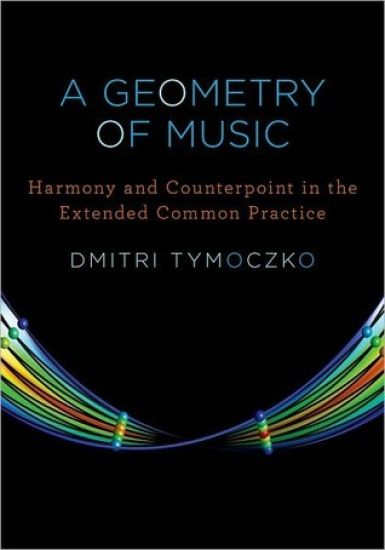
A Geometry of Music

A Geometry of Music

Dmitri Tymoczko

Oxford University Press Inc
2011
sidottu
Most listeners prefer tonal music to atonal music, but what exactly is the difference between them? In this groundbreaking work, author Dmitri Tymoczko identifies five basic musical features that jointly contribute to the sense of tonality, and shows how these features recur throughout the history of Western music. Tymoczko creates for the reader a new framework for thinking about music, one that emphasizes the commonalities among styles from Medieval polyphony to contemporary jazz. A Geometry of Music provides an accessible introduction to Tymoczko's revolutionary geometrical approach to music theory. The book shows how to construct simple diagrams representing the relationships among familiar chords and scales. This gives readers the tools to translate between the musical and visual realms, revealing surprising degrees of structure in otherwise hard-to-understand pieces. Tymoczko uses these theoretical ideas to retell the history of Western music from the eleventh century to the present day. Arguing that traditional histories focus too narrowly on the "common practice" period from 1680-1850, he proposes instead that Western music comprises an extended common practice stretching from the late middle ages to the present. Using analysis to make his argument clear, he discusses a host of familiar pieces by Bach, Mozart, Chopin, Debussy, Stravinsky, Shostakovich, Miles Davis, Bill Evans, and others. A Geometry of Music is accessible to a range of readers, from undergraduate music majors to scientists and mathematicians with an interest in music. Defining its terms along the way, it presupposes no special mathematical background and only a basic familiarity with Western music theory. The book also contains exercises designed to reinforce and extend readers' understanding, along with a series of appendices that explore the technical details of this exciting new theory.
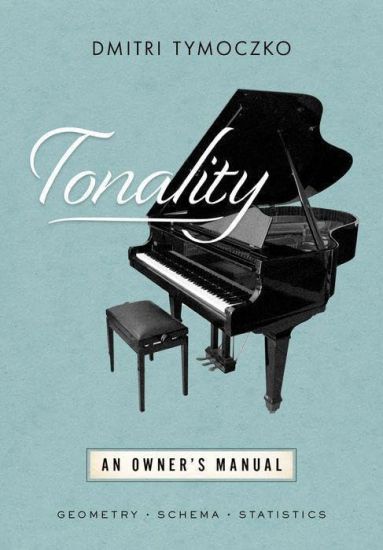
Tonality

Tonality

Dmitri Tymoczko

OXFORD UNIVERSITY PRESS INC
2023
sidottu
This encyclopaedic book proposes a sweeping reformulation of the basic concepts of Western music theory, revealing simple structures underlying a wide range of practices from the Renaissance to contemporary pop. Its core innovation is a collection of simple geometrical models describing the implicit knowledge governing a broad range of music-making, much as the theory of grammar describes principles that tacitly guide our speaking and writing. Each of its central chapters re-examines a basic music-theoretical concept such as voice leading, repetition, nonharmonic tones, the origins of tonal harmony, the grammar of tonal harmony, modulation, and melody. These are flanked by two largely analytical chapters on rock harmony and Beethoven. Wide-ranging in scope, and with almost 700 musical examples from the Middle Ages to the present day, Tonality: An Owner's Manual weaves philosophy, mathematics, statistics, and computational analysis into a new and truly twenty-first century theory of music.
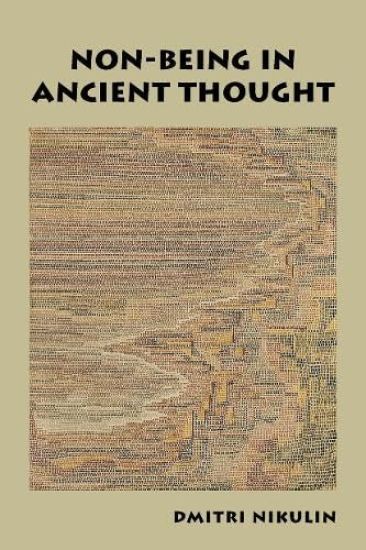
Non-Being in Ancient Thought

Non-Being in Ancient Thought

Dmitri Nikulin

OXFORD UNIVERSITY PRESS INC
2025
sidottu
Being has been at the forefront of philosophical debate from its very beginnings, whereas non-being has been considered derivative of being and an obstacle for thought. Dmitri Nikulin argues that without non-being, being can neither be nor thought. Non-Being in Ancient Thought provides a critical, historical, and systematic reconstruction of the concept of non-being in ancient philosophy, from Pre-Socratic thought to Neoplatonism, in the works of Parmenides, Democritus, Plato, Diogenes, Aristotle, Plotinus, and Simplicius. Most contemporary studies of ontology in antiquity are dedicated to being in its philosophical and philological meaning and significance and yet, non-being is a central topic for every ancient philosopher. Therefore, rethinking the role of non-being is essential, since it can lead to the reconsideration of the concept of being and a different account of being and existence. A careful analysis of the relevant texts demonstrates that ancient thinkers stress the centrality of non-being for the understanding of being. Yet because non-being is not, and thus cannot be thought as an existing object, it requires special philosophical apparatus and apophatic language for its investigation and expression. This approach constitutes the other kind of ontology, which has faded in modern times and yet remains philosophically significant. Non-Being in Ancient Thought provides a historical and systematic reconstruction of the concept of non-being in ancient philosophy from the Pre-Socratics to the Neoplatonists, with reference to the works of Parmenides, Democritus, Plato, Diogenes, Aristotle, Plotinus, and Simplicius.
Small Angle X-Ray and Neutron Scattering from Solutions of Biological Macromolecules

Small Angle X-Ray and Neutron Scattering from Solutions of Biological Macromolecules

Dmitri I. Svergun; Michel H. J. Koch; Peter A. Timmins; Roland P. May

Oxford University Press
2020
nidottu
Small-angle scattering of X-rays (SAXS) and neutrons (SANS) is an established method for the structural characterization of biological objects in a broad size range from individual macromolecules (proteins, nucleic acids, lipids) to large macromolecular complexes. SAXS/SANS is complementary to the high resolution methods of X-ray crystallography and nuclear magnetic resonance, allowing for hybrid modeling and also accounting for available biophysical and biochemical data. Quantitative characterization of flexible macromolecular systems and mixtures has recently become possible. SAXS/SANS measurements can be easily performed in different conditions by adding ligands or binding partners, and by changing physical and/or chemical characteristics of the solvent to provide information on the structural responses. The technique provides kinetic information about processes like folding and assembly and also allows one to analyze macromolecular interactions. The major factors promoting the increasingly active use of SAXS/SANS are modern high brilliance X-ray and neutron sources, novel data analysis methods, and automation of the experiment, data processing and interpretation. In this book, following the presentation of the basics of scattering from isotropic macromolecular solutions, modern instrumentation, experimental practice and advanced analysis techniques are explained. Advantages of X-rays (rapid data collection, small sample volumes) and of neutrons (contrast variation by hydrogen/deuterium exchange) are specifically highlighted. Examples of applications of the technique to different macromolecular systems are considered with specific emphasis on the synergistic use of SAXS/SANS with other structural, biophysical and computational techniques.
Small Angle X-Ray and Neutron Scattering from Solutions of Biological Macromolecules

Small Angle X-Ray and Neutron Scattering from Solutions of Biological Macromolecules

Dmitri I. Svergun; Michel H. J. Koch; Peter A. Timmins; Roland P. May

Oxford University Press
2013
sidottu
Small-angle scattering of X-rays (SAXS) and neutrons (SANS) is an established method for the structural characterization of biological objects in a broad size range from individual macromolecules (proteins, nucleic acids, lipids) to large macromolecular complexes. SAXS/SANS is complementary to the high resolution methods of X-ray crystallography and nuclear magnetic resonance, allowing for hybrid modeling and also accounting for available biophysical and biochemical data. Quantitative characterization of flexible macromolecular systems and mixtures has recently become possible. SAXS/SANS measurements can be easily performed in different conditions by adding ligands or binding partners, and by changing physical and/or chemical characteristics of the solvent to provide information on the structural responses. The technique provides kinetic information about processes like folding and assembly and also allows one to analyze macromolecular interactions. The major factors promoting the increasingly active use of SAXS/SANS are modern high brilliance X-ray and neutron sources, novel data analysis methods, and automation of the experiment, data processing and interpretation. In this book, following the presentation of the basics of scattering from isotropic macromolecular solutions, modern instrumentation, experimental practice and advanced analysis techniques are explained. Advantages of X-rays (rapid data collection, small sample volumes) and of neutrons (contrast variation by hydrogen/deuterium exchange) are specifically highlighted. Examples of applications of the technique to different macromolecular systems are considered with specific emphasis on the synergistic use of SAXS/SANS with other structural, biophysical and computational techniques.
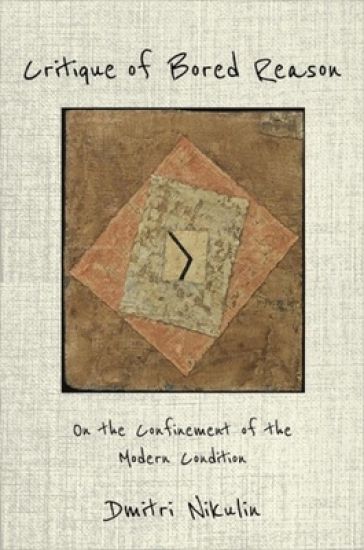
Critique of Bored Reason

Critique of Bored Reason

Dmitri Nikulin

Columbia University Press
2022
sidottu
Most of the core concepts of the Western philosophical tradition originate in antiquity. Yet boredom is strikingly absent from classical thought. In this philosophical study, Dmitri Nikulin explores the concept’s genealogy to argue that boredom is the mark of modernity.Nikulin contends that boredom is a specifically modern phenomenon. He provides a critical reconstruction of the concept of the modern subject as universal, rational, autonomous, and self-sufficient. Understanding itself in this way, this subject is at once the protagonist, playwright, director, and spectator of the staged drama of human existence. It is therefore inevitably monological, lonely, and alone, and can neither escape its own presence nor get rid of it. In other words, it is bored—and this boredom is the fundamental expression and symptom of the modern condition.Considering such thinkers as Descartes, Pascal, Kant, Kierkegaard, Kracauer, Heidegger, and Benjamin, Critique of Bored Reason places boredom on center stage in the philosophical critique of modernity. Nikulin also considers the alternative to the notion of the autonomous subject in the—nonbored and nonboring—dialogic and comic subject capable of shared existence with others.