Kirjojen hintavertailu. Mukana 11 699 587 kirjaa ja 12 kauppaa.

Kirjahaku

Etsi kirjoja tekijän nimen, kirjan nimen tai ISBN:n perusteella.

1000 tulosta hakusanalla Douglas Cockell

Douglas County

Douglas County

Jean Jacobsen; Susan Rocco-McKeel

Arcadia Publishing (SC)
2023
nidottu
Douglas County, established in 1861, is one of Colorado's original counties. Mining, agriculture, sawmills, and railroads contributed to the growth of this territory, which includes two state parks and dozens of landmarked properties. Over 46 percent of the county's land is public or protected. While retail is now the largest industry in the area, this book will highlight some of the working ranches, original structures, and open spaces that remain thanks to cultural and historical stewardship.
Douglas Snelling

Douglas Snelling

Davina Jackson

Routledge
2016
sidottu
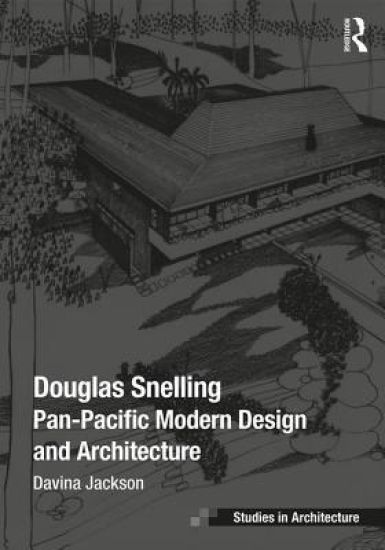
Douglas Burrage Snelling (1916–85) was one of Britain’s significant emigré architects and designers. Born in Kent and educated in New Zealand, he became one of Australia’s leading mid-century architects, of luxury residences and commercial buildings, and a trend-setting designer of furniture, interiors and landscapes. This is the first comprehensive study of Snelling’s pan-Pacific life, works and trans-disciplinary significance. It provides a critical examination of this controversial modernist, revealing him to be a colourful and talented protagonist who led antipodean interpretations of American, especially Wrightian and southern Californian, architecture, design and lifestyle innovations.
Douglas D-558

Douglas D-558

Peter E. Davies

Osprey Publishing
2019
nidottu
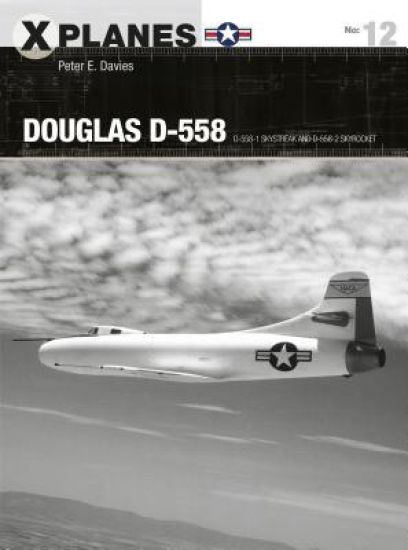
The six Douglas D-558 research aircraft, built as two variants, were produced for a US Navy and NACA collaborative project to investigate flight in the high subsonic and supersonic regimes and to develop means of coping with the dangerous phenomena of compressibility and pitch-up which had caused many accidents to early jets. Wind tunnels could not provide the necessary data so pilots had to risk their safety in experimental aircraft which, for their time, achieved phenomenal performance. Both series of D-558 were well-designed, strong and efficient aircraft which enabled test pilots to tackle the unknown in comparative safety. Though delayed by their innovative but troublesome power-plants, and limited by the cost of their air-launched sorties, they went well beyond their original Mach 1 speed objective and continued to generate information that provided design solutions for a whole generation of supersonic combat aircraft. Although the final stage of the D-55 programme, the USN’s ‘militarized’ D-558-3, never happened, the Navy was able to apply the lessons of the programme to its much more practical combat types such as the F8U Crusader and F3H Demon. Supported by full-colour artwork including three-view plates of the two D-558 models and a technical view of the D-2 cockpit, this authoritative text offers a comprehensive guide to the record-breaking Navy research craft.
Douglas XB-19

Douglas XB-19

William Wolf

Osprey Publishing
2021
nidottu
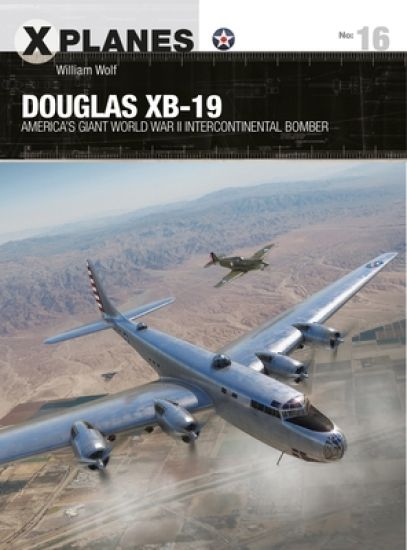
In 1935 the USAAC wanted to build a potential intercontinental bomber, a 'Guardian of the Hemisphere,' and granted Donald Douglas a contract to build the world’s largest bomber. The groundwork for the intercontinental bomber had been laid in the previous two decades by the courageous military and civilian pilots who risked their lives to set new distance and endurance records. After World War I the future Axis and Allied nations built larger aircraft and finally during World War II Germany and Japan became intent on developing intercontinental bomber to retaliate against America. While the XB-19 never flew as an intercontinental bomber or even as a combat bomber; its contributions as a 'Flying Laboratory' significantly influenced the development of the Consolidated B-36 Peacemaker, the world’s first true intercontinental bomber.Since the XB-19 project was top secret and there was only one example built there is little information remaining for researchers. Over the years Bill Wolf has collected the largest quantity of XB-19 material and a number of photographs, including a copy of the original Army Air Force acceptance of the aircraft, first-hand narratives of its first flight, and other USAAC and Douglas Company documents. This book provides a superbly illustrated history of the XB-19 intercontinental bomber and the text is supported by previously unpublished photographs.
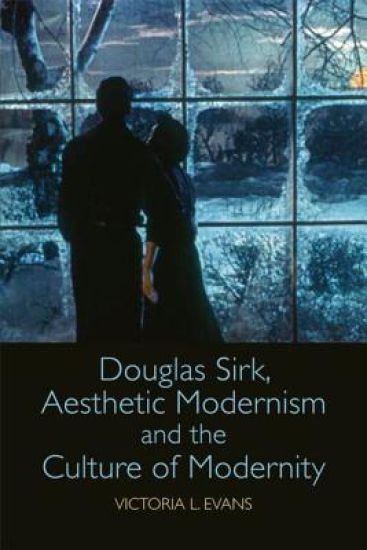
Douglas Sirk, Aesthetic Modernism and the Culture of Modernity

Douglas Sirk, Aesthetic Modernism and the Culture of Modernity

Victoria L. Evans

Edinburgh University Press
2017
sidottu
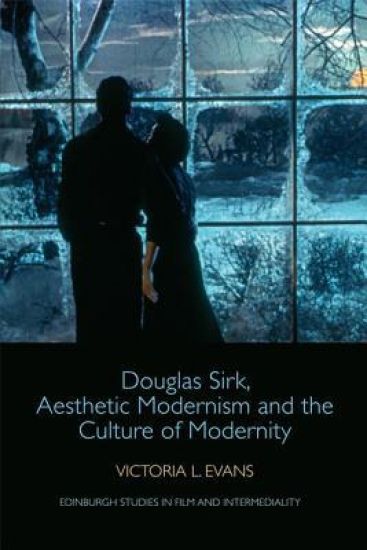
The first truly interdisciplinary analysis to link Douglas Sirk's striking visual aesthetic to key movements in twentieth century art and architecture, this book reveals how the exaggerated artifice of Sirk's formal style emerged from his detailed understanding of the artistic debates that raged in 1920s Europe and the post-war United States. With detailed case studies of Final Chord and All That Heaven Allows, Victoria Evans demonstrates how Sirk attempted to dissolve the boundaries of cinema by assimilating elements of avant-garde art, architecture and design into the colour, composition and setting of many of his most well-known films. Treating Sirk's oeuvre as a continuum between his German and American periods, Evans argues that his mise-en-scene was the result of an interdisciplinary, transnational dialogue, and illuminates the broader cultural context in which his films appeared by establishing links between archival documents, Modernist manifestos and the philosophical writings of his peers.
Douglas Sirk, Aesthetic Modernism and the Culture of Modernity

Douglas Sirk, Aesthetic Modernism and the Culture of Modernity

Victoria L. Evans

Edinburgh University Press
2019
nidottu
The first truly interdisciplinary analysis to link Douglas Sirk's striking visual aesthetic to key movements in twentieth century art and architecture, this book reveals how the exaggerated artifice of Sirk's formal style emerged from his detailed understanding of the artistic debates that raged in 1920s Europe and the post-war United States. With detailed case studies of Final Chord and All That Heaven Allows, Victoria Evans demonstrates how Sirk attempted to dissolve the boundaries of cinema by assimilating elements of avant-garde art, architecture and design into the colour, composition and setting of many of his most well-known films. Treating Sirk's oeuvre as a continuum between his German and American periods, Evans argues that his mise-en-scene was the result of an interdisciplinary, transnational dialogue, and illuminates the broader cultural context in which his films appeared by establishing links between archival documents, Modernist manifestos and the philosophical writings of his peers.
Sir Douglas Haig's Despatches

Sir Douglas Haig's Despatches

Douglas Haig

NAVAL MILITARY PRESS
2024
pokkari
Eight despatches written by Haig as C in C BEF from December 1915 to March 1919, restoring passages deleted from Despatches of 25 Dec 1917 and 20 July 1918 (relating to Third Ypres) at Lloyd George's insistence before granting permission to publish. Contains lists of Mentioned in Despatches.Field Marshal Sir Douglas Haig (1861-1928) took command of the BEF on 19th December 1915, replacing Sir John French who had been in command since the outbreak of war. During the previous ten years Haig had been successively Director of Military Training, Director of Staff Duties (very much involved with the S of S for War, Haldane, in his reforms that led to the formation of the TF and the BEF), Chief of Staff, India and from March 1912, GOC in C Aldershot Command, which consisted of 1st and 2nd Infantry Divisions. On mobilization this became I Corps which he took to France in August 1914. His corps was scarcely touched by the Battle of Mons (40 out of a total 1,600 casualties), but suffered severely at First Ypres. At the end of 1914 First and Second Armies were formed with Haig commanding the First. 1915 was a bad year for the BEF, First Army conducting several unsuccessful offensives culminating in the Battle of Loos. French's despatch describing the battle was challenged by Haig who maintained that the GHQ Reserve was put at his disposal significantly later than stated in the despatch; Haig made his complaint in writing. A few weeks later French resigned command of the BEF and, on 19 December 1915 Haig became C in C. On 1st January 1917 he was promoted to Field Marshal. These eight despatches cover Haig's command from 19th December 1915 to 21st March 1919, but the Government, then led by Lloyd George, no fan of Haig's, insisted on the deletion of certain passages before granting permission to publish. These deletions, indicated in the text by asterisks, were made in the Despatches of 25 December 1917 and 20 July 1918 and relate to the Third Ypres offensive (commonly known as Passchendaele) and to the BEF manpower shortages of early 1918 which led to divisions being reduced from twelve to nine battalions plus the pioneer battalion. This new edition publishes all those deleted passages in a special Preface and also, in two instances where the Government actually inserted its own words, gives the original text.
Sir Douglas Haig's Despatches

Sir Douglas Haig's Despatches

Douglas Haig

NAVAL MILITARY PRESS
2024
sidottu
Eight despatches written by Haig as C in C BEF from December 1915 to March 1919, restoring passages deleted from Despatches of 25 Dec 1917 and 20 July 1918 (relating to Third Ypres) at Lloyd George's insistence before granting permission to publish. Contains lists of Mentioned in Despatches.Field Marshal Sir Douglas Haig (1861-1928) took command of the BEF on 19th December 1915, replacing Sir John French who had been in command since the outbreak of war. During the previous ten years Haig had been successively Director of Military Training, Director of Staff Duties (very much involved with the S of S for War, Haldane, in his reforms that led to the formation of the TF and the BEF), Chief of Staff, India and from March 1912, GOC in C Aldershot Command, which consisted of 1st and 2nd Infantry Divisions. On mobilization this became I Corps which he took to France in August 1914. His corps was scarcely touched by the Battle of Mons (40 out of a total 1,600 casualties), but suffered severely at First Ypres. At the end of 1914 First and Second Armies were formed with Haig commanding the First. 1915 was a bad year for the BEF, First Army conducting several unsuccessful offensives culminating in the Battle of Loos. French's despatch describing the battle was challenged by Haig who maintained that the GHQ Reserve was put at his disposal significantly later than stated in the despatch; Haig made his complaint in writing. A few weeks later French resigned command of the BEF and, on 19 December 1915 Haig became C in C. On 1st January 1917 he was promoted to Field Marshal. These eight despatches cover Haig's command from 19th December 1915 to 21st March 1919, but the Government, then led by Lloyd George, no fan of Haig's, insisted on the deletion of certain passages before granting permission to publish. These deletions, indicated in the text by asterisks, were made in the Despatches of 25 December 1917 and 20 July 1918 and relate to the Third Ypres offensive (commonly known as Passchendaele) and to the BEF manpower shortages of early 1918 which led to divisions being reduced from twelve to nine battalions plus the pioneer battalion. This new edition publishes all those deleted passages in a special Preface and also, in two instances where the Government actually inserted its own words, gives the original text.
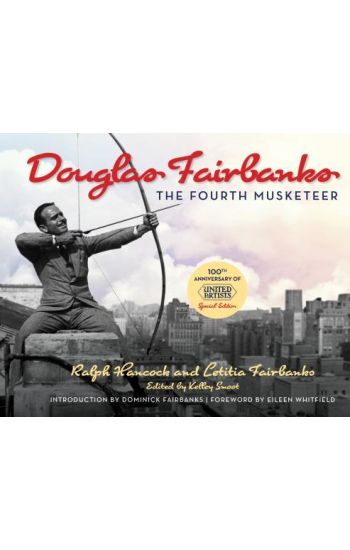
Douglas Fairbanks

Douglas Fairbanks

Ralph Hancock; Letitia Fairbanks

The Lyons Press
2019
pahvisivuinen
Few people have influenced Hollywood history than Douglas Fairbanks. And who better than his niece and Fairbanks family historian, Letitia, to relate that story? On-screen and offscreen, he was a force of nature, progressing in easy leaps and bounds from the Broadway stage to silent movies when feature-length film was just a few years old. His happy, healthy characters and acrobatic acting style brought a new energy to the medium. But it was through his extraordinary success as a producer that Fairbanks achieved the goal of all creative people: to run his own show. This he did by co-founding United Artists in 1919 with his soon-to-be wife Mary Pickford, Charles Chaplin, and D. W. Griffith. As a producer, he showed visionary taste, collaborating with his directors and designers to enact gallant tales in spectacular settings. Whether he played a young man on the go or a swashbuckling hero in a fairy-tale land, Fairbanks—one of the thirty-six founders of the Academy of Motion Picture Arts and Sciences—put America’s hopes and dreams on film. This updated version of the original 1953 biography has been expanded by the Fairbanks family with archival materials as well as never-before-seen photographs from the Academy of Motion Picture Arts and Sciences, Margaret Herrick Library.