Kirjojen hintavertailu. Mukana 11 244 527 kirjaa ja 12 kauppaa.

Kirjahaku

Etsi kirjoja tekijän nimen, kirjan nimen tai ISBN:n perusteella.

1000 tulosta hakusanalla Dwayne Nelson

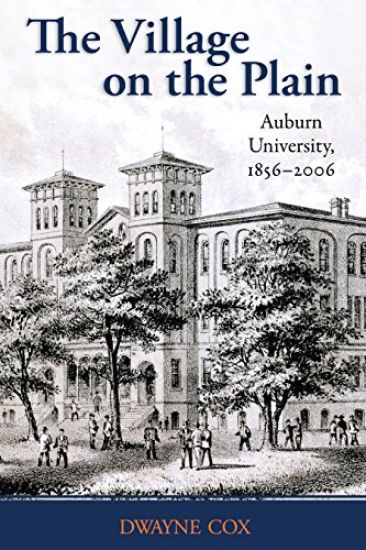
The Village on the Plain

The Village on the Plain

Dwayne Cox

THE UNIVERSITY OF ALABAMA PRESS
2025
nidottu
Auburn University possesses a rich and storied past as well as an esprit de corps that is the envy of its rivals. Dwayne Cox’s The Village on the Plain traces the school’s history in fascinating detail from its origins as a private college through its emergence as a nationally recognized land-grant university. Founded before the Civil War to provide a classical education, Auburn became the state’s land-grant college after the cessation of hostilities. This infused the school with a vision of the reborn South as a commercial and industrial power. By the 1880s, the applied sciences were at the core of Auburn’s growth and strength. Like most southern universities, Auburn never enjoyed financial abundance, and scarcity intensified internal debates over investments in liberal arts or science. Modest state funding for higher education also complicated Auburn’s rise. It became a source of competition with the University of Alabama. This rivalry was most intense between 1908 and 1948. The two schools did not meet on the gridiron but blocked and tackled one another in the legislature over the division of state funds. On the idyllic plains of Lee County, Alabama, Auburn developed a unique, sometimes introspective culture, which is true of many universities founded far from urban centers. Long Auburn’s head archivist, Cox describes this culture with an insider’s insights and shows how it shaped the school's history and community. Auburn University’s history is that of a small private college that rose to the challenges of convulsive state and national events, not only to survive but to emerge more vibrant and thriving. Offering much to students of higher education and Alabama history, as well as readers affiliated with Auburn University, The Village on the Plain tells the story of this complex and fascinating institution.

Communication and Empire

Communication and Empire

Dwayne R. Winseck; Robert M. Pike

Duke University Press
2007
sidottu
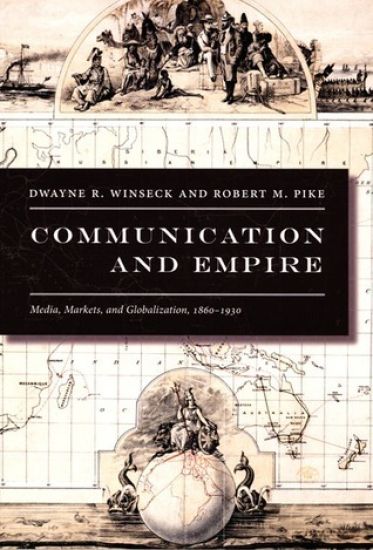
Filling in a key chapter in communications history, Dwayne R. Winseck and Robert M. Pike offer an in-depth examination of the rise of the “global media” between 1860 and 1930. They analyze the connections between the development of a global communication infrastructure, the creation of national telegraph and wireless systems, and news agencies and the content they provided. Conventional histories suggest that the growth of global communications correlated with imperial expansion: an increasing number of cables were laid as colonial powers competed for control of resources. Winseck and Pike argue that the role of the imperial contest, while significant, has been exaggerated. They emphasize how much of the global media system was in place before the high tide of imperialism in the early twentieth century, and they point to other factors that drove the proliferation of global media links, including economic booms and busts, initial steps toward multilateralism and international law, and the formation of corporate cartels.Drawing on extensive research in corporate and government archives, Winseck and Pike illuminate the actions of companies and cartels during the late nineteenth century and early twentieth, in many different parts of the globe, including Africa, Asia, and Central and South America as well as Europe and North America. The complex history they relate shows how cable companies exploited or transcended national policies in the creation of the global cable network, how private corporations and government agencies interacted, and how individual reformers fought to eliminate cartels and harmonize the regulation of world communications. In Communication and Empire, the multinational conglomerates, regulations, and the politics of imperialism and anti-imperialism as well as the cries for reform of the late nineteenth century and early twentieth emerge as the obvious forerunners of today’s global media.
Communication and Empire

Communication and Empire

Dwayne R. Winseck; Robert M. Pike

Duke University Press
2007
pokkari
Filling in a key chapter in communications history, Dwayne R. Winseck and Robert M. Pike offer an in-depth examination of the rise of the “global media” between 1860 and 1930. They analyze the connections between the development of a global communication infrastructure, the creation of national telegraph and wireless systems, and news agencies and the content they provided. Conventional histories suggest that the growth of global communications correlated with imperial expansion: an increasing number of cables were laid as colonial powers competed for control of resources. Winseck and Pike argue that the role of the imperial contest, while significant, has been exaggerated. They emphasize how much of the global media system was in place before the high tide of imperialism in the early twentieth century, and they point to other factors that drove the proliferation of global media links, including economic booms and busts, initial steps toward multilateralism and international law, and the formation of corporate cartels.Drawing on extensive research in corporate and government archives, Winseck and Pike illuminate the actions of companies and cartels during the late nineteenth century and early twentieth, in many different parts of the globe, including Africa, Asia, and Central and South America as well as Europe and North America. The complex history they relate shows how cable companies exploited or transcended national policies in the creation of the global cable network, how private corporations and government agencies interacted, and how individual reformers fought to eliminate cartels and harmonize the regulation of world communications. In Communication and Empire, the multinational conglomerates, regulations, and the politics of imperialism and anti-imperialism as well as the cries for reform of the late nineteenth century and early twentieth emerge as the obvious forerunners of today’s global media.
Yes, But Not Quite

Yes, But Not Quite

Dwayne A. Tunstall

Fordham University Press
2009
sidottu
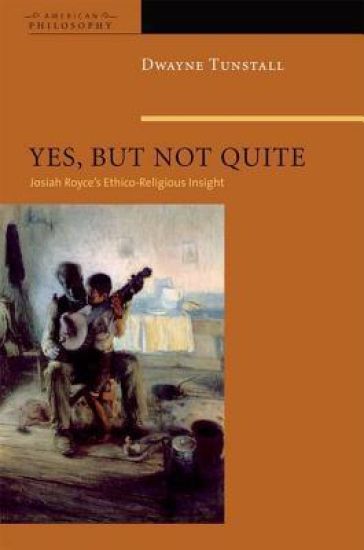
This book contends that Josiah Royce bequeathed to philosophy a novel idealism based on an ethico-religious insight. This insight became the basis for an idealistic personalism, wherein the Real is the personal and a metaphysics of community is the most appropriate approach to metaphysics for personal beings, especially in an often impersonal and technological intellectual climate. The first part of the book traces how Royce constructed his idealistic personalism in response to criticisms made by George Holmes Howison. That personalism is interpreted as an ethical and panentheistic one, somewhat akin to Charles Hartshorne's process philosophy. The second part investigates Royce's idealistic metaphysics in general and his ethico-religious insight in particular. In the course of these investigations, the author examines how Royce's ethico-religious insight could be strengthened by incorporating the philosophical theology of Dr. Reverend Martin Luther King, Jr., and Emmanuel Levinas's ethical metaphysics. The author concludes by briefly exploring the possibility that Royce's progressive racial anti-essentialism is, in fact, a form of cultural, antiblack racism and asks whether his cultural, antiblack racism taints his ethico-religious insight.
Doing Philosophy Personally

Doing Philosophy Personally

Dwayne A. Tunstall

Fordham University Press
2013
sidottu
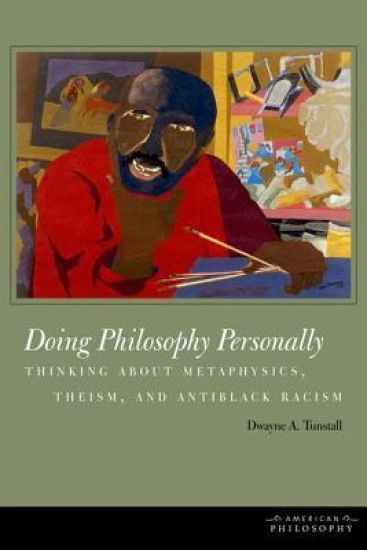
Gabriel Marcel's reflective method is animated by his extraphilosophical commitment to battle the ever-present threat of dehumanization in late Western modernity. Unfortunately, Marcel neglected to examine what is perhaps the most prevalent threat of dehumanization in Western modernity: antiblack racism. Without such an account, Marcel's reflective method is weakened because it cannot live up to its extraphilosophical commitment. Tunstall remedies this shortcoming in his eloquent new volume.
Yes, But Not Quite

Yes, But Not Quite

Dwayne A. Tunstall

Fordham University Press
2014
pokkari
This book contends that Josiah Royce bequeathed to philosophy a novel idealism based on an ethico-religious insight. This insight became the basis for an idealistic personalism, wherein the Real is the personal and a metaphysics of community is the most appropriate approach to metaphysics for personal beings, especially in an often impersonal and technological intellectual climate. The first part of the book traces how Royce constructed his idealistic personalism in response to criticisms made by George Holmes Howison. That personalism is interpreted as an ethical and panentheistic one, somewhat akin to Charles Hartshorne's process philosophy. The second part investigates Royce's idealistic metaphysics in general and his ethico-religious insight in particular. In the course of these investigations, the author examines how Royce's ethico-religious insight could be strengthened by incorporating the philosophical theology of Dr. Reverend Martin Luther King, Jr., and Emmanuel Levinas's ethical metaphysics. The author concludes by briefly exploring the possibility that Royce's progressive racial anti-essentialism is, in fact, a form of cultural, antiblack racism and asks whether his cultural, antiblack racism taints his ethico-religious insight.
There is No Humor in Heaven

There is No Humor in Heaven

Dwayne E. Eutsey

UNIVERSITY OF MISSOURI PRESS
2025
sidottu
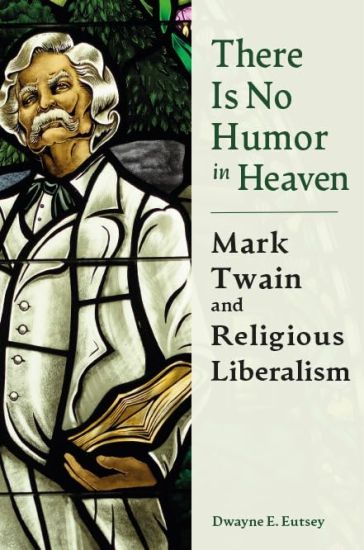
More than a century after his death in 1910, Mark Twain remains a lightning rod for controversy. Especially in matters of race, class, and gender, the volatile views this iconic American author expressed in classics like Adventures of Huckleberry Finn continue to provoke heated debate among antagonistic culture-war factions. However, when citing his withering attacks on religion, believers and atheists alike are often united in concluding that Twain was either a mocking skeptic or a hostile atheist. In There is No Humor in Heaven, Dwayne Eutsey challenges the persistent view of Twain as a hostile critic of religion by placing him within the prevailing liberal religious ethos of his time. From Hannibal to the western frontier and from Hartford to the wider world, Eutsey contends Twain’s vocation as a humorist was rooted in his frustrated youthful ambition to become a preacher of the Gospel. Throughout his life, his friendships with several influential liberal ministers, each of them espousing various forms of the era’s diverse progressive theology, informed not only Twain’s evolving religious worldview but his lecture performances and literary output.There is No Humor in Heaven traces unconventional theological influences on Twain ranging from African-American spirituality, Freemasonry, and frontier Unitarianism to devout Liberal Christianity, radical Free Religion, and esoteric Hinduism. Drawing from Twain’s writings, documents, personal notes, and more, There is No Humor in Heaven offers readers a radical re-examination of the spiritually creative vitality of a controversial literary giant.
Enhancing Next-Generation Diplomacy Through Best Practices in Lessons Learned

Enhancing Next-Generation Diplomacy Through Best Practices in Lessons Learned

Dwayne M Butler; Angelena Bohman; Christina Bartol Burnett; Julia A Thompson; Amanda Kadlec; Larry Hanauer

RAND
2017
nidottu
The Department of State has developed several organizational elements and cultural attributes relevant for a lessons-learned program, and these provide a starting point from which the department can mature its enterprisewide capabilities. To that end, this report explores best practices across fields of organizational theory and within both public and private organizations.
The Rise of the Biggest Little City

The Rise of the Biggest Little City

Dwayne Kling; Rollan Melton

University of Nevada Press
2010
nidottu
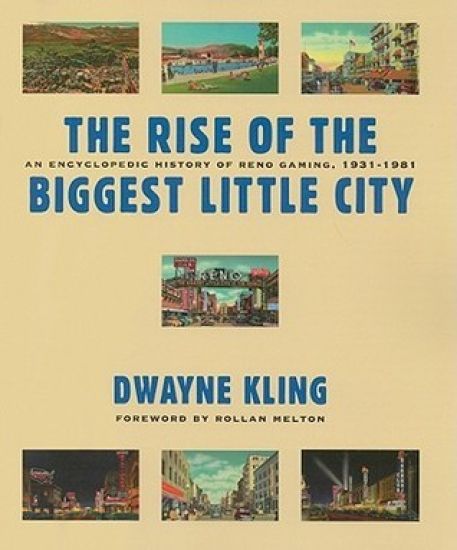
The history of Reno during the first half century is to a great degree the history of Reno’s gaming industry. Between 1931 and 1981, the economy, skyline, and lifestyle of “the Biggest Little City in the World” were strongly influenced by the city’s casinos and the people who created and operated them. In ‘The Rise of the Biggest Little City’, longtime Reno gaming executive Dwayne Kling records the fruits of his fourteen years of research into the history of Reno’s casinos, from the backroom (and often illegal) dives of the industry’s beginnings to the elegant casino-hotels of today. Arranged in encyclopedic form with historic photographs (many never before published), the book offers the stories of such famous establishments as Harolds Club, the Cal-Neva, the Sands, and Harrah’s, as well as defunct clubs like the Cedars, the Silver Spur, and the Bank Club. We also find the stories of the men and women who created Reno’s gaming industry—such as James McKay and Bill Graham, who came from the rough-and-tumble saloons of boom-town Tonopah and developed a chain of illegal gambling clubs and brothels into Reno’s first major casino, the Bank Club; the Smith family—Raymond I. “Pappy,” Harold Sr., Raymond A., and Harold Jr.—whose Harolds Club was a prime downtown attraction for over fifty years and brought Reno national fame as a destination for fun and gambling; Bill Bailey, an African-American whose Harlem Club—one of the first integrated casinos in Reno—attracted such show-business luminaries as Louis Armstrong and Pearl Bailey (his cousin) for late-night jam sessions; William Harrah, who parleyed a string of small bingo parlours into a major gaming empire; and Jack Douglass, a slot-route operator in the early days of legal gaming who became a major figure in Reno’s modern casino industry. There are more. Kling records the stories of hundreds of gaming establishments, most of them long forgotten, stretching geographically from the Mount Rose Highway to the north end of town, from Verdi to Sparks; and of dozens of men and women who shaped the industry, for better and for worse. We learn from that Reno was the true pioneer of the gambling industry. It was here that big-name entertainment was first offered in a casino setting; that elegant hotel rooms and fine dining were first offered as amenities of the casino experience; that a casino corporation first traded its stock on the New York Stock Exchange; that ethnic minorities first owned and operated casinos, and first integrated them. ‘The Rise of the Biggest Little City’ will engage readers with its authoritative account of the rise of modern Reno and of the colourful history that lies beneath today’s neon and glitz.
Redesign: An SEL Toolkit to Designing Culturally Sustaining and Antiracist Practices
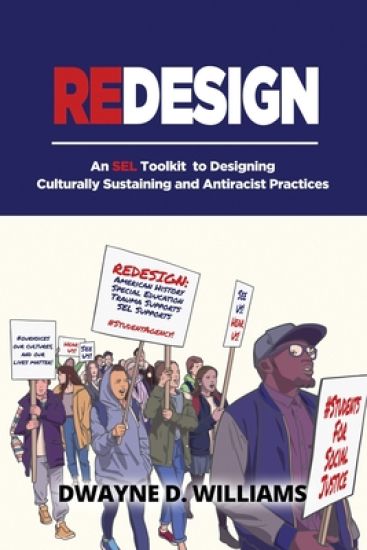
There is no doubt that educational policies and practices require an overhaul, a redo, a redesign. While this is true, a critical question is, "Where should practitioners and school leaders start when redesigning instruction in ways that are antiracist, inclusive, and culturally sustaining?"In this highly anticipated work, Dwayne D. Williams argues that schools often rush to make surface-level changes that don't address the racist beliefs and practices that result in inequity. He contends that educators side-step the hard conversations by starting with curricula: purchasing new curricula and inserting into their lessons something of "cultural relevance" for Black and Brown students. In a compelling argument, Williams problematizes this approach. He contends, "It is possible to design highly engaging, culturally responsive programming for students of color, yet maintain racist and oppressive beliefs and attitudes about their cultures, abilities, languages, literacies, and identities." Instead, educators must engage in surgical work of the mind by interrogating and rejecting racist, deficit-based thinking concerning students of color, which Williams describes as the "prep work" that precedes designing antiracist and culturally sustaining programming. Williams employs CASEL's five SEL competencies as both a framework and a toolkit to interrogate beliefs and attitudes, and then to prepare for antiracist and culturally sustaining teaching. Redesign includes a host of practical activities that educators can engage with individually, as well as within problem-solving teams and department meetings, to prepare for antiracist and culturally sustaining work.
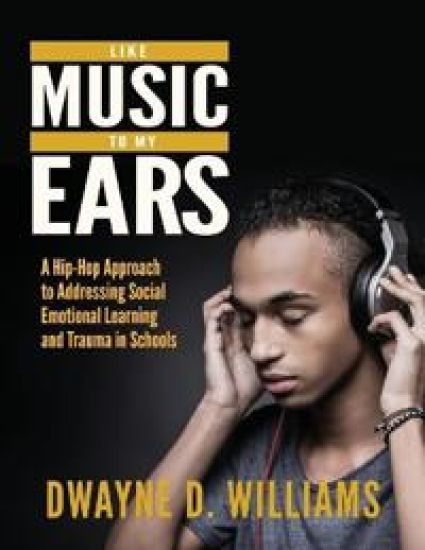
Like Music to My Ears

Like Music to My Ears

Dwayne D Williams

Dwayne D. Williams
2018
pokkari
While there are "evidence-based" curricula available to help students develop social-emotional learning (SEL) competencies and process traumatic events, many students in general and culturally diverse learners in particular, refuse to participate in traditional school-based groups that address SEL and trauma.In the curriculum Like Music to My Ears: A Hip-Hop Approach to Addressing Social Emotional Learning and Trauma in Schools, Dwayne D. Williams reveals proven strategies that educators can use to get students to say "Yes " to developing SEL competencies and "Yes " to dealing with stress and trauma in schools. Not only does Williams share how to adapt SEL and trauma-informed curricula to include hip-hop cultural elements for students who embrace hip-hop-but also, he details exactly how to get your students to help you do it.Like Music to My Ears provides: A step-by-step map to creating hip-hop SEL groups-and how you can get your students to help you do it18 lessons by Williams, all tested and shown to increase engagement, 18 action-item agendas that practitioners can adapt to bring hip-hop SEL and trauma-informed lessons to life, A simple, evidence-based tool students can use to monitor their progress, Rap songs aligned with the 5 SEL competencies, Strategies that students can use to process stress and trauma, Engaging community building activities that include hip-hop themes-and more " . . . By the end of the group, which was extended by student request, the students had not only reached nearly 100% group attendance, but they also demonstrated an increase in their school attendance. One student even stated that the only reason he came to school was so that he could attend group." -Sheena Mohseny-SeranellaSchool Social Worker
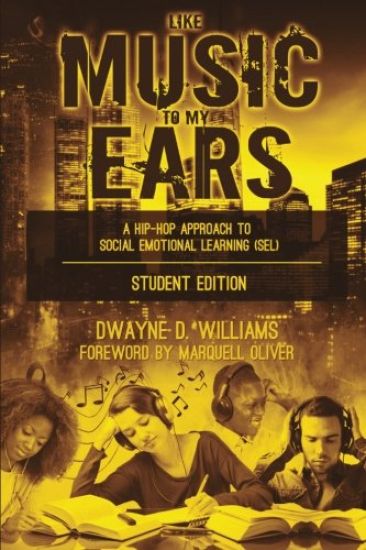
Like Music to My Ears, Student Edition: A Hip-Hop Approach to Social Emotional Learning
The author of this book: -was held back in elementary school because he couldn't read -lived in housing projects as a kid -received "food stamps" for weekly allowance -was homeless -got into many fights in middle and high school -earned a "1-point something" GPA -obtained a whopping "15" on his ACT This same author: -graduated from high school -earned an associate's degree, bachelor's degree, and 2 master's degrees -is a school psychologist and success coach -started his own business-and earned close to $30,000 within 30 hours -published 4 books -receives requests from professors to ghostwrite books -trains teachers on how to make learning fun for all students This author is Dwayne D. Williams, and in this book, he shares his powerful story of overcoming poverty and academic failure-and explains just what students must do to experience success in every area of their life
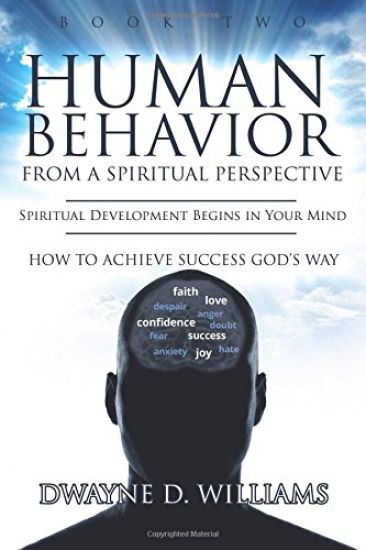
Human Behavior from a Spiritual Perspective: Spiritual Development Begins in Your Mind: How to Achieve Success God's Way
"Beloved, I pray that you may prosper in all things and be in good health." 3 John: 2, NKJV In this groundbreaking book, school psychologist Dwayne D. Williams explains human behavior from a spiritual perspective. He reveals that God intends for you to experience success in every area of your life-that's right, every area He pairs psychological principles and Scripture to show the role your mind plays in spiritual development and achieving success. In this book, Dwayne shares exactly what you must do to overcome anxiety, fear, and other social and emotional challenges that interfere with success From this book, you will learn -how to use thoughts to develop spiritually -how to use your mind to create Godly habits -why memory is key to accessing the blessings of God -why meditation is critical to spiritual development -why God places emphasis on learning accurate information -how to use mental abilities to experience success God's way Human Behavior from a Spiritual Perspective is a two-book series. This book's (Book 2) theme is "mental tools" and focuses on using mental abilities, including thoughts, memory, and meditation, to renew your mind and experience success in every area of your life. It is recommended that readers read Book 1 prior to reading Book 2.
Human Behavior from a Spiritual Perspective: Spiritual Development Begins in Your Mind: How to Achieve Success God's Way
"Beloved, I pray that you may prosper in all things and be in good health." 3 John: 2, NKJV In this groundbreaking book, school psychologist Dwayne D. Williams explains human behavior from a spiritual perspective. He reveals that God intends for you to experience success in every area of your life-that's right, every area He pairs psychological principles and Scripture to show the role your mind plays in spiritual development and achieving success. In this book, Dwayne shares exactly what you must do to overcome anxiety, fear, and other social and emotional conditions that interfere with your daily functioning-conditions that interfere with achieving success God's way From this book, you will learn -how to renew your mind using practical behaviors -how to live a positive life -how to access the blessings of God -what low self-esteem means from a spiritual perspective -how to overcome anxiety, fear, and depression, according to Scripture, to live a prosperous life -how to reshape self-concepts-and more Human Behavior from a Spiritual Perspective is a two-book series. This book's (book 1) theme is self-awareness and focuses on the importance of becoming self-aware to develop spiritually and to achieve success God's way.
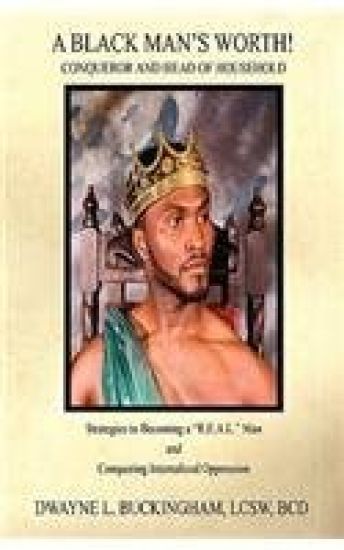
A Black Man's Worth: Conqueror and Head of Household: How to Conquer Internalized Oppression

A Black Man's Worth: Conqueror and Head of Household: How to Conquer Internalized Oppression

Dwayne L. Buckingham

R.E.A.L. Horizons Consulting Service, LLC
2015
nidottu
Life changing, A Black Man's Worth: Conqueror and Head of Household by psychotherapist and advocate Dr. Dwayne L. Buckingham offers cognitive-behavioral techniques and spiritual guidance to inspire Black males to become R.E.A.L. Men by conquering internalized oppression through self-reflection, community empowerment and spiritual growth.Beginning with a thoroughly invigorating chapter, "Does My Life Have Meaning," Dr. Buckingham instructs readers how to look at the psychological, behavioral and environmental dispositions of Black males and American history in a whole new light, highlighting struggles as well as successes.This powerful book helps Black males from all walks of life understand the meaning of their lives and equips them with tools to cope with adversity positively. Take heed, Black men are resilient, Black men are strong, and Black men are amazing-they are Conquerors.
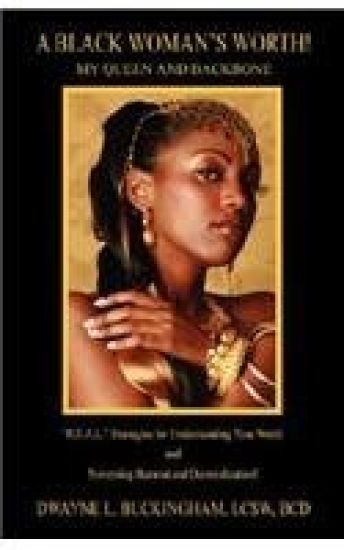
A Black Woman's Worth: My Queen and Backbone: R.E.A.L. Strategies for Preventing Burnout and Demoralization
Uplifting and heartfelt, A Black Woman's Worth: My Queen and Backbone inspire Black women and young Black girls to take control of their lives by focusing on things they can influence. Black communities and the world over continue to face serious social, spiritual and political dilemmas, which jeopardize and disenfranchise Black women.This powerful manifesto helps readers of all ages understand their ancestral and personal worth and empowers them to regain control of their lives and their communities. In six chapters, this powerful book celebrates women, specifically Black women, by providing strategies to prevent their demoralization. With an enlightened approach to history, the author includes specific directives and a list of one hundred most fascinating Black women of the twentieth century. Behold, Black women are beautiful, Black women are powerful, and Black women are extraordinary-they are our future.
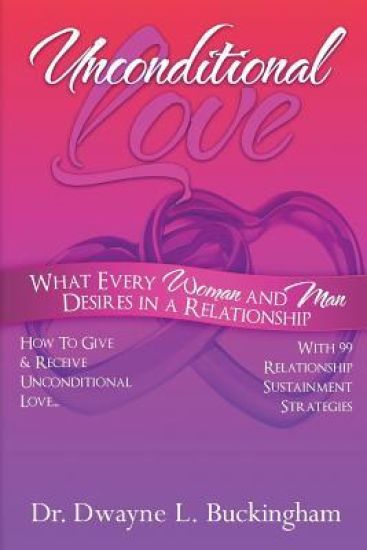
Unconditional Love: What Every Woman and Man Desires in a Relationship: How to Give and Receive Unconditional Love
Profound and inspiring, Unconditional Love: What Every Woman and Man Desires in a Relationship highlights challenges women and men face in their attempt to give and receive unconditional love in their relationships. The marriage institution is in grave danger as individuals abandon their marital commitment when faced with adversity and hardship.This profound manuscript educates readers about the one skill that can conquer adversity and hardship in relationships: the ability to give and receive unconditional love. With 99 Relationship Sustainment Strategies, Dr. Buckingham provides detailed guidance on how to make relationships last forever. Wait no longer: this relationship guide provides the essential tools you need to give and receive the unconditional love you desire in your relationship.