Kirjojen hintavertailu. Mukana 12 378 307 kirjaa ja 12 kauppaa.

Kirjahaku

Etsi kirjoja tekijän nimen, kirjan nimen tai ISBN:n perusteella.

1000 tulosta hakusanalla EDWARD CHARLE BOOTH

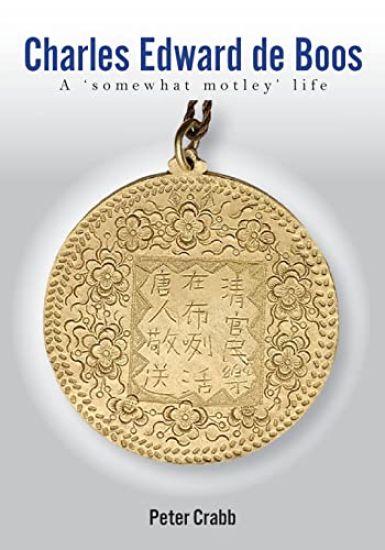
Charles Edward de Boos

Charles Edward de Boos

Peter Crabb

Busybird Publishing
2022
pokkari
Charles de Boos was born in London 1819. His Huguenot ancestors from Normandy were among thousands who fled France during the religious wars of the 16-17th centuries. His family prospered, eventually living in London's West End. He was educated at the East India Company Military Seminary in Surrey. From there, still only a teenager, he joined the British Auxiliary Legion that participated in the Carlist Wars in northern Spain.In 1839 de Boos sailed to Australia. He spent time in Sydney and the Hunter Valley and travelled to other parts of NSW., undertaking a variety of activities, including starting his own newspaper. With his wife and first child, he moved to Melbourne in 1850. Employed by The Argus, he reported on the early Victorian gold rushes in Mount Alexander, Ballarat, Bendigo, and the Ovens Valley. He also worked for the Victorian colonial government.He returned to Sydney in 1856 and joined the Sydney Morning Herald. He reported the debates of the NSW Legislative Assembly. Much more importantly, over some 16 years, he travelled extensively throughout the eastern and central parts of NSW reporting on the gold fields, writing numerous series of articles. In 1875, he became a Mining Warden and Police Magistrate for the NSW Government, with appointments at Braidwood, Copeland (twice), Forbes, Temora, Milparinka and Cobar. He was highly regarded as a government official. He retired in 1889 and spent his last years in Sydney. He died in 1900.As well as an accomplished reporter, de Boos' other writings were considerable: satyr, social commentary, fiction. He was one of Australia's most important early writers, yet his work has received very little attention in Australian literature studies. Among other things, this biography corrects the records and seeks to give him the place he merits in the history of early Australian literature.
The Admiral's Caravan (1909) by: Charles Edward Carryl. illustrated by: Reginald B.

The Admiral's Caravan (1909) by: Charles Edward Carryl. illustrated by: Reginald B.

Charles Edward Carryl

Createspace Independent Publishing Platform
2017
nidottu
Charles Edward Caryl (December 30, 1841 - July 3, 1920) was an American children's literature author.Born in New York, Carryl became a second-generation successful businessman; and a stockbroker, who for 34 years starting in 1874 held a seat on the New York Stock Exchange. In 1869 he married Mary Wetmore. Their elder child was the poet and humorist Guy Wetmore Carryl. In 1882 Charles E. Carryl published his first work: Stock Exchange Primer. In 1884 he published the children's fantasy Davy and the Goblin; or, What Followed Reading "Alice's Adventures in Wonderland", serialized in the magazine St Nicholas. His work includes the children's nonsense poem "The Walloping Window Blind", published in 1885, in a verse style similar to Lewis Carroll's: A capital ship for an ocean trip/Was the Walloping Window-Blind;/No wind that blew dismayed her crew/Or troubled the captain's mind. A second novel, The Admiral's Caravan, also serialized in St Nicholas beginning in December 1891, was dedicated to his daughter Constance.
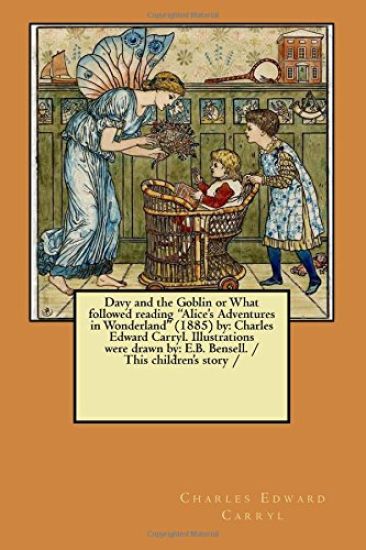
Davy and the Goblin or What followed reading "Alice's Adventures in Wonderland" (1885) by: Charles Edward Carryl. Illustrations were drawn by: E.B. Be
This children's story follows the adventures of Davy, a young boy in his wanderings through a fantasy world. Illustrations were drawn by E.B. Bensell. Charles Edward Caryl (December 30, 1841 - July 3, 1920) was an American children's literature author.Born in New York, Carryl became a second-generation successful businessman; and a stockbroker, who for 34 years starting in 1874 held a seat on the New York Stock Exchange. In 1869 he married Mary Wetmore. Their elder child was the poet and humorist Guy Wetmore Carryl. In 1882 Charles E. Carryl published his first work: Stock Exchange Primer. In 1884 he published the children's fantasy Davy and the Goblin; or, What Followed Reading "Alice's Adventures in Wonderland", serialized in the magazine St Nicholas. His work includes the children's nonsense poem "The Walloping Window Blind", published in 1885, in a verse style similar to Lewis Carroll's: A capital ship for an ocean trip/Was the Walloping Window-Blind;/No wind that blew dismayed her crew/Or troubled the captain's mind. A second novel, The Admiral's Caravan, also serialized in St Nicholas beginning in December 1891, was dedicated to his daughter Constance.
Routledge Revivals: Charles Edward Horn's Memoirs of His Father and Himself (2003)
Originally published in 2003, Charles Edward Horn's Memoirs of His Father and Himself is an annotated collection of the memoirs of Charles Edward Horn. They include an account of Horn’s father, Charles Frederick Horn, who arrived penniless in London in 1782 and rose to become music master to Queen Charlotte. Today he is most remembered for his pioneering publications of J.S. Bach’s music in England. Charles Edward Horn’s memoir covers his activities in England and Ireland and provide numerous details of English musical life in the Georgian era not previously known to scholars. They are supplemented in this book by transcripts of four other autobiographical accounts of the Horns, a summary of their extant correspondence and a chronology of their activities.
Routledge Revivals: Charles Edward Horn's Memoirs of His Father and Himself (2003)
Originally published in 2003, Charles Edward Horn's Memoirs of His Father and Himself is an annotated collection of the memoirs of Charles Edward Horn. They include an account of Horn’s father, Charles Frederick Horn, who arrived penniless in London in 1782 and rose to become music master to Queen Charlotte. Today he is most remembered for his pioneering publications of J.S. Bach’s music in England. Charles Edward Horn’s memoir covers his activities in England and Ireland and provide numerous details of English musical life in the Georgian era not previously known to scholars. They are supplemented in this book by transcripts of four other autobiographical accounts of the Horns, a summary of their extant correspondence and a chronology of their activities.
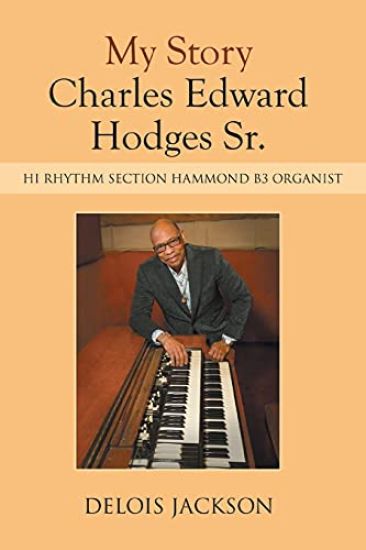
My Story Charles Edward Hodges Sr.

My Story Charles Edward Hodges Sr.

Delois Jackson

Xlibris Us
2021
pokkari
Rev. Charles Edward Hodges Sr. played the organ (Hammond B-3) for some of the most prominent artists in the world. His passion and dedication for music inspired audiences here in the United States and overseas. His life's journey was bittersweet; he knows what it feels like to be at the top, and he knows how it feels at the bottom. He lost everything, but the Lord told him he'd give it all back to him if he lived his life for him. Rev. Hodges, now an ordained minister, did that, and God kept his promise. Even in his mid-70s, people were still requesting to hear him play. He is still recording, doing live performances, and helping others develop their talents.
My Story Charles Edward Hodges Sr.

My Story Charles Edward Hodges Sr.

Delois Jackson

Xlibris Us
2021
sidottu
Rev. Charles Edward Hodges Sr. played the organ (Hammond B-3) for some of the most prominent artists in the world. His passion and dedication for music inspired audiences here in the United States and overseas. His life's journey was bittersweet; he knows what it feels like to be at the top, and he knows how it feels at the bottom. He lost everything, but the Lord told him he'd give it all back to him if he lived his life for him. Rev. Hodges, now an ordained minister, did that, and God kept his promise. Even in his mid-70s, people were still requesting to hear him play. He is still recording, doing live performances, and helping others develop their talents.
Itinerary of Prince Charles Edward Stuart

Itinerary of Prince Charles Edward Stuart

Walter Biggar Blaikie

Hansebooks
2017
pokkari
Itinerary of Prince Charles Edward Stuart - From his Landing in Scotland July 1745 to his Departure in September 1746 is an unchanged, high-quality reprint of the original edition of 1897. Hansebooks is editor of the literature on different topic areas such as research and science, travel and expeditions, cooking and nutrition, medicine, and other genres. As a publisher we focus on the preservation of historical literature. Many works of historical writers and scientists are available today as antiques only. Hansebooks newly publishes these books and contributes to the preservation of literature which has become rare and historical knowledge for the future.