Kirjojen hintavertailu. Mukana 11 244 527 kirjaa ja 12 kauppaa.

Kirjahaku

Etsi kirjoja tekijän nimen, kirjan nimen tai ISBN:n perusteella.

1000 tulosta hakusanalla ELDRIDGE JIM

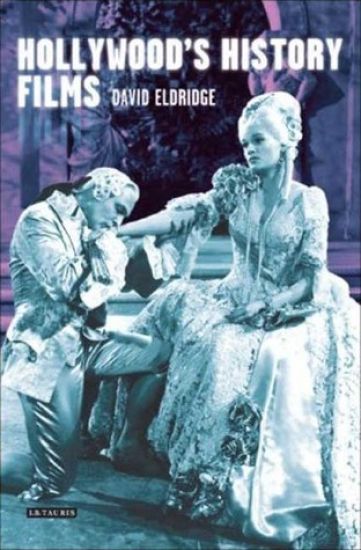
Hollywood's History Films

Hollywood's History Films

Eldridge David

I.B. Tauris
2006
sidottu
In a cinema that has presented John Wayne interpreting Genghis Khan as a medieval gunslinger, the idea that Hollywood filmmakers have historical consciousness might seem strange. However, they do and they did and in fascinating ways, which are revealed by David Eldridge in this innovative and detailed analysis of the film industry's use of history. Grounded in exceptional resources and rich in close readings of the films, "Hollywood's History Films" focuses on the Fifties, when Hollywood's interest in the past was at its peak. It reconstructs how filmmakers understood their treatment of the past, suggesting why many of them saw their work as superior to that of professional historians. The book embraces westerns, romances, biblical epics, biopics and the like, exploring the overlapping anxieties that encouraged an unprecedented turn to history, including the Cold War's ever-present nuclear threat, McCarthyism and the industry's fears about a haemorrhaging box-office. In an environment shaped by such tensions, filmmakers were not ignorant of the facts, nor simply exercising dramatic licence. David Eldridge considers researchers, advisors and outside interference from proponents of particular versions of the past and uncovers the different - and limited - ways in which producers, directors and screenwriters were exposed to historical debates and ideas. Challenging preconceptions, his book helps us to understand just how and why Hollywood blurs the boundaries between fiction and historical reality.
Dorothy Page

Dorothy Page

Eldridge B Hatcher

ALPHA EDITION
2021
pokkari
Dorothy Page, is many of the old classic books which have been considered important throughout the human history. They are now extremely scarce and very expensive antique. So that this work is never forgotten we republish these books in high quality, using the original text and artwork so that they can be preserved for the present and future generations. This whole book has been reformatted, retyped and designed. These books are not made of scanned copies of their original work and hence the text is clear and readable.
Unkempt

Unkempt

Courtney Eldridge

HOUGHTON MIFFLIN
2005
nidottu
In the seven stories and one novella collected in Unkempt, Courtney Eldridge gives life to characters of astounding originality. Probing the darker corners of the human psyche, she shows-with a sly and unexpected sense of humor-the neurotic mind at work, the skewed perspective of an alcoholic parent, the nature of sexual conquest, and the hazards of working in retail. Fresh, funny, and candid, Eldridge's writing delivers a new and marvelous vision of life.
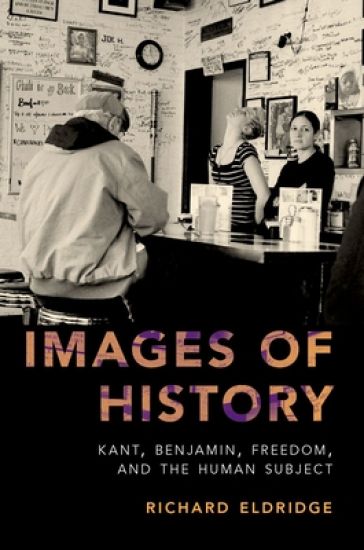
Images of History

Images of History

Richard Eldridge

Oxford University Press Inc
2016
sidottu
Developing work in the theories of action and explanation, Eldridge argues that moral and political philosophers require accounts of what is historically possible, while historians require rough philosophical understandings of ideals that merit reasonable endorsement. Both Immanuel Kant and Walter Benjamin recognize this fact. Each sees a special place for religious consciousness and critical practice in the articulation and revision of ideals that are to have cultural effect, but they differ sharply in the forms of religious-philosophical understanding, cultural criticism, and political practice that they favor. Kant defends a liberal, reformist, Protestant stance, emphasizing the importance of liberty, individual rights, and democratic institutions. His fullest picture of movement toward a moral culture appears in Religion within the Bounds of Mere Reason, where he describes conjecturally the emergence of an ethical commonwealth. Benjamin defends a politics of improvisatory alertness and consciousness-raising that is suspicious of progress and liberal reform. He practices a form of modernist, materialist criticism that is strongly rooted in his encounters with Kant, Hölderlin, and Goethe. His fullest, finished picture of this critical practice appears in One-Way Street, where he traces the continuing force of unsatisfied desires. By drawing on both Kant and Benjamin, Eldridge hopes to avoid both moralism (standing on sharply specified normative commitments at all costs) and waywardness (rejecting all settled commitments). And in doing so, he seeks to make better sense of the commitment-forming, commitment-revising, anxious, reflective and sometimes grownup acculturated human subjects we are.
Images of History

Images of History

Richard Eldridge

Oxford University Press Inc
2018
nidottu
Developing work in the theories of action and explanation, Eldridge argues that moral and political philosophers require accounts of what is historically possible, while historians require rough philosophical understandings of ideals that merit reasonable endorsement. Both Immanuel Kant and Walter Benjamin recognize this fact. Each sees a special place for religious consciousness and critical practice in the articulation and revision of ideals that are to have cultural effect, but they differ sharply in the forms of religious-philosophical understanding, cultural criticism, and political practice that they favor. Kant defends a liberal, reformist, Protestant stance, emphasizing the importance of liberty, individual rights, and democratic institutions. His fullest picture of movement toward a moral culture appears in Religion within the Bounds of Mere Reason, where he describes conjecturally the emergence of an ethical commonwealth. Benjamin defends a politics of improvisatory alertness and consciousness-raising that is suspicious of progress and liberal reform. He practices a form of modernist, materialist criticism that is strongly rooted in his encounters with Kant, Hölderlin, and Goethe. His fullest, finished picture of this critical practice appears in One-Way Street, where he traces the continuing force of unsatisfied desires. By drawing on both Kant and Benjamin, Eldridge hopes to avoid both moralism (standing on sharply specified normative commitments at all costs) and waywardness (rejecting all settled commitments). And in doing so, he seeks to make better sense of the commitment-forming, commitment-revising, anxious, reflective and sometimes grownup acculturated human subjects we are.
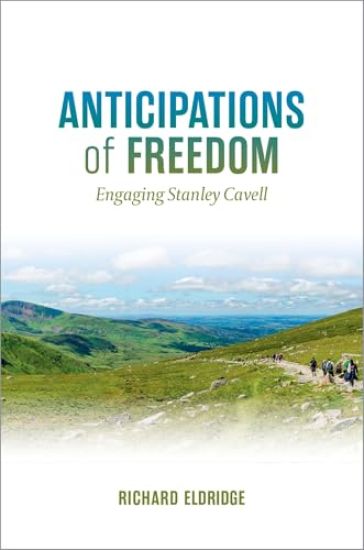
Anticipations of Freedom

Anticipations of Freedom

Richard Eldridge

OXFORD UNIVERSITY PRESS INC
2026
sidottu
Stanley Cavell's critical-aesthetic way of doing philosophy charts a unique path between dogmatic doctrinalism and dull despair in response to the alienations that trouble modern divided life. His methods of attention to cultural phenomena are rooted in a philosophical anthropology that sees human subjects as forever fated to live between complete reconciliation and individualist-instrumentalist transactionalism. Some works of literature, music, and film, he finds, arrest and absorb their audiences in the fullness of their registerings of this continuing condition and in somehow making meaning and achieving dramatic, non-doctrinal closure. They model for these audiences how temporally situated and finite moments of meaning-making are possible. In doing so, they show us how we might live within our shared condition more productively through engagement with the affordances of art. Cavell's own writing in turn both describes and re-enacts this achievement, thus itself manifesting the powers of art in response to modern life and serving as a model of 'knowing how to go on' within its ambit. These essays describe and defend Cavell's philosophical anthropology and critical-aesthetic practice. Anticipations of Freedom situates that practice as both a response to and a furthering of an image of America as a site of futural freedom always to be achieved, and it extends Cavell's practice into new readings of works of poetry, film, and music.
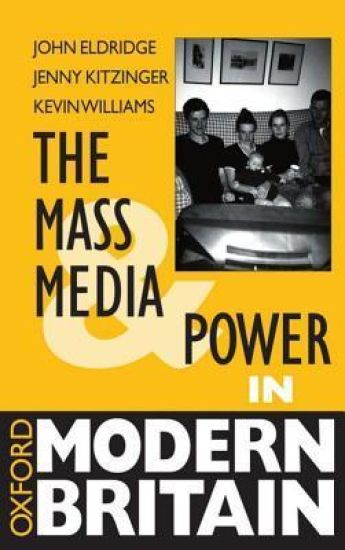
The Mass Media and Power in Modern Britain

The Mass Media and Power in Modern Britain

John Eldridge; Jenny Kitzinger; Kevin Williams

Oxford University Press
1997
nidottu
The Mass Media and Power in Britain is a thorough, lievely introduction to the role, importance, and power of the mass media in contemporary British society. What is the mass media, and how does it help shape life in modern Britain? After introducing the student to discussions around these questions, the authors examine the historical development of the mass media, issues of ownership, and the roots of its power in the public and political sphere. Contemporary questions surrounding todays media are also addressed. What is the role of the audience? How do people take pleasure from media culture? What are the issues surrounding the news, advertising, public services broadcasting, the shaping of public understanding, censorship, violence, and `moral panics'? The authors also look towards the future, considering prospects for a global media and the possible effects of the information superhighway. An invaluable introduction and point of reference for students of sociology, media studies, politics and human geography, The Mass Media and Power in Modern Britain will be essential reading for anyone interested in our mass media _
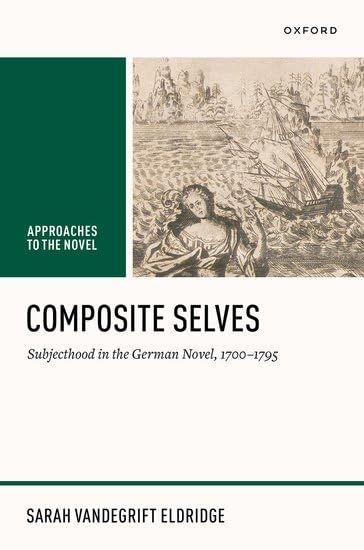
Composite Selves

Composite Selves

Sarah Eldridge

Oxford University Press
2025
sidottu
Composite Selves contributes to studies of the novel rooted in but continuing beyond the eighteenth century by reflecting on the ways in which a broad corpus of German-language novels reveals the self as composite. It uses detailed literary analysis to trace the changing and contingent models of selfhood presented in three clusters of novels: courtly novels from the 1720s and 30s; adventure novels from the 1750s; and sentimental novels of interiority from the 1770s and 80s. Drawing on insights from critical whiteness studies and historical analysis, it illuminates how literary selfhood changes over the century and how even the supposedly 'natural' interior selves of the late eighteenth-century novel are constituted by their encounters with an exterior literary world. Responding to debates over aesthetic education and literary universality that run through humanism, deconstruction, and cognitive literary studies, this project insists on recognizing the socially-turned qualities of novelistic 'selves' and on asking how these qualities relate to groups historically excluded from full selfhood and the social and cultural access that selfhood affords. This book is thus also a story about the construction of literary whiteness in the eighteenth-century novel--a story that fills a notable gap in German literary studies and thus uncovers a missing facet of narratives of the European novel from its earliest phases.
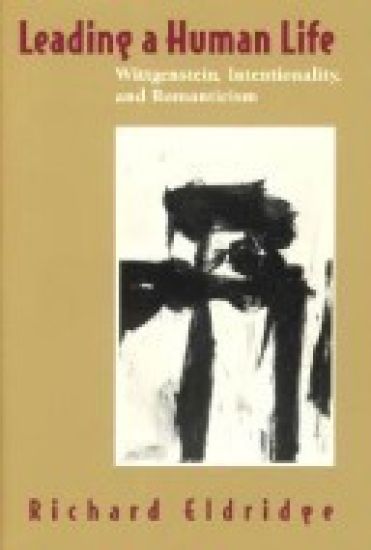
Leading a Human Life

Leading a Human Life

Richard Eldridge

University of Chicago Press
1997
sidottu
This study presents an account of Wittgenstein's "Philosophical Investigations", interpreting the text as displaying the human need to pursue an ideal of expressive freedom within the limits set by culture. The author sees Wittgenstein as a Romantic protagonist pondering on the nature of intentional consciousness, and ranging over ethics, aesthetics and philosophy of mind. Leading a human life becomes a creative act, of continuously seeking to overcome both complacency and scepticism. Eldridge aims to provide a careful reconstruction of the central motive of Wittgenstein's work.
Leading a Human Life

Leading a Human Life

Richard Eldridge

University of Chicago Press
1997
nidottu
This study presents an account of Wittgenstein's "Philosophical Investigations", interpreting the text as displaying the human need to pursue an ideal of expressive freedom within the limits set by culture. The author sees Wittgenstein as a Romantic protagonist pondering on the nature of intentional consciousness, and ranging over ethics, aesthetics and philosophy of mind. Leading a human life becomes a creative act, of continuously seeking to overcome both complacency and scepticism. Eldridge aims to provide a careful reconstruction of the central motive of Wittgenstein's work.
Rebel Women

Rebel Women

Jane Eldridge Miller

University of Chicago Press
1997
nidottu
With the rise of women's suffrage, challenges to marriage and divorce laws, and expanding opportunities for education and employment for women, the early years of the twentieth century were a time of social revolution. Examining British novels written in 1890-1914, Jane Eldridge Miller demonstrates how these social, legal, and economic changes rendered the traditional narratives of romantic desire and marital closure inadequate, forcing Edwardian novelists to counter the limitations and ideological implications of those narratives with innovative strategies. The original and provocative novels that resulted depict the experiences of modern women with unprecedented variety, specificity, and frankness. Rebel Women is a major re-evaluation of Edwardian fiction and a significant contribution to literary history and criticism. Miller's is the best account we have, not only of Edwardian women novelists, but of early 20th-century women novelists; the measure of her achievement is that the distinction no longer seems workable. --David Trotter, The London Review of Books
Literature, Life, and Modernity

Literature, Life, and Modernity

Richard Eldridge

Columbia University Press
2008
sidottu
Richard Eldridge explores the ability of dense and formally interesting literature to respond to the complexities of modern life. Beyond simple entertainment, difficult modern works cultivate reflective depth and help their readers order and interpret their lives as subjects in relation to complex economies and technological systems. By imagining themselves in the role of the protagonist or the authorial persona, readers become immersed in structures of sustained attention, under which concrete possibilities of meaningful life, along with difficulties that block their realization, are tracked and clarified. Literary form, Eldridge argues, generates structures of care, reflection, and investment within readers, shaping--if not stabilizing--their interactions with everyday objects and events. Through the experience of literary forms of attention, readers may come to think and live more actively, more fully engaging with modern life, rather than passively suffering it. Eldridge considers the thought of Descartes, Kant, Adorno, Benjamin, Stanley Cavell, and Charles Taylor in his discussion of Goethe, Wordsworth, Rilke, Stoppard, and Sebald, advancing a philosophy of literature that addresses our desire to read and the meaning and satisfaction that literary attention brings to our fragmented modern lives.
Women Talk Back to Shakespeare

Women Talk Back to Shakespeare

Jo Eldridge Carney

Routledge
2021
sidottu
This study explores more recent adaptations published in the last decade whereby women—either authors or their characters—talk back to Shakespeare in a variety of new ways."Talking back to Shakespeare", a term common in intertextual discourse, is not a new phenomenon, particularly in literature. For centuries, women writers—novelists, playwrights, and poets—have responded to Shakespeare with inventive and often transgressive retellings of his work. Thus far, feminist scholarship has examined creative responses to Shakespeare by women writers through the late twentieth century. This book brings together the "then" of Shakespeare with the "now" of contemporary literature by examining how many of his plays have cultural currency in the present day. Adoption and surrogate childrearing; gender fluidity; global pandemics; imprisonment and criminal justice; the intersection of misogyny and racism—these are all pressing social and political concerns, but they are also issues that are central to Shakespeare’s plays and the early modern period. By approaching material with a fresh interdisciplinary perspective, Women Talk Back to Shakespeare is an excellent tool for both scholars and students concerned with adaptation, women and gender, and intertextuality of Shakespeare’s plays.
Women Talk Back to Shakespeare

Women Talk Back to Shakespeare

Jo Eldridge Carney

Routledge
2021
nidottu
This study explores more recent adaptations published in the last decade whereby women—either authors or their characters—talk back to Shakespeare in a variety of new ways."Talking back to Shakespeare", a term common in intertextual discourse, is not a new phenomenon, particularly in literature. For centuries, women writers—novelists, playwrights, and poets—have responded to Shakespeare with inventive and often transgressive retellings of his work. Thus far, feminist scholarship has examined creative responses to Shakespeare by women writers through the late twentieth century. This book brings together the "then" of Shakespeare with the "now" of contemporary literature by examining how many of his plays have cultural currency in the present day. Adoption and surrogate childrearing; gender fluidity; global pandemics; imprisonment and criminal justice; the intersection of misogyny and racism—these are all pressing social and political concerns, but they are also issues that are central to Shakespeare’s plays and the early modern period. By approaching material with a fresh interdisciplinary perspective, Women Talk Back to Shakespeare is an excellent tool for both scholars and students concerned with adaptation, women and gender, and intertextuality of Shakespeare’s plays.