
Kirjahaku
Etsi kirjoja tekijän nimen, kirjan nimen tai ISBN:n perusteella.
1000 tulosta hakusanalla ERASMUS WILSON

When a man discovers he is moving across America, he and his best friend go on vacation to the White Mountains of New Hampshire just before Christmas.
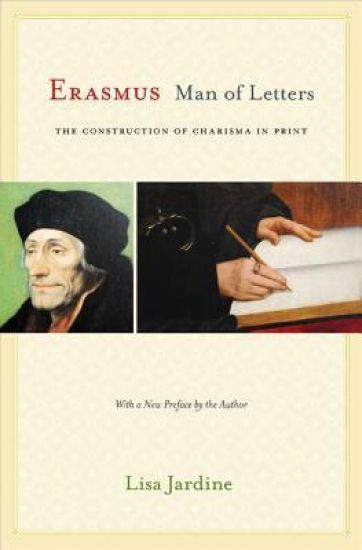
The name Erasmus of Rotterdam conjures up a golden age of scholarly integrity and the disinterested pursuit of knowledge, when learning could command public admiration without the need for authorial self-promotion. Lisa Jardine, however, shows that Erasmus self-consciously created his own reputation as the central figure of the European intellectual world. Erasmus himself--the historical as opposed to the figural individual--was a brilliant, maverick innovator, who achieved little formal academic recognition in his own lifetime. What Jardine offers here is not only a fascinating study of Erasmus but also a bold account of a key moment in Western history, a time when it first became possible to believe in the existence of something that could be designated "European thought."
Johan Huizinga had a special sympathy for the complex, withdrawn personality of Erasmus and for his advocacy of intellectual and spiritual balance in a quarrelsome age. This biography is a classic work on the sixteenth-century scholar/humanist. Originally published in 1984. The Princeton Legacy Library uses the latest print-on-demand technology to again make available previously out-of-print books from the distinguished backlist of Princeton University Press. These editions preserve the original texts of these important books while presenting them in durable paperback and hardcover editions. The goal of the Princeton Legacy Library is to vastly increase access to the rich scholarly heritage found in the thousands of books published by Princeton University Press since its founding in 1905.
Johan Huizinga had a special sympathy for the complex, withdrawn personality of Erasmus and for his advocacy of intellectual and spiritual balance in a quarrelsome age. This biography is a classic work on the sixteenth-century scholar/humanist. Originally published in 1984. The Princeton Legacy Library uses the latest print-on-demand technology to again make available previously out-of-print books from the distinguished backlist of Princeton University Press. These editions preserve the original texts of these important books while presenting them in durable paperback and hardcover editions. The goal of the Princeton Legacy Library is to vastly increase access to the rich scholarly heritage found in the thousands of books published by Princeton University Press since its founding in 1905.
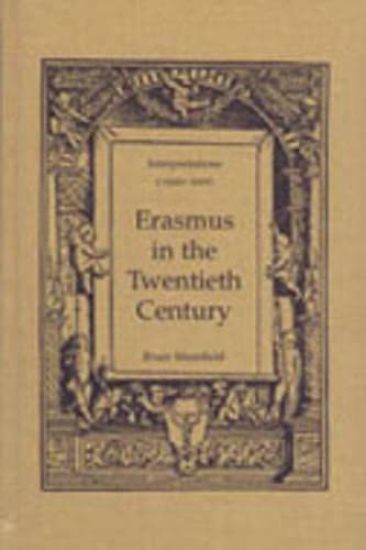
Erasmus of Rotterdam is perhaps one of the most studied and published literary figures and religious thinkers; yet despite the lavish amount of attention paid to him and his work, scholarly opinion of his intellectual and historical importance is varied and ambiguous. Bruce Mansfield shows how shifting interpretations and changing critical regard for Erasmus and his work reflect cultural shifts of the last century. Placing the development of Erasmus studies in the context of religious changes as well as shifts in humanities scholarship throughout the century, Mansfield draws out several main themes: the increasing awareness of the seriousness of Erasmus' thought on religion and politics, the emergence of Erasmus as a serious religious, even theological, thinker (against the view that he was a shallow moralist) and a revival of interest in his place in the rhetorical tradition. Controversy nevertheless remains. The theological and rhetorical approaches have produced different results on how far Erasmus was an 'orthodox' thinker, differences that the influence of postmodernism may well enhance. Differences also remain over his personality. Above all, Mansfield shows that, despite highly impressive and convincing claims in the first half of the century, the extent and character of Erasmus' influence on his own and the following age remains an unresolved and divisive question. This is the final volume in Professor Mansfield's trilogy that examines Erasmus' reputation from his death to the present day. It follows on his earlier studies, Phoenix of His Age: Interpretations of Erasmus c. 1550-1750 (1979) and Man on His Own: Interpretations of Erasmus c. 1750-1920 (1992).
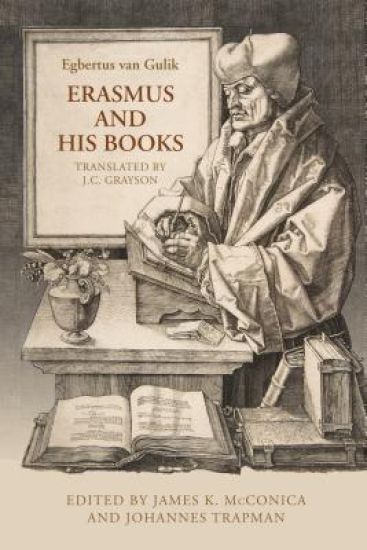
What became of Erasmus’ books? The most famous scholar of his day died in peaceful prosperity and in the company of celebrated and responsible friends. His zeal for useful books was insatiable. Indeed, he had taken care to insure that after his death they would pass to an appreciative noble owner, yet after his death their fate was unknown. Erasmus and His Books provides the most comprehensive evidence available about the books of Erasmus of Rotterdam – the books he owned and his attitude towards them, when and how he acquired them, how he housed, used, and cared for them, and how, from time to time, he disposed of them. Part 1 details the formation, growth, scope, and arrangement of Erasmus’ library and opens the door to a new understanding of the more intimate side of his daily life as a scholar at home with his books, friends, publishers, and booksellers. Part 2 presents a carefully annotated catalogue, the Versandliste, of the more than 400 books in Erasmus’ possession at one point. Drawing upon his command of bibliographical data and his extensive knowledge of Erasmus’ correspondence and related records Egbertus van Gulik proposes as precise an identification of each of the titles as the evidence will allow. Van Gulik’s insightful discoveries tell us what can be known of books in Erasmus’ working library and how he used them and will be of interest to students of the northern Renaissance, the history of the book, and the history of learning.
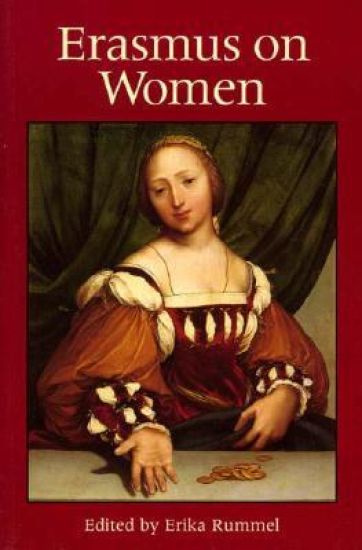
Erasmus on Women
University of Toronto Press
1996
pokkari
In his writings Erasmus was more interested in arguing than in settling a case. However the equivocation we find in his writings is more than a literary game or a technical expedient. It is the corollary of his scepticism. One can hardly expect unequivocal statements on complex issues such as the role of women in society from a man who holds that `human affairs take so many shapes that definite answers cannot be provided for them all.' But as Erika Rummel demonstrates, the difficulties of interpreting Erasmus' texts do not invalidate their use as sources of social history; they only prevent us from ascribing the views expressed specifically to Erasmus. What emerges from the text is a composite picture of women's role in society, reflecting a spectrum of views held in Erasmus' time rather than a coherent set of views advocated by him personally. Erasmus on Women offers selections from Erasmus' manuals on marriage and widowhood, his rhetorical treatises, and the Colloquies. The texts deal with the courtship, marriage, child-rearing, and widowhood. Selections treating particular topics, such as prostitution, scholarship, and activism, are placed within the context in which they are discussed by Erasmus. Erasmus' dialogues present a lively cast of virgins and mothers, housewives and harlots, shrews and activists. The fifteen texts and excerpts offered here represent a mixture of traditional and progressive thought. Along the traditional lines, he commends women for their role as caregivers and for their service to God and society. In contrast, he holds progressive views (by the standards of his time) on the education of women and breaks with tradition by challenging the idea that celibacy is superior to the married state. Erasmus' views were radical for his time and frequently involved him in controversy. Lavishly praised by some, his writings were bitterly denounced by others. Yet the wide dissemination of his writings makes him an important commentator and influence on the social thought of the sixteenth century.
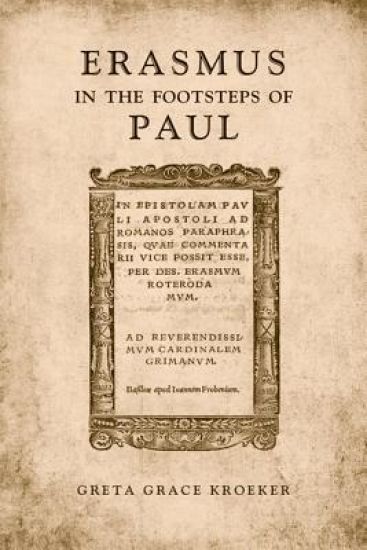
Erasmus allowed his religious beliefs to evolve in response to the Reformation's theological debates: in 1524 he gave in to pressure to write against Martin Luther and his position on free will; by 1527 he had begun to develop a theology of grace remarkably similar to that of leading Protestants. A chief source of evidence for Erasmus' theological views can be found in his changing understandings of Saint Paul's Epistle to the Romans and other teachings during this period. Erasmus in the Footsteps of Paul is the first book to investigate Erasmus' negotiations of Romans in the Reformation world. Greta Grace Kroeker examines Erasmus' Annotations, Paraphrases, and the texts of his polemic with Luther — De libero arbitrio and Hyperaspistes 1 and 2 — to show that although Erasmus never left the Catholic Church, his struggles with the Reformation's central issues were instrumental to his growth as a theologian.
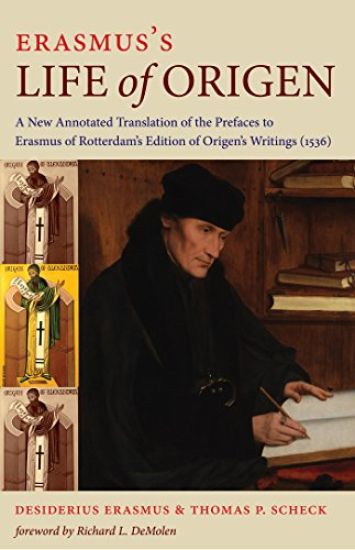
Erasmus's Life of Origen
Thomas P. Scheck; Richard L. DeMolen
The Catholic University of America Press
2016
sidottu
Erasmus of Rotterdam (1466–1536) hailed Origen of Alexandria (185–254) as a holy priest, a gifted homilist, a heroic Christian, and a celebrated exegete and theologian of the ancient Church. In this book Thomas Scheck presents one of the fruits of Erasmus’s endeavors in the field of patristic studies (a particularly neglected field of scholarshipwithin Erasmus studies) by providing the first English translation, annotated and thoroughly introduced, of Erasmus final work, the Prefaces to his Edition of Origen’s writings (1536). Originally published posthumously two months after Erasmus’s death, the work surveys Origen of Alexandria’s life, writings, preaching, and contribution to the Catholic Church. The staggering depth and breadth of Erasmus’s learning are exhibited here, as well as the maturity of his theological reflections, which in many ways anticipate the irenicism of the Second Vatican Council with respect to Origen. Erasmus presents Origen as a marvelous doctor of the ancient Church who made a tremendous contribution to the Catholic exegetical tradition and who lived a saintly life.Scheck’s translation of Erasmus’s prefaces is prefaced by four substantial chapters of introductory material, outlining Erasmus’s program for theological renewal, a survey of Origen’s life and works from a modern perspective, a discussion of Origen’s legacy in the Church as an exegete and theologian (focusing particularly on Origen’s influence on St. Jerome), and the immediate 16th century background of Erasmus’s Edition of Origen. These chapters are followed by the translation itself, to which is then appended a lengthy appendix chapter that discusses Erasmus’s own legacy in the Catholic Church in the 16th century.
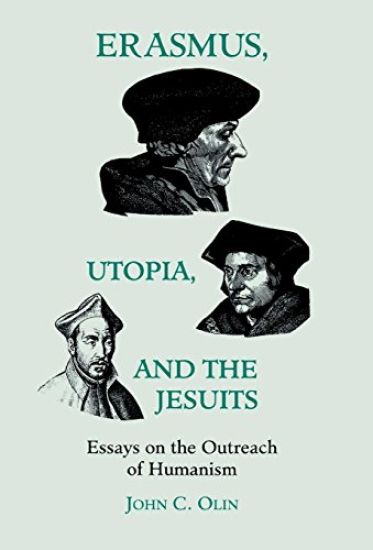
Olin's focus in this collection of essays is the historical period of the early sixteenth century, the juncture of the Renaissance and the Reformation. Providing an in-depth alternative to the standard treatment – so often limited to the classical revival – this work concerns itself with the unique link between humanism and the great literary works of the period, and, in particular, the patristic scholarship inherent in Erasmus' ideals of reform. Olin specifically take into account the movements of New Learning and Humanism defining the cultural break between Medieval scholasticism and the renaissance of interest in the literature of antiquity.
Olin's focus in this collection of essays is the historical period of the early sixteenth century, the juncture of the Renaissance and the Reformation. Providing an in-depth alternative to the standard treatment – so often limited to the classical revival – this work concerns itself with the unique link between humanism and the great literary works of the period, and, in particular, the patristic scholarship inherent in Erasmus' ideals of reform. Olin specifically take into account the movements of New Learning and Humanism defining the cultural break between Medieval scholasticism and the renaissance of interest in the literature of antiquity.
This work has been selected by scholars as being culturally important and is part of the knowledge base of civilization as we know it.This work is in the public domain in the United States of America, and possibly other nations. Within the United States, you may freely copy and distribute this work, as no entity (individual or corporate) has a copyright on the body of the work.Scholars believe, and we concur, that this work is important enough to be preserved, reproduced, and made generally available to the public. To ensure a quality reading experience, this work has been proofread and republished using a format that seamlessly blends the original graphical elements with text in an easy-to-read typeface.We appreciate your support of the preservation process, and thank you for being an important part of keeping this knowledge alive and relevant.
This work has been selected by scholars as being culturally important and is part of the knowledge base of civilization as we know it.This work is in the public domain in the United States of America, and possibly other nations. Within the United States, you may freely copy and distribute this work, as no entity (individual or corporate) has a copyright on the body of the work.Scholars believe, and we concur, that this work is important enough to be preserved, reproduced, and made generally available to the public. To ensure a quality reading experience, this work has been proofread and republished using a format that seamlessly blends the original graphical elements with text in an easy-to-read typeface.We appreciate your support of the preservation process, and thank you for being an important part of keeping this knowledge alive and relevant.