He is fond of enigmas, of conundrums, hieroglyphics; exhibiting in his solutions of each a degree of acumen which appears to the ordinary apprehension praeternatural.
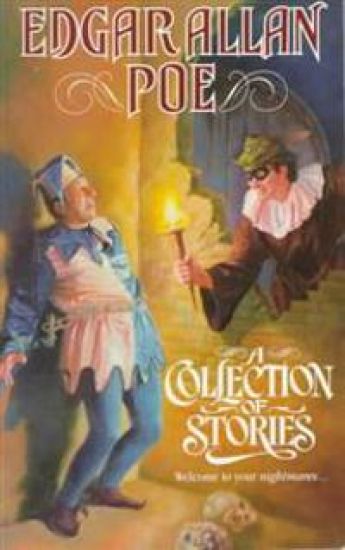
This edition of Edgar Allan Poe's A Collection of Stories includes a Foreword, Biographical Note, and Afterword by S. T. Joshi. Tor Classics are affordably-priced editions designed to attract the young reader. Original dynamic cover art enthusiastically represents the excitement of each story. Appropriate "reader friendly" type sizes have been chosen for each title--offering clear, accurate, and readable text. All editions are complete and unabridged, and feature Introductions and Afterwords.
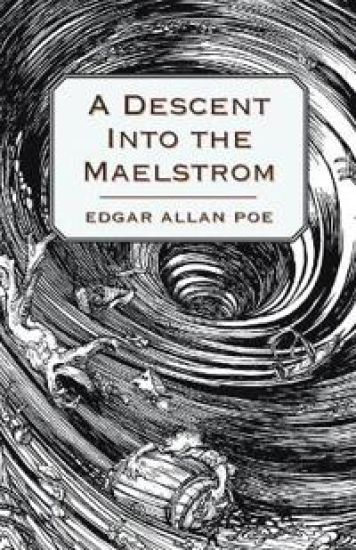
Inspired by the Moskstraumen, it is couched as a story within a story, a tale told at the summit of a mountain climb in Lofoten, Norway. The story is told by an old man who reveals that he only appears old-"You suppose me a very old man," he says, "but I am not. It took less than a single day to change these hairs from a jetty black to white, to weaken my limbs, and to unstring my nerves." The narrator, convinced by the power of the whirlpools he sees in the ocean beyond, is then told of the "old" man's fishing trip with his two brothers a few years ago. Driven by "the most terrible hurricane that ever came out of the heavens", their ship was caught in the vortex. One brother was pulled into the waves; the other was driven mad by the horror of the spectacle, and drowned as the ship was pulled under. At first the narrator only saw hideous terror in the spectacle. In a moment of revelation, he saw that the Maelstr m is a beautiful and awesome creation. Observing how objects around him were attracted and pulled into it, he deduced that "the larger the bodies, the more rapid their descent" and that spherical-shaped objects were pulled in the fastest. Unlike his brother, he abandoned ship and held on to a cylindrical barrel until he was saved several hours later. The "old" man tells the story to the narrator without any hope that the narrator will believe it.
Inspired by the Moskstraumen, it is couched as a story within a story, a tale told at the summit of a mountain climb in Lofoten, Norway. The story is told by an old man who reveals that he only appears old-"You suppose me a very old man," he says, "but I am not. It took less than a single day to change these hairs from a jetty black to white, to weaken my limbs, and to unstring my nerves." The narrator, convinced by the power of the whirlpools he sees in the ocean beyond, is then told of the "old" man's fishing trip with his two brothers a few years ago. Driven by "the most terrible hurricane that ever came out of the heavens," their ship was caught in the vortex. One brother was pulled into the waves; the other was driven mad by the horror of the spectacle, and drowned as the ship was pulled under. At first the narrator only saw hideous terror in the spectacle. In a moment of revelation, he saw that the Maelstr m is a beautiful and awesome creation. Observing how objects around him were attracted and pulled into it, he deduced that "the larger the bodies, the more rapid their descent" and that spherical-shaped objects were pulled in the fastest. Unlike his brother, he abandoned ship and held on to a cylindrical barrel until he was saved several hours later. The "old" man tells the story to the narrator without any hope that the narrator will believe it.
A Trilogy of Terror is a gripping American horror story collection that contains a trilogy of horror classics from Edgar Allan Poe including the following titles: The Raven, The Masque of the Red Death, and The Cask of Amontillado. "The Raven" is a narrative poem by American writer Edgar Allan Poe. First published in January 1845, the poem is often noted for its musicality, stylized language, and supernatural atmosphere. It tells of a talking raven's mysterious visit to a distraught lover, tracing the man's slow fall into madness. The lover, often identified as being a student, is lamenting the loss of his love, Lenore. Sitting on a bust of Pallas, the raven seems to further instigate his distress with its constant repetition of the word "Nevermore." The poem makes use of folk, mythological, religious, and classical references. Poe claimed to have written the poem logically and methodically, intending to create a poem that would appeal to both critical and popular tastes, as he explained in his 1846 follow-up essay, "The Philosophy of Composition." The poem was inspired in part by a talking raven in the novel Barnaby Rudge: A Tale of the Riots of 'Eighty by Charles Dickens. 3] Poe borrows the complex rhythm and meter of Elizabeth Barrett's poem "Lady Geraldine's Courtship," and makes use of internal rhyme as well as alliteration throughout. "The Raven" was first attributed to Poe in print in the New York Evening Mirror on January 29, 1845. Its publication made Poe popular in his lifetime, although it did not bring him much financial success. The poem was soon reprinted, parodied, and illustrated. Critical opinion is divided as to the poem's literary status, but it nevertheless remains one of the most famous poems ever written. "The Raven" follows an unnamed narrator on a dreary night in December who sits reading "forgotten lore" by a dying fire as a way to forget the death of his beloved Lenore. A "tapping at his] chamber door" reveals nothing, but excites his soul to "burning." The tapping is repeated, slightly louder, and he realizes it is coming from his window. When he goes to investigate, a raven flutters into his chamber. Paying no attention to the man, the raven perches on a bust of Pallas above the door.
Narrative of A. Gordon Pym of Nantucket Comprising the details of a mutiny and atrocious butchery on board the American brig Grampus, on her way to the south seas, in the month of June, 1827. is a classic sea adventure/horror story by Edgar Allan Poe. The work relates the tale of the young Arthur Gordon Pym who stows away aboard a whaling ship called Grampus. Various adventures and mis-adventures befall Pym including shipwreck, mutiny and cannibalism. The story starts out as a fairly conventional adventure at sea, but it becomes increasingly strange and hard to classify in later chapters, involving religious symbolism and the Hollow Earth.
In 1831, Edgar Allan Poe went to New York City where he had some of his poetry published. He submitted stories to a number of magazines, but they were all rejected. Poe had no friends, no job, and was in financial trouble. He sent a letter to John Allan begging for help but none came. John Allan died in 1834 and did not mention Edgar in his will at all.This was the beginning of Poe's writing career, which was financially unrewarding during his lifetime.Herein are 6 short stories and 6 poems that will not only make you scream, but prove - beyond a shadow of a doubt - that Poe was, is, and shall forever be, the Master of Horror.
"A Descent into the Maelstr m" is an 1841 short story by Edgar Allan Poe. In the tale, a man recounts how he survived a shipwreck and a whirlpool. It has been grouped with Poe's tales of ratiocination and also labeled an early form of science fiction. The story's opening bears a similarity to Samuel Taylor Coleridge's The Rime of the Ancient Mariner (1798): in both, an excited old man tells his story of shipwreck and survival. The tale is one of sensation, emphasizing the narrator's thoughts and feelings, especially his terror of being killed in the whirlpool. The narrator uses his reasoning skills to survive and the story is considered one of Poe's early examples of science fiction.
Inspired by the Moskstraumen, it is couched as a story within a story, a tale told at the summit of a mountain climb in Lofoten, Norway. The story is told by an old man who reveals that he only appears old-"You suppose me a very old man," he says, "but I am not. It took less than a single day to change these hairs from a jetty black to white, to weaken my limbs, and to unstring my nerves." The narrator, convinced by the power of the whirlpools he sees in the ocean beyond, is then told of the "old" man's fishing trip with his two brothers a few years ago. Driven by "the most terrible hurricane that ever came out of the heavens", their ship was caught in the vortex. One brother was pulled into the waves; the other was driven mad by the horror of the spectacle, and drowned as the ship was pulled under. At first the narrator only saw hideous terror in the spectacle. In a moment of revelation, he saw that the Maelstr m is a beautiful and awesome creation. Observing how objects around him were attracted and pulled into it, he deduced that "the larger the bodies, the more rapid their descent" and that spherical-shaped objects were pulled in the fastest. Unlike his brother, he abandoned ship and held on to a cylindrical barrel until he was saved several hours later. The "old" man tells the story to the narrator without any hope that the narrator will believe it. Un homme raconte comment il a surv cu un maelstrom (celui du Moskstraumen), un puissant tourbillon form dans la mer.