Kirjojen hintavertailu. Mukana 11 244 527 kirjaa ja 12 kauppaa.

Kirjahaku

Etsi kirjoja tekijän nimen, kirjan nimen tai ISBN:n perusteella.

1000 tulosta hakusanalla Editor Phyllis Galde

The Freelance Editor's Handbook

The Freelance Editor's Handbook

Suzy Bills

University of California Press
2021
pokkari
A comprehensive guide to building and maintaining a sustainable, profitable, and enjoyable business as a freelance editor. According to LinkedIn, more than twenty thousand people in the United States list themselves as freelance editors. But many who have the requisite skills to be excellent editors lack the entrepreneurial skills needed to run a thriving, fulfilling business. The few resources available to freelance editors, new and established, are typically limited in scope and lack the strategic thinking needed to make a business flourish. The Freelance Editor’s Handbook provides a complete guide to setting up and running a prosperous freelancing business, from finding clients to increasing productivity, from deciding how to price services to achieving work/life balance, and from paying taxes to saving for retirement. Unlike most other books on freelance editing, this book is founded on a business-success mindset: The goal isn’t simply to eke out a living through freelancing. Rather, the goal is to establish a thriving, rewarding business that allows editors to achieve their career goals, earn a comfortable living, and still have time for family, friends, and personal pursuits. Author Suzy Bills identifies multiple strategies and methods that freelancers can apply, drawing on current research in entrepreneurship, psychology, and well-being. This book is the ultimate resource for editors at all levels: students just starting out, in-house staff looking to transition, and experienced freelancers who want to make their businesses more profitable and enjoyable.Topics include: Deciding Whether You Really Want to Be a Freelance Editor Setting Up Your Business Finding Clients Marketing like a Pro Building Your Website Contracts and Invoices Becoming Financially Savvy ... and more!
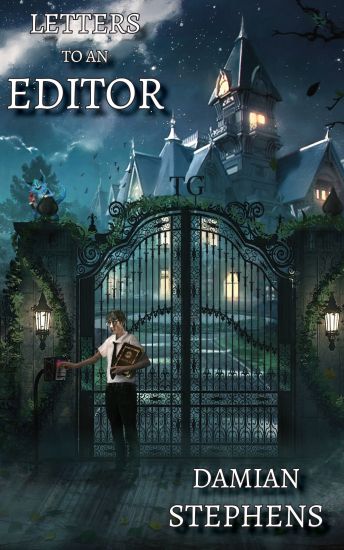
Letters to an Editor

Letters to an Editor

Damian Stephens

Fourth Mansions Press
2019
nidottu
Martin Ready remembers what it was like to be forgotten, mistreated, and presumed guilty-after all, he was a grad student. Before he ended up in jail, that is. But after slipping into that other world and saving the last inhabitant (?) of Yuttelborough, it seems like life has returned basically to normal. If you consider a three-foot tall, candy-addicted, half-cat/half-lizard genius living in your basement "normal." There is more at stake here than just what the vegan punk at Quest Video claims...more than what Hazzard Groschen, Nerd King (Candidate) of Rookville, bargained for...and far more than one murdered billionaire writer of a stolen world history could have imagined.
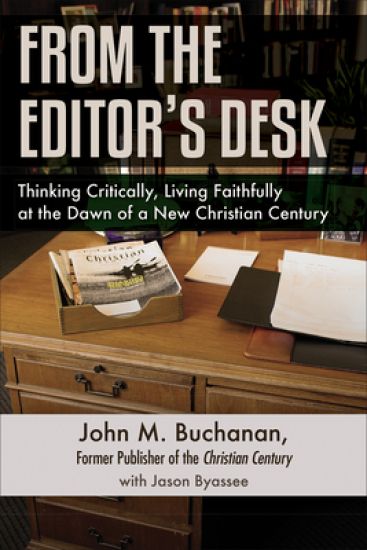
From the Editor's Desk

From the Editor's Desk

John M. Buchanan

Westminster/John Knox Press,U.S.
2016
nidottu
The Christian Century, the most respected magazine for mainline Protestants in the world, has helped Christians think critically and live faithfully since 1884. The publication's former editor and publisher, John Buchanan, has compiled a collection of biweekly editorials from the magazine that highlight events, issues, and questions that progressive Christians faced at the turning of this century.A must-read for Christian Century fans, From the Editor's Desk examines ten key areas from the years 1999-2015, focusing on war and peace, civic engagement, newsworthy events, the Middle East, and congregational life.
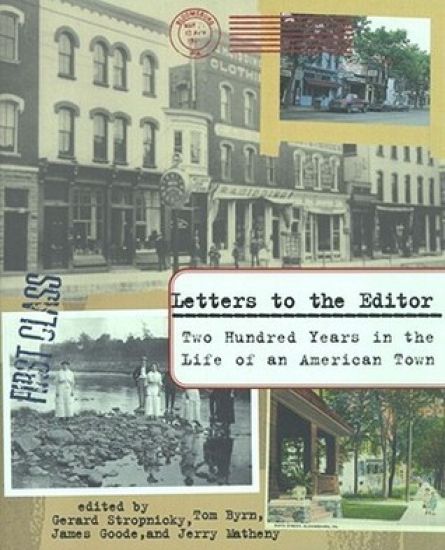
Letters to the Editor

Letters to the Editor

Gerard Stropnicky

Touchstone
1998
pokkari
The voices of America's past and present live on in this timeless portrayal of small-town America, which, through two hundred years of letters to one town's newspapers, evokes the most memorable moments in our history and the passions they engendered. Since the days of the Founding Fathers, the citizens of Bloomsburg, Pennsylvania, have recorded their impressions of such dramatic events of national significance as the ratification of the Bill of Rights, the signing of the Emancipation Proclamation, the rise of Andrew Carnegie, the assassinations of President John F. and Senator Robert Kennedy, and the Clarence Thomas hearings -- as well as their opinions on genuinely local concerns like building good schools and roads, seeing the sights at the Bloomsburg Fair, romantic intrigue in a trailer park, and finding a home for a lonely puppy. By turns hilarious and contemplative, here is a book so genuinely representative of the American experience that each page will bring memories of home and family, friends and neighbors, and our own hometowns sharply -- and honestly -- into focus. Beneath it all, "Letters to the Editor" is about how a community negotiates with itself, how it talks and how it listens.
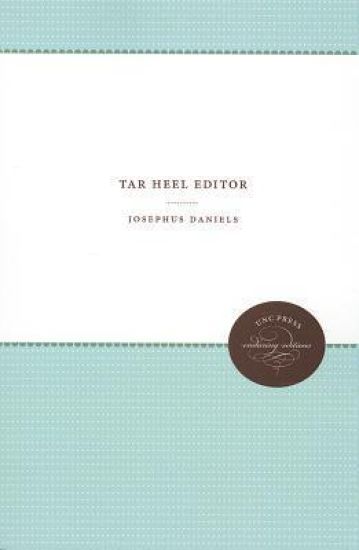
Tar Heel Editor

Tar Heel Editor

Daniels Josephus

The University of North Carolina Press
2012
nidottu
Born during the Civil War, Josephus Daniels has lived a remarkably full life and played a substantial part in one of the most significant periods of our nation's history. This volume of the autobiography of Wilson's secretary of the navy covers the period up to the year 1893 and is concerned with his early interests, his schooling, and his early ventures into the field of journalism.Originally published in 1939.A UNC Press Enduring Edition -- UNC Press Enduring Editions use the latest in digital technology to make available again books from our distinguished backlist that were previously out of print. These editions are published unaltered from the original, and are presented in affordable paperback formats, bringing readers both historical and cultural value.
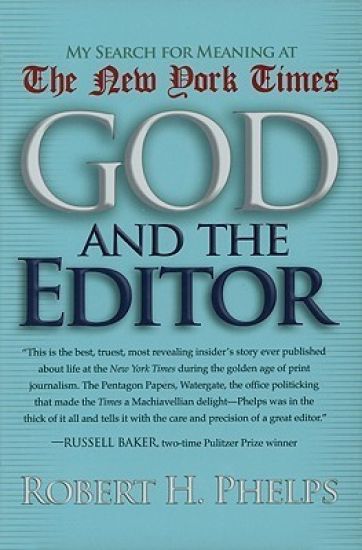
God and the Editor

God and the Editor

Robert H Phelps

Syracuse University Press
2009
sidottu
For nearly twenty years Robert H. Phelps ran interference for, cheered on, and sometimes scolded star reporters and top editors at the ""New York Times"". Starting his career as a cub reporter for the ""Providence Journal-Bulletin"", Phelps joined the ""New York Times"" as a copy editor, eventually serving as the ""Times"" news editor for the Washington bureau. Along the way he struggled with balancing his moral ideals and his personal ambition. In this compelling memoir, Phelps interweaves his personal and professional experiences with some of the most powerful stories of the era. With candor and keen observation, Phelps chronicles both the triumphant and the tragic events at the ""Times"". He explains the missed lessons of the ""Pentagon Papers"", why the ""Times"" played catch-up with the ""Washington Post"" on the Watergate scandal but eventually surpassed it on covering that seminal story, and how the ""Times"" failed to report a key element of the riots at the 1968 Democratic convention. Phelps offers mixed appraisals of such luminaries as A. M. Rosenthal, James B. Reston, E. Clifton Daniel, and Max Frankel, and expresses great admiration for Seymour Hersh, Neil Sheehan, and Bill Beecher, three unlikely scoop artists. As Phelps settled in at the ""New York Times"", journalism became the religion he had searched for since his adolescence. Over his tenure of nearly two decades, however, Phelps found that journalism's stark emphasis on fact was insufficient to address many of life's dilemmas and failed to provide the sustaining guidance he envied in his wife's Catholic faith.
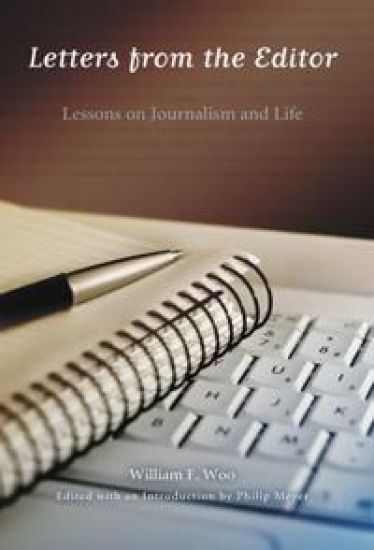
Letters from the Editor

Letters from the Editor

William F. Woo

University of Missouri Press
2007
sidottu
William F. Woo, born in China, was the first person outside the Pulitzer family to edit the ""St. Louis Post-Dispatch"" and the first Asian American to edit a major American newspaper. After forty years in the newsroom, Woo embarked on a second career in 1996 teaching journalism at Stanford University, where he wrote weekly informal essays to his students in the same personal style that characterized his columns for the ""Post-Dispatch"". Each made a philosophical point about journalism and society and their delicate relationship over the last half of the twentieth century. Woo was revered as both a writer and a reporter, and this volume collects some of the best of those essays to the next generation of journalists on their craft's high purpose. As inspiration for students from someone who knew the ropes, it distills the essence of the values that define independent journalism while offering them invaluable food for thought about their future professions. The essays touch on a wide range of subjects. Woo reflects on journalism as a public trust, requiring the publication of stories that give readers a better understanding of society and equip them to change it for the better. He also ponders print journalism conducted in the face of broadcast and online competition along with the transformation of newspapers from privately owned to publicly traded companies. Here too are personal reflections on the Pulitzer family's impact on journalism and on the tensions between a journalist's personal and professional life, as well as the conflicts posed by political advocacy versus free speech or a reporter's expertise versus a newspaper's credibility. Woo's idealistic spirit conveys the virtues of his era's newspaper journalism to the next generation of journalists - and most likely to the next generation of news media as well. Even as new students of journalism have an eye on an electronic future, Woo's essays come straight from a newsman's heart and soul to remind them of values worth preserving.
Letters from the Editor

Letters from the Editor

William F. Woo

University of Missouri Press
2007
nidottu
William F. Woo, born in China, was the first person outside the Pulitzer family to edit the ""St. Louis Post-Dispatch"" and the first Asian American to edit a major American newspaper. After forty years in the newsroom, Woo embarked on a second career in 1996 teaching journalism at Stanford University, where he wrote weekly informal essays to his students in the same personal style that characterized his columns for the ""Post-Dispatch"". Each made a philosophical point about journalism and society and their delicate relationship over the last half of the twentieth century. Woo was revered as both a writer and a reporter, and this volume collects some of the best of those essays to the next generation of journalists on their craft's high purpose. As inspiration for students from someone who knew the ropes, it distills the essence of the values that define independent journalism while offering them invaluable food for thought about their future professions. The essays touch on a wide range of subjects. Woo reflects on journalism as a public trust, requiring the publication of stories that give readers a better understanding of society and equip them to change it for the better. He also ponders print journalism conducted in the face of broadcast and online competition along with the transformation of newspapers from privately owned to publicly traded companies. Here too are personal reflections on the Pulitzer family's impact on journalism and on the tensions between a journalist's personal and professional life, as well as the conflicts posed by political advocacy versus free speech or a reporter's expertise versus a newspaper's credibility. Woo's idealistic spirit conveys the virtues of his era's newspaper journalism to the next generation of journalists - and most likely to the next generation of news media as well. Even as new students of journalism have an eye on an electronic future, Woo's essays come straight from a newsman's heart and soul to remind them of values worth preserving.
Write Better – A Lifelong Editor on Craft, Art, and Spirituality
Christianity Today 2020 Book of the Year Award, Culture and the Arts Writing is not easy. But it can get better. In this primer on nonfiction writing, Andrew Le Peau offers insights he has learned as a published author and an editor for over forty years, training, guiding, and cheering on hundreds of writers. Here are skills that writers can master—from finding strong openings and closings, to focusing on an audience, to creating a clear structure, to crafting a persuasive message. With wide-ranging examples from fiction and nonfiction, Le Peau also demystifies aspects of art in writing such as creativity, tone, and metaphor. He considers strategies that can move writers toward fresher, more vital, and perhaps more beautiful expressions of the human condition. One aspect of writing that rarely receives attention is who we are as writers and how writing itself changes us. Self-doubt, fear of criticism, downsides of success, questions of authority, and finding our voice are all a part of the exploration of our spirituality as writers found in these pages. Discover how the act of writing can affect our life in God. Whether you're a veteran writer, an occasional practitioner, a publishing professional, or a student just starting to explore such skills, Le Peau's wit and wisdom can speed you on your way.