Kirjojen hintavertailu. Mukana 11 342 296 kirjaa ja 12 kauppaa.

Kirjahaku

Etsi kirjoja tekijän nimen, kirjan nimen tai ISBN:n perusteella.

1000 tulosta hakusanalla Edward Cocker

Edward Steichen In High Fashion
Edward Steichen was already a famous painter and photographer in America and abroad when, in early 1923, he was offered the most prestigious position in photography's commercial domain: that of chief photographer for Vogue and Vanity Fair.Over the next fifteen years, Steichen would produce a body of work of unequaled brilliance, dramatizing and glamorizing contemporary culture and its achievers in politics, literature, film, sport, dance, theater, opera, and the world of high fashion. Here are iconic images of Gloria Swanson, Gary Cooper, Greta Garbo, and Charlie Chaplin as well as numerous other celebrities drawn from an archive of more than two thousand original prints. Until now, no more than a handful have been exhibited or published in book form. The photographs of the 1920s and 1930s represent the high point in Steichen's career and are among the most striking creations of twentieth-century photography.
EDWARD HOPPER PAINT/LEDGER CL

EDWARD HOPPER PAINT/LEDGER CL

Edward Hopper; Lyons Deborah

WW Norton Co
2013
sidottu
In his ledger books, Edward Hopper recorded paintings produced and sold, payments made and received, materials used and subjects considered. Juxtaposing selected ledger pages with reproductions of the respective paintings, Edward Hopper: Paintings & Ledger Book Drawings documents the making of and fate of Hopper's most revered works.
Edward Durell Stone

Edward Durell Stone

Mary Anne Hunting

WW Norton Co
2012
sidottu
Framed between the Great Depression and the oil embargo of the early 1970s, the distinguished career of the native Arkansan is represented on four continents, in thirteen foreign countries, and in thirty-two states—his masterpiece the American Embassy chancery (1953–59) in New Delhi, India. Recognized in his prime as one of the nation’s most sought-after architects, Stone’s vast and prestigious workload brought prosperity on a scale rare in architecture in his time; after the death of Frank Lloyd Wright, some supporters thought Stone seemed destined to take the place of his personal hero and close friend as the great national architect. But Stone also drew divergent reactions. Such International Style buildings as his Museum of Modern Art (1935–39) in New York City, an austere, unornamented volume, won critical approval; in contrast, his monumental postwar architecture—the John F. Kennedy Center for the Performing Arts (1958–71) in Washington, DC, among the best known—exposed popular tastes by offering a broader definition of Modernism inclusive of decoration. Enhanced interest in Stone’s architecture has been spurred by the reconsideration of a number of his buildings. The former Gallery of Modern Art (1958–64) at 2 Columbus Circle in New York City, which was lost to a near complete makeover, stimulated vigorous and at times contentious discussion that made evident the need for an objective reassessment. His legacy—of giving form to the aspirations of the emerging consumer culture and of reconciling Modernism with the dynamism of the age—is established in Edward Durell Stone: Modernism’s Populist Architect.
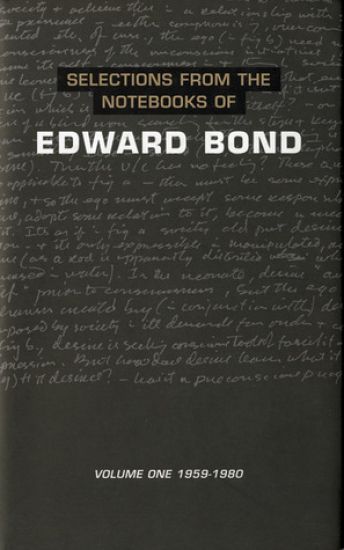
Selections from the Notebooks Of Edward Bond
From his emergence as a young writer at London's Royal Court Theatre to being hailed as "the greatest living English playwright" (The Independent), this first volume of the notebooks of Edward Bond reveals the mind behind some of the most provoc Exploring the meeting point between politics and the art of the writer, Bond's notes offer a rare insight into one of the theatre's foremost thinkers whilst charting the creative progress of his work between 1959 and 1980. As well as providing a detailed commentary on his plays, the notebooks also contain early play drafts, poems and stories, his thoughts on life, art, Brecht, dramatic method and censorship."1 August 1965: I would do almost anything to prevent my play [Saved] being banned except alter one comma at the request of the Lord Chamberlain."Edward Bond is "a great playwright - many, particularly in continental Europe, would say the greatest living English playwright" (Independent)
Selections from the Notebooks Of Edward Bond
This second volume of Edward Bond's notebooks covers the period from Restoration, his historic drama with songs, to Eleven Vests, his play for young people written for Big Brum Theatre-in-Education "There is a cliche - which is also false - that all creative writing is autobiographical. If I were to be asked when you write do you write about your life I would answer when I write I am living my life."Including first drafts of plays, ideas and thoughts on characters, themes, actions and dramatic technique, this selection of notes provides a glimpse into the working mind of one of the world's most provocative playwrights. Alongside the commentaries on the plays, Bond's notes also contain stories and poems. His philosophy on theatre and art and his views on the role of the writer in society are included. Emphasis is given to Bond's critical response to political and moral issues such as Thatcherism, the monarchy, nuclear war, Britain's social classes and our definitions of good and evil.
Edward the Elder
Edward the Elder, son and successor of King Alfred, was one of the greatest architects of the English state and yet is one of the most neglected kings of English history. During his 24-year reign, Edward led a series of successful campaigns against the Vikings and by the time of his death controlled most of southern and midland England, with his influence also felt in Wales and the north. Edward the Elder is a timely reassessment of his reign and helps to restore this ruler to his rightful place in English history.The period of Edward's reign is notably lacking in primary materials for historians. But by drawing upon sources as diverse as literature, archaeology, coins and textiles, this book brings together a rich variety of scholarship to offer new insight into the world of Edward the Elder. With this wealth of perspectives, Edward the Elder offers a broad picture of Edward's reign and his relation to the politics and culture of the Anglo-Saxon period.
Edward the Elder
Edward the Elder, son and successor of King Alfred, was one of the greatest architects of the English state and yet is one of the most neglected kings of English history. During his 24-year reign, Edward led a series of successful campaigns against the Vikings and by the time of his death controlled most of southern and midland England, with his influence also felt in Wales and the north. Edward the Elder is a timely reassessment of his reign and helps to restore this ruler to his rightful place in English history.The period of Edward's reign is notably lacking in primary materials for historians. But by drawing upon sources as diverse as literature, archaeology, coins and textiles, this book brings together a rich variety of scholarship to offer new insight into the world of Edward the Elder. With this wealth of perspectives, Edward the Elder offers a broad picture of Edward's reign and his relation to the politics and culture of the Anglo-Saxon period.
Edward Sapir
Edward Sapir (1884–1939) was one of the foremost linguists and anthropologists of his time. He is most widely known for his contributions to the study of North American Indian languages. A founder of ethnology, which considers the relationship of culture to language, he was also principal developer of the American (descriptive) school of structural linguistics. Bringing together the best work on Sapir, this long-awaited three-volume collection from Routledge includes a new introduction by the editor, a chronological table of the gathered materials, a bibliography, and a full index. It is destined to be welcomed by all scholars and students of Sapir as an invaluable reference resource.
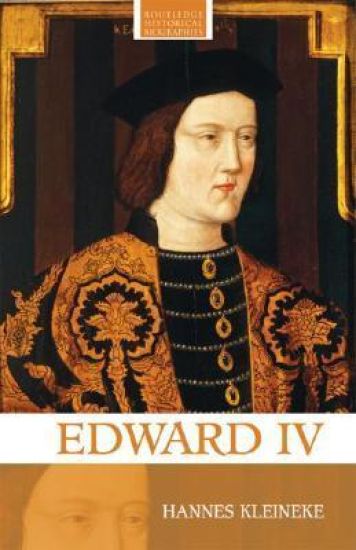
Edward IV

Edward IV

Hannes Kleineke

Routledge
2008
sidottu
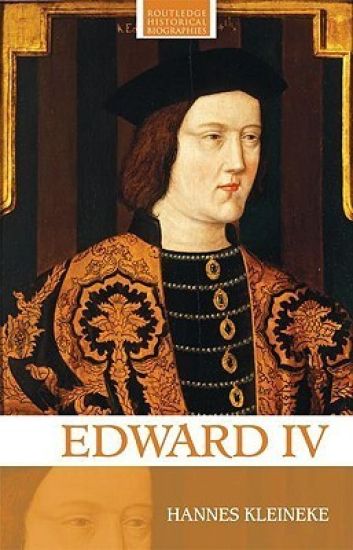
The reign of King Edward IV occupies a pivotal place in late medieval English history, marking the transition from a medieval to a renaissance monarchy. The personality of the young monarch was undoubtedly a factor in this transition, yet there has been much controversy over the King's character. Was Edward a vain and self-indulgent playboy, more interested in his own pleasures than the well-being of his kingdom, or was his life cut tragically short, thus preventing him from fully establishing the 'new monarchy' now more commonly associated with his son-in-law, Henry VII?A central personality in both historical study and literary fame, Edward IV is as fascinating a character now as he was for William Shakespeare over four centuries ago. Drawing together both recent research and original sources, Hannes Kleineke reassesses the debate in this concise and accessible biography. This volume is an invaluable read for all those interested in fifteenth century history.
Edward IV

Edward IV

Hannes Kleineke

Routledge
2008
nidottu
The reign of King Edward IV occupies a pivotal place in late medieval English history, marking the transition from a medieval to a renaissance monarchy. The personality of the young monarch was undoubtedly a factor in this transition, yet there has been much controversy over the King's character. Was Edward a vain and self-indulgent playboy, more interested in his own pleasures than the well-being of his kingdom, or was his life cut tragically short, thus preventing him from fully establishing the 'new monarchy' now more commonly associated with his son-in-law, Henry VII?A central personality in both historical study and literary fame, Edward IV is as fascinating a character now as he was for William Shakespeare over four centuries ago. Drawing together both recent research and original sources, Hannes Kleineke reassesses the debate in this concise and accessible biography. This volume is an invaluable read for all those interested in fifteenth century history.
Edward Thring

Edward Thring

W F Rawnsley

Routledge
2007
sidottu
Originally published in 1926, this volume charts the achievements of Edward Thring, arguably the most original and striking figure in the schoolmaster world of England in the nineteenth century. Abroad, he was the only English schoolmaster of his generation widely known by name. The principles upon which he relied were that every boy should be taught, and the less able the boy, the more able should be the teacher who was set to deal with him; that no class should exceed twenty-five boys; that each boy should have privacy in the dormitories and that trust between boys and masters was paramount. These were revolutionary principles in educational terms at the time but they have endured to form the cornerstones of British boarding-schools which are still recognized today.
Edward Said

Edward Said

Bill Ashcroft; Pal Ahluwalia

Routledge
2008
sidottu
Edward Said is perhaps best known as the author of the landmark study Orientalism, a book which changed the face of critical theory and shaped the emerging field of post-colonial studies, and for his controversial journalism on the Palestinian political situation.Looking at the context and the impact of Said's scholarship and journalism, this book examines Said's key ideas, including:the significance of 'worldliness', 'amateurism', 'secular criticism', 'affiliation' and 'contrapuntal reading' the place of text and critic in 'the world' knowledge, power and the construction of the 'Other' links between culture and imperialismexile, identity and the plight of Palestinea new chapter looking at Said's later work and style This popular guide has been fully updated and revised in a new edition, suitable for readers approaching Said's work for the first time as well as those already familiar with the work of this important theorist. The result is the ideal guide to one of the twentieth century's most engaging critical thinkers.
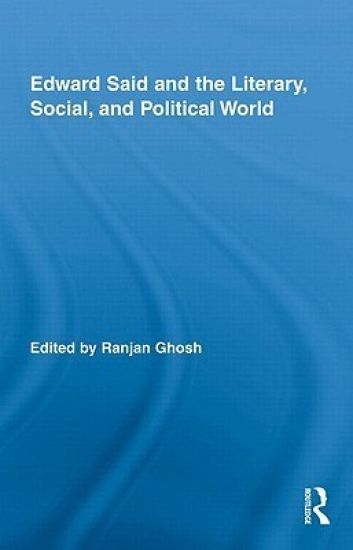
Edward Said and the Literary, Social, and Political World
Edward Said is widely recognized for his work as a critic and theorist of Orientalism and the Palestine crisis, but far less attention has been devoted to his considerable body of literary and cultural criticism. In this edited collection, the contributors - many among the foremost Said scholars in the world - examine Said as the literary critic; his relationship to other major contemporary thinkers (including Derrida, Ricoeur, Barthes and Bloom); and his involvement with major movements and concerns of his time (such as music, Feminism, New Humanism, and Marxism). Featuring freshly carved out essays on new areas of intervention, the volume is an indispensable addition for those interested in Edward Said and the many areas in which his legacy looms.
Edward Thring

Edward Thring

W F Rawnsley

Routledge
2014
nidottu
Originally published in 1926, this volume charts the achievements of Edward Thring, arguably the most original and striking figure in the schoolmaster world of England in the nineteenth century. Abroad, he was the only English schoolmaster of his generation widely known by name. The principles upon which he relied were that every boy should be taught, and the less able the boy, the more able should be the teacher who was set to deal with him; that no class should exceed twenty-five boys; that each boy should have privacy in the dormitories and that trust between boys and masters was paramount. These were revolutionary principles in educational terms at the time but they have endured to form the cornerstones of British boarding-schools which are still recognized today.
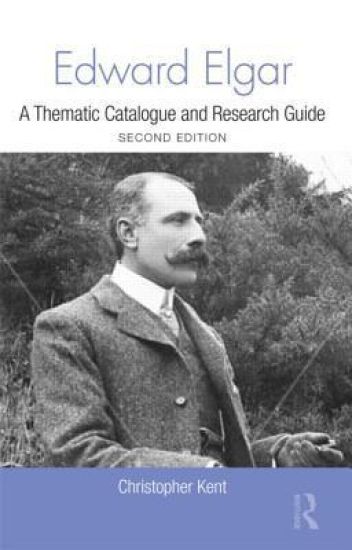
Edward Elgar

Edward Elgar

Christopher Kent

Routledge
2012
sidottu
This updated second edition is an in-depth exploration of Elgar's compositions and of writings by and about the composer and his music. The past 16 years have seen a steady increase in scholarly publications and the emergence of The Elgar Society Journal, as well as further discoveries of the composer's MSS and letters, and the new edition incorporates this latest research. The compositions are examined in a work-by-work catalog, in chronological order, in which each entry gives a complete census and collation of manuscript, proof, text, biographical, printed edition and bibliographical sources for each item. The listing also includes unfinished sketches and details of much unpublished material. The bibliography section covers selected established literature as well as details of reviews and articles contained in the European periodicals at the climax of Elgar's career. Christopher Kent was nominated unanimously by the Scrutiny Panel of the International Association of Music Libraries, Archives and Research Centres for the 2014 C.B. Oldman Prize for the most outstanding reference resource published in 2014. He received the award at their Annual Conference held at the University of Aston, Birmingham in April.
Edward Said's Translocations
Working with processes of translocation enabled Edward Said to point out interdependence and complementarity across geographical borders and disciplinary boundaries while recognizing cultural difference and the distinct historical experiences of colonizer and colonized. This book brings into focus Said’s politics of reading, from his literary criticism in English to his political columns in Arabic. The international contributors—from Britain, Egypt, France, Germany, India, Switzerland, and the United States—investigate his intellectual legacies without necessarily identifying themselves with the critical positions these involve. Instead of treating his work as a unitary theoretical system, the various arguments explored offer a critical assessment of those situations in which his writing has entered into a productive relationship with other theoretical positions and interlocutors. The collection considers location, which has always been a central category in and for Said’s writing; readings, which designates the acts by which, according to Said, the world comes to be constituted; and legacies, which pertains to the many fields across the boundaries of established academic disciplines that have taken up Said’s challenges. The critical positions visited in this book include critical and cultural theory, postcolonialism, literary studies, theatre and performance studies, and visual and music studies.
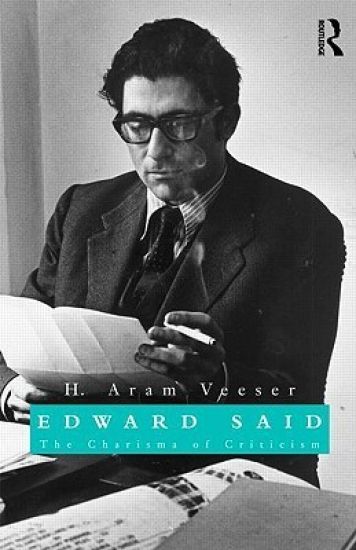
Edward Said

Edward Said

H. Aram Veeser

Routledge
2010
sidottu
This insightful critical biography shows us an Edward Said we did not know. H. Aram Veeser brings forth not the Said of tabloid culture, or Said the remote philosopher, but the actual man, embedded in the politics of the Middle East but soaked in the values of the West and struggling to advance the best European ideas. Veeser shows the organic ties connecting his life, politics, and criticism.Drawing on what he learned over 35 years as Said's student and skeptical admirer, Veeser uses never-before-published interviews, debate transcripts, and photographs to discover a Said who had few inhibitions and loathed conventional routine. He stood for originality, loved unique ideas, wore marvelous clothes, and fought with molten fury. For twenty years he embraced and rejected, at the same time, not only the West, but also literary theory and the PLO. At last, his disgust with business-as-usual politics and criticism marooned him on the sidelines of both. The candid tale of Said's rise from elite academic precincts to the world stage transforms not only our understanding of Said—the man and the myth—but also our perception of how intellectuals can make their way in the world.
Edward Said and the Literary, Social, and Political World
Edward Said is widely recognized for his work as a critic and theorist of Orientalism and the Palestine crisis, but far less attention has been devoted to his considerable body of literary and cultural criticism. In this edited collection, the contributors - many among the foremost Said scholars in the world - examine Said as the literary critic; his relationship to other major contemporary thinkers (including Derrida, Ricoeur, Barthes and Bloom); and his involvement with major movements and concerns of his time (such as music, Feminism, New Humanism, and Marxism). Featuring freshly carved out essays on new areas of intervention, the volume is an indispensable addition for those interested in Edward Said and the many areas in which his legacy looms.