Kirjojen hintavertailu. Mukana 11 244 527 kirjaa ja 12 kauppaa.

Kirjahaku

Etsi kirjoja tekijän nimen, kirjan nimen tai ISBN:n perusteella.

1000 tulosta hakusanalla Edward Liddell

Edward Said

Edward Said

University of California Press
2010
pokkari
Edward W. Said (1935-2003) ranks as one of the most preeminent public intellectuals of our time. Through his literary criticism, his advocacy for the Palestinian cause, and his groundbreaking book "Orientalism", Said elegantly enriched public discourse by unsettling the status quo. This indispensable volume, the most comprehensive and wide-ranging resource on Edward Said's life and work, spans his broad legacy both within and beyond the academy. The book brings together contributions from thirty-one luminaries - leading scholars, critics, writers, and activists - to engage Said's provocative ideas. Their essays and interviews explore the key themes of emancipation and representation through the prisms of postcolonial theory, literature, music, philosophy, and cultural studies. The contributors include: Bill Ashcroft, Ben Conisbee Baer, Daniel Barenboim, Timothy Brennan, Noam Chomsky, Denise DeCaires-Narain, Nicholas Dirks, Marc H. Ellis, Rokus de Groot, Sabry Hafez, Abdirahman A. Hussein, Ardi Imseis, Adel Iskandar, Ghada Karmi, Katherine Callen King, Joseph Massad, W. J. T. Mitchell, Laura Nader, Ilan Pappe, Benita Parry, Rajagopalan Radhakrishnan, Jahan Ramazani, Jacqueline Rose, Lecia Rosenthal, Hakem Rustom, Avi Shlaim, Ella Habiba Shohat, Robert Spencer, Gayatri Chakravorty Spivak, Anastasia Valassopoulos, Asha Varadharajan, and, Michael Wood.
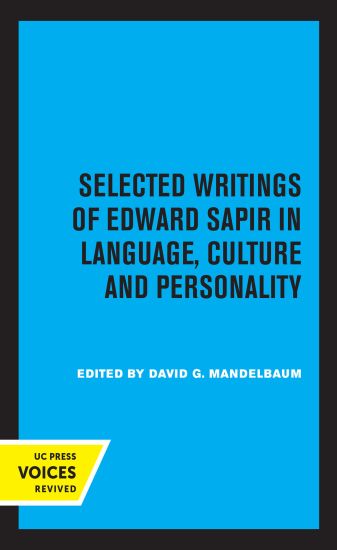
Selected Writings of Edward Sapir in Language, Culture and Personality
This title is part of UC Press's Voices Revived program, which commemorates University of California Press’s mission to seek out and cultivate the brightest minds and give them voice, reach, and impact. Drawing on a backlist dating to 1893, Voices Revived makes high-quality, peer-reviewed scholarship accessible once again using print-on-demand technology. This title was originally published in 1949.
Selected Writings of Edward Sapir in Language, Culture and Personality
This title is part of UC Press's Voices Revived program, which commemorates University of California Press’s mission to seek out and cultivate the brightest minds and give them voice, reach, and impact. Drawing on a backlist dating to 1893, Voices Revived makes high-quality, peer-reviewed scholarship accessible once again using print-on-demand technology. This title was originally published in 1949.
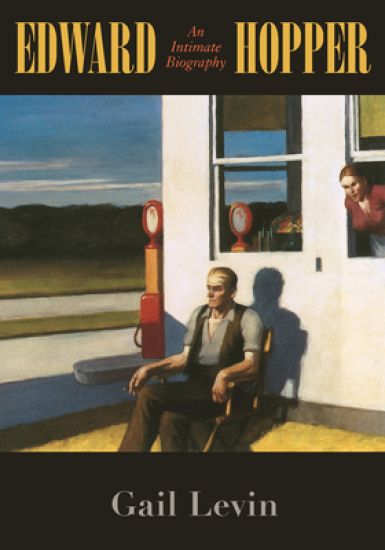
Edward Hopper

Edward Hopper

Gail Levin

University of California Press
2023
pokkari
New York Times Notable BookLos Angeles Times Book Prize FinalistWall Street Journal—one of five best artist biographies Edward Hopper's canvasses are filled with stripped-down spaces and unrelenting light, evocative landscapes, and the lonely aspects of men and women seemingly isolated in their surroundings. What kind of man had this haunting vision, and what kind of life engendered this art? No one is better qualified to answer these questions than art historian Gail Levin, author and curator of the major studies and exhibitions of Hopper's work. In this intimate biography she reveals the true nature and personality of the man himself—and of the woman who shared his life, the artist Josephine Nivison.
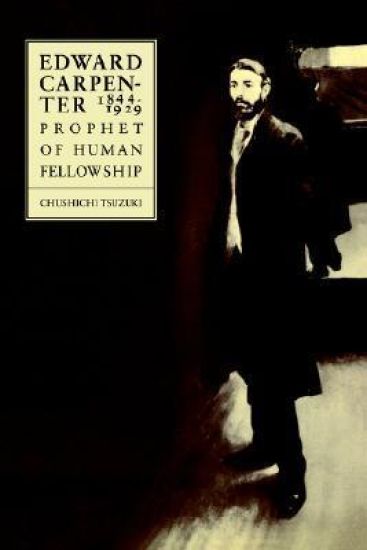
Edward Carpenter 1844–1929

Edward Carpenter 1844–1929

Chushichi Tsuzuki

Cambridge University Press
2005
pokkari
This is the first full-scale biography of Edward Carpenter, an 'eminent Victorian' who played an intriguing role in the revival of Socialism in Britain in the late nineteenth century. 'A worthy heir of Carlyle and Ruskin', as Tolstoy called him, Carpenter tackled boldly the problems of alienation under the pressures of commercial civilisation, and developed a strongly personalised brand of Socialism which inspired both the Labour Party and its enemies, Syndicalism and Anarchism. A homosexual, he grappled with the problems of sexual alienation above all, and emerged as the foremost advocate of the homosexual cause at a time when it was a social 'taboo'. This study, based upon letters and many other personal documents, reveals much of Carpenter's personal life which has hitherto remained obscure, including his 'comradeship' with some of his working-men friends and his influence upon such notable literary figures as Siegfried Sassoon, E. M. Forster and D. H. Lawrence.
Edward Young: Night Thoughts

Edward Young: Night Thoughts

Edward Young

Cambridge University Press
2008
pokkari
During the century after its publication in 1742, 'Night Thoughts' was one of the most popular, widely read and influential poems in the English language. However, there have been no editions of the poem since the middle of the nineteenth century. This edition contains a critical introduction setting the poem in the context of the eighteenth-century sublime. There is a commentary which explains historical and linguistic obscurities, and a history of the poem's publication. The text is based on the first editions of the separate 'Nights', and the old spelling has been retained. The editions are collated here, and all substantive variants recorded. Dr Cornford's critical introduction discusses the conception of the poet's role; Young's attitude to the 'imagination' in the context of contemporary epistemology; eighteenth-century attitudes to death and immortality as expressed in sermons and devotional literature; and the critical reception of the poem in Britain and Europe. This discussion seeks to explain why a poem of Christian consolation, orthodox and ancient in its theology, became a seminal work in a secular cult of sepulchral melancholoy.
Edward I and Criminal Law

Edward I and Criminal Law

T. F. T. Plucknett

Cambridge University Press
2008
pokkari
The main theme of Professor Plucknett's Wiles Lectures is the transition from the local legislation of Anglo-Saxon times to the beginnings of the English common law under feudalism, and especially under Edward I's direction. Professor Plucknett examines the early laws, which were mainly the attempts of perplexed men in a harsh age to fix a value on human life and property, and to enforce the exaction of these monetary penalties: wer and bot and wite. He then shows how the common law under Edward I became more technical, more concerned with principles, and of course more universal and better enforced. In the course of his argument Professor Plucknett touches on other important problems, notably the place of the Crown and its supremacy over other institutions, the influence of Christian thought, as expressed in the Penitentials and by the moral theologians (especially as to the place of intention), the substitution of trial by jury for trial by ordeal, the organization of local government, the triumph of Parliament and the rise of the legal profession.
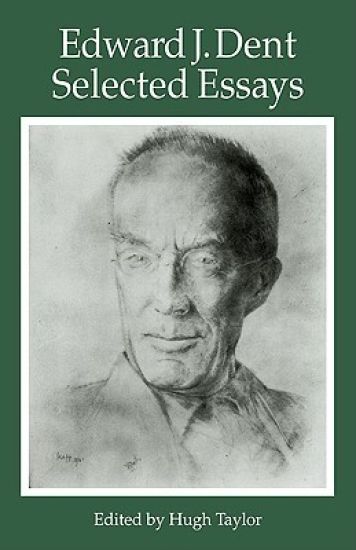
Edward J Dent: Selected Essays

Edward J Dent: Selected Essays

Edward J. Dent

Cambridge University Press
2009
nidottu
During his long career, Edward Dent wrote on a variety of musical subjects, ranging from substantial articles in the most learned journals to less weighty pieces in Radio Times. This volume aims to reflect that variety. Some of the articles are now of primarily historical interest, others offer insights of a fundamental kind; all are informed by Dent's witty and distinctive prose style. In editing this collection, Hugh Taylor has drawn on writings from 1903 to 1951 and included two pieces originally written in Italian and published here in English for the first time. As well as providing footnotes, which amplify certain of Dent's statements and draw attention to subsequent research, Mr Taylor has listed sources for Dent's many textual references and quotations. Brought together in this way Dent's learned but always readable criticism will appeal to the reader with a general interest in music as well as to the music student and specialist.
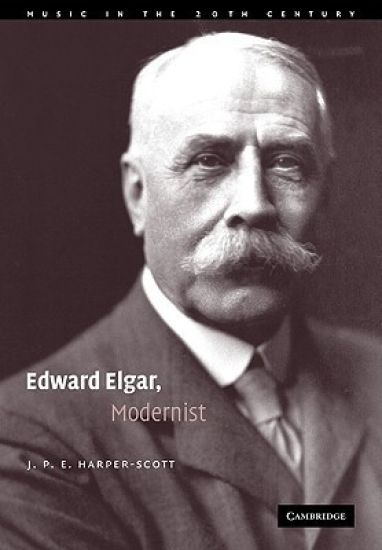
Edward Elgar, Modernist

Edward Elgar, Modernist

Harper-Scott J. P. E.

Cambridge University Press
2009
pokkari
The first full-length analytical study of Edward Elgar's music, this book argues that Elgar was a modernist composer, and that his music constitutes a pessimistic twentieth-century assessment of the nature of human being. Focusing on Elgar's music rather than his life, Harper-Scott blends the hermeneutic and existential philosophy of Martin Heidegger with music-analytical methods derived from Heinrich Schenker and James Hepokoski. In the course of engaging with debates centred on duotonality in musical structures, sonata deformations, meaning in music, the nature of tragedy, and the quest narrative, the book rejects poststructuralist and literary-theoretical interpretations of music, radically interprets Schenkerian theory, and tentatively outlines a new space - a Heideggerian 'clearing' - in which music of all periods can be understood to operate, be experienced and be understood. The book includes a detailed glossary which provides the reader with clear definitions of important and difficult terms.
Edward Elgar and the Nostalgic Imagination

Edward Elgar and the Nostalgic Imagination

Riley Matthew

Cambridge University Press
2009
pokkari
During his lifetime, and in the course of the twentieth century, Edward Elgar and his music became sites for a remarkable variety of nostalgic impulses. These are manifested in his personal life, in the content of his works, in his critical and biographical reception, and in numerous artistic ventures based on his character and music. Today Elgar enjoys renewed popularity in Britain, and nostalgia of various forms continues to shape our responses to his music. From one viewpoint, Elgarian nostalgia might be dismissed as escapist, regressive and reactionary, and the revival in Elgar's fortunes regarded as the symptom of a pernicious 'heritage industry' in post-colonial, post-industrial Britain. While there is undeniably a grain of truth to that view, Matthew Riley's careful treatment of the topic reveals a more complex picture of nostalgia, and sheds light on Elgar and his cultural significance in the twentieth and twenty-first centuries.
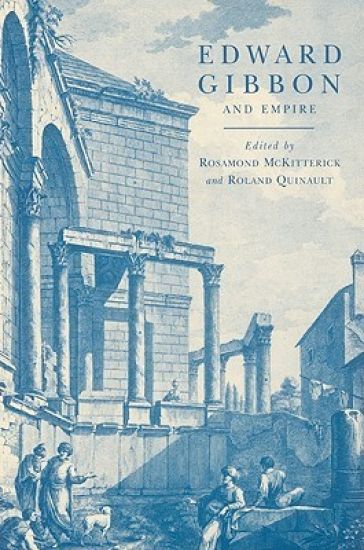
Edward Gibbon and Empire

Edward Gibbon and Empire

Cambridge University Press
1996
sidottu
This book examines Gibbon's interpretations of empire and the intellectual context in which he formulated them against a background of the eighteenth- and late twentieth-century knowledge of late antiquity and the Middle Ages. Gibbon's ideas of empire, his understanding of monarchy and the balance of power, his sources and working methods, the structure of the History of the Decline and Fall of the Roman Empire, his attitude towards the barbarians, the contrasting treatments of the eastern and western Empire, his appreciation of past civilizations and their material remains, his audience and their reactions - contemporary and Victorian - are considered in the light of the latest research on eighteenth-century intellectual history on the one hand and on late antiquity, Byzantium and the Middle Ages on the other. The book breaks new ground in taking the form of a dialogue between experts on the fields about which Gibbon himself wrote, and eighteenth-century intellectual historians.
Edward Gibbon and Empire

Edward Gibbon and Empire

Cambridge University Press
2002
pokkari
This book examines Gibbon's interpretations of empire and the intellectual context in which he formulated them against a background of the eighteenth- and late twentieth-century knowledge of late antiquity and the Middle Ages. Gibbon's ideas of empire, his understanding of monarchy and the balance of power, his sources and working methods, the structure of the History of the Decline and Fall of the Roman Empire, his attitude towards the barbarians, the contrasting treatments of the eastern and western Empire, his appreciation of past civilizations and their material remains, his audience and their reactions - contemporary and Victorian - are considered in the light of the latest research on eighteenth-century intellectual history on the one hand and on late antiquity, Byzantium and the Middle Ages on the other. The book breaks new ground in taking the form of a dialogue between experts on the fields about which Gibbon himself wrote, and eighteenth-century intellectual historians.
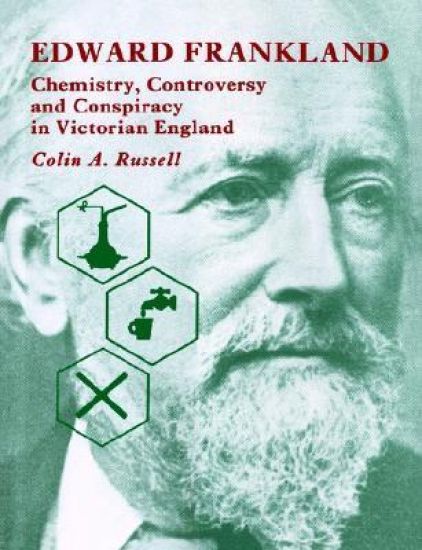
Edward Frankland

Edward Frankland

Colin A. Russell

Cambridge University Press
2003
pokkari
This is the first scientific biography of Edward Frankland, probably the most eminent chemist of nineteenth-century Britain. Frankland discovered the chemical bond and founded the science of organometallic chemistry. He was a leading reformer of chemistry teaching, and the government’s close adviser on urban water purity. From an apprenticeship in a druggist’s shop in Lancaster, he was to occupy the first chemical chair at Manchester, and become professor at what became Imperial College. He was knighted in 1897. Today an obscurity of reputation stems from the conspiracy of silence surrounding Frankland’s origins as an illegitimate child. Recently, however, Professor Russell has gained access to a vast collection of his private papers. Russell’s authoritative account discloses, amongst much else, this web of conspiracy in the scientific community, and will be of great interest to professional chemists, historians of science, and general readers concerned with the social fabric of Victorian England.
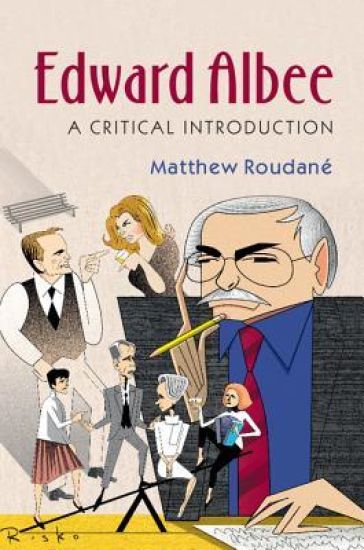
Edward Albee

Edward Albee

Matthew Roudané

Cambridge University Press
2017
pokkari
Edward Albee (1928–2016) was a central figure in modern American theatre, and his bold and often experimental theatrical style won him wide acclaim. This book explores the issues, public and private, that so influenced Albee's vision over five decades, from his first great success, The Zoo Story (1959), to his last play, Me, Myself, & I (2008). Matthew Roudané covers all of Albee's original works in this comprehensive, clearly structured, and up-to-date study of the playwright's life and career: in Part I, the volume explores Albee's background and the historical contexts of his work; Part II concentrates on twenty-four of his plays, including Who's Afraid of Virginia Woolf? (1962); and Part III investigates his critical reception. Surveying Albee's relationship with Broadway, and including interviews conducted with Albee himself, this book will be of great importance for theatregoers and students seeking an accessible yet incisive introduction to this extraordinary American playwright.
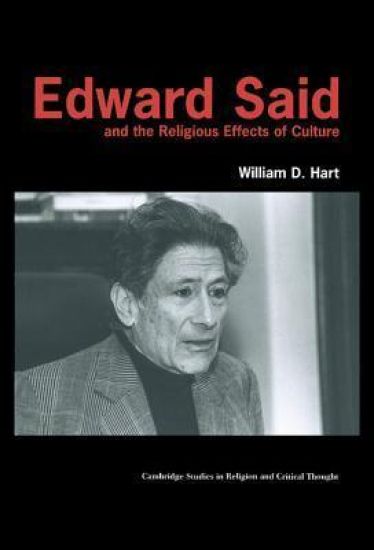
Edward Said and the Religious Effects of Culture

Edward Said and the Religious Effects of Culture

William D. Hart

Cambridge University Press
2000
sidottu
This book provides a distinctive account of Edward Said’s critique of modern culture by highlighting the religion-secularism distinction on which it is predicated. This distinction is both literal and figurative. It refers, on the one hand, to religious traditions and to secular traditions and, on the other hand, to tropes that extend the meaning and reference of religion and secularism in indeterminate ways. The author takes these tropes as the best way of organizing Said’s heterogeneous corpus - from Joseph Conrad and the Fiction of Autobiography, his first book, to Orientalism, his most influential book, to his recent writings on the Palestinian question. The religion-secularism distinction, as an act of imagination and narrative continuity, lies behind Said’s cultural criticism, his notion of intellectual responsibility, and his public controversy with Michael Walzer about the meaning and the uses of the Exodus story and about the question of Palestine.
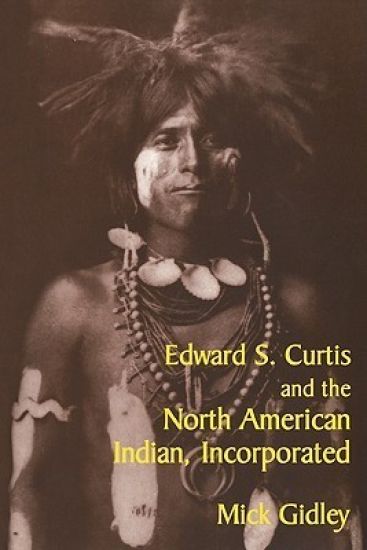
Edward S. Curtis and the North American Indian, Incorporated
For three decades from the 1890s onwards, Edward S. Curtis took thousands of photographs of Native Americans all over the West. These were published (1907–1930) in twenty volumes of illustrated text and twenty portfolios of photographs; the project was supported by Theodore Roosevelt and funded in part by J. Pierpont Morgan, and spawned exhibitions, postcards, magazine articles, lecture series, a 'musicale', and the very first narrative documentary film. While not necessarily unique, the project was bigger, better funded, and more famous than any of its time, and its images still retain their influence today. Neither a eulogy to Curtis's achievement nor a debunking of it, this book is an honest study of the project as a collective whole: what it was, who was involved, and what it meant.
Edward Said and the Religious Effects of Culture

Edward Said and the Religious Effects of Culture

William D. Hart

Cambridge University Press
2000
pokkari
This book provides a distinctive account of Edward Said’s critique of modern culture by highlighting the religion-secularism distinction on which it is predicated. This distinction is both literal and figurative. It refers, on the one hand, to religious traditions and to secular traditions and, on the other hand, to tropes that extend the meaning and reference of religion and secularism in indeterminate ways. The author takes these tropes as the best way of organizing Said’s heterogeneous corpus - from Joseph Conrad and the Fiction of Autobiography, his first book, to Orientalism, his most influential book, to his recent writings on the Palestinian question. The religion-secularism distinction, as an act of imagination and narrative continuity, lies behind Said’s cultural criticism, his notion of intellectual responsibility, and his public controversy with Michael Walzer about the meaning and the uses of the Exodus story and about the question of Palestine.
Edward Elgar, Modernist

Edward Elgar, Modernist

Harper-Scott J. P. E.

Cambridge University Press
2006
sidottu
The first full-length analytical study of Edward Elgar's music, this book argues that Elgar was a modernist composer, and that his music constitutes a pessimistic twentieth-century assessment of the nature of human being. Focusing on Elgar's music rather than his life, Harper-Scott blends the hermeneutic and existential philosophy of Martin Heidegger with music-analytical methods derived from Heinrich Schenker and James Hepokoski. In the course of engaging with debates centred on duotonality in musical structures, sonata deformations, meaning in music, the nature of tragedy, and the quest narrative, the book rejects poststructuralist and literary-theoretical interpretations of music, radically interprets Schenkerian theory, and tentatively outlines a new space - a Heideggerian 'clearing' - in which music of all periods can be understood to operate, be experienced and be understood. The book includes a detailed glossary which provides the reader with clear definitions of important and difficult terms.
Edward Elgar and the Nostalgic Imagination

Edward Elgar and the Nostalgic Imagination

Riley Matthew

Cambridge University Press
2007
sidottu
During his lifetime, and in the course of the twentieth century, Edward Elgar and his music became sites for a remarkable variety of nostalgic impulses. These are manifested in his personal life, in the content of his works, in his critical and biographical reception, and in numerous artistic ventures based on his character and music. Today Elgar enjoys renewed popularity in Britain, and nostalgia of various forms continues to shape our responses to his music. From one viewpoint, Elgarian nostalgia might be dismissed as escapist, regressive and reactionary, and the revival in Elgar's fortunes regarded as the symptom of a pernicious 'heritage industry' in post-colonial, post-industrial Britain. While there is undeniably a grain of truth to that view, Matthew Riley's careful treatment of the topic reveals a more complex picture of nostalgia, and sheds light on Elgar and his cultural significance in the twentieth and twenty-first centuries.
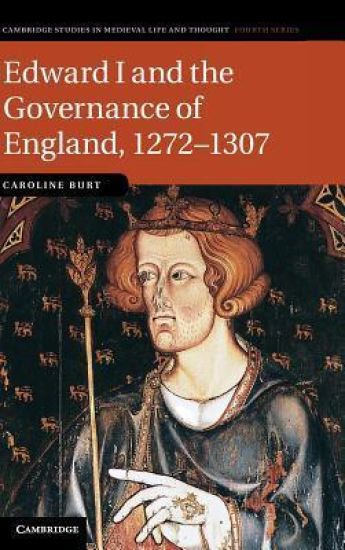
Edward I and the Governance of England, 1272–1307

Edward I and the Governance of England, 1272–1307

Caroline Burt

Cambridge University Press
2012
sidottu
This important exploration of the reign of Edward I – one of England's most lionised, feared and successful monarchs – presents his kingship in a radical new light. Through detailed case studies of Shropshire, Warwickshire and Kent, Caroline Burt examines how Edward's governance at a national level was reflected in different localities. She employs novel methodology to measure levels of disorder and the effects of government action, and uncovers a remarkably sophisticated approach to governance. This study combines an empirical examination of government with an understanding of developing political ideas and ideological motivation, and contributes towards a greater understanding of the development of local government and politics in England in the thirteenth and fourteenth centuries. Edward emerges as a king with a coherent set of ideas about the governance of his realm, both intellectually and practically, whose achievements were even more remarkable than has previously been recognised.