Kirjojen hintavertailu. Mukana 11 522 284 kirjaa ja 12 kauppaa.

Kirjahaku

Etsi kirjoja tekijän nimen, kirjan nimen tai ISBN:n perusteella.

1000 tulosta hakusanalla Edwards J.

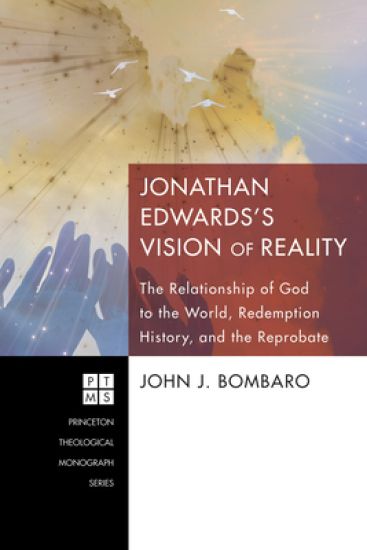
Jonathan Edwards's Vision of Reality

Jonathan Edwards's Vision of Reality

John J Bombaro

Pickwick Publications
2011
sidottu
Since the publication of Sang Hyun Lee's revolutionary commentary, The Philosophical Theology of Jonathan Edwards, scholars have considered the possibilities of understanding Jonathan Edwards's thought in terms of dispositional laws, forces, and habits. While some scholars reject the notion of a dispositional ontology in Edwards, others have taken the concept of disposition in his thought beyond the usage the Northampton minister ever indicated, especially with respect to soteriological considerations. The preacher of "Sinners in the Hands of an Angry God" is made to be an inclusivist, if not a crypto-universalist. Jonathan Edwards's Vision of Reality substantiates that Edwards, in an effort to combat deistic and materialistic Enlightenment paradigms, employs dispositions in his philosophy, but that his radical theocentrism and Calvinistic particularism established its boundaries within his apologetical reconsideration of spatiotemporal and metaphysical reality. Within his "spiritual vision" of reality, Edwards leaves no stone unturned: history and even the reprobate find inherent value and a positive functional role not only in God's program of self-glorification but as manifestations of divine being--the damned are "deformities" in God. The logic of Edwards's theocentric vision of reality pushes his ideas to the limits of acceptable Reformed orthodoxy, and sometimes beyond those limits.
The Theology of Jonathan Edwards

The Theology of Jonathan Edwards

Michael J. McClymond; Gerald R. McDermott

Oxford University Press Inc
2012
sidottu
The Theology of Jonathan Edwards is the first survey of the religious thought of America's theologian--Jonathan Edwards--that draws on all of his writings, now available in a 73-volume online Yale critical edition. In 48 chapters, McClymond and McDermott, two of the world's leading Edwards scholars, treat topics in Edwards's thought that have rarely been analyzed in depth, and never in coordination with a close analysis of the rest of his theology. Such topics include the implications of his doctrine of the Trinity for the divide between Roman Catholicism and Orthodoxy, his enduring appeal among both conservative and liberal Protestants, his ecclesial and sacramental theologies, his conflicted relationship with the history of Calvinism, the cultural-historical and comparative-religious turn he made toward the end of his career (as the leading colonial thinker on the topic of world religions), the appeals to his ideas in nineteenth- and twentieth-century debates over Methodist, Holiness, Pentecostal, and Charismatic revivals, and the reception of his writings in the England, Scotland, continental Europe, and, more recently, in the evangelical communities of Latin America, Africa, Asia, and Oceania. Many of these topics have only been treated in passing in the existing literature, and never in connection with one another and with the whole bulk of Edwards's writings.
The Writings of Jonathan Edwards

The Writings of Jonathan Edwards

William J. Scheick

Texas A M University Press
2000
nidottu
Puritan culture in many respects militated against artistic expression. Yet, like nature, art persisted, managing to gain a foothold in whatever crevices Puritan culture provided. Jonathan Edwards's artistry, evident in his deliberate experiments in the management of language, grew out of his duty as a minister to communicate his sermons effectively. Emphasizing recurrent theological and artistic implications, The Writings of Jonathan Edwards focuses on the progressive interiorization of Edwards's primary concerns. Underlying this development was Edwards's desire to resolve the question of whether he was one of God's elect, and his search for genuine selfhood or identity resulted in autobiographical dimensions in many of his public writings. In his quest for true identity, Edwards aligned himself with Puritan orthodoxy, and his regard for tradition is a consistent theme in his work from his earliest notes to his last treatises. Within Puritan tradition Edwards perceived a collective self, a divinely ordained continuity and integrity immune to the vicissitudes of time. Scheick's study will appeal to scholars and students of American literature, history, and culture as well as to those with a special interest in the relation between art and theology. As an explication of Edwards's writings and of the development of his thought, the study will make Edwards more easily accessible to students of American literature.
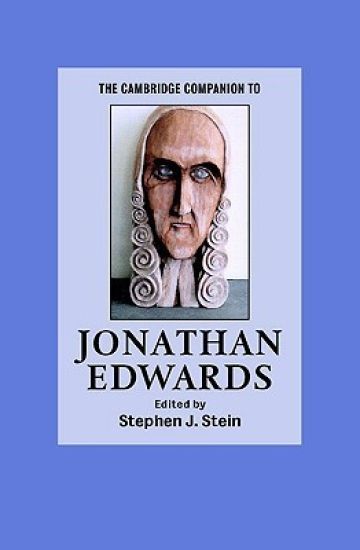
The Cambridge Companion to Jonathan Edwards

The Cambridge Companion to Jonathan Edwards

Stephen J. Stein

Cambridge University Press
2006
pokkari
Long recognized as 'America's theologian', Jonathan Edwards (1703–1758) is seen as instrumental in the Great Awakening of the 1740s that gripped much of New England and that laid the groundwork for an American Protestant religious identity. This Cambridge Companion offers a general, comprehensive introduction to Jonathan Edwards and examines his life and works from various disciplinary perspectives including history, literature, theology, religious studies, and philosophy. The book consists of seventeen chapters written by leading religious scholars, historians and literary critics on Edwards' life, work, and legacy. The Companion will be an invaluable aid to teachers and scholars and will be imminently accessible to those just encountering Edwards for the first time.
The Cambridge Companion to Jonathan Edwards

The Cambridge Companion to Jonathan Edwards

Stephen J. Stein

Cambridge University Press
2006
sidottu
Long recognized as 'America's theologian', Jonathan Edwards (1703–1758) is seen as instrumental in the Great Awakening of the 1740s that gripped much of New England and that laid the groundwork for an American Protestant religious identity. This Cambridge Companion offers a general, comprehensive introduction to Jonathan Edwards and examines his life and works from various disciplinary perspectives including history, literature, theology, religious studies, and philosophy. The book consists of seventeen chapters written by leading religious scholars, historians and literary critics on Edwards' life, work, and legacy. The Companion will be an invaluable aid to teachers and scholars and will be imminently accessible to those just encountering Edwards for the first time.
Understanding Affections in the Theology of Jonathan Edwards
This volume argues that the notion of “affections” discussed by Jonathan Edwards (and Christian theologians before him) means something very different from what contemporary English speakers now call “emotions.” and that Edwards’s notions of affections came almost entirely from traditional Christian theology in general and the Reformed tradition in particular. Ryan J. Martin demonstrates that Christian theologians for centuries emphasized affection for God, associated affections with the will, and distinguished affections from passions; generally explaining affections and passions to be inclinations and aversions of the soul. This was Edwards’s own view, and he held it throughout his entire ministry. Martin further argues that Edwards’s view came not as a result of his reading of John Locke, or the pressures of the Great Awakening (as many Edwardsean scholars argue), but from his own biblical interpretation and theological education. By analysing patristic, medieval and post-medieval thought and the journey of Edwards’s psychology, Martin shows how, on their own terms, pre-modern Christians historically defined and described human psychology.
Understanding Affections in the Theology of Jonathan Edwards
This volume argues that the notion of “affections” discussed by Jonathan Edwards (and Christian theologians before him) means something very different from what contemporary English speakers now call “emotions.” and that Edwards’s notions of affections came almost entirely from traditional Christian theology in general and the Reformed tradition in particular. Ryan J. Martin demonstrates that Christian theologians for centuries emphasized affection for God, associated affections with the will, and distinguished affections from passions; generally explaining affections and passions to be inclinations and aversions of the soul. This was Edwards’s own view, and he held it throughout his entire ministry. Martin further argues that Edwards’s view came not as a result of his reading of John Locke, or the pressures of the Great Awakening (as many Edwardsean scholars argue), but from his own biblical interpretation and theological education. By analysing patristic, medieval and post-medieval thought and the journey of Edwards’s psychology, Martin shows how, on their own terms, pre-modern Christians historically defined and described human psychology.
The Covenant Theology of Jonathan Edwards

The Covenant Theology of Jonathan Edwards

Paul J Hoehner; Jeong Koo Jeon

Pickwick Publications
2021
pokkari
As a theologian in the Reformed tradition, covenant theology was for Jonathan Edwards the internal scaffolding that gave shape to the biblical story of redemption. The establishment of the eternal rule of righteousness as the basis of the believer's communion with God and eternal happiness is a central theme beginning with the Covenant of Works, grounded in the eternal Covenant of Redemption, and culminating in the Covenant of Grace. It is the basis for the law-gospel distinction in Edwards and the early architects of federal theology. For the ""God intoxicated"" New England Puritan preacher, this was no dry academic exercise. Rather, it was a joyous and affectionate discovery and embrace of what God had ordained in eternity, what Christ accomplished in history on the cross, and what the Holy Spirit is doing and will complete in the church. This study grew out of current discussions in Reformed scholarship questioning aspects of traditional covenant theology. As a key transitional figure in the history of Reformed theology, Edwards's thinking is still relevant. The richness and depth of Edwards's vision of redemptive history provides a clear and comprehensive understanding of his Reformed soteriology and the role of evangelical obedience in justification.
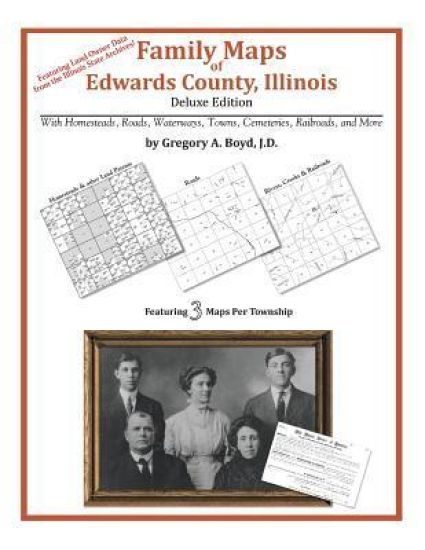
Family Maps of Edwards County, Illinois

Family Maps of Edwards County, Illinois

Gregory a. Boyd J. D.

Arphax Publishing Co.
2010
nidottu
174 pages with 50 total maps Locating original landowners in maps has never been an easy task-until now. This volume in the Family Maps series contains newly created maps of original landowners (patent maps) in what is now Edwards County, Illinois, gleaned from the indexes of the Illinois State Archives. But it offers much more than that. For each township in the county, there are two additional maps accompanying the patent map: a road map and a map showing waterways, railroads, and both modern and many historical city-centers and cemeteries. Included are indexes to help you locate what you are looking for, whether you know a person's name, a last name, a place-name, or a cemetery. The combination of maps and indexes are designed to aid researchers of American history or genealogy to explore frontier neighborhoods, examine family migrations, locate hard-to-find cemeteries and towns, as well as locate land based on legal descriptions found in old documents or deeds. The patent-maps are essentially plat maps but instead of depicting owners for a particular year, these maps show original landowners, no matter when the transfer from the federal government was completed. Dates of patents typically begin near the time of statehood and run into the early 1900s. What's Mapped in this book (that you'll not likely find elsewhere) . . . 2497 Parcels of Land (with original landowner names and patent-dates labeled in the relevant map) 46 Cemeteries plus . . . Roads, and existing Rivers, Creeks, Streams, Railroads, and Small-towns (including some historical), etc. What YEARS are these maps for? Here are the counts for parcels of land mapped, by the decade in which the patent applications were made: DecadeParcel-count 1810s313 1820s31 1830s1080 1840s207 1850s829 1860s163 1870s26 What Cities and Towns are in Edwards County, Illinois (and in this book)? Albion, Bennington, Black, Bone Gap, Browns, Grayville, Lexington (historical), Maple Grove, Marion, Mills Prairie (historical), Piankashawtown (historical), Red Top, Samsville, Wanborough (historical), West Salem