The best-selling author of the No. 1 Ladies' Detective Agency series deftly escorts Jane Austen's beloved, meddlesome heroine into the twenty-first century in this delightfully inventive retelling." McCall Smith] takes Jane's characters and invites them warmly into our world." --The Washington Post The summer after university, Emma Woodhouse returns home to live with her widowed father and launch her interior design business. Apart from cultivating grand career plans and managing her father's hypochondria, Emma busies herself with the two things she does best: matchmaking and offering advice on everything from texting etiquette to first date destinations. Happily, this summer presents abundant opportunities for both, as old and new friends are drawn into the sphere of Emma's counsel: George Knightley, her principled brother-in-law; Frank Churchill, the attractive stepson of her former governess; Harriet Smith, a na ve but enchanting young teacher's assistant at the local language school; and the perfect (and perfectly vexing) Jane Fairfax. Carriages have been replaced by Mini Coopers and cups of tea by cappuccinos, but Alexander McCall Smith's sparkling satire and cozy sensibility are the perfect match for Jane Austen's beloved tale.
Emma Goldman’s Supreme Court appeal occurred during a transitional point for First Amendment law, as justices began incorporating arguments related to free expression into decisions on espionage and sedition cases. This project analyzes the communications that led to her arrest—writings in Mother Earth, a mass-mailed manifesto, and speeches related to compulsory military service during World War I—as well as the ensuing legal proceedings and media coverage. The authors place Goldman’s Supreme Court appeal in the context of the more famous Schenck and Abrams trials to demonstrate her place in First Amendment history while providing insight into wartime censorship and the attitude of the mainstream press toward radical speech.
Brave EmmaExploring the special bond between brothers and sisters, this fairy tale shares an important life lesson, and parents will be thrilled to introduce a story that focuses on family values with their little ones.With charming characters and a creative setting, this book truly delights with a sweet story that is sure to connect with young readers.Also serving as a great educational tool, this children's book is particularly helpful for young readers who are learning multi-syllabic words and practicing reading longer lines of dialogue and more complex sentences.Young readers will also be challenged by basic story concepts, such as plot, sequence, motivation, action, and cause and effect. In addition to being a great learning tool, this book is fun to read Imagination is thoroughly at play in this story, which emphasizes the power of words and the importance of family.
Emma Goldman’s Supreme Court appeal occurred during a transitional point for First Amendment law, as justices began incorporating arguments related to free expression into decisions on espionage and sedition cases. This project analyzes the communications that led to her arrest—writings in Mother Earth, a mass-mailed manifesto, and speeches related to compulsory military service during World War I—as well as the ensuing legal proceedings and media coverage. The authors place Goldman’s Supreme Court appeal in the context of the more famous Schenck and Abrams trials to demonstrate her place in First Amendment history while providing insight into wartime censorship and the attitude of the mainstream press toward radical speech.
Emma and Zoe are working on an assignment about the planet Jupiter, but Emma is struggling to focus. When the pair decide to use the school's telescope, they embark on a spectacular cosmic adventure that brings their project to life.Discover, experiment and learn with the little scientists! Each little scientist has something new to teach readers. Through engaging narratives and full-colour illustrations, I'm a Little Scientist! introduces children to the exciting and ever-advancing world of science. Everyone can be a little scientist!
Emma and Zoe are working on an assignment about the planet Jupiter, but Emma is struggling to focus. When the pair decide to use the school's telescope, they embark on a spectacular cosmic adventure that brings their project to life.Discover, experiment and learn with the little scientists! Each little scientist has something new to teach readers. Through engaging narratives and full-colour illustrations, I'm a Little Scientist! introduces children to the exciting and ever-advancing world of science. Everyone can be a little scientist!
This work has been selected by scholars as being culturally important and is part of the knowledge base of civilization as we know it.This work is in the public domain in the United States of America, and possibly other nations. Within the United States, you may freely copy and distribute this work, as no entity (individual or corporate) has a copyright on the body of the work.Scholars believe, and we concur, that this work is important enough to be preserved, reproduced, and made generally available to the public. To ensure a quality reading experience, this work has been proofread and republished using a format that seamlessly blends the original graphical elements with text in an easy-to-read typeface.We appreciate your support of the preservation process, and thank you for being an important part of keeping this knowledge alive and relevant.
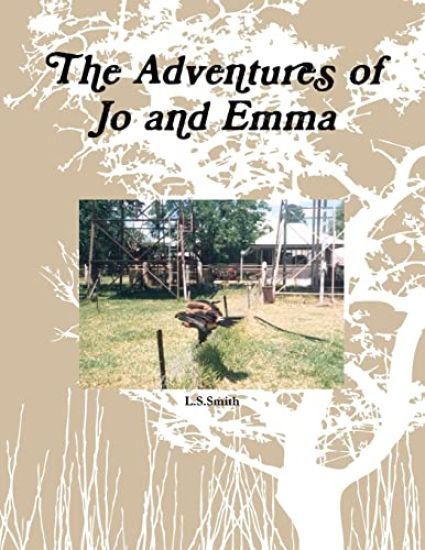
Jo is delighted when she is given her own Guardian Beast for her birthday and together, her and her golden eagle Emma have many fun and sometimes frightening adventures on their property in the outback.
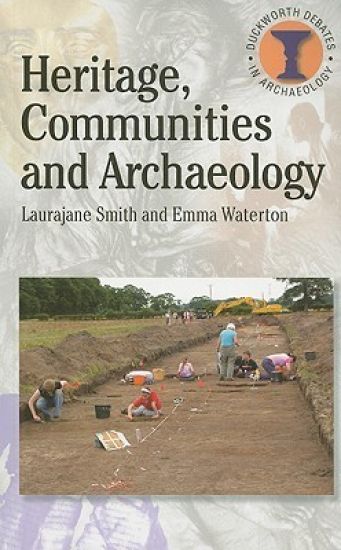
This book traces the development of 'community archaeology', identifying both its advantages and disadvantages by describing how and why tensions have arisen between archaeological and community understandings of the past. The focus of this book is the conceptual disjunction between heritage and data and the problems this poses for both archaeologists and communities in communicating and engaging with each other. In order to explain the extent of the miscommunication that can occur, the authors examine the ways in which a range of community groups, including communities of expertise, define and negotiate memory and identity. Importantly, they explore the ways in which these expressions are used, or are taken up, in struggles over cultural recognition - and ultimately, the practical, ethical, political and theoretical implications this has for archaeologists engaging in community work. Finally, they argue that there are very real advantages for archaeological research, theory and practice to be gained from engaging with communities.