Kirjojen hintavertailu. Mukana 12 083 983 kirjaa ja 12 kauppaa.

Kirjahaku

Etsi kirjoja tekijän nimen, kirjan nimen tai ISBN:n perusteella.

1000 tulosta hakusanalla Eric A.K. Middlemost

Antioxidants in Muscle Foods

Antioxidants in Muscle Foods

Eric A. Decker; Cameron Faustman; Clemente J. Lopez-Bote

John Wiley Sons Inc
2000
sidottu
A complete guide to the use of dietary antioxidants in muscle food products Advances in food and animal science have given rise to a variety of nutritional strategies for improving the quality of muscle food products, from livestock to fish. Antioxidants in Muscle Foods describes a new methodology in this emerging field, which involves the use of dietary antioxidants to improve meat quality while avoiding exogenous food additives or packaging procedures. Through expert contributions by leading scientists from around the globe, this important book answers questions about the science and technology, benefits, and concerns associated with antioxidant supplementation in muscle foods. Photographs, illustrations, charts, and tables accompany in-depth discussions on: * Oxidative processes in muscle foods * Dietary strategies for improving the oxidative stability of muscle foods * The beneficial impact of vitamin E supplementation on meat quality * Economic and safety implications of nutritionally modified meat * Food industry applications involving meat, poultry, and seafood * Animal nutrition and muscle biochemistry * New areas where nutritional strategies can improve meat quality
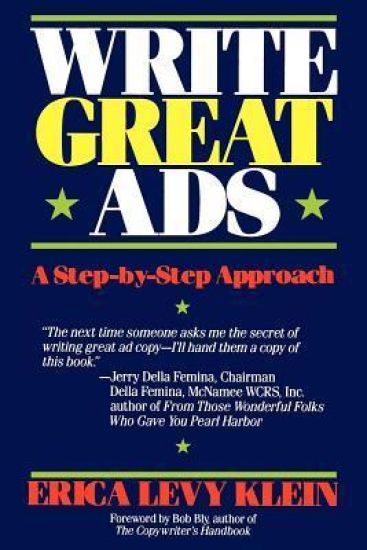
Write Great Advertisements

Write Great Advertisements

Eric A. Klein

John Wiley Sons Inc
1990
nidottu
You don’t have to be especially "creative." And you can forget about writer’s block. Because now, even if you’ve never written advertising before, there’s a simple proven way to Write *ADS* Great copywriters aren’t born. They’re made! That’s because writing isn’t a talent you’re born with—it’s a skill as learnable as driving a car or typing. Write Great Ads takes the mystery out of copywriting and shows how to write effective advertising copy for print ads, direct mail packages, radio spots, and television commercials. Write Great Ads takes you, step-by-step, through every aspect of the process. You’ll learn:*How to zero in on the key features and benefits of your ad*How to write a headline that really sells*How to come up with an original, effective selling concept*How to put all the facts together and craft an irresistible call to action—guaranteed to pull in sales!This one-of-a-kind workbook breaks advertising down into simple steps that anyone—no matter what your level of experience—can master and enjoy. Write Great Ads is also packed with fill-in exercises and self-tests so you can practice each step immediately. "This is a practical, straightforward, and instructive book with heavy emphasis on fundamentals—all in good, clear, no-nonsense English—and an overall good reference for anyone interested in better communications."
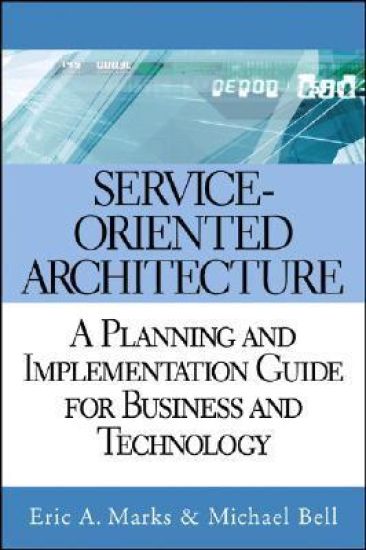
Service-Oriented Architecture

Service-Oriented Architecture

Eric A. Marks; Michael Bell

John Wiley Sons Inc
2006
sidottu
Praise for Service-Oriented Architecture "This book provides a superb overview of the SOA topic. Marks and Bell provide practical guidance across the entire SOA life cycle-from business imperatives and motivations to the post-deployment business and technical metrics to consider. With this book, Marks and Bell demonstrate a unique ability to take the complex dynamics of SOA, and through an eloquent set of metaphors, models, and principles, provide an understandable and insightful how-to manual for both technical and business executives. This will become a required handbook for any organization implementing SOA." —Dan Bertrand, Enterprise Technology Officer & EDS Fellow, EDS Corporation "A fundamental breakthrough in the business and technology perspectives of SOA-this book belongs in every software developer, architect, and IT executive library. Marks and Bell demonstrate a creative and practical approach to building complex, service-oriented systems. I especially liked the hands-on perspective brought to multiple aspects of SOA. A must-have guide in the technology turbulence of the future." —Ariel Aloni, Chief Technology Officer, SunGard Data Management Solutions "This outstanding text gets straight to the heart of the matter, cutting through the hyperbole and discussing how to drive real business value through SOA. It will certainly impact my behavior, our governance models, and, subsequently, the successful business outcomes we derive as we continue to embrace SOA. A must-read for battle-scarred SOA veterans and fledgling architects alike." —Christopher Crowhurst, Vice President and Chief Architect, Thomson Learning "Too often, SOA has been perceived as 'all about the technology'-standards, technology stacks, operational monitoring, and the like. In this book, Marks and Bell expand beyond the technology to provide a refreshing business-driven perspective to SOA, connecting the dots between business requirements, architecture, and development and operations, and overlaying these perspectives with tried-and-true governance techniques to keep SOA initiatives on track. A must-read for those leading the charge to adopt SOA within their enterprise." —Brent Carlson, Chief Technology Officer, LogicLibrary and coauthor of San Francisco Design Patterns: Blueprints for Business Software "Marks and Bell have captured a wealth of practical experience and lessons learned in what has become the hottest topic in software development. In this book, they explain in detail what works and what does not, from procedural issues to technical challenges. This book is an invaluable reference for organizations seeking the benefits of SOAs." —Dr. Jeffrey S. Poulin, System Architect, Lockheed Martin and author of Measuring Software Reuse: Principles, Practices, and Economic Models "One of the last things companies often consider when implementing a business solution such as SOA is the impact on people. Marks and Bell provide an in-depth look at 'what has to change' from a process standpoint to make any SOA implementation a success. A great read for those considering to embark on an enterprise SOA and looking for the right mix of people, process, and products." —Alan Himler, Vice President of Product Management and Marketing, LogicLibrary SOA is a complex topic and a complex organizational goal Service-Oriented Architecture: A Planning and Implementation Guide for Business and Technology shows you how to plan, implement, and achieve SOA value through its prescriptive approach, joining the business and strategic perspective to the technical and architectural perspective. Applicable to all industries, technology platforms, and operating environments, this innovative book provides you with the essential strategies to drive greater value from your SOA and realize your business goals.
The Working-Class Tories

The Working-Class Tories

Eric A. Nordlinger

University of California Press
2021
pokkari
This title is part of UC Press's Voices Revived program, which commemorates University of California Press’s mission to seek out and cultivate the brightest minds and give them voice, reach, and impact. Drawing on a backlist dating to 1893, Voices Revived makes high-quality, peer-reviewed scholarship accessible once again using print-on-demand technology. This title was originally published in 1967.
The Working-Class Tories

The Working-Class Tories

Eric A. Nordlinger

University of California Press
2021
sidottu
This title is part of UC Press's Voices Revived program, which commemorates University of California Press’s mission to seek out and cultivate the brightest minds and give them voice, reach, and impact. Drawing on a backlist dating to 1893, Voices Revived makes high-quality, peer-reviewed scholarship accessible once again using print-on-demand technology. This title was originally published in 1967.
Urbanization and Crime

Urbanization and Crime

Eric A. Johnson

Cambridge University Press
1995
sidottu
This 1995 book contributes to both modern German history and to the sociological understanding of crime in modern industrial and urban societies. Its central argument is that cities, in themselves, do not cause crime. It focuses on the problems of crime and criminal justice during Germany's period of most rapid urban and industrial growth - a period when Germany also rose to world power status. From 1871 to 1914, German cities, despite massive growth, socialist agitation and non-ethnic German immigration, were not particularly infested with crime. Yet the conservative political and religious elites constantly railed against the immoral nature of the city and the German governmental authorities, police, and court officials often overreacted against city populations. In so doing, they helped to set Germany on a dangerous authoritarian course.
Urbanization and Crime

Urbanization and Crime

Eric A. Johnson

Cambridge University Press
2002
pokkari
This book contributes to both modern German history and to the sociological understanding of crime in modern industrial and urban societies. Its central argument is that cities, in themselves, do not cause crime. It focuses on the problems of crime and criminal justice during Germany’s period of most rapid urban and industrial growth - a period when Germany also rose to world power status. From 1871 to 1914, German cities, despite massive growth, socialist agitation and non-ethnic German immigration, were not particularly infested with crime. Yet the conservative political and religious elites constantly railed against the immoral nature of the city and the German governmental authorities, police, and court officials often overreacted against city populations. In so doing, they helped to set Germany on a dangerous authoritarian course.
The Ritual of Rights in Japan

The Ritual of Rights in Japan

Eric A. Feldman

Cambridge University Press
2000
sidottu
The Ritual of Rights in Japan challenges the conventional wisdom that the assertion of rights is fundamentally incompatible with Japanese legal, political and social norms. It discusses the creation of a Japanese translation of the word ‘rights’, Kenri; examines the historical record for words and concepts similar to ‘rights’; and highlights the move towards recognising patients’ rights in the 1960s and 1970s. Two policy studies are central to the book. One concentrates on Japan’s 1989 AIDS Prevention Act, and the other examines the protracted controversy over whether brain death should become a legal definition of death. Rejecting conventional accounts that recourse to rights is less important to resolving disputes than other cultural forms,The Ritual of Rights in Japan uses these contemporary cases to argue that the invocation of rights is a critical aspect of how conflicts are articulated and resolved.
The Ritual of Rights in Japan

The Ritual of Rights in Japan

Eric A. Feldman

Cambridge University Press
2000
pokkari
The Ritual of Rights in Japan challenges the conventional wisdom that the assertion of rights is fundamentally incompatible with Japanese legal, political and social norms. It discusses the creation of a Japanese translation of the word ‘rights’, Kenri; examines the historical record for words and concepts similar to ‘rights’; and highlights the move towards recognising patients’ rights in the 1960s and 1970s. Two policy studies are central to the book. One concentrates on Japan’s 1989 AIDS Prevention Act, and the other examines the protracted controversy over whether brain death should become a legal definition of death. Rejecting conventional accounts that recourse to rights is less important to resolving disputes than other cultural forms,The Ritual of Rights in Japan uses these contemporary cases to argue that the invocation of rights is a critical aspect of how conflicts are articulated and resolved.
New Geometries for New Materials

New Geometries for New Materials

Eric A. Lord; Alan L. Mackay; S. Ranganathan

Cambridge University Press
2006
sidottu
Advances in materials science have given rise to novel materials with unique properties, through the manipulation of structure at the atomic level. Elucidating the shape and form of matter at this scale requires the application of mathematical concepts. This 2006 book presents the geometrical ideas that are being developed and integrated into materials science to provide descriptors and enable visualisation of the atomic arrangements in three-dimensional space. Emphasis is placed on the intuitive understanding of geometrical principles, presented through numerous illustrations. Mathematical complexity is kept to a minimum and only a superficial knowledge of vectors and matrices is required, making this an accessible introduction to the area. With a comprehensive reference list, this book will appeal to those working in crystallography, solid state and materials science.
Subversive Scribes and the Solomonic Narrative
Subversive Scribes and the Solomonic Narrative considers 1 Kgs 1-11 through the optics of propaganda and subversion with primary attention given to subversive readings of portions of the Solomonic narrative. Seibert explores the social context in which scribal subversion was not only possible but perhaps even necessary and examines texts that covertly undermine the legitimacy or the legacy of Solomon. The book is divided into two parts. In the first, Seibert develops definitions of propaganda and subversion and notes other studies which have understood certain biblical texts to function in these ways. Primary consideration is given to developing a theory of subversive scribal activity in this section of the book. An important distinction is made between "submissive scribes," individuals who wrote what they were told, and "subversive scribes," individuals who did otherwise. Since many scribes were writing for the very people who paid them, those wanting to engage in subversive literary activity had to do so carefully, and to a certain extent covertly, lest they be detected and exposed. Yet their critique could not be so obscure that none could detect it. There needed to be enough clues to allow like-minded scribes to read the text and appreciate the critique, but not so many that opponents could charge such scribes with sedition. In the second part of the book, Seibert applies this theory of scribal subversion to various passages in 1 Kgs 1-11. An extended discussion is given to 1 Kgs 1-2 with the remainder of the Solomonic narrative being treated more episodically. The focus is on passages which look suspiciously like the work of a subversive scribe and/or which have subversive potential. It is argued that scribes could-and sometimes did-intentionally encode a critique of the king/kingship in the text and that one of the most effective ways they accomplished this was by cloaking scribal subversion in the guise of propaganda.
Redeeming Violent Verses

Redeeming Violent Verses

Eric A. Seibert

WESTMINSTER/JOHN KNOX PRESS,U.S.
2023
pokkari
“One the greatest challenges the church faces today,” writes Jerome F. D. Creach, “is to interpret and explain passages in the Bible that seem to promote or encourage violence” (Violence in Scripture, 1). In the past fifteen years, a number of books have been published to help people make sense of God’s violent behavior in the Bible. Yet very little has been written about how to use these (and other) violent texts constructively in church. This leaves religious practitioners—pastors, priests, Sunday school teachers, worship ministers, lay leaders, and others—at a real disadvantage. What should they do with stories that sanction genocide or praise individuals for killing others? How can they use these violent texts in sermons, liturgies, Christian educations classes, and elsewhere without promoting the violent ideologies they contain? In Redeeming Violent Verses, Eric Seibert addresses these questions by focusing on a wide range of practical ways to use violent biblical texts responsibly in the church and beyond. With chapters devoted to using violent verses when preaching sermons, teaching Sunday school, and leading worship, this book is filled with guidelines and specific practices designed to help ministers use violent verses responsibly. Seibert includes numerous examples to illustrate specific ways these verses could be used in ministry settings and pays special attention to dealing with passages that portray God behaving violently. Rather than ignoring these passages or being intimidated by them, Redeeming Violent Verses tackles troublesome texts head-on. It charts a bold path forward, one that opens up new possibilities for ministers by equipping them to use these texts in life-giving and spiritually edifying ways. Religious practitioners of all stripes will find this book immensely helpful, and readers will benefit greatly from the many strategies and suggestions offered here.
Reconstructing Public Reason

Reconstructing Public Reason

Eric A. MacGilvray

Harvard University Press
2004
sidottu
Can a liberal polity act on pressing matters of public concern in a way that respects the variety of beliefs and commitments that its citizens hold? Recent efforts to answer this question typically begin by seeking an uncontroversial starting point from which legitimate public ends can be said to follow. This reluctance to admit controversial beliefs as legitimate grounds for public action threatens to prevent us from responding effectively to many of the leading social and political challenges that we face.Eric MacGilvray argues that we should shift our attention away from the problem of identifying uncontroversial public ends in the present and toward the problem of evaluating potentially controversial public ends through collective inquiry over time. Rather than ask ourselves which public ends are justified, we must instead decide which public ends we should seek to justify.Reconstructing Public Reason offers a fundamental rethinking of the nature and aims of liberal toleration, and of the political implications of pragmatic philosophy. It also provides fresh interpretations of founding pragmatic thinkers such as John Dewey and William James, and of leading contemporary figures such as John Rawls and Richard Rorty.
Economic Foundations of International Law

Economic Foundations of International Law

Eric A. Posner; Alan O. Sykes

The Belknap Press
2021
sidottu
The ever-increasing exchange of goods and ideas among nations, as well as cross-border pollution, global warming, and international crime, pose urgent questions for international law. Here, two respected scholars provide an intellectual framework for assessing these pressing legal problems from a rational choice perspective.The approach assumes that states are rational, forward-looking agents which use international law to address the actions of other states that may have consequences for their own citizens, and to obtain the benefits of international cooperation. It further assumes that in the absence of a central enforcement agency—that is, a world government—international law must be self-enforcing. States must believe that if they violate international agreements, other states will retaliate.Consequently, Eric A. Posner and Alan O. Sykes devote considerable attention to the challenges of enforcing international law, which begin with the difficulties of determining what it is. In the absence of an international constitution, the sources for international law are vague. Lawyers must rely on statements contained in all manner of official documents and on simple observation of states’ behavior. This looseness leads international institutions such as the United Nations to deliver conflicting interpretations of the law’s most basic principles. The authors describe the conditions under which international law succeeds or fails, across a wide range of issues, including war crimes, human rights, international criminal law, principles of state responsibility, law of the sea, international trade regulation, and international investment law.
The Greek Concept of Justice

The Greek Concept of Justice

Eric A Havelock

Harvard University Press
1978
sidottu
In this book, Eric Havelock presents a challenging account of the development of the idea of justice in early Greece, and particularly of the way justice changed as Greek oral tradition gradually gave way to the written word in a literate society. He begins by examining the educational functions of poets in preliterate Greece, showing how they conserved and transmitted the traditions of society, a thesis adumbrated in his earlier book Preface to Plato. Homer, he demonstrates, has much to say about justice, but since that idea is nowhere in the epics directly stated or expressed, it must be deduced from the speech and actions of the characters. Havelock's careful reading of the "Iliad" and the "Odyssey" is original and revealing; it sheds light both on Homeric notions of justice and on the Archaic Greek society depicted in the poems. As Havelock continues his inquiry from Hesiod to Aeschylus, his findings become more complex. The oral Greek world shades into a literate one. Words lose some kinds of meanings, gain others, and steadily become more suited to the conceptualization that Plato strove for and achieved. This evolution of language itself, Havelock shows, was one of the principal accomplishments of the Greek world. Lucidly written and forcefully argued, this book is a major contribution to our knowledge of ancient Greece--its politics, philosophy, and literature, from Homer to Plato.
On the Autonomy of the Democratic State

On the Autonomy of the Democratic State

Eric A. Nordlinger

Center for International Affairs
1982
nidottu
In this major revisionist study, Eric A. Nordlinger poses two critical questions about democratic politics. How are the public policy decisions of the democratic state in America and Europe to be explained? To what extent is the democratic state an autonomous entity, that is, a state that translates its own policy preferences into public policies?On the Autonomy of the Democratic State challenges the central assumption of liberal and Marxist scholars, journalists, and citizens alike—that elected and appointed public officials are consistently constrained by society in the making of public policy. Nordlinger demonstrates that public officials are not only frequently autonomous insofar as they regularly act upon their own policy preferences, but also markedly autonomous in doing so even in the face of opposition from the most politically powerful groups in society: voters, well-organized and financed interest groups, national associations of farmers, workers, employers, and large corporations.Here is a book in which wide-ranging generalizations are tightly bound up with empirical examples and data. Nordlinger systematically identifies the state's many capacities and opportunities for enhancing its autonomy. These are used by public officials to shape, alter, neutralize, deflect, and resist the policy preferences and pressures of societal groups. Even the highly fragmented national state in America is shown to be far more independent of societal demands than claimed by the conventional wisdom.
Preface to Plato

Preface to Plato

Eric A. Havelock

The Belknap Press
2006
nidottu
Plato’s frontal attack on poetry has always been a problem for sympathetic students, who have often minimized or avoided it. Beginning with the premise that the attack must be taken seriously, Eric Havelock shows that Plato’s hostility is explained by the continued domination of the poetic tradition in contemporary Greek thought.The reason for the dominance of this tradition was technological. In a nonliterate culture, stored experience necessary to cultural stability had to be preserved as poetry in order to be memorized. Plato attacks poets, particularly Homer, as the sole source of Greek moral and technical instruction—Mr. Havelock shows how the Iliad acted as an oral encyclopedia. Under the label of mimesis, Plato condemns the poetic process of emotional identification and the necessity of presenting content as a series of specific images in a continued narrative.The second part of the book discusses the Platonic Forms as an aspect of an increasingly rational culture. Literate Greece demanded, instead of poetic discourse, a vocabulary and a sentence structure both abstract and explicit in which experience could be described normatively and analytically: in short a language of ethics and science.
Schoolhouses, Courthouses, and Statehouses

Schoolhouses, Courthouses, and Statehouses

Eric A. Hanushek; Alfred A. Lindseth

Princeton University Press
2009
sidottu
Spurred by court rulings requiring states to increase public-school funding, the United States now spends more per student on K-12 education than almost any other country. Yet American students still achieve less than their foreign counterparts, their performance has been flat for decades, millions of them are failing, and poor and minority students remain far behind their more advantaged peers. In this book, Eric Hanushek and Alfred Lindseth trace the history of reform efforts and conclude that the principal focus of both courts and legislatures on ever-increasing funding has done little to improve student achievement. Instead, Hanushek and Lindseth propose a new approach: a performance-based system that directly links funding to success in raising student achievement. This system would empower and motivate educators to make better, more cost-effective decisions about how to run their schools, ultimately leading to improved student performance. Hanushek and Lindseth have been important participants in the school funding debate for three decades. Here, they draw on their experience, as well as the best available research and data, to show why improving schools will require overhauling the way financing, incentives, and accountability work in public education.